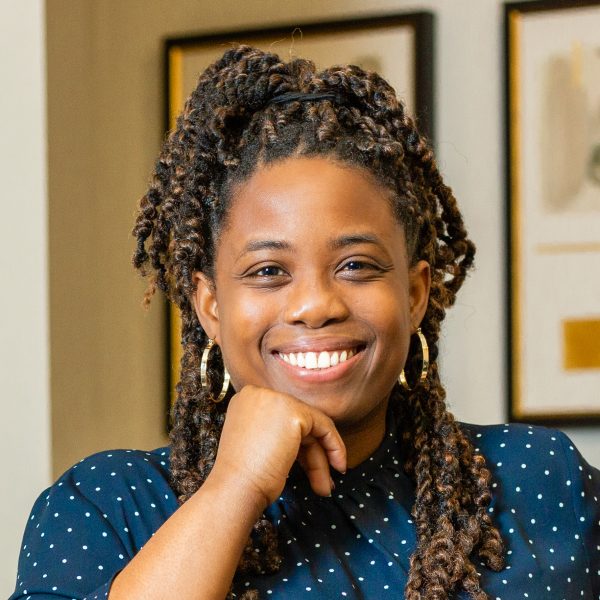
Brean'a Parker
· Assistant ProfessorVerifiedNorth Carolina State University · Health, Physical Education, and Recreation
Active 2020–2025
About
Brean'a Parker is an assistant professor in the Department of Educational Leadership, Policy and Human Development’s Counselor Education Program at NC State University. Her research focuses on stories and experiences of violence and trauma within Black communities, especially for community members occupying multiply marginalized positions. She explores healing and pleasure praxis for survivors and victims of interpersonal violence and aims to cultivate a social justice-based counseling training curriculum that embodies the lived realities, strengths, and power within communities historically disenfranchised and oppressed. Dr. Parker emphasizes how mediums such as storytelling can inform counseling interventions, education, training, and future research within communities often overlooked by academia. Her research primarily centers on Black womxn and other members of the Black community at the margins, including those who are queer, Trans, non-binary, living in poverty, or with disabilities. She utilizes storytelling and creative mediums to examine the mental health consequences of systemic oppression, state and federal violence, and interpersonal trauma, with the goal of developing prevention and intervention praxis for Black survivors and victims. Her current projects include utilizing Black womxn historical narratives of violence and trauma to inform counseling approaches, exploring cultural and sexual scripts within Black womxn narratives, and investigating how Black womxn experience pleasure and healing after abuse. Additional research interests involve developing trans-affirming counseling curricula, culturally affirming counseling praxis for historical trauma, and the role of community-based trauma centers in supporting underserved communities. Dr. Parker teaches courses such as Introduction to Clinical Mental Health Counseling, Research in Counseling, and Counseling Couples and Family Education, and her academic background includes a PhD in Counselor Education and Supervision from the University of Georgia, a Master of Education in Professional Counseling from the same institution, and a Bachelor of Science in Psychology from the University of Central Florida.
Research topics
- Sociology
- Psychology
- Computer Science
- Social Science
- Political Science
- Social psychology
- Criminology
- Engineering
- Demography
- Pedagogy
- Medicine
- Law
- Engineering ethics
- Medical education
- History
- Gender studies
Selected publications
Qualitative Psychology · 2025-03-03 · 1 citations
articleJournal of Latinx Psychology · 2025-08-04
articleOpen accessLiving Our Equity, Diversity, Inclusion, and Antiracism Values in the Academy
2024-04-23
book-chapterThis chapter discusses how the authors (two BIPOC, one white, one mid-career, two early-career) embodied JEDI (justice, equity, diversity, inclusion) as they co-built the vision and foundations of a college-based JEDI office. In doing so, they describe ways the structural (and spiritual) JEDI space can be transformative for students, faculty, and staff if these spaces are firmly situated in a lineage of abolitionist and liberatory work. In this chapter, readers are invited to explore their own Black, Indigenous, and People of Color (BIPOC) identity and consider how our ancestors have always called for action to address injustice and discriminatory practices as we work for intergenerational justice for our communities.
Journal of Counseling Sexology and Sexual Wellness · 2024-11-08 · 2 citations
articleOpen accessIn this document, we present exemplary practices for counseling sexology and sexual wellness. These professional guidelines advance practice, research, and education in sexuality and sexual health within the counseling profession. The exemplary practices are grounded in critical theories to center the experiences of diverse clients, contextualize the role of culture, environment, and history in shaping our sexualities, and celebrate varied ways of being. We detail 12 exemplary practice areas for sexuality counseling across the following domains: a) attitudes, beliefs, & understanding of historical influences; b) knowledge; c) counseling skills; d) action and advocacy; and e) counselor education and supervision.
Journal of Interpersonal Violence · 2024-07-25
article1st authorCorrespondingThe last few decades have ushered in an increase in scholarship focused on campus-based violence, specifically sexual violence, sexual assault, and unwanted sexual experiences. This rise in sexual violence scholarship has promoted the examination of current campus-based interventions, resources, and response systems. However, there exists a dearth of research exploring the experience of intimate partner violence for college students within college/university settings. In this descriptive analysis, we capture the prevalence of intimate partner violence for a nationwide sample of 1,035 college students across diverse college and university campuses within the United States. Researchers utilized a sociodemographic questionnaire and the Intimate Partner Violence Screening Questionnaire to capture and measure college students' experiences of intimate partner violence during the COVID-19 pandemic. To analyze the data, the Statistical Package for Social Sciences (SPSS 28) was used. Univariate analyses and cross-tabulation analyses were conducted to examine the data. Specifically, due to the majority of research focusing on cisgender, White heterosexual women respondents, we focus our analysis on the experiences of Black and/or African American survivors of intimate partner violence on college campuses, in hopes of capturing the prevalence of intimate and relationship violence for Black/African American college students across colleges and universities. Results of this study revealed the prevalence of all types of intimate partner violence and abuse such as emotional/psychological, physical, and sexual violence within Black/African American college students. Findings from this database study produce implications for college/university campuses to consider capacity to address enduring psychological concerns and outcomes tied to intimate partner violence within college/university campuses, while also considering culturally responsive prevention and intervention efforts.
Teaching and Supervision in Counseling · 2024-01-01 · 1 citations
articleOpen access1st authorCorrespondingWhile Black women are entering academe at increasing rates, they still remain underrepresented in the counselor education academic workforce. Empirical literature suggests that lack of educational infrastructure, challenging sociocultural climates and fewer possibility models within academe are factors for low matriculation of Black women doctoral students into academic positions in counselor education. Utilizing collaborative autoethnography (CAE), we explore teaching mentorship relationships among Black women (N = 4) counseling faculty and doctoral students. We also examine how mentoring relationships shape Black women’s professionalization within academe in a manner that fosters the embodiment and practice of social justice andragogy. CAE narratives revealed teaching mentorships as promoting social justice-based teaching andragogy, cultural praxis of community as liberative and providing a blueprint for transformative praxis among mentees in counselor education training programs. Implications for counselor educators from our findings identify the importance of implementing programmatic infrastructure and culturally- responsive mechanisms to be considered in support of Black women students’ matriculation into academe.
Journal for Social Action in Counseling & Psychology · 2022 · 9 citations
Senior authorCorresponding- Sociology
- Pedagogy
- Computer Science
Social justice curriculum development continues to be an evolving area in the educational and professional training of counselors and counseling psychologists. While many programs facilitate trainees’ exploration of social justice knowledge through infusion into multicultural counseling courses, there is a growing trend in counseling curriculum development to provide students with specific social justice-oriented awareness and approaches to advocacy. This article describes the development of two-course sequence in a mental health counseling program where trainees are introduced to multicultural and social justice content pedagogically organized around liberation and critical history frameworks. The theoretical frameworks, process of implementing specific curricular activities with a focus on a culminating service-learning experience, and strategies for enhancing social justice and advocacy curriculum development through an embodied social justice learning curricular approach are discussed. This article aims to advance curriculum development by encouraging faculty in counseling programs to consider implementing curricular activities that are guided by social justice embodiments and critical-liberatory frameworks to facilitate trainees’ social justice knowledge and their approach to advocacy in their roles as helping professionals.
American Psychological Association eBooks · 2020 · 23 citations
- Sociology
- Gender studies
- History
What Do We Know About Campus Sexual Violence? A Content Analysis of 10 Years of Research
Review of higher education/The review of higher education · 2020 · 69 citations
Senior authorCorresponding- Sociology
- Social Science
- Political Science
We examined 10 years of scholarship about campus sexual violence from 12 social sciences databases to illuminate the trends, gaps, and possibilities in research. Using a content analysis methodology, we examined 540 articles. In this paper, we highlight the methodologies, subjects, and demographics of participants in the studies. We use a power-conscious framework to interpret our findings, which indicate that campus sexual violence research primarily focuses on white, cisgender, heterosexual college women as victims of sexual violence. Further, most scholarship focuses on victims, rather than perpetrators of sexual violence, leaving significant gaps in effectively eradicating campus sexual violence.
Frequent coauthors
- 2 shared
Anneliese A. Singh
- 2 shared
Collette Chapman‐Hilliard
- 1 shared
Anushka Aqil
- 1 shared
Niah S. Grimes
- 1 shared
Jake Leite
North Carolina State University
- 1 shared
Erica Campbell
Fayetteville State University
- 1 shared
F. Weldon Thacker
University of Central Florida
- 1 shared
Chris Linder
- Resume-aware match score
- Save to shortlist
- AI-drafted outreach
See your match with Brean'a Parker
PhdFit ranks faculty by your research interests, methods, and publications — grounded in their actual work, not templates.
- Free to start
- No credit card
- 30-second signup