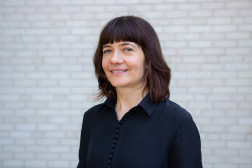
Bettina Stoetzer
· Associate Professor of AnthropologyVerifiedMassachusetts Institute of Technology · Sociology
Active 2014–2022
About
Bettina Stoetzer is an Associate Professor of Anthropology at the Massachusetts Institute of Technology. Her research focuses on the intersections of ecology, globalization, and social inequality in Europe. She has conducted ethnographic fieldwork with ecologists, migrant communities, nature enthusiasts, and residents in Berlin to explore how human-environment relations serve as a key register for articulating urban citizenship in contemporary Europe. Her work develops concepts such as the ruderal, which refers to communities inhabiting disturbed urban environments, to rethink urban life and social inequalities in European cities. She is the author of the book 'Ruderal City: Ecologies of Migration, Race, and Urban Nature,' which examines sites like urban wastelands, gardens, forests, and parks in Berlin, illustrating how conflicts over nature and green spaces reconfigure social inequalities. Her current research project, 'Unsettling Refuge,' investigates wildlife mobility—specifically birds, boar, and orca—and their responses to environmental changes like habitat destruction and climate change, analyzing how these animal movements influence political and social practices related to refuge and environmental action in Europe and North America. Bettina Stoetzer's academic background includes an M.A. in Sociology, Anthropology, and Media Studies from the University of Goettingen and a Ph.D. in Anthropology from the University of California Santa Cruz. Before joining MIT, she was a Harper Fellow at the University of Chicago.
Research topics
- Geography
- Sociology
- Ecology
- Socioeconomics
- Archaeology
- Biology
- History
Selected publications
2022-11-07 · 1 citations
book1st authorCorrespondingIn Ruderal City Bettina Stoetzer traces relationships among people, plants, and animals in contemporary Berlin as they make their lives in the ruins of European nationalism and capitalism. She develops the notion of the ruderal—originally an ecological designation for the unruly life that inhabits inhospitable environments such as rubble, roadsides, train tracks, and sidewalk cracks—to theorize Berlin as a “ruderal city.” Stoetzer explores sites in and around Berlin that have figured in German national imaginaries—gardens, forests, parks, and rubble fields—to show how racial, class, and gender inequalities shape contestations over today’s uses and knowledges of urban nature. Drawing on fieldwork with gardeners, botanists, migrant workers, refugees, public officials, and nature enthusiasts while charting human and more-than-human worlds, Stoetzer offers a wide-ranging ethnographic portrait of Berlin’s postwar ecologies that reveals emergent futures in the margins of European cities. Brimming with stories that break down divides between environmental perspectives and the study of migration and racial politics, Berlin’s ruderal worlds help us rethink the space of nature and culture and the categories through which we make sense of urban life in inhospitable times.
Duke University Press eBooks · 2022 · 6 citations
1st authorCorresponding- Geography
- Biology
- Ecology
Bettina Stoetzer traces the more-than-human relationships between people, plants, and animals in contemporary Berlin, showing how Berlin’s “urban nature” becomes a key site in which notions of citizenship and belonging as well as racialized, gendered, and classed inequalities become apparent.
Social Anthropology · 2020 · 2 citations
1st authorCorresponding- Sociology
- Geography
- History
In March and April 2020, social media and news were awash with images of wildlife in cities under lockdown. As city residents sheltered in their homes, other less likely urban dwellers ventured out onto the streets. Dolphins and swans returned to seemingly crystal clear canals in Venice. Deer frolicked in the streets of Nara prefecture in Japan. Macaques roamed the streets in large crowds in Lobpuri, Thailand. Residents reported wild boar in Berlin, coyotes in San Francisco and mountain lions in Santiago (Figure 1). With a sense of awe, many saw ‘nature’ recovering, ‘finding its way’ amid tremendous human suffering. Although some of these stories turned out to be fabricated (as was the case with the dolphins in Venice), they do capture a ‘weedy’ reality that has long existed in the cracks of urban life. With growing urban sprawl, deforestation, rising global temperatures and the consolidation of farmland, many animals and plants gradually make the city their new home. In the context of the COVID-19 crisis, reductions in human traffic indeed have had initial, unexpected effects: deprived of their usual anthropogenic food sources, provided by tourists and other urban dwellers, many animals have begun to change their behaviour, moving further into city centres during unusual daytime hours or more aggressively fighting over their prey. Meanwhile, carbon monoxide levels in cities such as Los Angeles and Beijing have decreased significantly for the first time in decades. In the face of these unintended consequences, who would not find glimpses of hope for nature’s resilience amid destruction and viral disaster? In Europe, the pandemic has primarily been discussed as a public health and an economic problem. Yet it is also an ecological one. While the detailed pathways that have led COVID-19 to cross the species boundary (possibly from bats to pangolins to humans) still need to be determined, it is clear that industrial agriculture and factory farming, as well as the destruction of wildlife habitats via deforestation and urbanisation, have accelerated pathogen transmission from animals to humans and thus contribute to the spread of zoonotic diseases like COVID-19. Humans, viruses and animals (both domestic and wild) have co-evolved in a deadly dance. And this dance is more deadly for some than for others. The proliferation of COVID-19 has already begun to deepen existing racial, class and gender inequalities, disproportionately affecting working class and communities of colour who often do not have access to adequate healthcare or suffer from ‘pre-existing medical conditions’ due to environmental pollution. As the mobile and privileged carry the virus across the globe and flee to their vacation homes, those who cannot easily take shelter – cashiers, grocery sellers, truck drivers, meatpackers, farm- and careworkers, but also refugees, the homeless and prisoners – are most exposed and vulnerable. While the air may be clearing momentarily, many people struggle to breathe not only because of the virus, but also because of engrained structures of racial violence and injustice. Celebrating nature’s resilience runs risk of absolving humans from collaborating with each other and other living beings to rebuild urban worlds. Similarily, adhering to grand narratives about humans as destructive (see slogans such as ‘humans are the virus’) does not account for the ways in which marginalised communities are criminalised and often blamed for the spread of disease. Rather, it is time to shift focus toward the broader social, ecological and economic formations that impact who lives and dies in today’s cities. Perhaps then, the crisp blue skies, and the wild boar and deer roaming the streets can be a guide: for being accountable to the unequal ways in which different bodies, both human and nonhuman, become vulnerable. After all, such accountability might be a first step toward forging new forms of care and building more liveable worlds.
Anthropology News · 2019-11-01 · 1 citations
article1st authorCorrespondingRuderal Ecologies: Rethinking Nature, Migration, and the Urban Landscape in Berlin
Cultural Anthropology · 2018-05-21 · 212 citations
articleOpen access1st authorCorrespondingEngaging with a series of human–plant encounters in Berlin, this article explores possibilities for rethinking the heterogeneity of urban life in the ruins of European nationalism and capitalism. Drawing on ethnographic fieldwork and revisiting Berlin’s postwar history of botanical research, I develop the concept of the ruderal and expand it for an anthropological inquiry of urban life. The term ruderal was originally used by Berlin ecologists after the Second World War to refer to ecologies that spontaneously inhabit disturbed environments: the spaces alongside train tracks or roads, wastelands, or rubble. Exploring Berlin as a ruderal city, I direct attention to the often unnoticed, cosmopolitan, and unruly ways of remaking the urban fabric at a time of increased nationalism and ecological destruction. Tracing human–plant socialities in encounters between scientists and rubble plants, in public culture, and among immigrants and their makeshift urban gardens, the lens of the ruderal directs ethnographic analysis toward the city’s unintended ecologies as these are produced in the context of nation-making, war, xenophobia, migration, environmental change, and contemporary austerity policies. Attending to ruderal worlds, I argue, requires telling stories that do not easily add up but that combine environmental perspectives with the study of migration, race, and social inequality—in the interest of mapping out possibilities for change. This framework thus expands a recent anthropological focus on ruins, infrastructure, and urban landscapes by highlighting questions of social justice that are at stake in emerging urban ecologies and an era of inhospitable environments.
A Path through the Woods: Remediating Affective Landscapes in Documentary Asylum Worlds
Transit · 2014-01-01 · 12 citations
articleOpen access1st authorCorrespondingIn his book Landscape and Memory , Simon Schama argues that an engagement with the legacies of German nationalism requires a track through the woods: throughout German history, forests have played a key role as origin myth to found a national identity (Schama 1995). In today’s forests, these entanglements between the forest landscape and the nation acquire a strange and unhomely twist: in former East German states, such as Brandenburg and Thuringia, asylum seekers—many of them from Africa—find themselves living on the ruins of abandoned military barracks in the forest. Their isolation in the forest is the outcome of post-unification asylum policies that responded to a heated nation-wide asylum debate and xenophobic attacks against urban refugee shelters in the 1990s, by relocating refugees to remote new ‘homes’ in rural East Germany—often on former military barracks in the forest. Engaging with Forst , a documentary film produced in collaboration between refugees and European film-makers, this article asks about the possibilities of a mode of analysis that follows Schama’s call to embark on a track through the woods and shed light on contemporary entanglements between landscape, race and nationalism. Forst breaks with documentary—and ethnographic—conventions of creating empathy via the portrayal of individual life stories, or “cases”. Instead, the film situates its story almost entirely in the claustrophobic environment of a gloomy forest in which refugees live. Doing so, it provokes affects and environments in order to invoke the visceral dimensions of borders and nationalism—a method, I argue, that can be mobilized for social inquiry of both the mediation of racialized exclusions in contemporary asylum worlds in Germany—as well as their material and visceral effects.
Palgrave Macmillan eBooks · 2014-04-07
book-chapter1st authorCorresponding“Wild Barbecuing”: Urban Citizenship and the Politics of Transnationality in Berlin’s Tiergarten
Palgrave Macmillan US eBooks · 2014-01-01 · 14 citations
book-chapter1st authorCorrespondingWalking along the banks of the river Spree, you reach the edges of Berlin's largest green space, the Tiergarten.1 As you approach the park's meadows in summertime, you smell the fragrance of barbecued chicken, lamb, or beef; boiling tea; and sweet tobacco. Many Berliners, and especially Turkish immigrant families, extend their lives and homes into the Tiergarten. As people of all generations gather here, picnic blankets, chairs, kitchen tables, hammocks, prayer rugs, teapots—and most importantly a small grill—are spread out on the grass. Only a few steps further, you encounter a spectacle of thin layers of smoke dancing in between tree branches (Figure 4.1).KeywordsGreen SpacePublic SpacePublic ParkRural MigrantTurkish ImmigrantThese keywords were added by machine and not by the authors. This process is experimental and the keywords may be updated as the learning algorithm improves.
At the forest edges of the city: Nature, race and national belonging in Berlin
2011-01-01 · 10 citations
dissertation1st authorCorrespondingFrom Rubble Ecologies to Urban Wilderness: Tracking Different Ways of Seeing "Nature" in Berlin
PsycEXTRA Dataset · 2010-01-01
dataset1st authorCorresponding
Awards & honors
- Forsythe Prize by the Committee for the Anthropology of Scie…
- William A. Douglass Prize in Europeanist Anthropology at the…
- Award for the Best Book in Social Sciences and History at th…
- Resume-aware match score
- Save to shortlist
- AI-drafted outreach
See your match with Bettina Stoetzer
PhdFit ranks faculty by your research interests, methods, and publications — grounded in their actual work, not templates.
- Free to start
- No credit card
- 30-second signup