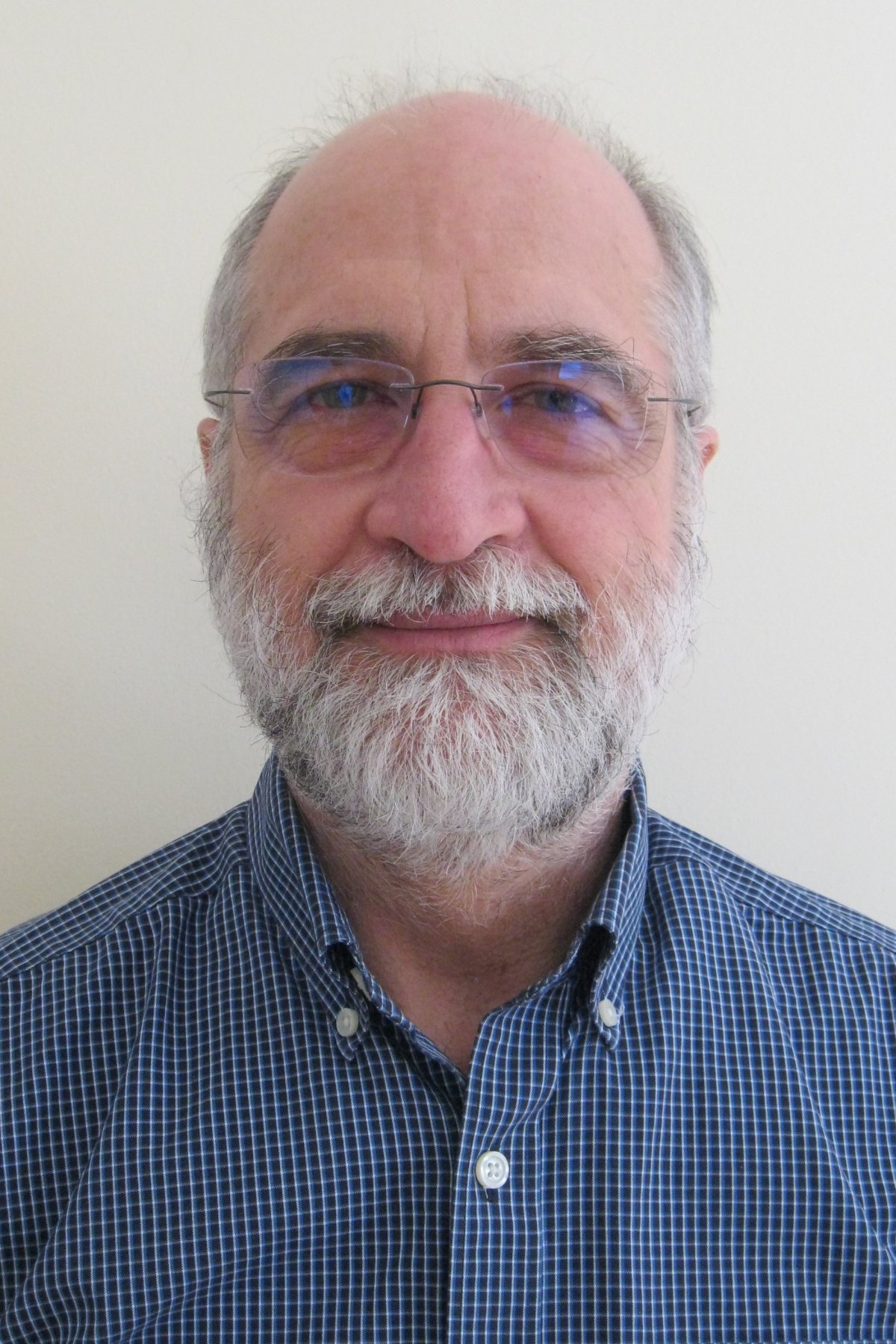
Bernardo Cockburn
· Distinguished McKnight University Professor, School of MathematicsVerifiedUniversity of Minnesota · Mathematics
Active 1980–2026
About
Bernardo Cockburn is a Distinguished McKnight University Professor at the School of Mathematics at the University of Minnesota. His main research interest is in devising and analyzing efficient methods for numerically solving linear and nonlinear partial differential equations. He is particularly focused on the development of discontinuous Galerkin methods. Cockburn earned his PhD from the University of Chicago in 1986 and holds a Master of Science in Applied Mathematics from U. Nacional de Ingenieria in Lima, Peru, obtained in 1980. His work contributes significantly to the field of numerical analysis and computational mathematics, especially in the context of partial differential equations.
Research topics
- Mathematics
- Mathematical optimization
- Physics
- Applied mathematics
- Mathematical analysis
- Computer Science
Selected publications
HDG Methods for the two-dimensional Vector Laplacian
arXiv (Cornell University) · 2026-04-07
preprintOpen access1st authorCorrespondingWe introduce new hybridizable discontinuous Galerkin (HDG) methods for solving the two-dimensional vector Laplacian equation under three types of boundary conditions: electric, magnetic, and Dirichlet. The method is formulated on a first-order system form of the equations, in which the rotational and divergence of the electric field are introduced as auxiliary variables. We study the well-posedness of the method and prove that, when using piecewise polynomial approximations of degree $k \geq 0$, the error in the $L^2$ norm of the electric field converges at the optimal rate of $k+1$. Additionally, we prove that the $L^2$-errors of the auxiliary variables, the rotational and divergence, converge with order $k + 1/2$. We also show that the methods can be implemented in three different forms, corresponding to three distinct hybridizations based on the choice of the globally coupled unknowns among the numerical traces defined on the mesh skeleton. Finally, we provide numerical tests that not only validate the theoretical convergence rates but also consistently showcase the optimal convergence across all variables.
HDG Methods for the two-dimensional Vector Laplacian
arXiv (Cornell University) · 2026-04-07
articleOpen access1st authorCorrespondingWe introduce new hybridizable discontinuous Galerkin (HDG) methods for solving the two-dimensional vector Laplacian equation under three types of boundary conditions: electric, magnetic, and Dirichlet. The method is formulated on a first-order system form of the equations, in which the rotational and divergence of the electric field are introduced as auxiliary variables. We study the well-posedness of the method and prove that, when using piecewise polynomial approximations of degree $k \geq 0$, the error in the $L^2$ norm of the electric field converges at the optimal rate of $k+1$. Additionally, we prove that the $L^2$-errors of the auxiliary variables, the rotational and divergence, converge with order $k + 1/2$. We also show that the methods can be implemented in three different forms, corresponding to three distinct hybridizations based on the choice of the globally coupled unknowns among the numerical traces defined on the mesh skeleton. Finally, we provide numerical tests that not only validate the theoretical convergence rates but also consistently showcase the optimal convergence across all variables.
Turbo Post-processing for Discontinuous Galerkin Methods: One-Dimensional Linear Transport
Journal of Scientific Computing · 2025-04-03
article1st authorCorrespondingArXiv.org · 2025-11-17
preprintOpen access1st authorCorrespondingWe present improved $L^2$-error estimates on the time-integrated primal variable for the wave equation in its first-order formulation. The space discretization relies on a hybrid nonconforming method, such as the hybridizable discontinuous Galerkin, the hybrid high-order or the weak Galerkin methods. We consider both equal-order and mixed-order settings on simplices, and include the lowest-order case with piecewise constant unknowns on the faces and in the cells. Our main result is a superclose, resp., optimal bound on the above error in the equal-, resp., mixed-order case. A key result of independent interest to achieve these estimates are novel approximation estimates for an interpolation operator inspired from the hybridizable discontinuous Galerkin literature.
Beijing Journal of Pure and Applied Mathematics · 2025-01-01 · 1 citations
articleOpen access1st authorCorrespondingThis paper is dedicated to Chi-Wang Shu in the occasion of his 65th birthdayIn the framework of ODEs, we uncover a new link between the continuous Galerkin method (see Math.Comp.(1972), 26 (118 and 120), 415-426 and 881-891) and the discontinuous Galerkin method (see Mathematical Aspects of Finite elements in PDEs, (1974), 89-123), namely, that the discretizations of the derivative by these two methods are the same.A direct consequence of this result is the construction of a new elementwise post-processing of the approximate solution provided by the Discontinuous Galerkin method.When the DG method uses polynomials of degree k 0, the post-processing consists in adding, to the DG approximate solution, the (scaled) left-Radau polynomial of degree k+1 multiplied by the jump of the approximate solution at the left boundary of the interval.No extra computation is required.The resulting new approximation is continuous and, for k > 0, converges with order k + 2, that is, with one order more than the original discontinuous Galerkin approximation.For k = 0, the order remains the same.
ArXiv.org · 2025-09-26
preprintOpen access1st authorCorrespondingIn the framework of ODEs, we uncover a new link between the continuous Galerkin method (see Math. Comp. (1972), 26 (118 and 120), 415-426 and 881-891) and the discontinuous Galerkin method (see Mathematical Aspects of Finite elements in PDEs, (1974), 89-123), namely, that the discretizations of the derivative by these two methods are the same. A direct consequence of this result is the construction of a new elementwise post-processing of the approximate solution provided by the Discontinuous Galerkin method. When the DG method uses polynomials of degree $k\ge0$, the post-processing consists in adding, to the DG approximate solution, the (scaled) left-Radau polynomial of degree $k+1$ multiplied by the jump of the approximate solution at the left boundary of the interval. No extra computation is required. The resulting new approximation is continuous and, for $k>0$, converges with order $k+2$, that is, with one order more than the original discontinuous Galerkin approximation. For $k=0$, the order remains the same.
2024-01-04 · 1 citations
articleSenior authorIn this paper, we perform numerical simulations of supersonic flow over a 15◦-45◦ double- wedge geometry using a time-implicit spectral discontinuous finite element method (DG-SEM). The particular geometry configuration studied in this paper generates a set of shock-shock interactions classified by Edney as Type V [1]. A defining characteristic of this shocked flowfield is the high degree of anisotropy that is generated due to the influence of the wedge angles on the development of the shock-shock interactions. Numerically, this is particularly challenging as it imposes a burden on the numerical scheme to effectively capture the spectrum of length scales generated by this shocked flow
Mathematics in Engineering · 2024-01-01 · 1 citations
articleOpen accessSenior authorCorresponding<abstract><p>We show how to reduce the computational time of the practical implementation of the Raviart-Thomas mixed method for second-order elliptic problems. The implementation takes advantage of a recent result which states that certain local subspaces of the vector unknown can be eliminated from the equations by transforming them into stabilization functions; see the paper published online in JJIAM on August 10, 2023. We describe in detail the new implementation (in MATLAB and a laptop with Intel(R) Core (TM) i7-8700 processor which has six cores and hyperthreading) and present numerical results showing 10 to 20% reduction in the computational time for the Raviart-Thomas method of index $ k $, with $ k $ ranging from 1 to 20, applied to a model problem.</p></abstract>
Bridging the Hybrid High-Order and Hybridizable Discontinuous Galerkin Methods: Summary
HAL (Le Centre pour la Communication Scientifique Directe) · 2024-07-14
articleOpen access1st authorCorrespondingInternational audience
Japan Journal of Industrial and Applied Mathematics · 2023-08-10 · 13 citations
articleOpen access1st authorCorresponding
Recent grants
Discontinuous Galerkin Methods for Partial Differential Equations
NSF · $366k · 2007–2011
NSF · $375k · 2015–2019
Superconvergent Discontinuous Galerkin methods for Partial Differential Equations
NSF · $420k · 2011–2015
Superconvergent Approximations by Galerkin Methods for Partial Differential Equations
NSF · $350k · 2019–2023
Frequent coauthors
- 80 shared
Chi‐Wang Shu
- 36 shared
Eitan Tadmor
University of Maryland, College Park
- 36 shared
Claes Johnson
Chalmers University of Technology
- 35 shared
Ngoc Cuong Nguyen
- 32 shared
J. Peraire
Massachusetts Institute of Technology
- 31 shared
Jay Gopalakrishnan
- 22 shared
Fré́dé́ric Coquel
École Polytechnique
- 21 shared
Philippe G. LeFloch
Centre National de la Recherche Scientifique
Awards & honors
- Outstanding Achievement
- Distinguished Leadership
- Honorary Doctorate Degrees
- Resume-aware match score
- Save to shortlist
- AI-drafted outreach
See your match with Bernardo Cockburn
PhdFit ranks faculty by your research interests, methods, and publications — grounded in their actual work, not templates.
- Free to start
- No credit card
- 30-second signup