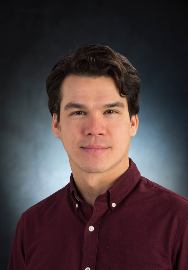
Benjamin Hunt · Carnegie Mellon University · PhdFit
Resume-aware faculty matching
Find professors who actually fit you
Upload your resume. PhdFit's six research agents compare your background with faculty profiles, recent publications, lab focus, and outreach opportunities, then rank professors with evidence you can review.
Resume-aware matchingEvidence from recent researchOutreach drafts included
Advisor Match Brief Resume uploaded
Resume signals5 found
NLPHCIFairnessGraph MLPyTorch
Six-agent analysisRunning
Axel · Candidate AnalystResume parsed
Nova · Professor ResearcherRecent papers
Echo · Match ExplainerEvidence linked
Atlas · Strategy AdvisorFit ranked
Lyra · Outreach WriterDraft queued
Juno · Meeting Prep CompilerNext step ready
SC
Dr. Sarah Chen
Stanford · NLP & interpretability
91
fit
Fairness + NLP projects overlap with her recent work.
Strong methods fit: model evaluation and interpretability.
Clear outreach angle for current trustworthy AI research.
Outreach angle
Ask how her lab is extending interpretability methods into fairness audits for real-world AI systems.
Welcome to the Hunt Lab, located in the Department of Physics at Carnegie Mellon University, in Pittsburgh, PA. We are a group of scientists specializing in experimental condensed matter physics. Our current interests involve the physics of low-dimensional structures, especially vertical 'van der Waals heterostructures' of two-dimensional crystals, a variety of methods for probing mesoscopic devices, the behavior of (possibly strongly interacting) electrons at low temperatures and high magnetic fields, and many areas of condensed matter physics related to low-dimensional structures.
Semiconducting transition metal dichalcogenide (TMDC) moiré superlattices provide an unprecedented platform for manipulating excitons. The in-situ control of moiré excitons could enable novel excitonic devices but remains challenging. Meanwhile, as dipolar composite bosons, interlayer excitons in the type-II aligned TMDC moiré superlattices exhibit strong interactions with fermionic charge carriers. Here, we demonstrate active manipulation of exciton diffusivity by tuning their interplay with correlated carriers in moiré potentials. When electrons form Mott insulators, the interlayer exciton energy is blueshifted due to strong electron-exciton repulsion, leading to the enhancement of diffusivity by as much as two orders of magnitude. In contrast, exciton diffusivity is suppressed at fractional fillings, where carriers form generalized Wigner crystals. In between fractional fillings, electrons populate all moiré traps, resulting in enhanced diffusivity with increasing carrier density, owing to the effectively reduced moiré potential confinement experienced by excitons. Our study inspires further engineering and controlling exotic excitonic states in TMDC moiré superlattices for fascinating quantum phenomena and novel excitonic devices.
Quantum spin liquids can arise from Kitaev magnetic interactions, and exhibit fractionalized excitations with the potential for a topological form of quantum computation. This review surveys recent experimental and theoretical progress on the pursuit of phenomena related to Kitaev magnetism in layered and exfoliatable materials, which offer numerous opportunities to apply powerful techniques from the field of atomically thin materials. We primarily focus on the antiferromagnetic Mott insulator $α$-RuCl3, which exhibits Kitaev couplings and is readily exfoliated to single- or few-layer sheets, and thus serves as a test bed for developing probes of Kitaev phenomena in atomically thin materials and devices. We introduce the Kitaev model and how it is realized in $α$-RuCl3 and other material candidates; and cover $α$-RuCl3 synthesis and fabrication into van der Waals heterostructure devices. A key discovery is a work-function-mediated charge transfer that heavily dopes both the $α$-RuCl3 and proximate materials, and can enhance Kitaev interactions by up to 50%. We further discuss a wide range of recent results in electronic transport and optical and tunneling spectroscopies of $α$-RuCl3 devices. The experimental techniques and theoretical insights developed for $α$-RuCl3 establish a framework for discovering and engineering superior two-dimensional Kitaev materials that may ultimately realize elusive quantum spin liquid phases.
Semiconducting transitional metal dichalcogenides (TMDCs) moiré superlattice provides an exciting platform for manipulating excitons. The in-situ control of moiré potential confined exciton would usher in unprecedented functions of excitonic devices but remains challenging. Meanwhile, as a dipolar composite boson, interlayer exciton in the type-II aligned TMDC moiré superlattice strongly interacts with fermionic charge carriers. Here, we demonstrate active manipulation of the exciton diffusivity by tuning their interplay with correlated carriers in moiré potentials. At fractional fillings where carriers are known to form generalized Wigner crystals, we observed suppressed diffusivity of exciton. In contrast, in Fermi liquid states where carriers dynamically populate all moiré traps, the repulsive carrier-exciton interaction can effectively reduce the moiré potential confinement seen by the exciton, leading to enhanced diffusivity with the increase of the carrier density. Notably, the exciton diffusivity is enhanced by orders of magnitude near the Mott insulator state, and the enhancement is much more pronounced for the 0-degree than the 60-degree aligned WS2/WSe2 heterobilayer due to the more localized nature of interlayer excitons. Our study inspires further engineering and controlling exotic excitonic states in TMDC moiré superlattices for fascinating quantum phenomena and novel excitonic devices.
N (AlBN) thin films, generating structures with sizes as small as 35 nm. We demonstrate the ferroelectric field effect with a graphene/vdW stack on AlBN by creating a p-n junction. This resist-free, high-resolution, contactless patterning method offers a new pathway to integrate ferroelectric films with a wide range of two-dimensional layers including transition-metal dichalcogenides (TMD), enabling arbitrary programming and top-down creation of multifunctional devices.
The ability to create superlattices in van der Waals (vdW) heterostructures via moiré interference heralded a new era in the science and technology of two-dimensional materials. Through precise control of the twist angle, flat bands and strongly correlated phases have been engineered. The precise twisting of vdW layers is in some sense a bottom-up approach--a single parameter can dial in a wide range of periodic structures. Here, we describe a top-down approach to engineering nanoscale potentials in vdW layers using a buried programmable ferroelectric layer. Ultra-low-voltage electron beam lithography (ULV-EBL) is used to program ferroelectric domains in a ferroelectric Al_{1-x}B_{x}N thin film through a graphene/hexagonal boron nitride (hBN) heterostructure that is transferred on top. We demonstrate ferroelectric field effects by creating a lateral p-n junction, and demonstrate spatial resolution down to 35 nm, limited by the resolution of our scanned probe characterization methods. This innovative, resist-free patterning method is predicted to achieve 10 nm resolution and enable arbitrary programming of vdW layers, opening a pathway to create new phases that are inaccessible by moiré techniques. The ability to "paint" different phases of matter on a single vdW "canvas" provides a wealth of new electronic and photonic functionalities.
Physical review. B./Physical review. B · 2024-12-17 · 2 citations
articleSenior author
Flat bands, where Coulomb repulsion dwarfs bandwidth, hold the potential to realize many correlated electron states in a material. Rhombohedral graphite (RG) hosts an intrinsic flat band near the Fermi level localized on its top and bottom surfaces, in which the density of states is predicted to increase sharply with increasing crystal thickness. Here, we study rhombohedral graphite samples of multiple thicknesses using scanning tunneling microscopy and spectroscopy. We observe a van Hove singularity (vHs) in the density of states of all samples as well as additional peaks corresponding to the onsets of higher-energy bands that have been pushed away from the Fermi level due to interlayer hopping. The relative height of the central vHs to the higher-energy peaks increases with crystal thickness, a result that agrees quantitatively with our tight-binding (TB) calculations. We study the boundary between RG and hexagonal graphite and observe splitting of the flat surface band, an effect which can be described by the inclusion of a stacking fault into our TB model.
Physical review. B./Physical review. B · 2023-10-10 · 11 citations
article
We show that a superlattice potential can be employed to engineer topology in massive Dirac fermions in systems such as bilayer graphene, moir\'e graphene-boron nitride, and transition-metal dichalcogenide (TMD) monolayers and bilayers. We use symmetry analysis to analyze band inversions to determine the Chern number $\mathcal{C}$ for the valence band as a function of tunable potential parameters for a class of ${C}_{4}$ and ${C}_{3}$ symmetric potentials. We present a method to engineer Chern number $\mathcal{C}=2$ for the valence band and show that the applied potential at minimum must have a scalar together with a nonscalar periodic part. We discover that certain forms of the superlattice potential, which may be difficult to realize in naturally occurring moir\'e patterns, allow for the possibility of nontrivial topological transitions. These forms may be achievable using an external superlattice potential that can be created using contemporary experimental techniques. Our paper paves the way to realize the quantum spin Hall effect (QSHE), quantum anomalous Hall effect (QAHE), and even exotic non-Abelian anyons in the fractional quantum Hall effect (FQHE).
We show that a superlattice potential can be employed to engineer topology in massive Dirac fermions in systems such as bilayer graphene, moiré graphene-boron nitride, and transition-metal dichalcogenide (TMD) monolayers and bilayers. We use symmetry analysis to analyze band inversions to determine the Chern number $\mathscr C$ for the valence band as a function of tunable potential parameters for a class of $C_4$ and $C_3$ symmetric potentials. We present a novel method to engineer Chern number $\mathscr{C}=2$ for the valence band and show that the applied potential at minimum must have a scalar together with a non-scalar periodic part. We discover that certain forms of the superlattice potential, which may be difficult to realize in naturally occurring moiré patterns, allow for the possibility of non-trivial topological transitions. These forms may be achievable using an external superlattice potential that can be created using contemporary experimental techniques. Our work paves the way to realize the quantum Spin Hall effect (QSHE), quantum anomalous Hall effect (QAHE), and even exotic non-Abelian anyons in the fractional quantum Hall effect (FQHE).
We introduce a novel planar tunneling architecture for van der Waals heterostructures based on via contacts, namely metallic contacts embedded into through-holes in hexagonal boron nitride ($h$BN). We use the via-based tunneling method to study the single-particle density of states of two different two-dimensional (2D) materials, NbSe$_2$ and graphene. In NbSe$_2$ devices, we characterize the barrier strength and interface disorder for barrier thicknesses of 0, 1 and 2 layers of $h$BN and study the dependence on tunnel-contact area down to $(44 \pm 14)^2 $ nm$^2$. For 0-layer $h$BN devices, we demonstrate a crossover from diffusive to point contacts in the small-contact-area limit. In graphene, we show that reducing the tunnel barrier thickness and area can suppress effects due to phonon-assisted tunneling and defects in the $h$BN barrier. This via-based architecture overcomes limitations of other planar tunneling designs and produces high-quality, ultra-clean tunneling structures from a variety of 2D materials.