
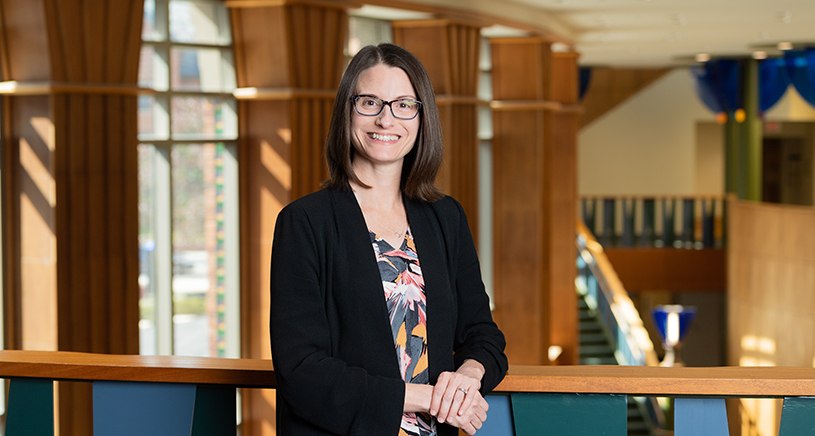
Belinda L. Needham
· Chair, EpidemiologyUniversity of Michigan · Epidemiology
Active 2004–2026
Academic metrics are sourced from OpenAlex and public funding records; values may differ from Google Scholar.
About
Belinda L. Needham, PhD, MA, is a Chair in Epidemiology and Associate Professor at the U-M School of Public Health. Her work seeks to identify, explain, and reduce health disparities related to race/ethnicity, socioeconomic status, gender, and sexual orientation. Her primary research goals involve using novel approaches to assess disparities across the life course and to identify the social structural, psychological, behavioral, and physiological mechanisms by which social disadvantage leads to poor health. Dr. Needham's research interests include social epidemiology, health disparities, biodemography, aging, and the life course. Her projects utilize data from sources such as NHANES to examine DNA methylation as a mechanism underlying racial/ethnic disparities in cardiovascular mortality, and from birth records, newborn dried bloodspots, electronic surveys, and social media to study the impact of indirect exposure to the Flint Water Crisis on Black-White disparities in birth outcomes in Michigan. Additionally, she investigates how state-level racially discriminatory laws influence cardiovascular health disparities using data from the Behavioral Risk Factor Surveillance System. Her educational background includes a PhD and MA from the University of Texas at Austin, and a BS from Texas A&M University. Dr. Needham's work is focused on understanding and addressing health inequities through social epidemiology and related fields.
Research topics
- Sociology
- Medicine
- Demography
- Geography
- Political Science
- Computer Science
- Law
- Psychology
- Psychiatry
- Biology
Selected publications
Institutional Racism and Health: a Framework for Conceptualization, Measurement, and Analysis
Journal of Racial and Ethnic Health Disparities · 2022 · 70 citations
1st authorCorrespondingDiabetes Research and Clinical Practice · 2020 · 42 citations
Do black/white differences in telomere length depend on socioeconomic status?
Biodemography and Social Biology · 2020 · 35 citations
1st authorCorrespondingSocial and economic disadvantage are hypothesized to increase the risk of disease and death via accelerated biological aging. Given that US blacks are socially and economically disadvantaged relative to whites, health disparities scholars expected that blacks would have shorter telomere length-a biomarker of cell aging-than whites. Yet the majority of studies have found that blacks have longer telomere length than whites. Using data from the National Health and Nutrition Examination Survey (n =…
Pedagogy in Health Promotion · 2020 · 34 citations
In the past decade, the number of undergraduate public health programs has increased exponentially. This growth provides a unique opportunity to explore concepts and issues relevant to understanding the determinants of health at a population level using new pedagogical approaches. One of these issues is stigma toward mental disorders. Stigma is a concept that refers to a feature or characteristic that reduces, devalues, and disempowers a person. Given the prevalence of mental and substance use d…
Vicarious structural racism and infant health disparities in Michigan: The Flint Water Crisis
Frontiers in Public Health · 2022 · 13 citations
Senior authorCorresponding= 0.6962). The FWC, which was widely attributed to structural racism, appears to have had a greater impact, overall, on outcomes for babies born to Black people. However, given the frequency of highly publicized examples of anti-Black racism over the study period, it is difficult to disentangle the effects of the FWC from the effects of other racialized stressors.
Recent grants
Race/Ethnicity, DNA Methylation, and Disparities in Cardiovascular Mortality: NHANES 1999-2002
NIH · $3.1M · 2017–2025
NIH · $4.1M · 2016
Frequent coauthors
- 45 shared
Teresa E. Seeman
University of California, Los Angeles
- 35 shared
Bhramar Mukherjee
University of Michigan–Ann Arbor
- 30 shared
Jennifer A. Smith
Virginia Tech
- 27 shared
Elissa S. Epel
University of California, San Francisco
- 27 shared
Ana V. Diez Roux
Drexel University
- 22 shared
Nancy E. Adler
- 22 shared
Jue Lin
University of California, San Francisco
- 19 shared
Sharon L. R. Kardia
University of Michigan–Ann Arbor
Education
- 2006
MA, PhD, Sociology
University of Texas at Austin
- 1999
BS, Sociology
Texas A&M University
Similar researchers at University of Michigan
- Resume-aware match score
- Save to shortlist
- AI-drafted outreach
See your match with Belinda L. Needham
PhdFit ranks faculty by your research interests, methods, and publications — grounded in their actual work, not templates.
- Free to start
- No credit card
- 30-second signup