Resume-aware faculty matching

Find professors who actually fit you

Upload your resume. Four AI agents analyze your background, rank the faculty who fit, inspect their recent research, and help you draft outreach — grounded in their actual work, not templates.

Free to startNo credit cardCancel anytime
Top matches Balanced preset
Dr. Sarah Chen
Stanford · Interpretability · NLP
91
Dr. Marcus Holloway
MIT · Robotics · RL
84
Dr. Aisha Okonkwo
CMU · Fairness · HCI
82
Nova · Professor Researcher · re-ranking top 20…
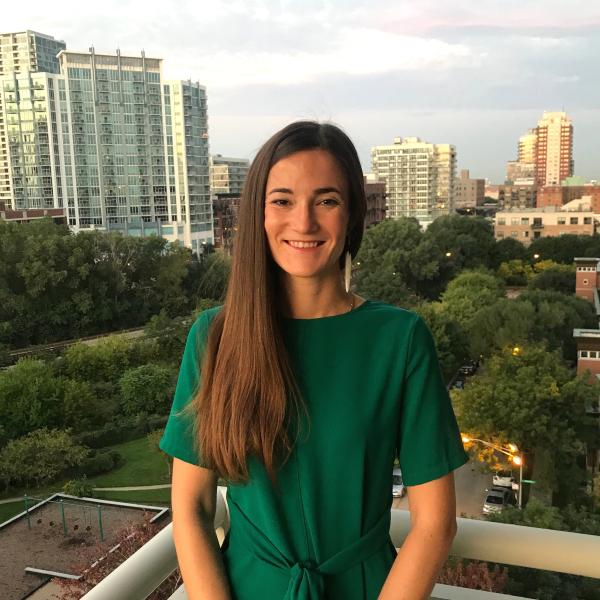
Begoña Arechabaleta Regulez

Begoña Arechabaleta Regulez

· Associate Instructional Professor in Spanish

University of Chicago · Romance Languages and Literatures

Active 2019–2023

h-index2
Citations16
Papers76 last 5y
Funding
See your match with Begoña Arechabaleta Regulez — sign in to PhdFit.Sign in

About

Begoña Arechabaleta Regulez is an Associate Instructional Professor in Spanish at the University of Chicago. She was born and raised in Bilbao, in the Basque Country region of Spain. She holds a BA in Modern Languages from Universidad de Deusto, as well as MA and PhD degrees in Spanish Linguistics from the University of Illinois at Urbana-Champaign, where she completed her doctoral dissertation on understanding language variation in monolingual and bilingual communities from a psycholinguistic perspective. Her research has extensively focused on language acquisition, particularly by bilingual children and heritage speakers of Spanish living in the United States. At the University of Illinois, she gained experience teaching a wide variety of subjects to students of all ages and abilities. She emphasizes creating engaging learning environments and has worked to incorporate innovative technologies such as virtual reality into language education, aiming to immerse students in linguistic and cultural contexts of the target language. She is committed to developing and utilizing innovative teaching strategies suitable for all learners. Her recent teaching includes courses in elementary Spanish, language, history, and culture, as well as specialized courses for heritage speakers and regional studies related to the Spanish language.

Research topics

  • Cognitive psychology
  • Linguistics
  • Psychology
  • Communication

Selected publications

  • Production, acceptability, and online comprehension of Spanish differential object marking by heritage speakers and L2 learners

    Frontiers in Psychology · 2023 · 15 citations

    1st authorCorresponding
    • Psychology
    • Linguistics
    • Cognitive psychology

    'Juan sees DOM María'). Previous studies have reported variability and high omission rates of obligatory DOM in bilingual situations where Spanish is in contact with a non-DOM language.Our study combined different methodologies to tap knowledge of DOM in the two groups. The results showed that heritage speakers and L2 learners (1) exhibited variability with DOM in production (in two oral tasks), comprehension (in an acceptability judgement task), and processing (in an eye-tracking reading task); (2) can integrate DOM into their production, judgments and processing, but they do so inconsistently, and (3) type of task and type of sentence each have an effect on speakers' use of DOM.

  • Receptive Methods in Child Bilingualism and Second Language Acquisition

    2022-07-26

    book-chapterSenior author

    In this chapter, we discuss the sentence-picture matching task and the grammaticality or acceptability judgment task as they have been used to investigate comprehension of morphosyntax in children learning Spanish and English as a second language during the elementary school period. We provide a general description of each method, their assumptions, rationale and procedure, and the types of structures that we have tested using these methods in different languages. We offer concrete examples of the advantages and challenges of using these methods based on our work, and we discuss implications for the field of child second language acquisition as well as ideas for future studies with different methodologies.

  • Psycholinguistic Evidence for Incipient Language Change in Mexican Spanish: The Extension of Differential Object Marking

    Languages · 2021 · 11 citations

    1st authorCorresponding
    • Psychology
    • Linguistics
    • Cognitive psychology

    Spanish marks animate and specific direct objects overtly with the preposition a, an instance of Differential Object Marking (DOM). However, in some varieties of Spanish, DOM is advancing to inanimate objects. Language change starts at the individual level, but how does it start? What manifestation of linguistic knowledge does it affect? This study traced this innovative use of DOM in oral production, grammaticality judgments and on-line comprehension (reading task with eye-tracking) in the Spanish of Mexico. Thirty-four native speakers (ages 18–22) from the southeast of Mexico participated in the study. Results showed that the incidence of the innovative use of DOM with inanimate objects varied by task: DOM innovations were detected in on-line processing more than in grammaticality judgments and oral production. Our results support the hypothesis that language variation and change may start with on-line comprehension.

  • Chapter 9. The processing of Differential Object Marking by heritage speakers of Spanish

    Trends in language acquisition research · 2020-02-14 · 1 citations

    book-chapter1st authorCorresponding

    This study examines the online processing of Differential Object Marking by heritage speakers of Spanish living in the U.S. Previous research has found that even heritage speakers with high proficiency in Spanish omit DOM with animate objects in oral production and find omitted DOM acceptable in judgment tasks. Therefore, this study investigated whether heritage speakers’ acceptability of DOM omission is reflected in their language processing. Twenty monolingual-raised native speakers and 20 heritage speakers participated in an eye-tracking reading experiment. Sentences varied in DOM marking (use vs. omission) and word order (SVO vs. VSO). Overall, reading time data indicated that heritage speakers behaved more similarly to monolingual-raised native speakers than predicted. The potential effects of language variation and language attrition are discussed.

  • The processing of Differential Object Marking by heritage speakers of Spanish

    Trends in language acquisition research · 2020 · 3 citations

    1st authorCorresponding
    • Psychology
    • Linguistics
    • Cognitive psychology

    Abstract This study examines the online processing of Differential Object Marking by heritage speakers of Spanish living in the U.S. Previous research has found that even heritage speakers with high proficiency in Spanish omit DOM with animate objects in oral production and find omitted DOM acceptable in judgment tasks. Therefore, this study investigated whether heritage speakers’ acceptability of DOM omission is reflected in their language processing. Twenty monolingual-raised native speakers and 20 heritage speakers participated in an eye-tracking reading experiment. Sentences varied in DOM marking (use vs. omission) and word order (SVO vs. VSO). Overall, reading time data indicated that heritage speakers behaved more similarly to monolingual-raised native speakers than predicted. The potential effects of language variation and language attrition are discussed.

  • Interpretación de los determinantes definidos y demostrativos por niños hispanohablantes

    Estudios de Lingüística Aplicada · 2020-02-20

    articleOpen accessSenior author

    Este estudio analiza el desarrollo de la interpretación de las frases nominales (FN) en niños hispanohablantes para confirmar (o refutar) si muestran preferencia por la interpretación genérica y si la edad constituye un factor en dicha interpretación. Treinta y nueve niños (grupos de edad: 4;11–7;11 y 8;4–11;7) y un grupo control de 19 adultos realizaron una prueba en línea, en la que se les mostraban imágenes de animales / objetos con características atípicas, que incluían una pregunta con una FN definida (¿Los leones son verdes?) o una FN demostrativa (¿Estos leones son verdes?). Nuestras hipótesis fueron: 1) todos los niños mostrarían preferencia por el significado genérico y 2) esta preferencia se vería entre los niños más jóvenes. Los resultados demostraron que las interpretaciones de las FN definidas fueron similares en los tres grupos. En las interpretaciones de las FN específicas hubo diferencias significativas: los más pequeños interpretaron como genéricas un número elevado de FN demostrativas. Esto apoya la propuesta de que la interpretación genérica es una predisposición universal y que no es sino hasta la adolescencia que los niños se acercan a la norma adulta.

  • Interpretation of definite and demonstrative determiners by Spanish-speaking children

    Estudios de Lingüística Aplicada · 2019-01-01

    articleOpen accessSenior author

    This study explores the development of interpretation of noun phrases (NPs) by Spanish-speaking children to confirm (or reject) whether children have an innate preference toward generic interpretation and to examine whether their interpretations change with age. Thirty-nine children (age groups: 4; 11-7; 11 and 8; 4-11; 7) and a control group of 19 adults completed an online task whereby they were presented with images of animals / objects with atypical characteristics, accompanied by questions involving either a definite NP ( Are lions green? ) or a demonstrative NP ( Are these lions green? ). We hypothesized that: 1) all children would prefer the generic interpretation, and 2) this preference would be especially strong in younger children. Our results show that nps were interpreted similarly across the three age groups. However, the interpretation of specific NPs revealed significant differences: younger children interpreted a large number of demonstrative NPs as generic. These findings support the assumption that the generic interpretation is the default preference, and that only in adolescence children approach to the adult norm.

  • Tracing language variation in Spanish: A multidisciplinary approach

    2019-07-05 · 2 citations

    dissertation1st authorCorresponding

Frequent coauthors

  • Silvina Montrul

    University of Illinois Urbana-Champaign

    3 shared
  • Alexandra Morales Reyes

    University of Puerto Rico-Mayaguez

    3 shared

Labs

  • Resume-aware match score
  • Save to shortlist
  • AI-drafted outreach

See your match with Begoña Arechabaleta Regulez

PhdFit ranks faculty by your research interests, methods, and publications — grounded in their actual work, not templates.

  • Free to start
  • No credit card
  • 30-second signup