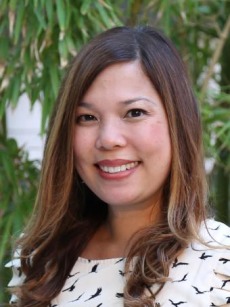
Jacqueline Jean Barrios
· Assistant ProfessorVerifiedUniversity of Arizona · East Asian Studies
Active 1999–2025
About
Dr. Jacqueline Jean Barrios is an Assistant Professor whose scholarship focuses on urbanism and narrative, with concentrations in the global 19th century, the contemporary Southwest city, and literature. Her current research investigates London-Pacific trans-urban imaginaries—geographies of East Asian Pacific Rim entanglement with the British capital. She specializes in the emerging field of urban humanities, activating stories of place and culture through interdisciplinary, socially engaged projects in partnership with the public humanities. Dr. Barrios is the founder of LitLabs, a research hub that fuses site-specific research with the interpretation of literary texts to document and uplift community life-worlds. Her upcoming book, Dear Charles Dickens, Love South LA, centers the history and daily life of South LA teens through creative engagements with the nineteenth-century long-form novel. Her recent projects include multimedia translations of Dickens’ David Copperfield, a digital film festival inspired by Frances E. W. Harper’s Iola Leroy, and various curated exhibitions on urban histories, literature, and spatial design methods across multiple platforms. At the University of Arizona, she is a core faculty member for the minor in Asian Pacific American Studies, a Faculty-in-Residence at the Asian Pacific American Student Affairs, and a founding member of the APA Faculty Network. Dr. Barrios holds a PhD in English from UCLA, along with master's degrees from UCLA and UC Irvine, and a BA from UC Berkeley. She has extensive experience as a public-school teacher in South Los Angeles and is actively engaged in creative place-keeping initiatives around Tucson’s historic neighborhoods.
Research topics
- Sociology
- Computer Science
- Political Science
- History
- Art
- Literature
- Advertising
- Chemistry
- Law
- Mathematics education
- Psychology
- Visual arts
- Library science
- Business
- Art history
- Public relations
Selected publications
Converging Place: Urban Humanities and the Asian Century
Verge Studies in Global Asias · 2025-08-12
article1st authorCorrespondingRoutledge eBooks · 2024 · 1 citations
1st authorCorresponding- Computer Science
- Business
- Computer Science
This chapter considers three publicly engaged humanities projects connected to the Department of Public & Applied Humanities at the University of Arizona: LitLabs, Drag Story Hour, and the Learning Games Initiative Research Archive. The projects serve as case studies for a discussion of how publicly engaged humanities scholarship produces multiple meanings for those within and beyond academia, meanings that can be leveraged as different currencies at specific moments and over time. The chapter emphasizes the concept of strategic legibility, and explores the opportunities and challenges for thinking through publicly engaged humanities work as part of the everyday humanities experience in both higher education and community contexts.
Public humanities. · 2024 · 2 citations
Senior authorCorresponding- Sociology
- Political Science
- Sociology
Abstract How do we do public scholarship? It might seem like a simple question, but as anyone who has attempted to experiment with academic norms—let alone work collaboratively in and through institutional regulations, cultural expectations, and diverse personalities—is well aware, things get complicated quickly. As scholars, practitioners, and educators in the public humanities, the authors offer a set of sticky and thorny questions that are both theoretically minded and practice oriented, as possibilities to consider throughout the process of working on public projects or with community partners. Questions are grouped thematically—Framing, Planning, Partnerships, Institutions, Tools, Outputs and Forms, Documentation, Evaluation and Reflection—though are not meant to be exhaustive or prescriptive. In so doing, the essay insists that public scholarship not be codified into a clearly-defined discipline, but rather acknowledged as both an always already present practice for many scholars and in a constant state of emergence as a field. To that end, the authors also invite direct engagement with these questions, both inside and outside of the space of the text, encouraging readers to generate and share their own questions as well.
Novel Wayfinding: LitLabs and the Activism of Place
Victorian Literature and Culture · 2023-01-01 · 2 citations
articleOpen access1st authorCorrespondingIf advanced high school English classrooms remain some of the few spaces where young people, especially young people of color, might read the Victorian novel, what opportunities for political work might we expect, innovate, demand from those encounters? Drawing from experiences directing LitLabs, immersive, site-specific, design-based approaches to studying literature with South LA teens, the author argues for expanding the geographies literary works reference to include readers’ embodiment in place so that Victorian studies can strengthen and nurture a sense of place for readers often displaced by engagements with the Western literary canon. The essay traces the conflicted, but rewarding, processes for reading literature with an agenda for placekeeping, as one avenue for producing a self-affirming communal consciousness among readers as users of urban space. The essay turns to David Copperfield , where a typical mode of individualized, absorptive reading is contrasted to LitLabs’ model of “emplaced reading” through its adaptations of a core urban humanities “fused practice” of thick-mapping.
Who Is the We in Diaspora? Liner Notes from the Future
Amerasia Journal · 2023-05-04
articleSenior author"Who Is the We in Diaspora?" is episode2, season two of Digital Salon, an experimental podcast begun at the onset of the COVID-19 pandemic. Produced by coauthor Jonathan Jae-an Crisman, the "DJ," it meditates on the Atlanta shootings of six Asian spa workers on March6 2021. The transcript of this episode is presented anew, paired with "liner notes" that are a collaboration between the DJ and his "critical listener," Jacqueline Barrios, coauthor of this piece and co-producer of Digital Salon, through textual "accompaniments" on the episode and its afterlife to stage the work's claim to its own futurity.
Teaching Nineteenth-Century Novels to Today's Teens
Dickens Studies Annual · 2021 · 1 citations
- Literature
- History
- Art
ABSTRACT A survey of AP English Literature and AP English Language exams administered over the past two decades reveals that nineteenth-century British literature—especially novels of this era—is underrepresented compared to texts from other literary historical periods. At the same time, a range of recent or relatively recent fiction, television shows, and film depicts teenagers embracing Victorian texts, particularly the novels of George Eliot. This unexpected enthusiasm for literature published two centuries ago, however, is even more evident in high school English classes today. This article includes six accounts of the successes that secondary school English teachers have had in motivating their students to read nineteenth-century fiction that seemed destined to gather dust on the shelves of their schools' bookrooms.
City analog: scavenging sonic archives and urban pedagogy
Review of Communication · 2020 · 4 citations
1st authorCorresponding- Sociology
- Sociology
- Visual arts
In this essay, we describe a pedagogy for teaching and studying literature and cities through the embodiment of an urban sound scavenger. Extending Walter Benjamin’s figure of the ragpicker to poetically assemble disparate urban imaginaries, we explore how two linked teaching projects set in Los Angeles, CA, demonstrate listening bodies coconstituting both literary texts and urban environments.
Push the Envelope: An Alternative to Testing and the Teaching of Emily Dickinson’s Manuscripts
2018-01-01
book-chapter1st authorCorrespondingPrejuicios y Estigmas en el Aula de Preescolar
Educere: Revista Venezolana de Educación · 1999-01-01 · 1 citations
articleOpen access1st authorCorrespondingPatients with cancer often show impaired immune functions; however, the basis of this suppression is still not understood. In several experimental systems, human T-cells with receptors for Fc of immunoglobulin G may function as suppressors, and those with receptors for Fc of immunoglobulin M may function as helpers. Peripheral blood as well as tumor tissue infiltrates were examined for proportions and numbers of T gamma, T mu, or Ia-positive T-cells. Forty-five untreated patients with solid tumors and 24 patients with lymphomas were studied. An increase in the percentage of peripheral blood T gamma cells (p < 0.001) and a decrease in T mu cells (p < 0.0005) were recorded in all tumor patients when compared with 30 normal controls. Percentages and absolute numbers of peripheral blood Ia-positive T-cells were decreased (p < 0.001 and < 0.00001) in solid-tumor patients; by contrast, the proportion of peripheral blood Ia-positive T-cells was elevated (p < 0.005) in lymphoma subjects. Studies of cancer tissues from 46 untreated patients using immunofluorescence and mouse hybridoma antibody specific for T-cells showed that tumor lymphocytic infiltrates were composed mainly of T-cells. Double staining with fluorescein-conjugated specific anti-T gamma and Ia-positive T-cells within solid-tumor lymphoid infiltrates. A comparison of peripheral blood and tumor lymphocyte T-cell profiles revealed that, in some patients, low proportions of Ia-positive T-cells in blood were paralleled by a high percentage of such cells in tumor lymphoid infiltrates.
Frequent coauthors
- 2 shared
Harris Kornstein
University of Arizona
- 1 shared
Ken S. McAllister
- 1 shared
Vincent A. Lankewish
- 1 shared
Lissette Lopez Szwydky
University of Arkansas at Fayetteville
- 1 shared
Michelle Boswell
- 1 shared
Jonathan Jae-an Crisman
University of Arizona
- 1 shared
Geoffrey Schramm
- 1 shared
Judd Ethan Ruggill
Arizona State University
- Resume-aware match score
- Save to shortlist
- AI-drafted outreach
See your match with Jacqueline Jean Barrios
PhdFit ranks faculty by your research interests, methods, and publications — grounded in their actual work, not templates.
- Free to start
- No credit card
- 30-second signup