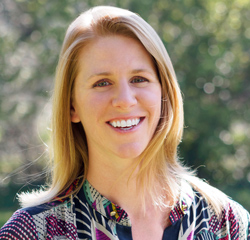
Helen Bateup
· Associate Professor of Molecular TherapeuticsUniversity of California, Berkeley · Biological Sciences
Active 2002–2024
About
Helen Bateup is an Associate Professor of Molecular Therapeutics at the University of California, Berkeley. She is part of the Department of Molecular and Cell Biology and conducts research in the field of molecular therapeutics. Her laboratory is located at 291 Weill Hall, Berkeley, CA, and she can be contacted via email at bateup@berkeley.edu or by phone at (510) 664-4009. Her research focuses on understanding molecular mechanisms relevant to therapeutic development, contributing to advancements in molecular and cell biology.
Research topics
- Biology
- Neuroscience
- Computer Science
- Computational biology
- Virology
- Genetics
- Geography
- Cell biology
- Cartography
- Zoology
- Immunology
- Medicine
- Anatomy
- Environmental health
Selected publications
A nomenclature consensus for nervous system organoids and assembloids
Nature · 2022 · 283 citations
- Computer Science
- Computational biology
- Biology
A multimodal cell census and atlas of the mammalian primary motor cortex
Nature · 2021 · 564 citations
- Neuroscience
- Biology
- Computational biology
. First, our study reveals a unified molecular genetic landscape of cortical cell types that integrates their transcriptome, open chromatin and DNA methylation maps. Second, cross-species analysis achieves a consensus taxonomy of transcriptomic types and their hierarchical organization that is conserved from mouse to marmoset and human. Third, in situ single-cell transcriptomics provides a spatially resolved cell-type atlas of the motor cortex. Fourth, cross-modal analysis provides compelling evidence for the transcriptomic, epigenomic and gene regulatory basis of neuronal phenotypes such as their physiological and anatomical properties, demonstrating the biological validity and genomic underpinning of neuron types. We further present an extensive genetic toolset for targeting glutamatergic neuron types towards linking their molecular and developmental identity to their circuit function. Together, our results establish a unifying and mechanistic framework of neuronal cell-type organization that integrates multi-layered molecular genetic and spatial information with multi-faceted phenotypic properties.
Interferon-independent STING signaling promotes resistance to HSV-1 in vivo
Nature Communications · 2020 · 171 citations
- Biology
- Cell biology
- Virology
The Stimulator of Interferon Genes (STING) pathway initiates potent immune responses upon recognition of DNA. To initiate signaling, serine 365 (S365) in the C-terminal tail (CTT) of STING is phosphorylated, leading to induction of type I interferons (IFNs). Additionally, evolutionary conserved responses such as autophagy also occur downstream of STING, but their relative importance during in vivo infections remains unclear. Here we report that mice harboring a serine 365-to-alanine (S365A) mutation in STING are unexpectedly resistant to Herpes Simplex Virus (HSV)-1, despite lacking STING-induced type I IFN responses. By contrast, resistance to HSV-1 is abolished in mice lacking the STING CTT, suggesting that the STING CTT initiates protective responses against HSV-1, independently of type I IFNs. Interestingly, we find that STING-induced autophagy is a CTT- and TBK1-dependent but IRF3-independent process that is conserved in the STING S365A mice. Thus, interferon-independent functions of STING mediate STING-dependent antiviral responses in vivo.
Recent grants
The impact of Tsc-mTOR signaling on basal ganglia function
NIH · $1.3M · 2019–2024
The impact of Tsc-mTOR signaling on cells and circuits in the basal ganglia
NIH · $383k · 2017–2019
Elucidating the origins of cortical tuber cells using human brain organoid models of TSC
NIH · $3.5M · 2016–2026
Frequent coauthors
- 83 shared
Dirk Hockemeyer
University of California, Berkeley
- 38 shared
Hanqin Li
Research Network (United States)
- 32 shared
Donald C. Rio
Research Network (United States)
- 29 shared
Khaja Syed
Research Network (United States)
- 29 shared
Oriol Busquets
Albert Einstein College of Medicine
- 29 shared
Frank Soldner
Research Network (United States)
- 26 shared
Luke A. Gilbert
University of California, San Francisco
- 23 shared
Yogendra Verma
University of California, Berkeley
Similar researchers at University of California, Berkeley
- Resume-aware match score
- Save to shortlist
- AI-drafted outreach
See your match with Helen Bateup
PhdFit ranks faculty by your research interests, methods, and publications — grounded in their actual work, not templates.
- Free to start
- No credit card
- 30-second signup