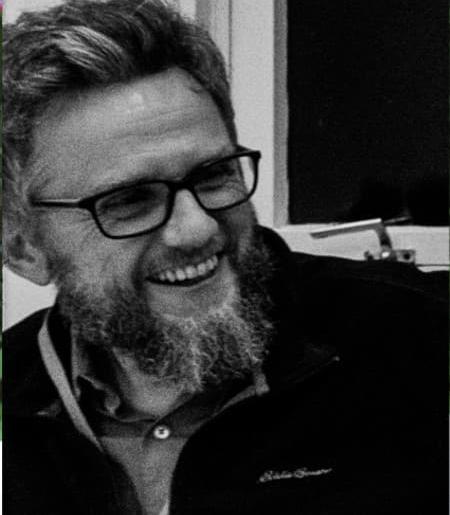
Slawomir Solecki
· ProfessorVerifiedCornell University · Mathematics
Active 1990–2025
About
Slawomir Solecki is a professor in the Department of Mathematics at Cornell University. He earned his Ph.D. in 1995 from the California Institute of Technology. His research is primarily motivated by mathematically interesting objects and phenomena arising in the study of canonical topological spaces and the dynamics of large groups, often equipped with a metric separable, complete topology but lacking Haar measure. His work is informed by mathematical logic, particularly set theory and model theory, and involves essential elements of combinatorics (Ramsey theory), probability theory (concentration of measure), and algebraic topology (fixed point theorems). His contributions include significant research on measure-preserving transformations, ultrafilter methods in Ramsey theory, unitary representations of groups of measurable and continuous functions, and the structure of topological spaces such as the pseudo-arc. Solecki's research has led to numerous publications in prestigious mathematical journals, reflecting his active engagement in advancing the understanding of complex mathematical structures and their properties.
Research topics
- Mathematics
- Data Mining
- Mathematical analysis
- Combinatorics
- Discrete mathematics
- Law
- Pure mathematics
Selected publications
Polish modules over subrings of ℚ
Israel Journal of Mathematics · 2025-11-04
articleSenior authorHomeomorphisms of continua through projective Fraïssé limits
ArXiv.org · 2025-11-03
preprintOpen accessSenior authorWe study homeomorphisms and the homeomorphism groups of compact metric spaces using the automorphism groups of projective Fraïssé limits. In our applications, we investigate the Polish group ${\rm Homeo}(P)$ of all homeomorphisms of the pseudoarc $P$ using the automorphism group ${\rm Aut}(\mathbb{P})$ of the pre-pseudoarc $\mathbb{P}$. Strengthening results from the literature, we show that the diagonal conjugacy action of ${\rm Homeo}(P)$ on ${\rm Homeo}(P)^{\mathbb{N}}$ has a dense orbit. In our second application, we show that there exists a homeomorphism of $P$ that is not conjugate in ${\rm Homeo}(P)$ to an element of ${\rm Aut}(\mathbb{P})$.
Simplicial complexes, stellar moves, and projective amalgamation
ArXiv.org · 2025-03-19
preprintOpen access1st authorCorrespondingWe explore connections between stellar moves on simplicial complexes (these are fundamental operations of combinatorial topology) and projective Fra{ï}ss{é} limits (this is a model theoretic construction with topological applications). We identify a class of simplicial maps that arise from the stellar moves of welding and subdividing. We call these maps weld-division maps. The core of the paper is the proof that the category of weld-division maps fulfills the projective amalgamation property. This gives an example of an amalgamation class that substantially differs from known classes. The weld-division amalgamation class naturally gives rise to a projective Fra{ï}ss{é} class. We compute the canonical limit of this projective Fra{ï}ss{é} class and its canonical quotient space. This computation gives a combinatorial description of the geometric realization of a simplicial complex and an example of a combinatorially defined projective Fra{ï}ss{é} class whose canonical quotient space has topological dimension strictly bigger than $1$. The method of proof of the amalgamation theorem is new. It is not geometric or topological, but rather it consists of combinatorial calculations performed on finite sequences of finite sets and functions among such sequences. Set theoretic nature of the entries of the sequences is crucial to the arguments.
Finite Ramsey theory through category theory
L’Enseignement Mathématique · 2024-04-23 · 2 citations
articleOpen access1st authorCorrespondingWe present a new, category-theoretic point of view on finite Ramsey theory. Our aims are as follows: We also provide some concrete illustrations of the general method.
$κ$-Borel sets, $κ$-Baire spaces, and filtrations between topologies
arXiv (Cornell University) · 2024-07-14
preprintOpen access1st authorCorrespondingFiltrations are certain transfinite sequences of topologies increasing in strength and interpolating between two given topologies $σ$ and $τ$, with $τ$ being stronger than $σ$. We prove general results on stabilization at $τ$ of filtrations interpolating between $σ$ and $τ$. These topological results involve an interplay between $κ$-Borel sets with respect to the topology $σ$ and $κ$-Baireness of the topology $τ$.
Groups without unitary representations, submeasures, and the escape property
arXiv (Cornell University) · 2024-02-17
preprintOpen accessSenior authorWe give new examples of topological groups that do not have non-trivial continuous unitary representations, the so-called exotic groups. We prove that all groups of the form $L^0(ϕ, G)$, where $ϕ$ is a pathological submeasure and $G$ is a topological group, are exotic. This result extends, with a different proof, a theorem of Herer and Christensen on exoticness of $L^0(ϕ,\mathbb{R})$ for $ϕ$ pathological. It follows that every topological group embeds into an exotic one. In our arguments, we introduce the escape property, a geometric condition on a topological group, inspired by the solution to Hilbert's fifth problem and satisfied by all locally compact groups, all non-archimedean groups, and all Banach--Lie groups. Our key result involving the escape property asserts triviality of all continuous homomorphisms from $L^0(ϕ, G)$ to $L^0(μ, H)$, where $ϕ$ is pathological, $μ$ is a measure, $G$ is a topological group, and $H$ is a topological group with the escape property.
Groups without unitary representations, submeasures, and the escape property
Mathematische Annalen · 2024-10-24
articleSenior authorCOMBINATORICA · 2023 · 7 citations
1st authorCorresponding- Mathematics
- Combinatorics
- Discrete mathematics
Logics for Epistemic Actions: Completeness, Decidability, Expressivity
Logics · 2023-06-12
articleOpen accessSenior authorWe build and study dynamic versions of epistemic logic. We study languages parameterized by an action signature that allows one to express epistemic actions such as (truthful) public announcements, completely private announcements to groups of agents, and more. The language L(Σ) is modeled on dynamic logic. Its sentence-building operations include modalities for the execution of programs, and for knowledge and common knowledge. Its program-building operations include action execution, composition, repetition, and choice. We consider two fragments of L(Σ). In L1(Σ), we drop action repetition; in L0(Σ), we also drop common knowledge. We present the syntax and semantics of these languages and sound proof systems for the validities in them. We prove the strong completeness of a logical system for L0(Σ) and the weak completeness of one for L1(Σ). We show the finite model property and, hence, decidability of L1(Σ). We translate L1(Σ) into PDL, obtaining a second proof of decidability. We prove results on expressive power, comparing L1(Σ) with modal logic together with transitive closure operators. We prove that a logical language with operators for private announcements is more expressive than one for public announcements.
Colloquium Mathematicum · 2022-09-26
articleSenior authorWe compute the spectral form of the Koopman representation induced by a natural boolean action of $L^0(\lambda , \mathbb T)$ identified earlier by the authors. Our computation establishes the sharpness of the constraints on spectral forms of Koopman repre
Recent grants
Logic and combinatorics and topology
NSF · $95k · 2017–2017
Dynamics, descriptive set theory, and Ramsey theory
NSF · $237k · 2007–2011
Measurable dynamics of Polish groups and Ramsey theory
NSF · $314k · 2013–2017
Aspects of Polish group dynamics
NSF · $360k · 2023–2026
Ramsey theory, dynamics of Polish groups, and Tukey functions
NSF · $290k · 2010–2014
Frequent coauthors
- 11 shared
Ilijas Farah
Institut za savremenu istoriju
- 5 shared
Stevo Todorčević
University of Toronto
- 5 shared
Alexandru Baltag
University of Amsterdam
- 5 shared
Lawrence S. Moss
Indiana University Bloomington
- 5 shared
Justin Tatch Moore
Cornell University
- 4 shared
Daoud Siniora
- 4 shared
Wiesław Kubiś
- 4 shared
Aristotelis Panagiotopoulos
Awards & honors
- Math professors honored as AMS fellows
- Resume-aware match score
- Save to shortlist
- AI-drafted outreach
See your match with Slawomir Solecki
PhdFit ranks faculty by your research interests, methods, and publications — grounded in their actual work, not templates.
- Free to start
- No credit card
- 30-second signup