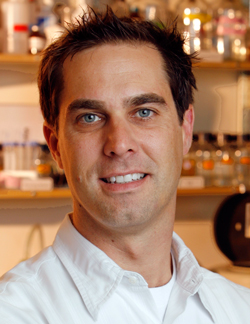
Andrew Dillin
· Howard Hughes Medical Institute Investigator, Professor of Immunology and Molecular MedicineVerifiedUniversity of California, Berkeley · Biological Sciences
Active 1993–2025
About
Andrew Dillin is a Howard Hughes Medical Institute Investigator and a Professor of Immunology and Molecular Medicine at the University of California, Berkeley. His research focuses on molecular and cell biology, with particular emphasis on immunology and molecular medicine. He is associated with the Department of Molecular and Cell Biology at UC Berkeley, where he conducts research and contributes to academic programs. His lab is located at 430E Li Ka Shing Center, and he can be contacted via email at dillin@berkeley.edu or by phone at (510) 664-4951. His work involves exploring fundamental biological processes, and he is actively engaged in advancing scientific understanding within his field.
Research topics
- Biology
- Cell biology
- Computer Science
- Chemistry
- Biochemistry
- Evolutionary biology
- Genetics
Selected publications
Translational regulation in stress biology
Nature Cell Biology · 2025-10-01 · 6 citations
reviewSenior authorAge-related remodeling of the sialoglycans dampens murine CD8 <sup>+</sup> T cell function
Science Advances · 2025-09-26 · 2 citations
articleOpen accessSenior authorCorrespondingGlycans regulate cellular function, yet how aging affects the glycocalyx remains unclear. Here, we investigate changes in immune cell glycocalyx with age and find that α2,6-linked sialic acid, a glycan epitope associated with inhibitory signaling, is down-regulated in T cells from old animals. This reduction is tightly correlated with age-associated accumulation of effector T cells, which have little to no α2,6-linked sialic acid. To understand how α2,6-linked sialic acid affects T cell physiology, we generated a mouse model with T cell–specific deletion of sialyltransferase gene St6gal1 . The lack of α2,6-linked sialic acid leads to reduced responsiveness in naïve T cells, leading to impaired T cell responses against Listeria monocytogenes infection and tumor growth. PD-1 pathway blockade partially restores St6gal1 -deficient T cells’ ability to control tumor growth. These findings suggest that α2,6-linked sialic acid is critical for maintaining long-term T cell responsiveness, and its loss may contribute to decreased T cell function with age.
Cross-Organ Mitochondrial Communication in Stress and Disease
The Annual Review of Pharmacology and Toxicology · 2025-09-22 · 1 citations
reviewOpen accessSenior authorGrowing evidence points to mitochondria as not just the "powerhouse of the cell" but as a major cellular hub for signaling. Mitochondria use signaling pathways to communicate with other organelles within the cell or organs within an organism to regulate stress response, metabolic, immune, and longevity pathways. These communication pathways are carried out by mitokine signaling molecules encompassing metabolites, lipids, proteins, and even whole mitochondrial organelles themselves. In this review, we focus on the communication pathways mitochondria use to communicate between different organs in invertebrates, mammalian models, and humans. We cover the molecular events that trigger communication, the signaling mechanisms themselves, and the impact this communication has on organismal health in the context of stress and disease. Further understanding of cross-organ mitochondrial communication pathways will inform the design of therapeutics that take advantage of their protective effects to treat diseases associated with mitochondrial dysfunction.
Aging is growing up: celebrating the latest research in aging and senescence biology
Genes & Development · 2025-08-01
articleOpen access1st authorCorrespondingWe are perhaps the only species that realizes our own mortality.We see the path to our eventual demise through the process of aging.This knowledge has shaped our cultures, religions, art, and philosophy, as well as our pursuit to understand aging in the hopes of delaying it.For decades, scientists have formulated theories about aging to make hypotheses that could be tested in the laboratory.The biology of aging is one of the most complex processes that exist and is often thought to be intractable.Over the past four decades, considerable advances in the field of aging research have brought new light onto this old question.In model organisms, single gene changes could profoundly change longevity, suggesting that the complexity of aging might not be too intractable.These discoveries have also brought on a fever pitch effort to find drugs to circumvent the aging process in humans.The 89th edition of the Cold Spring Harbor Laboratory Symposium centered itself on aging and one potential culprit: cell senescence, a process through which cells terminally exit the cell cycle and begin to produce numerous inflammatory molecules that accelerate aging.The Symposium is a yearly event that highlights fields that have gained maturity with deep mechanistic insight, such as cancer, brain body physiology, and the genetic code.Aging has finally made its place among these hallmark fields, and the 89th Symposium highlighted leaders of the field,
Quiescent cell re-entry is limited by macroautophagy-induced lysosomal damage
Cell · 2025-04-08 · 21 citations
articleOpen accessSenior authorTo maintain tissue homeostasis, many cells reside in a quiescent state until prompted to divide. The reactivation of quiescent cells is perturbed with aging and may underlie declining tissue homeostasis and resiliency. The unfolded protein response regulators IRE-1 and XBP-1 are required for the reactivation of quiescent cells in developmentally L1-arrested C. elegans. Utilizing a forward genetic screen in C. elegans, we discovered that macroautophagy targets protein aggregates to lysosomes in quiescent cells, leading to lysosome damage. Genetic inhibition of macroautophagy and stimulation of lysosomes via the overexpression of HLH-30 (TFEB/TFE3) synergistically reduces lysosome damage. Damaged lysosomes require IRE-1/XBP-1 for their repair following prolonged L1 arrest. Protein aggregates are also targeted to lysosomes by macroautophagy in quiescent cultured mammalian cells and are associated with lysosome damage. Thus, lysosome damage is a hallmark of quiescent cells, and limiting lysosome damage by restraining macroautophagy can stimulate their reactivation.
The extracellular matrix integrates mitochondrial homeostasis
Cell · 2024-06-27 · 103 citations
articleOpen accessSenior authorAge-related remodeling of the glycocalyx drives T cell exhaustion
bioRxiv (Cold Spring Harbor Laboratory) · 2024-12-09 · 1 citations
preprintOpen accessSenior authorCorrespondingAbstract Cell surface glycans, termed the glycocalyx, are essential regulators of cellular signaling and thus cellular development and functions, but how aging impacts the glycocalyx remains poorly understood. Here, using immune cells as a model system for studying the relationship between aging and glycocalyx remodeling, we show that α2,6-linked sialic acid – a terminal glycan epitope typically associated with inhibitory signaling – becomes downregulated in T cells from older animals. This downregulation is tightly correlated with age-associated accumulation of effector T cells, which are decorated with little to no α2,6-linked sialic acids. T cell aging renders older individuals more vulnerable to infections and cancers. To understand the role of α2,6-linked sialic acids in T cell physiology, we generated a mouse model with T cell-specific deletion of the sialyltransferase gene St6gal1 . The chronic depletion of α2,6-linked sialic acids led to naïve T (T N ) cells expansion in the periphery and premature T cell exhaustion. As a result, these mice were less able to control acute Listeria infection and chronic tumor growth. Blockade of the PD-1 pathway can partially restore the ability of St6gal1 -deficient T cells to control tumor growth. Together, these data suggest that α2,6-linked sialic acids are critical for maintaining long-term T cell responsiveness, and the loss of α2,6-linked sialic acids may directly contribute to age-related T cell exhaustion.
Olfaction regulates peripheral mitophagy and mitochondrial function
Science Advances · 2024-06-21 · 11 citations
articleOpen accessSenior authorCorrespondingThe central nervous system coordinates peripheral cellular stress responses, including the unfolded protein response of the mitochondria (UPR MT ); however, the contexts for which this regulatory capability evolved are unknown. UPR MT is up-regulated upon pathogenic infection and in metabolic flux, and the olfactory nervous system has been shown to regulate pathogen resistance and peripheral metabolic activity. Therefore, we asked whether the olfactory nervous system in Caenorhabditis elegans controls the UPR MT cell nonautonomously. We found that silencing a single inhibitory olfactory neuron pair, AWC, led to robust induction of UPR MT and reduction of oxidative phosphorylation dependent on serotonin signaling and parkin -mediated mitophagy. Further, AWC ablation confers resistance to the pathogenic bacteria Pseudomonas aeruginosa partially dependent on the UPR MT transcription factor atfs-1 and fully dependent on mitophagy machinery. These data illustrate a role for the olfactory nervous system in regulating whole-organism mitochondrial dynamics, perhaps in preparation for postprandial metabolic stress or pathogenic infection.
Central role of the ER proteostasis network in healthy aging
Trends in Cell Biology · 2024-11-14 · 19 citations
reviewSenior authorCell non-autonomous control of autophagy and metabolism by glial cells
iScience · 2024-02-27 · 16 citations
articleOpen accessSenior authorin intestinal cells via neuropeptides. Autophagy, a key regulator of metabolism and aging, has been described as a cell autonomous process. Surprisingly, we find that glial XBP-1s enhances proteostasis and longevity by cell non-autonomously reprogramming organismal lipid metabolism and activating autophagy. Glial XBP-1s regulates the activation of another transcription factor, HLH-30/TFEB, in the intestine. HLH-30 activates intestinal autophagy, increases intestinal lipid catabolism, and upregulates a robust transcriptional program. Our study reveals a novel role for glia in regulating peripheral lipid metabolism, autophagy, and organellar health through peripheral activation of HLH-30 and autophagy.
Recent grants
NIH · $1.5M · 2019
The Collapse of Proteostasis during Aging is Mediated by Cytoskeletal Actin Functions
NIH · $1.3M · 2017–2024
Neuroendocrine Coordination of Mitochondrial Stress Signaling and Proteostasis
NIH · $4.6M · 2012–2026
NIH · $1.9M · 2011
NIH · $2.4M · 2015
Frequent coauthors
- 83 shared
Jenni Durieux
University of California, Berkeley
- 82 shared
Phillip A. Frankino
Howard Hughes Medical Institute
- 75 shared
Ryo Higuchi‐Sanabria
University of Southern California
- 54 shared
Raz Bar‐Ziv
Howard Hughes Medical Institute
- 47 shared
Holly K. Gildea
University of California, Berkeley
- 44 shared
Sarah U. Tronnes
- 43 shared
Milos S. Simic
University of California, San Francisco
- 42 shared
Ashley E. Frakes
Howard Hughes Medical Institute
- Resume-aware match score
- Save to shortlist
- AI-drafted outreach
See your match with Andrew Dillin
PhdFit ranks faculty by your research interests, methods, and publications — grounded in their actual work, not templates.
- Free to start
- No credit card
- 30-second signup