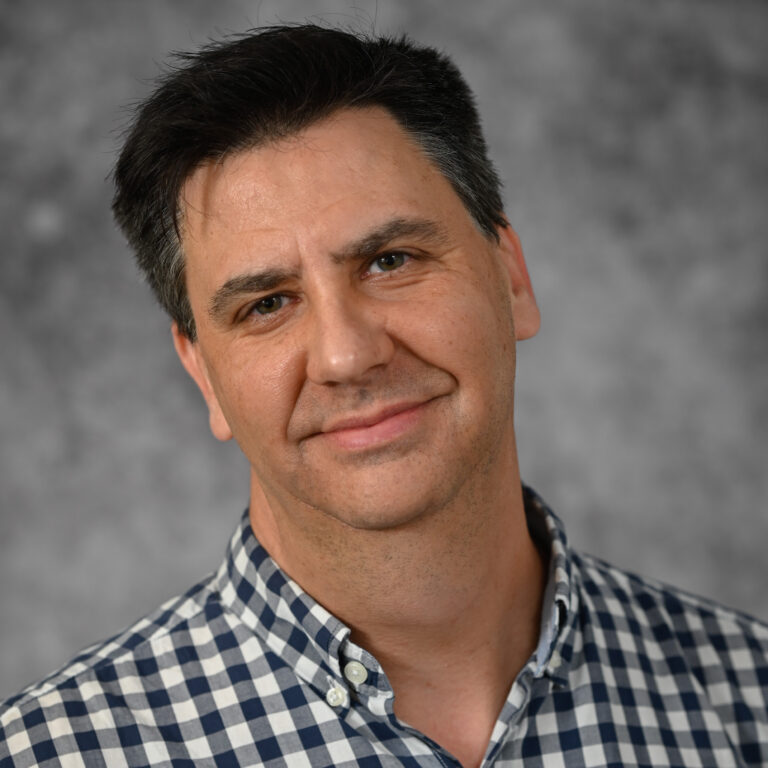
Timothy Stinson
VerifiedNorth Carolina State University · English
Active 2008–2026
About
Timothy Stinson is an Associate Professor of English and a University Faculty Scholar at North Carolina State University. He earned his PhD in English Language and Literature from the University of Virginia in 2006 and completed a postdoctoral fellowship at Johns Hopkins University before joining NC State in 2008. His research interests include Middle English poetry, codicology, the history of the book, and digital humanities, with a particular focus on the application of digital technologies to medieval studies. Stinson is a leader in digital humanities initiatives, co-founding and directing the Medieval Electronic Scholarly Alliance, and serving as director of the Society for Early English and Norse Electronic Texts (SEENET). He has received numerous awards and grants, including support from the Andrew W. Mellon Foundation, the National Endowment for the Humanities, and the National Humanities Center, among others. His work has been published in leading journals in medieval studies and book history, and he has collaborated with colleagues in biological sciences to analyze DNA in medieval parchment manuscripts, which has garnered international media coverage. A dedicated educator, Stinson has developed curricula in medieval English literature, history of the book, and digital humanities, and has been recognized with the NC State Outstanding Teacher Award.
Research topics
- Computer Science
- Computational biology
- Biology
- Artificial Intelligence
- Ecology
- Archaeology
- Evolutionary biology
- Database
- Chemistry
- Chromatography
- Geography
- Linguistics
- Computer vision
- Literature
- Epistemology
- Philosophy
- Art
Selected publications
Adventures in the Animal Archive: New Techniques for the Genetic Analysis of Parchment Manuscripts
Manuscript studies · 2026-03-01
articleOpen access1st authorCorrespondingAbstract: This article reports the findings of a recent interdisciplinary project to extract and analyze the genetic information contained in parchment manuscripts. We discuss the genetic analysis of ninety-one parchment manuscripts held by the David M. Rubenstein Rare Book & Manuscript Library at Duke University. Manuscripts tested ranged in date from the eighth through the twentieth centuries and originated in a wide geographical area spanning England, much of Europe, the Middle East, and northeast Africa. The article comprises an overview of the project and its aims, a description of methods and outcomes, and a discussion of the implications and promises of such research for a variety of humanistic and scientific fields.
Evaluating non-destructive sampling methods of parchment for genomic sequencing
npj Heritage Science · 2025-06-05 · 1 citations
articleOpen accessAbstract Parchment is a writing surface derived from animal skins. While sequencing the mitochondrial genome has been used to identify the parchment animal source, non-destructive sampling methods are pivotal because of their unique and irreplaceable nature. In this study, four different parchments were utilized to evaluate three non-destructive sampling methods: brushing, gecko tape, and forensic fibre lifts. For all methods, the impact of a 30-second eraser pre-cleaning to remove surface contaminants was assessed. After sample collection, total DNA was isolated, the mitochondrial genome enriched and sequenced using Illumina chemistry, and sequencing reads processed through a bioinformatics pipeline. Across all four documents, brushing with an eraser pre-cleaning was the optimal method, with an average of 98% of the mitochondrial genome recovered. Regardless of sampling method, collection after a 30-second eraser pre-cleaning resulted in higher source species DNA sequences. Non-destructive sampling will preserve documents with historical significance while allowing for genetic analysis.
PLoS ONE · 2024 · 5 citations
- Computer Science
- Evolutionary biology
- Computational biology
Parchment, the skins of animals prepared for use as writing surfaces, offers a valuable source of genetic information. Many have clearly defined provenance, allowing for the genetic findings to be evaluated in temporal and spatial context. While these documents can yield evidence of the animal sources, the DNA contained within these aged skins is often damaged and fragmented. Previously, genetic studies targeting parchment have used destructive sampling techniques and so the development and validation of non-destructive sampling methods would expand opportunities and facilitate testing of more precious documents, especially those with historical significance. Here we present genetic data obtained by non-destructive sampling of eight parchments spanning the 15th century to the modern day. We define a workflow for enriching the mitochondrial genome (mtGenome), generating next-generation sequencing reads to permit species identification, and providing interpretation guidance. Using sample replication, comparisons to destructively sampled controls, and by establishing authentication criteria, we were able to confidently assign full/near full mtGenome sequences to 56.3% of non-destructively sampled parchments, each with greater than 90% of the mtGenome reference covered. Six of eight parchments passed all four established thresholds with at least one non-destructive sample, highlighting promise for future studies.
“Al for Some Conclusioun”: Trinitarian Structure and the Final Stanza of Chaucer’s <i>Troilus</i>
The Chaucer Review · 2023 · 9 citations
1st authorCorresponding- Computer Science
- Literature
- Philosophy
ABSTRACT Critics have been sharply divided both on whether the ending of Troilus and Criseyde is an artistic mishap or a key to the meaning of the larger poem and whether it signals agreement with or a departure from Dante. This article argues that the model of the Trinity employed by Dante also has structural meaning for Troilus, but that theending of Troilus clearly signals a worldview that departs from that found in the Commedia. It further demonstrates that the structure of the poem is divided into thirds, even as it is divided in half, and even as it is a cohesive whole, a feature that has important implications for interpretative cruxes surrounding the poem.
How to get your goat: automated identification of species from MALDI-ToF spectra
Bioinformatics · 2020 · 27 citations
- Computer Science
- Artificial Intelligence
- Computer Science
MOTIVATION: Classification of archaeological animal samples is commonly achieved via manual examination of matrix-assisted laser desorption/ionization time-of-flight (MALDI-ToF) spectra. This is a time-consuming process which requires significant training and which does not produce a measure of confidence in the classification. We present a new, automated method for arriving at a classification of a MALDI-ToF sample, provided the collagen sequences for each candidate species are available. The approach derives a set of peptide masses from the sequence data for comparison with the sample data, which is carried out by cross-correlation. A novel way of combining evidence from multiple marker peptides is used to interpret the raw alignments and arrive at a classification with an associated confidence measure. RESULTS: To illustrate the efficacy of the approach, we tested the new method with a previously published classification of parchment folia from a copy of the Gospel of Luke, produced around 1120 C.E. by scribes at St Augustine's Abbey in Canterbury, UK. In total, 80 of the 81 samples were given identical classifications by both methods. In addition, the new method gives a quantifiable level of confidence in each classification. AVAILABILITY AND IMPLEMENTATION: The software can be found at https://github.com/bioarch-sjh/bacollite, and can be installed in R using devtools. SUPPLEMENTARY INFORMATION: Supplementary data are available at Bioinformatics online.
BigDIVA and Networked Browsing: A Case for Generous Interfacing and Joyous Searching
Digital humanities quarterly · 2018-07-03
articleOpen accessThis paper examines the potentialities of networked browsing, a form of faceted searching that visualizes digital archives in the form of a force-directed network graph. Using BigDIVA.org as an example of networked browsing, this paper presents the results of a small usability study that compared how participants (N = 8) engaged with BigDIVA’s networked browsing in comparison to use of a search engine such as Google. In doing so, we situate our study within performative conceptualizations of human-computer interfaces in order to explore the potential becomings when human and nonhuman machinic component are entangled together. Based on the observations from our usability study, we argue that networked browsing is suggestive of Whitelaw’s (2015) generous interfacing that emphasizes browsing as a tool for exploring relationships between nodes in archives, as well as Shneiderman’s (1996) joyous experience for interfacing with the web.
Chapter 7. OF DINOSAURS AND DWARVES: MOVING ON FROM MOUVANCE IN DIGITAL EDITIONS
Amsterdam University Press eBooks · 2018-12-31
book-chapter1st authorCorrespondingOf Dinosaurs and Dwarves: Moving on from Mouvance in Digital Editions
2018-10-31
other1st authorCorrespondingSTUDIES OF TRANSLATIO typically focus on transformations of texts that occurred in the context of medieval practices of copying and authorship, including compiling, parsing, and “translating” languages, as well as on authorial efforts to convey auctoritas. In recent centuries, however, most critical interactions with medieval literary works and their authors have been experienced in and mediated through printed representations of these texts. In creating and using print texts, whether critical editions or massmarket paperbacks, editors and critics have introduced new acts of translatio that have remained fairly invisible to the critical lens. Such print-era practices as typography, modernized spelling, footnotes, glossaries, a focus on authorial intention, and a preference for a single, authoritative text rather than the simultaneous presence of competing witnesses, have profoundly shaped conceptions of medieval authorship and textuality and coloured the way we understand, read, and teach medieval literature.
Of Dinosaurs and Dwarves: Moving on from Mouvance in Digital Editions
2018-01-01
other1st authorCorrespondingStudies Of Translatio typically focus on transformations of texts that occurred in the context of medieval practices of copying and authorship, including compiling, parsing, and “translating” languages, as well as on authorial efforts to convey auctoritas. In recent centuries, however, most critical
(In)Completeness in Middle English Literature
ScholarlyCommons (University of Pennsylvania) · 2017-06-06
article1st authorCorrespondingThis essay considers the ways in which incompleteness – the de facto status of virtually all of Middle English literature – is both a type of failure and a special characteristic of this literature. The discussion is framed around the incomplete Cook's Tale from Chaucer's Canterbury Tales and the Tale of Gamelyn, a romance frequently misattributed to Chaucer that circulated with the Canterbury Tales, often to fill the gap left by the incomplete Cook's Tale.
Frequent coauthors
- 2 shared
Sarah Fiddyment
University of Cambridge
- 2 shared
Matthew J. Collins
University of Cambridge
- 1 shared
Kelly A. Meiklejohn
North Carolina State University
- 1 shared
Jim Knowles
- 1 shared
Melissa Scheible
North Carolina State University
- 1 shared
Benjamin J. Callahan
North Carolina State University
- 1 shared
Matthew Evan Davis
University of California, Davis
- 1 shared
Simon Hickinbotham
Labs
Research and EngagementPI
Awards & honors
- University Faculty Scholar at North Carolina State Universit…
- CHASS Research Award
- Research and Innovation Seed Funding Awards (two awards)
- Non-Laboratory Scholarship/Research Award
- NEH Collaborative Research program award
- Resume-aware match score
- Save to shortlist
- AI-drafted outreach
See your match with Timothy Stinson
PhdFit ranks faculty by your research interests, methods, and publications — grounded in their actual work, not templates.
- Free to start
- No credit card
- 30-second signup