
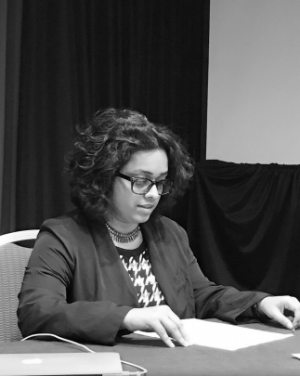
Aparna Parikh
Pennsylvania State University · Korean
Active 1991–2026
Academic metrics are sourced from OpenAlex and public funding records; values may differ from Google Scholar.
About
Aparna Parikh is a feminist urban geographer whose work focuses on gendered dimensions of urban environmental belonging in South Asian cities. Her ongoing projects in Mumbai include feminist investigations of indigenous urban worlds and housing challenges in light of authoritarian vegetarianism in India. She is involved in collaborative projects on urban climates and critical visual methods. Parikh’s research explores issues related to urban margins, gendered environments, and the politics of urban space, with a particular emphasis on Mumbai, India. Her work has been published in various academic journals including Gender, Place and Culture, cultural geographies, ACME: An International Journal for Critical Geographies, Environment and Planning C, GeoHumanities, and Environment and Planning D. She has also contributed chapters to edited volumes such as The Routledge Companion to Modernity, Space and Gender, and Suffragette City: Women, Politics, and the Built Environment.
Research topics
- Thermodynamics
- Biochemistry
- Biology
- Chemistry
- Biophysics
- Materials science
- Organic chemistry
Selected publications
Phytobiomes Journal · 2020-01-01 · 67 citations
articleOpen accessTo study the impact of lateral variation in surface topography on the microbial colonization of plant leaves, we used a two-step casting process to generate topomimetic “replicasts” in polydimethylsiloxane which faithfully resembled leaf surface topography at submicrometer scale. This process revealed that the shape and size of the phyllotelma—the collective body of standing water on a leaf surface—was a function of wetting method and presence of surface features, in particular leaf veins. The u…
Kinetic control of shape deformations and membrane phase separation inside giant vesicles
Nature Chemistry · 2023-07-06 · 61 citations
articleSenior authorCorrespondingCellular Uptake of Phase‐Separating Peptide Coacervates (Adv. Sci. 42/2024)
Advanced Science · 2024-11-01 · 1 citations
articleOpen accessPeptide Coacervates for Intracellular Therapeutic Delivery Peptide coacervate microdroplets (CMs) are promising vectors to deliver a broad range of macromolecular therapeutics inside cells, but the mechanism by which CMs enter cells has remained unknown to date. In article number 2402652, Ali Miserez and co‐workers demonstrate that CMs enter the cell through a mechanism reminiscent of macropinocytosis and phagocytosis. The cover image is a scanning electron microscope (SEM) image of CMs captured…
CHASE: Competing Hypotheses for Ambiguity-Aware Selective Prediction
arXiv (Cornell University) · 2026-05-02
preprintOpen accessStandard selective prediction methods typically estimate uncertainty from the output of a single predictive branch. While effective for general uncertainty estimation, these approaches often struggle under partial observability, where local temporal evidence can be contradictory and standard confidence scores become misleading. We introduce CHASE (Competing Hypotheses for Ambiguity-Aware Selective Prediction), a selective prediction framework that explicitly compares structured temporal explanat…
CHASE: Competing Hypotheses for Ambiguity-Aware Selective Prediction
ArXiv.org · 2026-05-02
articleOpen accessStandard selective prediction methods typically estimate uncertainty from the output of a single predictive branch. While effective for general uncertainty estimation, these approaches often struggle under partial observability, where local temporal evidence can be contradictory and standard confidence scores become misleading. We introduce CHASE (Competing Hypotheses for Ambiguity-Aware Selective Prediction), a selective prediction framework that explicitly compares structured temporal explanat…
Recent grants
Myelin Figures: Non-equilibrium organization of amphiphiles induced by hydration
NSF · $491k · 2021–2025
Collaborative Research: Isothermal Phase Transition in Lipid Vesicles and Swell-Burst Cycles
NSF · $210k · 2016–2020
Shaping membrane biointerfaces: shape-adaptation in giant vesicles powered by osmotic stresses
NSF · $350k · 2018–2023
Frequent coauthors
- 85 shared
James C. S. Ho
Nanyang Technological University
- 52 shared
Staffan Kjelleberg
Singapore Centre for Environmental Life Sciences Engineering
- 50 shared
Andrew P. Shreve
University of New Mexico
- 48 shared
Mark A. Schembri
UK Health Security Agency
- 45 shared
Bo Liedberg
Nanyang Technological University
- 39 shared
Chanel K. Yee
Amgen (United States)
- 36 shared
Binu Kundukad
Nanyang Technological University
- 36 shared
Anton Y. Peleg
The Alfred Hospital
Education
- 1994
Ph.D (Polymer Science), Materials Science & Engineering
Pennsylvania State University
- 1987
B. Chem. Eng., University Department of Chemical Technology (UDCT)
University of Bombay
Similar researchers at Pennsylvania State University
- Resume-aware match score
- Save to shortlist
- AI-drafted outreach
See your match with Aparna Parikh
PhdFit ranks faculty by your research interests, methods, and publications — grounded in their actual work, not templates.
- Free to start
- No credit card
- 30-second signup