
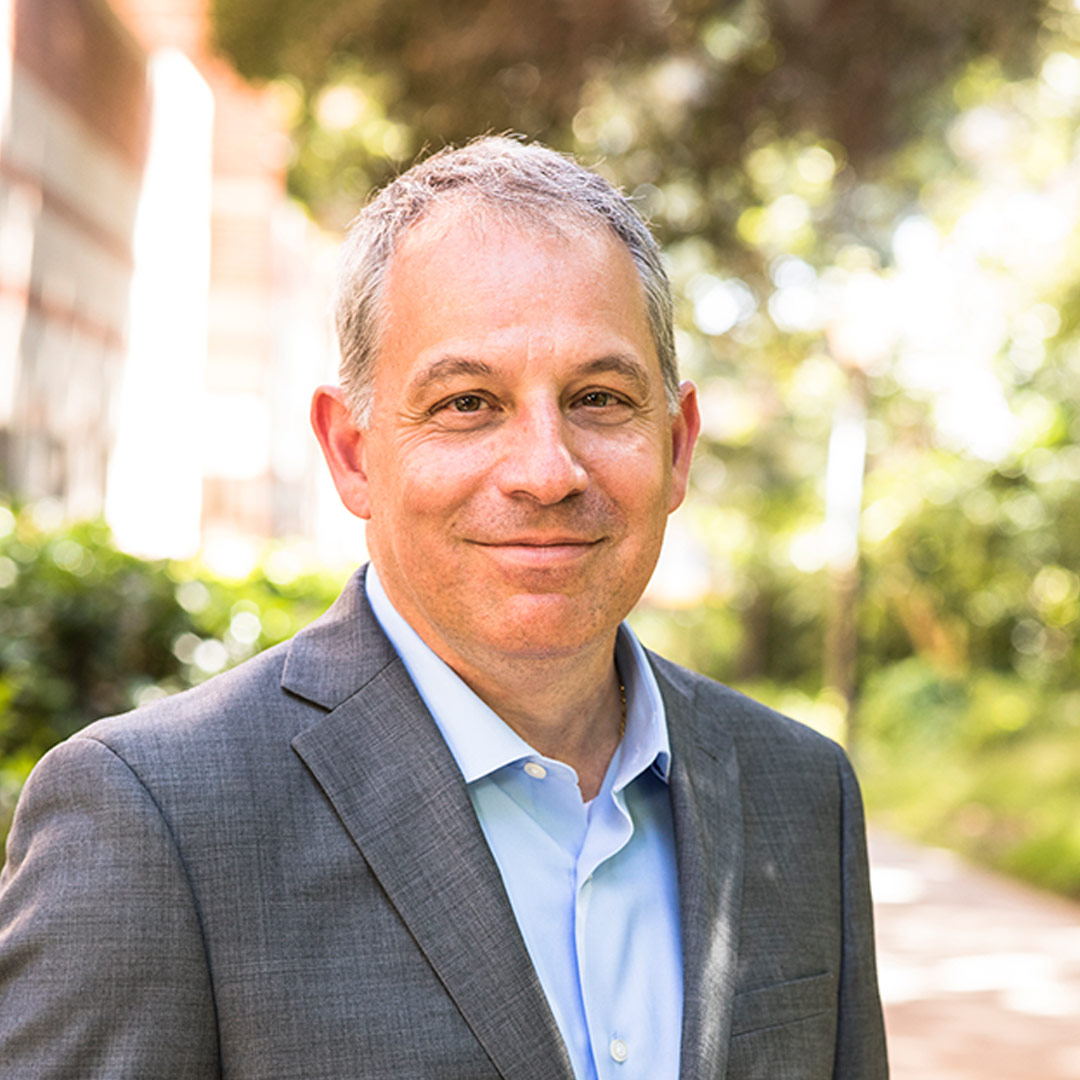
Antonio E. Bernardo
· John E. Anderson Chair in ManagementUniversity of California, Los Angeles · Accounting
Active 1996–2019
Academic metrics are sourced from OpenAlex and public funding records; values may differ from Google Scholar.
About
Antonio E. Bernardo is the John E. Anderson Chair in Management at UCLA Anderson. His research spans various areas of corporate finance, with recent work focusing on bailouts, providing policy recommendations for lawmakers designing bailouts for distressed firms. His current research also explores optimal capital structures, specifically how decisions regarding capital structure are influenced by the debt choices of other firms within the industry. Bernardo has been teaching finance at UCLA Anderson for more than 20 years, contributing to the academic community through his expertise in corporate finance, economy, management, operations, and strategy.
Research topics
- Business
- Economics
- Microeconomics
- Finance
- Monetary economics
Selected publications
Liquidity and Financial Market Runs
The Quarterly Journal of Economics · 2004-02-01 · 277 citations
article1st authorCorrespondingWe model a run on a financial market, in which each risk-neutral investor fears having to liquidate shares after a run, but before prices can recover back to fundamental values. To avoid having to possibly liquidate shares at the marginal postrun price—in which case the risk-averse market-making sector will already hold a lot of share inventory and thus be more reluctant to absorb additional shares—each investor may prefer selling today at the average in-run price, thereby causing the run itself…
Capital Budgeting in Multidivision Firms: Information, Agency, and Incentives
Review of Financial Studies · 2003-10-15 · 92 citations
article1st authorCorrespondingWe examine optimal capital allocation and managerial compensation in a firm with two investment projects (divisions) each run by a risk-neutral manager who can provide (i) (unverifiable) information about project quality and (ii) (unverifiable) access to value-enhancing, but privately costly resources. The optimal managerial compensation contract offers greater performance pay and a lower salary when managers report that their project is higher quality. The firm generally underinvests in capital…
National Bureau of Economic Research · 2002-10-01 · 22 citations
reportOpen access1st authorCorrespondingOur paper offers a minimalist model of a run on a financial market. The prime ingredient is that each risk-neutral investor fears having to liquidate after a run, but before prices can recover back to fundamental values. During the urn, only the risk-averse market-making sector is willing to absorb shares. To avoid having to possibly liquidate shares at the marginal post-run price-in which case the market-making sector will already hold a lot of share inventory and thus be more reluctant to abso…
Journal of applied corporate finance · 2012-09-01 · 21 citations
article1st authorCorrespondingFinding the appropriate discount rate, or cost of capital, for evaluating investment projects requires an accurate estimate of project risk. This can be challenging because project risk cannot be estimated directly using the CAPM, but must instead be inferred from a set of traded securities, typically the equity betas of comparable firms in the same industry. These equity betas are then unlevered to undo the effect of comparable companies' financial leverage and obtain estimates of “asset” betas…
The Journal of Law and Economics · 2016-02-01 · 7 citations
article1st authorCorrespondingAlthough common economic wisdom suggests that government bailouts are inefficient because they reduce incentives to avoid failure and induce excessive entry by marginal firms, in practice bailouts are difficult to avoid for systemically significant enterprises. Recent experience suggests that bailouts also induce litigation from shareholders and managers complaining about expropriation and wrongful termination by the government. Our model shows how governments can design tax-financed corporate b…
Frequent coauthors
- 107 shared
Ivo Welch
- 16 shared
Jiang Luo
- 11 shared
Eric L. Talley
European Corporate Governance Institute
- 10 shared
Hongbin Cai
Weichai Power (China)
- 7 shared
Alex Fabisiak
- 3 shared
Bhagwan Chowdhry
Indian School of Business
- 2 shared
Olivier Ledoit
- 2 shared
Bradford Cornell
Similar researchers at University of California, Los Angeles
- Resume-aware match score
- Save to shortlist
- AI-drafted outreach
See your match with Antonio E. Bernardo
PhdFit ranks faculty by your research interests, methods, and publications — grounded in their actual work, not templates.
- Free to start
- No credit card
- 30-second signup