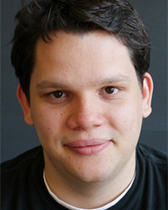
Antonio Auffinger
· ProfessorDepartment ChairVerifiedNorthwestern University · Mathematics
Active 2007–2025
About
Antonio Auffinger is a professor at Northwestern University's Department of Mathematics, specializing in probability theory with a focus on spin glasses, first passage percolation, and random matrices. He is actively involved in research supported by NSF grants and the Simons Foundation, contributing to the understanding of complex stochastic processes and high-dimensional random functions. Auffinger serves as an associate editor for prominent journals including the Annals of Probability, Bulletin of the AMS, and the Journal of Statistical Physics. His work encompasses the study of replica symmetry breaking, energy landscapes in spin glass models, and the complexity of Gaussian random fields, reflecting a deep engagement with both theoretical and applied aspects of probability and statistical physics. Additionally, he has played a significant role in organizing conferences and workshops that advance research in random dynamical systems, spin glass theory, and related probabilistic models.
Research topics
- Mathematics
- Computer Science
- Thermodynamics
- Physics
- Combinatorics
- Linguistics
- Philosophy
- Classical mechanics
- Library science
- Geometry
- Condensed matter physics
- Statistical physics
Selected publications
On the time constant of high dimensional first passage percolation, revisited
Electronic Journal of Probability · 2025-01-01
articleOpen access1st authorCorrespondingThe Spherical $$p+s$$ Spin Glass at Zero Temperature
Communications in Mathematical Physics · 2025-11-20
articleOpen access1st authorCorrespondingAbstract We determine the structure of the Parisi measure at zero temperature for the spherical $$p+s$$ <mml:math xmlns:mml="http://www.w3.org/1998/Math/MathML"> <mml:mrow> <mml:mi>p</mml:mi> <mml:mo>+</mml:mo> <mml:mi>s</mml:mi> </mml:mrow> </mml:math> spin glass model. We show that depending on the values of p and s , four scenarios may emerge, including the existence of 1-FRSB and 2-FRSB phases as predicted by Crisanti and Leuzzi (Private communication, 2022, Phys Rev B 73:014412, 2006). We also provide consequences for the model at low temperatures.
On the Discontinuous Breaking of Replica Symmetry and Shattering in Mean-Field Spin Glasses
ArXiv.org · 2025-06-02
preprintOpen access1st authorCorrespondingWe show that in mean-field spin glasses, a discontinuous breaking of replica symmetry at the critical inverse temperature $β_c$ implies the existence of an intermediate shattered phase. This confirms a prediction from physics regarding the nature of random first order phase transitions. On the other hand, we give an example of a spherical spin glass which exhibits shattering, yet the transition is continuous at $β_c$.
On the time constant of high dimensional first passage percolation, revisited
ArXiv.org · 2025-01-20
preprintOpen access1st authorCorrespondingIn [2], it was claimed that the time constant $μ_{d}(e_{1})$ for the first-passage percolation model on $\mathbb Z^{d}$ is $μ_{d}(e_{1}) \sim \log d/(2ad)$ as $d\to \infty$, if the passage times $(τ_{e})_{e\in \mathbb E^{d}}$ are i.i.d., with a common c.d.f. $F$ satisfying $\left|\frac{F(x)}{x}-a\right| \le \frac{C}{|\log x|}$ for some constants $a, C$ and sufficiently small $x$. However, the proof of the upper bound, namely, Equation (2.1) in [2] \begin{align} \limsup_{d\to\infty} \frac{μ_{d}(e_{1})ad}{\log d} \le \frac{1}{2} \end{align} is incorrect. In this article, we provide a different approach that establishes this inequality. As a side product of this new method, we also show that the variance of the non-backtracking passage time to the first hyperplane is of order $o\big((\log d/d)^{2}\big)$ as $d\to \infty$ in the case of the when the edge weights are exponentially distributed.
Optimization of Random High-Dimensional Functions: Structure and Algorithms
WORLD SCIENTIFIC eBooks · 2023-08-01 · 8 citations
book-chapter1st authorCorrespondingComplexity of Gaussian Random Fields with Isotropic Increments
Communications in Mathematical Physics · 2023-07-01 · 7 citations
article1st authorCorrespondingAsymptotic shapes for stationary first passage percolation on virtually nilpotent groups
Probability Theory and Related Fields · 2023-03-02 · 1 citations
article1st authorCorrespondingEquilibrium Distributions for t-distributed Stochastic Neighbour Embedding
arXiv (Cornell University) · 2023-04-07 · 1 citations
preprintOpen access1st authorCorrespondingWe study the empirical measure of the output of the t-distributed stochastic neighbour embedding algorithm when the initial data is given by n independent, identically distributed inputs. We prove that under certain assumptions on the distribution of the inputs, this sequence of measures converges to an equilibrium distribution, which is described as a solution of a variational problem.
Optimization of random high-dimensional functions: Structure and algorithms
arXiv (Cornell University) · 2022-06-21
preprintOpen access1st authorCorrespondingReplica symmetry breaking postulates that near optima of spin glass Hamiltonians have an ultrametric structure. Namely, near optima can be associated to leaves of a tree, and the Euclidean distance between them corresponds to the distance along this tree. We survey recent progress towards a rigorous proof of this picture in the context of mixed $p$-spin spin glass models. We focus in particular on the following topics: $(i)$~The structure of critical points of the Hamiltonian; $(ii)$~The realization of the ultrametric tree as near optima of a suitable TAP free energy; $(iii)$~The construction of efficient optimization algorithm that exploits this picture.
On properties of the spherical mixed vector p-spin model
Stochastic Processes and their Applications · 2022-02-09 · 3 citations
article1st authorCorresponding
Recent grants
Complexity of Disordered Systems
NSF · $110k · 2014–2017
Complexity of Disordered Systems
NSF · $144k · 2014–2015
CAREER: Complexity of Disordered Systems
NSF · $500k · 2017–2026
Frequent coauthors
- 21 shared
Michael Damron
- 15 shared
Wei-Kuo Chen
University of Minnesota System
- 15 shared
Gérard Ben Arous
New York University
- 12 shared
Jack Hanson
- 11 shared
Aukosh Jagannath
University of Waterloo
- 11 shared
Wei‐Kuo Chen
- 4 shared
Qiang Zeng
- 4 shared
Si Tang
Lehigh University
Labs
Research in mathematics, particularly in the fields of spin glasses, first passage percolation, and random matrices.
- Resume-aware match score
- Save to shortlist
- AI-drafted outreach
See your match with Antonio Auffinger
PhdFit ranks faculty by your research interests, methods, and publications — grounded in their actual work, not templates.
- Free to start
- No credit card
- 30-second signup