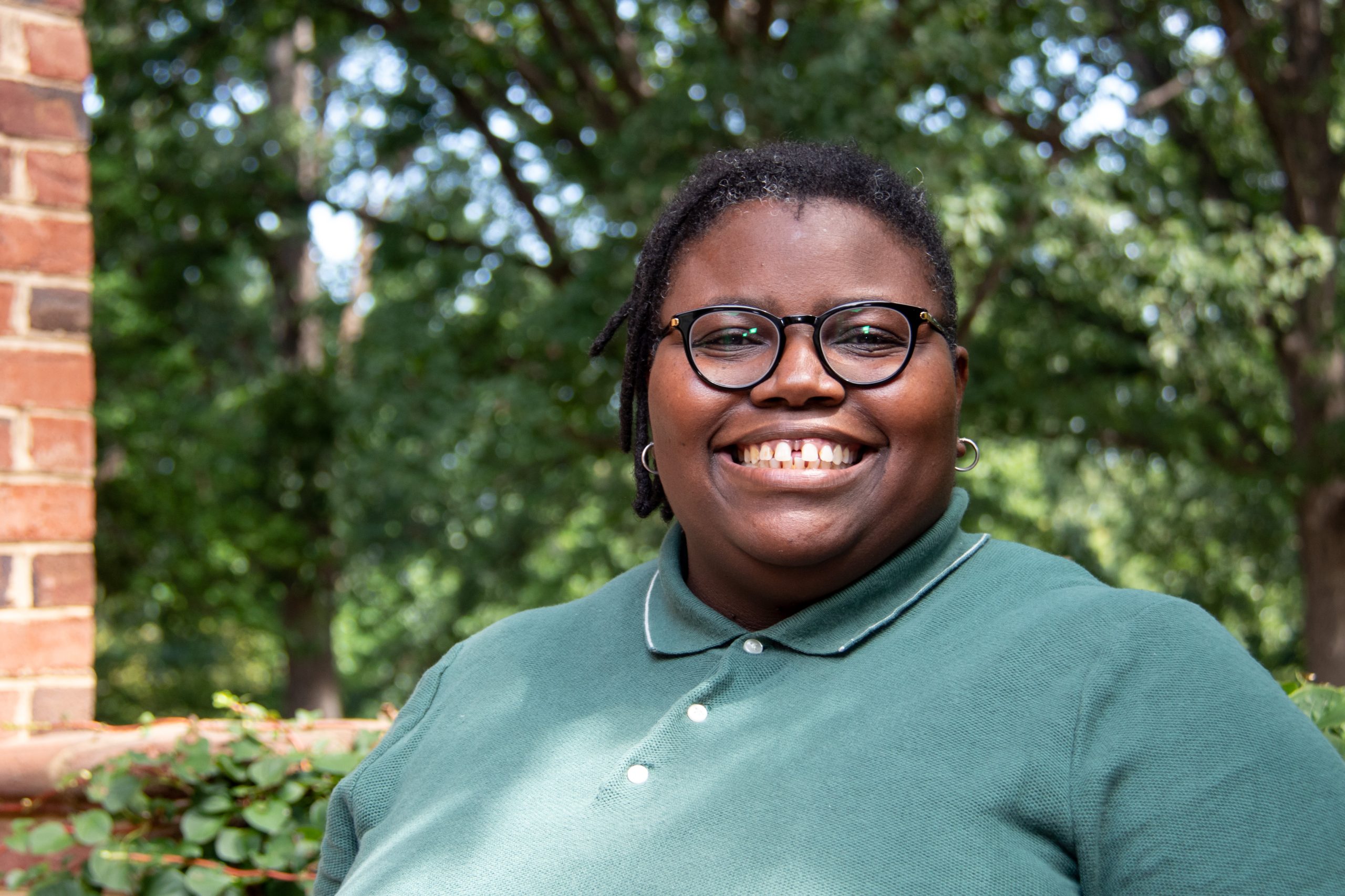
Antonia Randolph
· Assistant Professor and Jonathan M. Hess Term ProfessorUniversity of North Carolina at Chapel Hill · American Studies
Active 2004–2026
About
Antonia Randolph is a cultural sociologist with a focus on diversity discourse in education, multicultural capital, non-normative Black masculinity, and the production of misogyny in hip-hop culture. She holds a BA in Sociology from Spelman College (1996) and a PhD in Sociology from Northwestern University (2006). Randolph is a member of the Scholars’ Network on Masculinity and the Well-Being of African American Men and participates in the Women of Color Leadership Project of the National Women’s Studies Association. Her scholarly work includes her first book, The Wrong Kind of Different: Challenging the Meaning of Diversity in American Classrooms, which examined hierarchies constructed among students of color by elementary school teachers. She is currently working on a book project titled That’s My Heart: Queering Intimacy in Hip-Hop Culture, which explores portrayals of Black men’s intimate relationships in hip-hop culture.
Research topics
- Sociology
- Psychology
- Medical education
- Medicine
- Gender studies
- Political Science
- Law
- Literature
- Criminology
- Pedagogy
- Social psychology
- Art
Selected publications
On Thralldom and Other Everyday Apocalypses
GLQ A Journal of Lesbian and Gay Studies · 2026-01-01
article1st authorCorrespondingThis article considers how queer theory constructs apocalypse based on a normative understanding of what counts as queer and an inattention to the existence of multiple sexual worlds. Taking hip-hop culture as her case, the author argues that there is a distinct Black sexual world with its own definition of apocalypse. Both queer theory and hip-hop common sense overlook everyday forms of apocalypse that reflect non-normative attachments and emotions. Queer theory overemphasizes how deviations from sexual and gender norms threaten social order and overlooks how emotions and attachments can threaten social hierarchies.
GLQ A Journal of Lesbian and Gay Studies · 2025-01-01
article1st authorCorrespondingHip-hop's heteronormativity is just one common sense that Shanté Paradigm Smalls upends in their necessary and refreshing book Hip Hop Heresies: Queer Aesthetics in New York City. They subvert conventions by centering the Asian and Asian American influence on hip-hop culture in successive chapters about gay Asian American artist and curator Martin Wong and the cult classic Black karate film The Last Dragon (1985). The “queer aesthetics” of the subtitle is the queerness of non-normativity that subverts dominant racial, gender, and sexual expectations in hip-hop culture rather than a recounting of the contributions of self-identified LGBTQI+ people to rap music, though there's a chapter on that, too. Instead of treating hip-hop as antithetical to queerness, Hip Hop Heresies makes a compelling case for the “queerness of hip-hop culture” (Snorton 2013: vi).Hip Hop Heresies stands out from a spate of recent books on the queerness of hip-hop—including Lauron Kehrer's Queer Voices in Hip Hop: Cultures, Communities, and Contemporary Performance (2022) and Matthew Oware's I Got Something to Say: Gender, Race, and Social Consciousness in Rap Music (2018)—in its focus on New York City. As the introduction explains, Smalls focuses on New York City because its blurring of identities (e.g. race, gender, sexuality) and genres (e.g. music, visual art, nightlife) produced hip-hop's queer aesthetic. New York incubated a brand of hip-hop culture that mixes Black, queer, and hip-hop aesthetics, creating an experimental culture that takes advantage of all of the resources available in the city. Smalls commits “heresy” by decentering the stories of cis-straight Black men in their historiography of hip-hop and showing that hip-hop was never bound by those categories.Chapter one reminds us that graffiti was among the first of the five elements of hip-hop culture to garner mainstream attention. Early films like Wild Style (1983) nod to the racial, ethnic, and gender diversity of graffiti but nevertheless set the history too straight by overlooking Martin Wong's role in preserving the art form. A gay Chinese American transplant from the West Coast, Wong opened the Museum of American Graffiti in 1989, the first permanent space dedicated to hip-hop visual art. Wong is a stand-in for all the unknown queer figures that were involved in the early history of hip-hop culture. Smalls shows that queer and straight people freely mixed in the visual art scene surrounding graffiti. In works like “Sweet ‘Enuff,” Wong painted the Black and brown men he lived among and cruised in his Lower East Side neighborhood. The painting's rendition of brown skinned men hurtling above a barbed wire fence on their skateboards injects queer desire into a scene of liberation from the carceral forces of the dominant society.Wong's art reveals the queerness of street culture, a theme that Smalls explores directly in chapter two when discussing The Last Dragon. The Last Dragon overflows with non-normativity, where the Asian American characters are the jive-talking criminals sent to rough up our hero “Bruce” Leroy, a Black martial artist whose love for karate takes precedence over consummating his relationship with love interest, the singer Vanity. Smalls shines in this chapter, reading stereotypes of Asian male asexuality and Black male hypersexuality against each other in productive ways. The chapter shows the benefits of thinking race, ethnicity, gender, and sexuality together, as queer aesthetics counsels us to do, since we could not make sense of Leroy's “queerness” without doing so. A virginal, unhip Black man is as queer as Wong's eroticized paintings of Black and brown men living in the ‘hood. Wong and Leroy both violate multiple norms at once, including the prohibition against interracial romance and the belief in Asian male asexuality in Wong's case and the expectation of Black male hypersexuality in Leroy's case.Smalls continues in the vein of studying characters who violate gender and sexual norms but do not identify as same-gender loving in chapter three, which examines the career of rapper Jean Grae. That Smalls only turns to rap music in chapter three disrupts the rap-centricity of hip-hop historiography. Grae, the nonbinary virtuoso New York MC who wore the dubious title of best female rapper like an albatross, abandoned rapping years ago for other forms of cultural expression that were not as hung up on her gender. Smalls analyzes Grae's 2002 song “God's Gift” to show the constructedness of gender and sexual binaries. Grae takes on a male persona in the song, using her timbre, lyrics, and delivery to portray men's patriarchal relationships with women. Grae's performance is so convincing that Smalls’ students assumed that Grae must be a lesbian when they heard the song. Smalls’ analysis of “God's Gift” shows rap's potential to subvert heteronormativity by denaturalizing it.Chapter four tells the history of openly queer musicians in New York's rap music scene, from gay DJ Man Parrish's two groundbreaking releases in 1982 to Peace Out East, the queer hip-hop fest that Smalls helped co-organize from 2004–2007. This chapter is invaluable for its documentation of the long-standing role of openly LGBTQI+ people in rap music, belying the search for the “gay” rapper that heated up when a writer named Jamal X wrote “Confessions of a Gay Rapper” in a small hip-hop magazine in 1997 and sparked a witch hunt in the media (139). Still, given the unconventional examples of queer aesthetics that Smalls analyzed in earlier chapters, this chapter felt obligatory. The brief conclusion brings us up to date on the state of openly queer rappers today, continuing the focus on openly queer rap musicians from chapter four. While these last two chapters are solid, Hip Hop Heresies excels when it stays true to the “all queer everything” premise of its queer aesthetic.
A Novel Narrative Medicine Approach to DEI Training for Medical School Faculty
UNC Libraries · 2025-04-30
articleOpen access<strong><em>Problem</em></strong>: Diversity, Equity, and Inclusion (DEI) trainings for medical school faculty often lack self-reflective and pedagogically focused components that may promote incorporation of anti-racism and social justice into medical school curricula. <strong><em>Intervention</em></strong>: A four-session Narrative Medicine (NM) anti-racism program was designed for medical school faculty using critical race theory, phenomenology, and NM methods. Each workshop consisted of a lecture on key NM concepts and a small-group breakout session incorporating group discussion, close reading, and reflective writing. <strong><em>Context</em></strong>: This NM anti-racism program was developed and implemented in April 2021 by two medical students for faculty at an institution in the southeastern U.S. The program was supported by the Office of Inclusive Excellence at the institution and held in collaboration with the institution's medical education teaching academy. Program evaluation consisted of pre- and post-program surveys, which queried participants' previous experiences with DEI and medical humanities programs, perceptions of self-identity and privilege, and confidence in teaching concepts of anti-racism. Of the total program participants (n = 32), 19 completed both surveys (54.3%). Survey data were analyzed using bivariate testing methods and qualitative thematic analysis. <strong><em>Impact</em></strong>: Post-program surveys showed 13 (68.4%) participants felt "somewhat more" or "more" comfortable engaging in concepts of race, and 12 (63.2%) participants felt "somewhat more" or "more" comfortable including topics of race into their teaching compared to before the program. Five themes were generated following qualitative analysis: (1) the value of longitudinal narrative reflection in a small-group setting for DEI work; (2) desire to commit more time to DEI, anti-racist, and social justice work while balancing busy teaching and clinical schedules; (3) the value of storytelling in DEI and anti-racism programming; (4) an understanding of deconstructive and reconstructive work of anti-racism in medicine; and (5) an increased ability to educate and enact change through teaching, activism, and institutional cultural and policy changes. <strong><em>Lessons Learned</em></strong>: This novel NM DEI training for medical school faculty was successful in increasing comfort discussing and teaching concepts of race in the medical school classroom, while providing a uniquely reflective space for personal growth. Participation in this longitudinal reflective experience was limited by physician schedules, therefore efforts to make time to participate in similar longitudinal interventions must be undertaken.
By Medical Students, for Medical Students: A Narrative Medicine Antiracism Program
UNC Libraries · 2024-07-06
articleOpen accessSenior authorObjectives Medical schools have sought to incorporate concepts of race and racism in their curricula to facilitate students’ abilities to grapple with healthcare disparities in the United States; however, these efforts frequently fail to address implicit bias or equip students with cultural humility, reflective capacity, and interpersonal skills required to navigate racialized systems in healthcare. The purpose of this study was to develop and evaluate an antiracism narrative medicine (NM) program designed by and for preclinical medical students. Method Preclinical medical students at a single center were eligible to participate from June-July 2021. Program evaluation included a postprogram qualitative interview and electronic survey. The semistructured interview included questions about program experience, lessons learned, and perspectives on antiracism curricula in medical education. Interviews were qualitatively analyzed using open and axial coding. Survey data were analyzed with descriptive statistics. Results A total of 30 students registered. All (100%) respondents reported “somewhat true” or “very true” in the postprogram survey when asked about their ability to reflect on their own racial identity, racial identity of others, and influence of their racial identity on their future role as a healthcare worker through the program. Qualitative analysis revealed 3 themes: (1) curricular engagement; (2) racism and antiracism in medicine; and (3) group experience. Subthemes included: meaningful theoretical content; multimodal works and unique perspectives; race, identity, and intersectionality; deeper diversity, equity, and inclusion engagement; reconstructive visions; future oriented work; close reading and writing build confidence in discomfort; community and support system; and authentic space among peer learners. Conclusion This virtual, peer-facilitated antiracism NM program provided an engaging and challenging experience for participants. Postprogram interviews revealed the program deepened students’ understanding of racism, promoted self-reflection and community building, and propagated reconstructive visions for continuing antiracism work.
By Medical Students, for Medical Students: A Narrative Medicine Antiracism Program
Journal of Medical Education and Curricular Development · 2024 · 2 citations
- Medical education
- Medicine
- Psychology
Objectives: Medical schools have sought to incorporate concepts of race and racism in their curricula to facilitate students' abilities to grapple with healthcare disparities in the United States; however, these efforts frequently fail to address implicit bias or equip students with cultural humility, reflective capacity, and interpersonal skills required to navigate racialized systems in healthcare. The purpose of this study was to develop and evaluate an antiracism narrative medicine (NM) program designed by and for preclinical medical students. Method: Preclinical medical students at a single center were eligible to participate from June-July 2021. Program evaluation included a postprogram qualitative interview and electronic survey. The semistructured interview included questions about program experience, lessons learned, and perspectives on antiracism curricula in medical education. Interviews were qualitatively analyzed using open and axial coding. Survey data were analyzed with descriptive statistics. Results: A total of 30 students registered. All (100%) respondents reported "somewhat true" or "very true" in the postprogram survey when asked about their ability to reflect on their own racial identity, racial identity of others, and influence of their racial identity on their future role as a healthcare worker through the program. Qualitative analysis revealed 3 themes: (1) curricular engagement; (2) racism and antiracism in medicine; and (3) group experience. Subthemes included: meaningful theoretical content; multimodal works and unique perspectives; race, identity, and intersectionality; deeper diversity, equity, and inclusion engagement; reconstructive visions; future oriented work; close reading and writing build confidence in discomfort; community and support system; and authentic space among peer learners. Conclusion: This virtual, peer-facilitated antiracism NM program provided an engaging and challenging experience for participants. Postprogram interviews revealed the program deepened students' understanding of racism, promoted self-reflection and community building, and propagated reconstructive visions for continuing antiracism work.
Outskirts · 2024-04-25 · 1 citations
book-chapter1st authorCorresponding“Bringing Our Small, Imperfect Stones to the Pile”: The Everyday Work of Building a More Just World
UNC Libraries · 2023-06-16
articleOpen accessSenior authorIn this conversation between Brittany Pearl Battle and Tamara K. Nopper (facilitated by Antonia Randolph), two sociologists who have been involved in a variety of social justice struggles (e.g. prison abolition, worker’s rights, Asian American rights), describe the everyday practices that make up struggles for social justice. They identify a spectrum of practices that individuals can do to bring about a more just world, while arguing that all practices towards justice do not constitute organizing or activism. Moreover, they describe the salience of their status as workers and women of color as structuring the ways they have pursued social change at different points in their lives. In so doing, they identify academia as a workplace rather than being an academic as a status as the salient force that shapes how they work to build a more just world. Ultimately, the article questions the usefulness of the designation scholar-activist, opting to recognize the unique role of activists in social change while affirming that we all bring what we can to struggles for justice.
“Bringing Our Small, Imperfect Stones to the Pile”: The Everyday Work of Building a More Just World
Humanity & Society · 2023 · 2 citations
Senior authorCorresponding- Sociology
- Political Science
- Sociology
In this conversation between Brittany Pearl Battle and Tamara K. Nopper (facilitated by Antonia Randolph), two sociologists who have been involved in a variety of social justice struggles (e.g. prison abolition, worker’s rights, Asian American rights), describe the everyday practices that make up struggles for social justice. They identify a spectrum of practices that individuals can do to bring about a more just world, while arguing that all practices towards justice do not constitute organizing or activism. Moreover, they describe the salience of their status as workers and women of color as structuring the ways they have pursued social change at different points in their lives. In so doing, they identify academia as a workplace rather than being an academic as a status as the salient force that shapes how they work to build a more just world. Ultimately, the article questions the usefulness of the designation scholar-activist, opting to recognize the unique role of activists in social change while affirming that we all bring what we can to struggles for justice.
A Novel Narrative Medicine Approach to DEI Training for Medical School Faculty
Teaching and Learning in Medicine · 2022 · 27 citations
Senior authorCorresponding- Sociology
- Medical education
- Psychology
: This novel NM DEI training for medical school faculty was successful in increasing comfort discussing and teaching concepts of race in the medical school classroom, while providing a uniquely reflective space for personal growth. Participation in this longitudinal reflective experience was limited by physician schedules, therefore efforts to make time to participate in similar longitudinal interventions must be undertaken.
Review: <i>Why Bushwick Bill Matters</i>, by Charles L. Hughes
Journal of Popular Music Studies · 2022-05-23
article1st authorCorrespondingBook Review| June 01 2022 Review: Why Bushwick Bill Matters, by Charles L. Hughes Charles L. Hughes. Why Bushwick Bill Matters. Austin: University of Texas Press. 2021. 208 pp. Antonia Randolph Antonia Randolph University of North Carolina Email: antonia.randolph@unc.edu Search for other works by this author on: This Site PubMed Google Scholar Journal of Popular Music Studies (2022) 34 (2): 149–151. https://doi.org/10.1525/jpms.2022.34.2.149 Views Icon Views Article contents Figures & tables Video Audio Supplementary Data Peer Review Share Icon Share Twitter LinkedIn Tools Icon Tools Get Permissions Cite Icon Cite Search Site Citation Antonia Randolph; Review: Why Bushwick Bill Matters, by Charles L. Hughes. Journal of Popular Music Studies 1 June 2022; 34 (2): 149–151. doi: https://doi.org/10.1525/jpms.2022.34.2.149 Download citation file: Ris (Zotero) Reference Manager EasyBib Bookends Mendeley Papers EndNote RefWorks BibTex toolbar search Search Dropdown Menu toolbar search search input Search input auto suggest filter your search All ContentJournal of Popular Music Studies Search When popular culture puts its “freaks” on display, as U.S. talk shows did with gender and sexual non-conforming people during 1980s and 90s, the so-called freaks often seem more sympathetic than the audience members who spew prejudice at them.1 Charles L. Hughes makes a similar case with society’s treatment of Bushwick Bill, a little person who was one-third of the classic line-up of Houston’s Southern rap forerunners, the Geto Boys. A strength of Why Bushwick Bill Matters is Hughes’s unflinching portrayal of how both band members and critics reduced Bushwick Bill to stereotypes about his physical disabilities. Yet, Hughes shows that Bushwick Bill rejected the goal of respectability, where “freaks talk back” to an uncomprehending audience to gain social acceptance by showing how similar they are to “normal” people.2 Instead, Bushwick Bill emerges as a more complicated figure who rejected the role of poster child for anything, including... You do not currently have access to this content.
Frequent coauthors
- 9 shared
Brad Snyder
Delaware State University
- 9 shared
Ilene Kalish
York University
- 9 shared
Jeff Fagan
Delaware State University
- 9 shared
Thomas J. Catlaw
Arizona State University
- 9 shared
Dan Combs
Delaware State University
- 9 shared
Santhi Leon
Delaware State University
- 9 shared
Aiden Amos
Delaware State University
- 9 shared
Despina Gimbel
- Resume-aware match score
- Save to shortlist
- AI-drafted outreach
See your match with Antonia Randolph
PhdFit ranks faculty by your research interests, methods, and publications — grounded in their actual work, not templates.
- Free to start
- No credit card
- 30-second signup