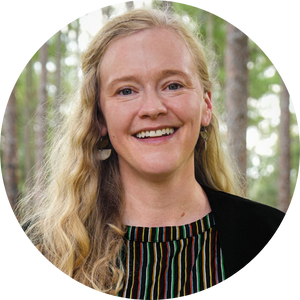
Anna Braswell
· Assistant Professor, Coastal Watersheds & EcosystemsVerifiedUniversity of Florida · Forest Resources and Conservation
Active 2014–2026
About
Anna E. Braswell is an Assistant Professor of Coastal Ecosystems and Watersheds at the SFRC, IFAS, University of Florida. Her research focuses on understanding the complex interactions between coastal ecosystems, water resources, and human activities, with a particular emphasis on the impacts of climate change and sea-level rise on coastal communities and ecosystems.
Research topics
- Geography
- Ecology
- Meteorology
- Environmental resource management
- Geology
- Environmental protection
- Economics
- Physical geography
- Business
- Biology
- Archaeology
- Demography
- Environmental planning
- Economic geography
- Environmental science
- Economic growth
Selected publications
Risky Development: Increasing Exposure to Natural Hazards in the United States
Earth s Future · 119 citations
- Geography
- Environmental science
- Environmental resource management
Losses from natural hazards are escalating dramatically, with more properties and critical infrastructure affected each year. Although the magnitude, intensity, and/or frequency of certain hazards has increased, development contributes to this unsustainable trend, as disasters emerge when natural disturbances meet vulnerable assets and populations. To diagnose development patterns leading to increased exposure in the conterminous United States (CONUS), we identified earthquake, flood, hurricane, tornado, and wildfire hazard hotspots, and overlaid them with land use information from the Historical Settlement Data Compilation data set. Our results show that 57% of structures (homes,
Data accompanying "Fertilizer enhances production more than mussels in a deteriorating salt marsh"
Zenodo (CERN European Organization for Nuclear Research) · 2026-03-10
datasetOpen accessSenior authorThese data accompany the publication of the same name. We performed a two-year manipulative field study in a deteriorating Florida salt marsh dominated by smooth cordgrass (Spartina alterniflora). We examined the interactive effects of ribbed mussel (Geukensia demissa) presence and fertilizer addition on cordgrass production, resistance of cordgrass stems to uprooting, cordgrass regrowth, the abundance of resident fauna, and porewater, leaf tissue, and soil nutrient concentrations. Data used in the manuscript are organized in seven Excel files: 1) cordgrass aboveground biomass, belowground production, and stem density data; 2) cordgrass regrowth data; 3) faunal data; 4) mussel data; 5) nutrient indicator data; 6) cordgrass stem height data; and 7) cordgrass uprooting resistance data. Information describing each dataset can be found in the “Metadata” sheet within each Excel file. This research was funded by the University of Florida Water Institute and the University of Florida School of Forest, Fisheries, and Geomatics Sciences.
Data accompanying "Fertilizer enhances production more than mussels in a deteriorating salt marsh"
Zenodo (CERN European Organization for Nuclear Research) · 2026-03-10
datasetOpen accessSenior authorThese data accompany the publication of the same name. We performed a two-year manipulative field study in a deteriorating Florida salt marsh dominated by smooth cordgrass (Spartina alterniflora). We examined the interactive effects of ribbed mussel (Geukensia demissa) presence and fertilizer addition on cordgrass production, resistance of cordgrass stems to uprooting, cordgrass regrowth, the abundance of resident fauna, and porewater, leaf tissue, and soil nutrient concentrations. Data used in the manuscript are organized in seven Excel files: 1) cordgrass aboveground biomass, belowground production, and stem density data; 2) cordgrass regrowth data; 3) faunal data; 4) mussel data; 5) nutrient indicator data; 6) cordgrass stem height data; and 7) cordgrass uprooting resistance data. Information describing each dataset can be found in the “Metadata” sheet within each Excel file. This research was funded by the University of Florida Water Institute and the University of Florida School of Forest, Fisheries, and Geomatics Sciences.
Factors Driving Mangrove Range Expansion
EDIS · 2026-01-05
articleOpen accessSenior authorFlorida is home to multiple mangrove species, including black mangroves, white mangroves, and red mangroves. Black and red mangroves have expanded their range along the Atlantic and Gulf Coasts in Florida as winter temperatures have increased and sea levels have risen, increasing their abundance and even converting salt marshes into mangrove forests. There are several factors that dictate mangrove migration on Florida’s coastlines. This publication is intended to educate the public and land managers about the factors driving mangrove range expansion. Though all the mangrove species listed above have been expanding their northern range limit, for the purposes of this publication, we will focus on the range expansion of black mangroves, which are more prevalent than other mangrove species.
Factors Driving Mangrove Range Expansion
DOAJ (DOAJ: Directory of Open Access Journals) · 2026-01-01
articleOpen accessSenior authorFlorida is home to multiple mangrove species, including black mangroves, white mangroves, and red mangroves. Black and red mangroves have expanded their range along the Atlantic and Gulf Coasts in Florida as winter temperatures have increased and sea levels have risen, increasing their abundance and even converting salt marshes into mangrove forests. There are several factors that dictate mangrove migration on Florida’s coastlines. This publication is intended to educate the public and land managers about the factors driving mangrove range expansion. Though all the mangrove species listed above have been expanding their northern range limit, for the purposes of this publication, we will focus on the range expansion of black mangroves, which are more prevalent than other mangrove species. Accessibility Summary: In accordance with Title II regulations this content meets all points of exemption as Archived web content and/or Preexisting conventional electronic documents.
Coastal Freshwater Salinization: Review of Monitoring Efforts Across U.S. Agencies
Zenodo (CERN European Organization for Nuclear Research) · 2026-03-11
reportOpen accessMany coastal freshwater systems are experiencing rapid salinization associated with climate change, increased water use, and water diversions. This salinization puts the sustainability of coastal ecosystems, freshwater resources, and nearshore communities at risk. To better adapt to and mitigate these salinization risks, well-coordinated coastal monitoring is needed to evaluate the migration of the saltwater front in both surface water and groundwater systems. However, due to the various mechanisms and patterns by which saltwater may intrude, there is a lack of a cohesive framework for monitoring. To support data-driven water-resources planning, encourage information sharing, and help identify data gaps, this review highlights some of the existing efforts across U.S.-based agencies and presents an inventory of case studies, datasets, data portals, and models related to coastal salinization. Further, we provide recommendations for future work to better equip coastal communities with tools for resiliency planning and responding to climate change.
Coastal Freshwater Salinization: Review of Monitoring Efforts Across U.S. Agencies
Zenodo (CERN European Organization for Nuclear Research) · 2026-03-11
reportOpen accessMany coastal freshwater systems are experiencing rapid salinization associated with climate change, increased water use, and water diversions. This salinization puts the sustainability of coastal ecosystems, freshwater resources, and nearshore communities at risk. To better adapt to and mitigate these salinization risks, well-coordinated coastal monitoring is needed to evaluate the migration of the saltwater front in both surface water and groundwater systems. However, due to the various mechanisms and patterns by which saltwater may intrude, there is a lack of a cohesive framework for monitoring. To support data-driven water-resources planning, encourage information sharing, and help identify data gaps, this review highlights some of the existing efforts across U.S.-based agencies and presents an inventory of case studies, datasets, data portals, and models related to coastal salinization. Further, we provide recommendations for future work to better equip coastal communities with tools for resiliency planning and responding to climate change.
Population and Environment · 2025-02-26 · 6 citations
articlePLoS ONE · 2025-03-25 · 8 citations
articleOpen accessCorrespondingIn subtropical preserve ecosystems, natural factors combined with anthropogenic activities have led to significant seasonal changes, including distinct dry and rainy seasons. These changes can potentially impact soil health indicators, which are keystone properties that control ecosystem services across terrestrial landscapes. Few studies have evaluated the impact of seasonal changes on soil health within non-agronomic landscapes, such as preserves. As part of this study, we collected topsoil samples (0-15 cm) from twenty-three land cover types within a 109 km² preserve in central Florida during two different seasons (dry and wet) to advance the understanding of how soil health responds to seasonal changes and to explore the environmental factors controlling soil health within non-agronomic landscapes. Ten soil indicators were analyzed and incorporated into the total dataset (TDS). From the TDS, a minimum dataset was derived using Principal Component Analysis, which was then used to calculate the Soil Health Index (SHI) for soil health assessment. Our findings showed that changes in soil indicators, their relationships, and the SHI across seasons depend on land cover type. Based on soil health classification grades, soil health status either improved, declined, or remained constant between seasons, depending on land cover type. The regression analysis of eight selected environmental factors, such as soil profile moisture (SPM), surface soil wetness (SSW), precipitation (P), soil temperature (T), elevation (El), slope gradient (S), global horizontal irradiance (GHI) and surface albedo (ALB), showed that only slope gradient significantly explains variations in SHI during wet season, whereas other environmental factors do not show significant explanatory power for SHI variations in either dry or wet season. These findings highlight the dominant influence of slope gradient on soil health within non-agronomic landscapes, while indicating that other evaluated environmental factors may have limited relevance in this context. Furthermore, the non-significant findings among soil indicators across seasons may be attributed to the study's small sample size (i.e., three replications), a limitation stemming from constrained funding. This highlights the importance of future research incorporating larger sample size to validate the findings of this study.
2025-01-01
article
Recent grants
Frequent coauthors
- 29 shared
Stefan Leyk
University of Colorado Boulder
- 28 shared
Erin Seybold
University of Kansas
- 20 shared
Johannes Uhl
- 18 shared
Jennifer K. Balch
Cooperative Institute for Research in Environmental Sciences
- 17 shared
Margaret Zimmer
University of California, Santa Cruz
- 15 shared
Emilio Grande
- 15 shared
Dylan S. Connor
Arizona State University
- 15 shared
Maxwell B. Joseph
University of Colorado Boulder
Labs
Interdisciplinary research on sea level rise, coastal flooding, resilience in rural communities, and ecosystem service benefits of living shorelines along Florida's Gulf Coast.
Education
Ph.D., River Center, Nic. School of the Environ.
Duke University
Other, Cherry lab
University of Alabama
Other
Earth Lab, CIRES, University of Colorado, Boulder
Awards & honors
- NSF Coastlines and People EAGER grant
- NSF Humans, Disasters and the Built Environment grant
- CA Sea Grant to investigate groundwater agricultural polluti…
- Zimmer, Braswell and Seybold Awarded CA Sea Grant
- Dean's Award for Outstanding PhD Student Paper
- Resume-aware match score
- Save to shortlist
- AI-drafted outreach
See your match with Anna Braswell
PhdFit ranks faculty by your research interests, methods, and publications — grounded in their actual work, not templates.
- Free to start
- No credit card
- 30-second signup