
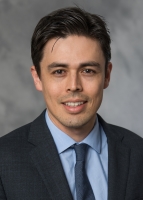
Andrew Birkeland
· Associate ProfessorUniversity of California, Davis · Otolaryngology
Active 1971–2026
Academic metrics are sourced from OpenAlex and public funding records; values may differ from Google Scholar.
About
Andrew C. Birkeland, M.D., is an Associate Professor in the Department of Otolaryngology Head and Neck Surgery at UC Davis Health. His clinical expertise encompasses the treatment of all benign and malignant head and neck tumors, including skin cancers, mucosal cancers, endocrine tumors, salivary gland disease, and skull base tumors. He has specialized training and particular interest in microvascular reconstructive surgery and transoral robotic surgery. Dr. Birkeland's approach emphasizes building strong, collaborative relationships with his patients, ensuring they receive the most appropriate and up-to-date care tailored to their individual needs. His research focuses on translating novel clinical and basic research findings directly into patient care. He utilizes advanced techniques such as next-generation sequencing, immune profiling, biomarker identification, and animal models to understand the causes of and develop treatments for head and neck cancers. His overarching goal is to advance precision medicine by providing personalized, optimized treatments for each patient with head and neck cancer.
Research topics
- Medicine
- Artificial Intelligence
- Computer Science
- Pathology
- Internal medicine
- Surgery
- Radiology
- Biomedical engineering
- Physics
- Oncology
Selected publications
NCCN Guidelines® Insights: Head and Neck Cancers, Version 1.2022
Journal of the National Comprehensive Cancer Network · 2022 · 522 citations
The NCCN Guidelines for Head and Neck Cancers address tumors arising in the oral cavity (including mucosal lip), pharynx, larynx, and paranasal sinuses. Occult primary cancer, salivary gland cancer, and mucosal melanoma (MM) are also addressed. The specific site of disease, stage, and pathologic findings guide treatment (eg, the appropriate surgical procedure, radiation targets, dose and fractionation of radiation, indications for systemic therapy). The NCCN Head and Neck Cancers Panel meets at…
NCCN Guidelines® Insights: Head and Neck Cancers, Version 2.2025
Journal of the National Comprehensive Cancer Network · 2025-02-01 · 121 citations
articleThe NCCN Guidelines for Head and Neck Cancers address tumors arising in the oral cavity (including mucosal lip), pharynx, larynx, and paranasal sinuses, as well as occult primary cancer, salivary gland cancer, and mucosal melanoma (MM). The specific site of disease, stage, and pathologic findings guide treatment (eg, the appropriate surgical procedure, radiation targets, dose and fractionation of radiation, indications for systemic therapy). The NCCN Head and Neck Cancers Panel meets at least an…
IEEE Transactions on Biomedical Engineering · 2020 · 88 citations
OBJECTIVE: To demonstrate the diagnostic ability of label-free, point-scanning, fiber-based Fluorescence Lifetime Imaging (FLIm) as a means of intraoperative guidance during oral and oropharyngeal cancer removal surgery. METHODS: FLIm point-measurements acquired from 53 patients (n = 67893 pre-resection in vivo, n = 89695 post-resection ex vivo) undergoing oral or oropharyngeal cancer removal surgery were used for analysis. Discrimination of healthy tissue and cancer was investigated using vario…
The Impact of COVID‐19 on Head and Neck Cancer Treatment: Before and During the Pandemic
OTO Open · 2021 · 49 citations
Senior authorCorrespondingOBJECTIVES: To describe the impact that the coronavirus disease 2019 (COVID-19) pandemic had on the presentation of patients with head and neck cancer in a single tertiary care center. STUDY DESIGN: Retrospective cohort study. SETTING: Academic institution. METHODS: We performed a retrospective review of patients with newly diagnosed head and neck squamous cell carcinoma (HNSCC) who presented as new patients between September 10, 2019, and September 11, 2020. Patients presenting during the 6 mon…
Head & Neck · 2022 · 27 citations
BACKGROUND: This study evaluated whether fluorescence lifetime imaging (FLIm), coupled with standard diagnostic workups, could enhance primary lesion detection in patients with p16+ head and neck squamous cell carcinoma of the unknown primary (HNSCCUP). METHODS: FLIm was integrated into transoral robotic surgery to acquire optical data on six HNSCCUP patients' oropharyngeal tissues. An additional 55-patient FLIm dataset, comprising conventional primary tumors, trained a machine learning classifi…
Recent grants
Fluorescence Lifetime Imaging/Spectroscopy System For Robotic Cancer Surgery Guidance
NIH · $4.6M · 2014–2027
UC Davis Paul Calabresi K12 Clinical Oncology Research Career Development Program
NIH · $9.7M · 2011–2027
Frequent coauthors
- 101 shared
J. Chad Brenner
University of Michigan–Ann Arbor
- 66 shared
Matthew E. Spector
- 65 shared
Jan L. Breslow
Rockefeller University
- 65 shared
Ralph Burkhardt
University Hospital Regensburg
- 64 shared
Itsik Pe’er
- 64 shared
Jeffrey M. Friedman
Rockefeller University
- 64 shared
Martha Noel
Reproductive Medicine Associates of New York
- 64 shared
Mark J. Daly
Massachusetts General Hospital
Labs
Department of Otolaryngology Head and Neck SurgeryPI
Education
- 2012
M.D., Medicine
Weill Cornell Medicine
- 2004
B.A., Molecular and Cellular Biology
University of California, Berkeley
Awards & honors
- Faculty Teaching Award, UC Davis, 2021
- Fellow Teacher of the Year, Stanford University, 2019
- Merle Lawrence, Ph.D. Research Award, University of Michigan…
- John L. Kemink, M.D., Clinical Research Award, University of…
- Arthur Palmer Prize for Efficiency in Otorhinolaryngology, W…
Similar researchers at University of California, Davis
- Resume-aware match score
- Save to shortlist
- AI-drafted outreach
See your match with Andrew Birkeland
PhdFit ranks faculty by your research interests, methods, and publications — grounded in their actual work, not templates.
- Free to start
- No credit card
- 30-second signup