
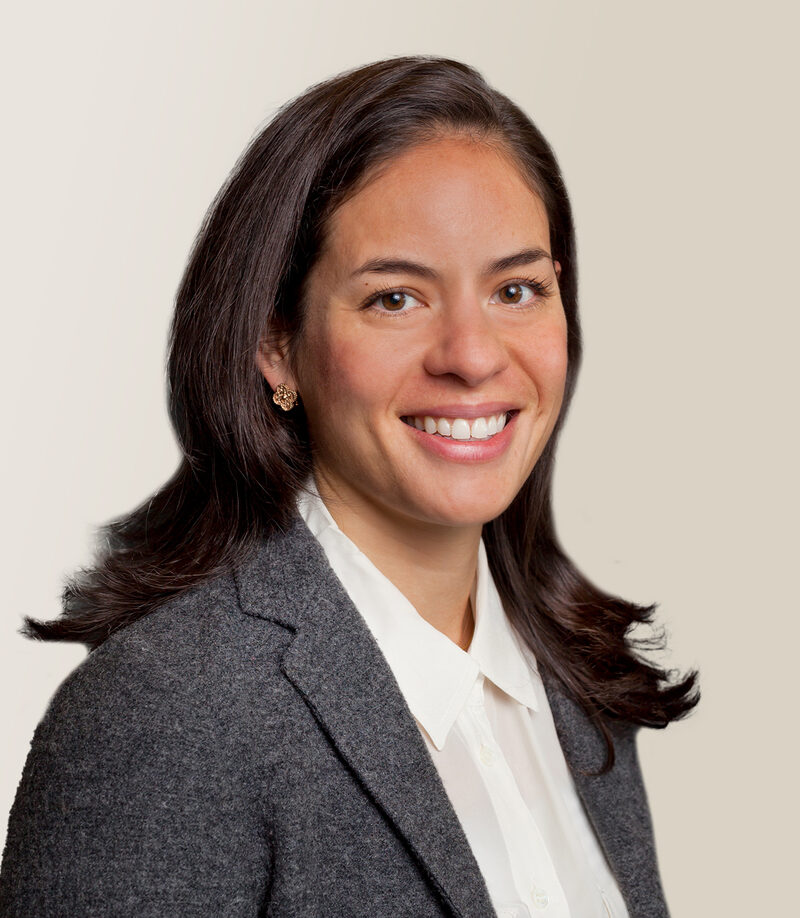
Andrea Vedolin
Boston University · Finance
Active 2008–2025
Academic metrics are sourced from OpenAlex and public funding records; values may differ from Google Scholar.
About
Andrea Vedolin is a Professor and Department Chair of Finance at Boston University Questrom School of Business. His research focuses on various aspects of financial economics, including interest rate risk management, exchange rates, asset prices, and monetary policy uncertainty. Vedolin has contributed to the understanding of central bank communication, model complexity in expectations, and the global factor structure of exchange rates, among other topics. His work has been published in leading journals such as the Journal of Financial Economics, The Review of Financial Studies, and the Journal of Finance. Vedolin's research provides insights into the behavior of financial markets and the impact of economic uncertainty, and he is recognized for his significant contributions to the field of finance.
Research topics
- Computer Science
- Economics
- Econometrics
- Macroeconomics
- Financial economics
- Monetary economics
- Mathematics
- Political Science
- Artificial Intelligence
- Business
Selected publications
Central bank communication and the yield curve
Journal of Financial Economics · 2021 · 100 citations
Interest Rate Risk Management in Uncertain Times
Review of Financial Studies · 2018-04-04 · 41 citations
articleSenior authorWe revisit evidence of real effects of uncertainty shocks in the context of interest rate uncertainty. We document that adverse movements in interest rate uncertainty predict significant slowdowns in real activity, both at the aggregate and at the firm levels. To understand how firms cope with interest rate uncertainty, we develop a dynamic model of corporate investment, financing, and risk management and test it using a rich data set on corporate swap usage. We find that interest rate uncertain…
The global factor structure of exchange rates
Journal of Financial Economics · 2023 · 19 citations
Senior authorCorrespondingWe propose a model-free methodology to estimate international stochastic discount factors (SDFs) that jointly price cross-sections of international stocks, bonds, and currencies in markets with frictions. We theoretically establish a SDF decomposition into one global factor and a currency basket. We show that our global factor prices a large cross-section of international asset returns, not just in- but also out-of-sample, across different currency denominations. Moreover, the pricing ability of…
Skewness and Time-Varying Second Moments in a Nonlinear Production Network: Theory and Evidence
National Bureau of Economic Research · 2021-11-01 · 17 citations
preprintSenior authorThis paper studies asymmetry in economic activity over the business cycle. It develops a tractable multisector model of the economy in which complementarity across inputs causes aggregate activity to be left skewed with countercyclical volatility. We then examine implications of the model regarding the time-series skewness of activity at the sector level, cyclicality of dispersion and skewness across sectors, and the conditional covariances of sector growth rates, finding support for each in the…
Model Complexity, Expectations, and Asset Prices
The Review of Economic Studies · 2023 · 13 citations
Senior authorCorrespondingAbstract This paper analyses how limits to the complexity of statistical models used by market participants can shape asset prices. We consider an economy in which the stochastic process that governs the evolution of economic variables may not have a simple representation, and yet, agents are only capable of entertaining statistical models with a certain level of complexity. As a result, they may end up with a lower-dimensional approximation that does not fully capture the intertemporal complexi…
Frequent coauthors
- 32 shared
Philippe Mueller
- 26 shared
Fabio Trojani
University of Geneva
- 23 shared
Alireza Tahbaz-Salehi
Northwestern University
- 11 shared
Aytek Malkhozov
Queen Mary University of London
- 10 shared
Gyuri Venter
University of Warwick
- 8 shared
Sofonias Alemu Korsaye
Swiss Finance Institute
- 7 shared
Hao Xing
Citadel
- 7 shared
Andrea Buraschi
Centre for Economic Policy Research
Education
- 2003
Ph.D., Finance
University of California, Berkeley
- 1999
M.S., Finance
University of California, Berkeley
- 1997
B.A., Economics
University of California, Santa Barbara
- Resume-aware match score
- Save to shortlist
- AI-drafted outreach
See your match with Andrea Vedolin
PhdFit ranks faculty by your research interests, methods, and publications — grounded in their actual work, not templates.
- Free to start
- No credit card
- 30-second signup