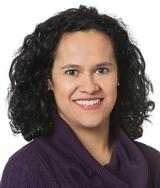
Ana Maria Acosta
· Professor, Physical Therapy and Human Movement SciencesNorthwestern University · Physical Therapy and Human Movement Sciences
Active 1983–2024
About
Ana Maria Acosta is an Associate Chair for Post Professional Education in the Department of Physical Therapy and Human Movement Sciences at Northwestern University Feinberg School of Medicine. She holds the position of Professor within the same department. Her role involves overseeing post-professional education programs, contributing to the academic leadership of the department, and engaging in research and teaching activities related to physical therapy and human movement sciences.
Research topics
- Psychology
- Computer Science
- Medicine
- Physical therapy
- Neuroscience
- Physical medicine and rehabilitation
- Surgery
- Anatomy
- Physics
Selected publications
A Method for Quantification of Stretch Reflex Excitability During Ballistic Reaching
IEEE Transactions on Neural Systems and Rehabilitation Engineering · 2023 · 4 citations
- Neuroscience
- Psychology
Stretch reflexes are crucial for performing accurate movements and providing rapid corrections for unpredictable perturbations. Stretch reflexes are modulated by supraspinal structures via corticofugal pathways. Neural activity in these structures is difficult to observe directly, but the characterization of reflex excitability during volitional movement can be used to study how these structures modulate reflexes and how neurological injuries impact this control, such as in spasticity after stroke. We have developed a novel protocol to quantify stretch reflex excitability during ballistic reaching. This novel method was implemented using a custom haptic device (NACT-3D) capable of applying high-velocity (270 °/s) joint perturbations in the plane of the arm while participants performed 3D reaching tasks in a large workspace. We assessed the protocol on four participants with chronic hemiparetic stroke and two control participants. Participants reached ballistically from a near to a far target, with elbow extension perturbations applied in random catch trials. Perturbations were applied before movement, during the early phase of movement, or near peak movement velocity. Preliminary results show that stretch reflexes were elicited in the stroke group in the biceps muscle during reaching, as measured by electromyographic (EMG) activity both before (pre-motion phase) and during (early motion phase) movement. Reflexive EMG was also seen in the anterior deltoid and pectoralis major in the pre-motion phase. In the control group, no reflexive EMG was seen, as expected. This newly developed methodology allows the study of stretch reflex modulation in new ways by combining multijoint movements with haptic environments and high-velocity perturbations.
Springer eBooks · 2022 · 6 citations
- Computer Science
- Physical medicine and rehabilitation
- Medicine
A Method for Quantifying Trunk Motor Control During Reaching in Individuals Post Hemiparetic Stroke
2020 · 6 citations
Senior authorCorresponding- Physical medicine and rehabilitation
- Medicine
- Psychology
After a hemiparetic stroke, the contralesional upper limb is left with significant motor impairments including: weakness, spasticity, and abnormal joint torque patterns resulting in the flexion synergy (i.e. abnormal coupling between shoulder abduction and elbow/wrist and finger flexion). These impairments, and in particular the flexion synergy, limit ability to reach to the full extent of their limb workspace. Motor control of the trunk is also altered post stroke, with compromised ability to stabilize the trunk and excessive trunk movement during reaching, abnormal isometric torque coupling patterns in the transverse and sagittal planes and weakness. These motor impairments in both trunk and arm limit their ability to perform activities of daily living. While the effect of stroke on reaching has been studied extensively, less is known about the impact of deficits in trunk motor control on reaching ability and the impact of the flexion synergy on trunk postural control. Methods for investigating altered trunk control, specifically during a reach when concurrent loads that elicit the flexion synergy are imposed on the limb and trunk, are limited. Specifically, trunk deficits have yet to be studied in the context of the flexion synergy whereby loads imposed on the arm to elicit shoulder abduction have a negative impact on reaching and potentially on trunk posture. In order to address this gap, we developed a system that integrates a robotic device to simulate varied reaching environments, surface electromyography to measure primary trunk and arm muscle activity, and a two-camera motion capture system that uses reflective markers to measure trunk and arm movement. Feasibility and usability of the system was established during evaluation of reaching ability with varying levels of shoulder abduction loads while the trunk is either restrained or unrestrained in two participants with stroke and a healthy control.Clinical Relevance- The system presented here is capable of monitoring changes in trunk postural control after a hemiparetic stroke during a reaching task as a first step in furthering our understanding of changes in trunk motor control during reaching with the goal of developing more targeted and effective interventions for stroke rehabilitation.
Frequent coauthors
- 31 shared
Robert F. Kirsch
Case Western Reserve University
- 22 shared
Julius P. A. Dewald
Northwestern University
- 10 shared
Eric J. Perreault
Shirley Ryan AbilityLab
- 6 shared
Michael D. Ellis
- 6 shared
Michael W. Keith
MetroHealth Medical Center
- 6 shared
Alberto Maíz
Pontificia Universidad Católica de Chile
- 5 shared
Thomas Plaisier
- 5 shared
Sandra Milena Castelblanco Toro
Hospital Universitario San Ignacio
Labs
Education
- 2001
Ph.D., Physical Therapy
University of Illinois at Chicago
- 1998
M.S., Physical Therapy
University of Illinois at Chicago
- 1996
B.S., Physical Therapy
University of Illinois at Chicago
Similar researchers at Northwestern University
- Resume-aware match score
- Save to shortlist
- AI-drafted outreach
See your match with Ana Maria Acosta
PhdFit ranks faculty by your research interests, methods, and publications — grounded in their actual work, not templates.
- Free to start
- No credit card
- 30-second signup