Upload your resume. PhdFit's six research agents compare your background with faculty profiles, recent publications, lab focus, and outreach opportunities, then rank professors with evidence you can review.
Resume-aware matchingEvidence from recent researchOutreach drafts included
Advisor Match Brief Resume uploaded
Resume signals5 found
NLPHCIFairnessGraph MLPyTorch
Six-agent analysisRunning
Axel · Candidate AnalystResume parsed
Nova · Professor ResearcherRecent papers
Echo · Match ExplainerEvidence linked
Atlas · Strategy AdvisorFit ranked
Lyra · Outreach WriterDraft queued
Juno · Meeting Prep CompilerNext step ready
SC
Dr. Sarah Chen
Stanford · NLP & interpretability
91
fit
Fairness + NLP projects overlap with her recent work.
Strong methods fit: model evaluation and interpretability.
Clear outreach angle for current trustworthy AI research.
Outreach angle
Ask how her lab is extending interpretability methods into fairness audits for real-world AI systems.
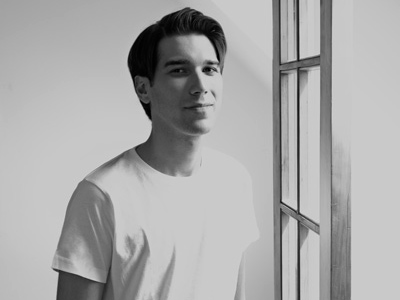
Anıl Çamcı
· Director of Graduate Studies and Associate Professor of Performing Arts TechnologyVerified
University of Michigan · Department of Performing Arts Technology
Anıl Çamcı is an artist and researcher whose work investigates new tools and theories for multimodal worldmaking using a variety of media ranging from electronic music to virtual reality. He previously served as a postdoctoral research associate at the University of Illinois at Chicago’s Electronic Visualization Laboratory, where he led research projects on human-computer interaction and immersive audio in virtual reality contexts. Prior to this, he worked as a faculty member at Istanbul Technical University, Center for Advanced Studies in Music, where he founded the Sonic Arts program. He completed his PhD at Leiden University in affiliation with the Institute of Sonology in The Hague, and the Industrial Design Department at Delft University of Technology. He also holds a degree in multimedia engineering from the Media Arts and Technology Department at the University of California, Santa Barbara. His work has been presented worldwide in journals, conferences, concerts, and exhibitions, and he has received several awards and scholarships, including the Audio Engineering Society Fellowship and the ACM CHI Artist Grant.
Various threads of acoustic communication emerge in enclosed social environments (e.g. cafés, pubs, concert venues). While their hierar- chical order may vary based on the social occasion, these coexisting channels interfere with and condition each other. A primary strand which materializes amongst two or more individuals in a social space is that of verbal interaction. Another originates from recorded music playback in such venues; the music functions as an affordance of the establishment and conveys the mood of the place. Therefore, an acoustic communication thread, the main function of which is to moderate social behaviour, is formed between the environment and the individuals within it. A third avenue for acoustic communication within enclosed social environments can be traced between the live music performer and the audience at a concert venue. This study aims at elaborating a real-world review of the aforementioned threads, and the interferences in-between, in the context of Istan- bul’s social life. Enclosed environments that range in social functions will be investigated as case studies; the communication processes that emerge within these spaces will be scrutinized through interviews and surveys with managers and customers, to portray the acoustic habitats of the given environments. This multi-perspective approach will allow us to reveal how differently these habitats impact social behaviour and whether the interference between two threads conditions the listening habits pertinent to a third one. Through these discus- sions, this paper will delineate a culturally idiosyncratic and modern view of social soundscapes in the city of Istanbul.
In this paper, we describe the design, implementation, and evaluation of a sound installation that is based on the spatial sonification of climate change data on global temperature, CO2 concentration, Arctic and Antarctic ice sheet mass, and sea level variation. Titled “Unnatural Nature,” the installation aims to evoke in the listeners an emotional connection with the data and an increased awareness of climate change. The sound engine underlying the sonification implements a range of sounds that model a natural soundscape as well as those that are more abstract. The sonification also leverages audio spatialization using a higher-order Ambisonic system to create an immersive experience that envelopes the listener in the modeled soundscape. We discuss the technical implementation of the sonification and some of the aesthetic decisions that were incorporated into the installation. We then present the results of a user study that aimed to understand participants’ interpretation of and engagement with the sonification, and its effectiveness in conveying the trends in climate data.
In this paper, we discuss our ongoing work to leverage virtual reality and digital fabrication to investigate sensory mappings across the visual, auditory, and haptic modalities in VR, and how such mappings can affect musical expression in this medium. Specifically, we introduce a custom adapter for the Oculus Touch controller that allows it to be augmented with physical parts that can be tracked, visualized, and sonified in VR. This way, a VR instrument can be made to have a physical manifestation that facilitates additional forms of tactile feedback besides those offered by the Touch controller, enabling new forms of musical interaction. We then discuss a case study, where we use the adapter to implement a new VR instrument that integrates the repelling force between neodymium magnets into the controllers. This allows us to imbue the virtual instrument, which is inherently devoid of tactility, with haptic feedbackââan essential affordance of many musical instruments.
<JATS1:p>The electronic medium allows any audible sound to be contextualized as music. This brings about unique structural possibilities as spectrum, dynamics, space, and time become continuous dimensions of musical articulation. What we hear in electronic music ventures beyond what we traditionally characterize as musical sound and challenge our auditory perception on the one hand and our imagination on the other. Based on an extensive listening study conducted over four years, this book offers a comprehensive analysis of the cognitive processes involved in the experience of electronic music. It pairs artistic practice with theories from a range of disciplines to communicate how this music operates on perceptual, conceptual, and affective levels. Looking at the common and the divergent ways in which our minds respond to electronic sound, the book investigates how we build narratives from of our experience of electronic music and how we situate ourselves in them.</JATS1:p>
Automated processes in musical instruments can serve to free a performer from the physical and mental constraints of music performance, allowing them to expressively control more aspects of music simultaneously. Modular synthesis has been a prominent platform for exploring automation through the use of sequencers and has therefore fostered a tradition of user interface design utilizing increasingly complex abstraction methods. We investigate the history of sequencer design from this perspective and introduce machine learning as a potential source for a new type of intelligent abstraction. We then offer a case study based on this approach and present Latent Drummer, which is a prototype system dedicated to integrating machine learning-based interface abstractions into the tradition of sequencers for modular synthesis.
The intersection between music and Extended Reality (XR) has grown significantly over the past twenty years, amounting to an established area of research today. The use of XR technologies represents a fundamental paradigm shift for various musical contexts as they disrupt traditional notions of musical interaction by enabling performers and audiences to interact musically with virtual objects, agents, and environments. This article both surveys and expands upon the knowledge accumulated in existing research in this area to build a foundation for future works that bring together Music and XR. To this end, we created a freely available dataset of 260 publications in this space and conducted an in-depth analysis covering 199 works in the last decade. We conducted this analysis using a list of conceptual dimensions belonging to technical, artistic, perceptual and methodological domains. This review of the literature is complemented with a set of interviews with domain experts with the goal of establishing a definition for the emergent field of Musical XR, i.e., the field of music in Extended Realities. Based on the results of the conducted review, a research agenda for the field is proposed.
In musical acoustics, wave propagation, reflection, phase inversion, and boundary conditions can be hard to conceptualize. Physical kinetic wave demonstrations offer visible and tangible experiences of wave behavior and facilitate active learning. We implement such kinetic demonstrations, a long spring and a Shive machine, using contemporary fabrication techniques. Furthermore, we employ motion capture (MoCap) technology to transform these kinetic assemblies into audio controllers. Time-varying coordinates of Mo-Cap markers integrated into the assemblies are mapped to audio parameters, closing a multi-sensory loop where visual analogues of acoustic phenomena are in turn used to control digital audio. The project leads to a pedagogical practice where fabrication and sensing technologies are used to reconstitute demonstrations for the eye as controllers for the ear.