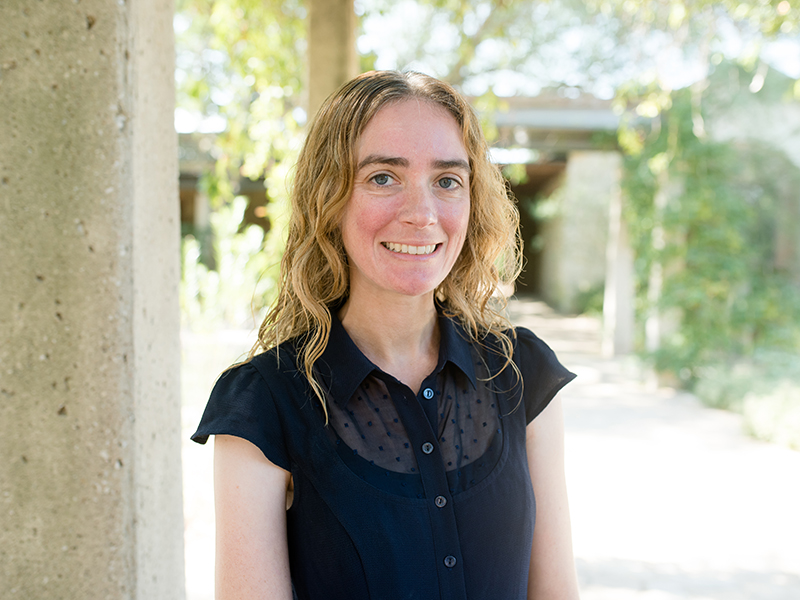
Amy Brock
· Associate Professor Biomedical EngineeringUniversity of Texas at Austin · Biomedical Engineering
Active 1984–2024
About
Amy Brock is an Associate Professor in the Department of Biomedical Engineering at The University of Texas at Austin. She received her Ph.D. in Biomedical and Biological Sciences from Harvard University and holds a B.S. in Biology from the Massachusetts Institute of Technology. Brock carried out postdoctoral work at Boston Children’s Hospital and the Wyss Institute for Biologically Inspired Engineering at Harvard before joining UT Austin in 2013. Her research interests include cancer systems biology, heterogeneity and cell state plasticity, models of cancer progression, and response to therapy. She is the Raymond F. Dawson Centennial Teaching Fellowship in Engineering and is associated with the Brock Lab and the Center for Computational Oncology. Outside of her academic pursuits, she enjoys sailing on Lake Travis with her family, gardening, playing board games, and spending time with her five children.
Research topics
- Biology
- Genetics
- Biochemistry
- Evolutionary biology
- Endocrinology
- Cell biology
- Neuroscience
- Cancer research
- Computational biology
- Pathology
- Chemistry
Selected publications
Nature Cancer · 2021 · 109 citations
Senior authorCorresponding- Biology
- Computational biology
- Evolutionary biology
A hybrid model of tumor growth and angiogenesis: In silico experiments
PLoS ONE · 2020 · 74 citations
- Cell biology
- Biology
- Cancer research
Tumor associated angiogenesis is the development of new blood vessels in response to proteins secreted by tumor cells. These new blood vessels allow tumors to continue to grow beyond what the pre-existing vasculature could support. Here, we construct a mathematical model to simulate tumor angiogenesis by considering each endothelial cell as an agent, and allowing the vascular endothelial growth factor (VEGF) and nutrient fields to impact the dynamics and phenotypic transitions of each tumor and endothelial cell. The phenotypes of the endothelial cells (i.e., tip, stalk, and phalanx cells) are selected by the local VEGF field, and govern the migration and growth of vessel sprouts at the cellular level. Over time, these vessels grow and migrate to the tumor, forming anastomotic loops to supply nutrients, while interacting with the tumor through mechanical forces and the consumption of VEGF. The model is able to capture collapsing and breaking of vessels caused by tumor-endothelial cell interactions. This is accomplished through modeling the physical interaction between the vasculature and the tumor, resulting in vessel occlusion and tumor heterogeneity over time due to the stages of response in angiogenesis. Key parameters are identified through a sensitivity analysis based on the Sobol method, establishing which parameters should be the focus of subsequent experimental efforts. During the avascular phase (i.e., before angiogenesis is triggered), the nutrient consumption rate, followed by the rate of nutrient diffusion, yield the greatest influence on the number and distribution of tumor cells. Similarly, the consumption and diffusion of VEGF yield the greatest influence on the endothelial and tumor cell numbers during angiogenesis. In summary, we present a hybrid mathematical approach that characterizes vascular changes via an agent-based model, while treating nutrient and VEGF changes through a continuum model. The model describes the physical interaction between a tumor and the surrounding blood vessels, explicitly allowing the forces of the growing tumor to influence the nutrient delivery of the vasculature.
Single cell transcriptome profiling of the human alcohol-dependent brain
Human Molecular Genetics · 2020 · 127 citations
- Biology
- Genetics
- Neuroscience
Alcoholism remains a prevalent health concern throughout the world. Previous studies have identified transcriptomic patterns in the brain associated with alcohol dependence in both humans and animal models. But none of these studies have systematically investigated expression within the unique cell types present in the brain. We utilized single nucleus RNA sequencing (snRNA-seq) to examine the transcriptomes of over 16 000 nuclei isolated from the prefrontal cortex of alcoholic and control individuals. Each nucleus was assigned to one of seven major cell types by unsupervised clustering. Cell type enrichment patterns varied greatly among neuroinflammatory-related genes, which are known to play roles in alcohol dependence and neurodegeneration. Differential expression analysis identified cell type-specific genes with altered expression in alcoholics. The largest number of differentially expressed genes (DEGs), including both protein-coding and non-coding, were detected in astrocytes, oligodendrocytes and microglia. To our knowledge, this is the first single cell transcriptome analysis of alcohol-associated gene expression in any species and the first such analysis in humans for any addictive substance. These findings greatly advance the understanding of transcriptomic changes in the brain of alcohol-dependent individuals.
Recent grants
Systems Approaches to Understanding Subpopulation Heterogeneity in Therapeutic Resistance
NIH · $2.1M · 2020–2026
The Allee Effect in Tumor Initiation
NIH · $2.3M · 2018–2024
Instability of Cancer Cell States in Tumor progression (ICCS)
NIH · $2.5M · 2021–2026
High resolution cell lineage tracking and isolation
NIH · $559k · 2017–2021
Frequent coauthors
- 74 shared
Thomas E. Yankeelov
The University of Texas at Austin
- 35 shared
Donald E. Ingber
Boston Children's Hospital
- 24 shared
David A. Hormuth
Livestrong Foundation
- 22 shared
Silva Krause
- 21 shared
Kaitlyn E. Johnson
The University of Texas at Austin
- 20 shared
Angela M. Jarrett
The University of Texas at Austin
- 18 shared
Grant Howard
The University of Texas at Austin
- 17 shared
Andrea Gardner
The University of Texas at Austin
Awards & honors
- Raymond F. Dawson Centennial Teaching Fellowship in Engineer…
Similar researchers at University of Texas at Austin
- Resume-aware match score
- Save to shortlist
- AI-drafted outreach
See your match with Amy Brock
PhdFit ranks faculty by your research interests, methods, and publications — grounded in their actual work, not templates.
- Free to start
- No credit card
- 30-second signup