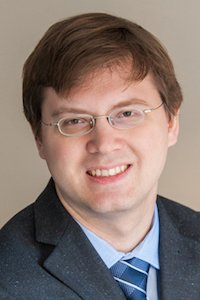
Alexander Opitz
· nullUniversity of Minnesota
Research signals
Five dimensions sourced from public faculty / publication signals. Sign in to compare against your own profile and see your match score.
Research topics
- Computer Science
- Neuroscience
- Psychology
- Biology
- Medicine
- Physics
Selected publications
Science Advances · 2020 · 234 citations
Senior authorCorresponding- Computer Science
- Neuroscience
- Psychology
Weak extracellular electric fields can influence spike timing in neural networks. Approaches to noninvasively impose these fields on the brain have high therapeutic potential in neurology and psychiatry. Transcranial alternating current stimulation (TACS) is hypothesized to affect spike timing and cause neural entrainment. However, the conditions under which these effects occur in vivo are unknown. Here, we recorded single-unit activity in the neocortex in awake nonhuman primates during TACS and found dose-dependent neural entrainment to the stimulation waveform. Cluster analysis of changes in interspike intervals identified two main types of neural responses to TACS-increased burstiness and phase entrainment. Our results uncover key mechanisms of TACS and show that the stimulation affects spike timing in the awake primate brain at intensities feasible in humans. Thus, novel TACS protocols tailored to ongoing brain activity may be a tool to normalize spike timing in maladaptive brain networks and neurological disease.
Recent grants
NIH · $1.5M · 2022–2027
Investigating the molecular, cellular and circuit effects of transcranial magnetic stimulation
NIH · $3.2M · 2019–2025
An open software solution to integrate non-invasive brain stimulation with functional imaging data
NIH · $1.4M · 2019–2023
NIH · $2.4M · 2020–2025
Validation of Closed-Loop Prefrontal Transcranial Magnetic Stimulation in a Non-Human Primate Model
NIH · $1.6M · 2024–2029
Similar researchers at University of Minnesota
- Resume-aware match score
- Save to shortlist
- AI-drafted outreach
See your match with Alexander Opitz
PhdFit ranks faculty by your research interests, methods, and publications — grounded in their actual work, not templates.
- Free to start
- No credit card
- 30-second signup