
Resume-aware faculty matching

Find professors who actually fit you

Upload your resume. Four AI agents analyze your background, rank the faculty who fit, inspect their recent research, and help you draft outreach — grounded in their actual work, not templates.

Free to startNo credit cardCancel anytime
Top matches Balanced preset
Dr. Sarah Chen
Stanford · Interpretability · NLP
91
Dr. Marcus Holloway
MIT · Robotics · RL
84
Dr. Aisha Okonkwo
CMU · Fairness · HCI
82
Nova · Professor Researcher · re-ranking top 20…
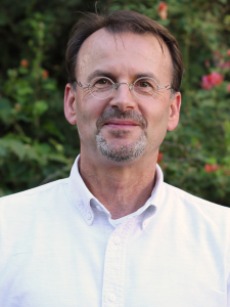
Albrecht Classen

Albrecht Classen

· University Distinguished ProfessorVerified

University of Arizona · German Studies

Active 1894–2026

h-index24
Citations2.6k
Papers1.5k449 last 5y
Funding
See your match with Albrecht Classen — sign in to PhdFit.Sign in

About

Dr. Albrecht Classen is a distinguished professor at the University of Arizona with a Ph.D. in German from the University of Virginia. His extensive academic background includes graduate studies at the University of Oxford and various international summer programs, reflecting a strong foundation in German studies, history, and pedagogy. Over the years, Dr. Classen has developed a multifaceted teaching and research career, focusing on medieval, renaissance, and reformation studies, as well as German language and literature. He has held numerous faculty and visiting professor positions worldwide, including appointments in Germany, Japan, Mexico, the United Kingdom, and other countries, demonstrating his global engagement in his field. His teaching portfolio includes directing multiple summer travel courses in medieval Europe and involvement in study abroad programs, emphasizing experiential learning and international scholarship. Dr. Classen's professional affiliations span several interdisciplinary fields, including Judaic Studies, Religious Studies, and LGBT Studies, highlighting his broad scholarly interests. He has contributed significantly to the academic community through roles such as faculty advisor for student organizations and professional development consultant for the American Association of Teachers of German. His research and teaching often intersect with cultural, social, and literary aspects of the medieval and early modern periods, as evidenced by his leadership in thematic minors and summer courses. Recognized for his scholarly excellence, Dr. Classen has received numerous honors and awards, including nominations for prestigious teaching and research accolades, and has been featured in various media interviews discussing his work on medieval literature and culture.

Research signals

Five dimensions sourced from public faculty / publication signals. Sign in to compare against your own profile and see your match score.

Research topics

  • Political Science
  • Sociology
  • History
  • Law
  • Computer Science
  • Artificial Intelligence
  • Ancient history
  • Linguistics
  • Epistemology
  • Demography
  • Classics
  • Archaeology
  • Philosophy

Selected publications

  • The Protagonist’s Quest or Journey Through Life in European Literature from Late Antiquity to the Early Modern Age: A Core Motif in European Culture

    European Journal of Arts Humanities and Social Sciences · 2026-01-01

    articleOpen access1st authorCorresponding

    Certainly, there is currently a strong movement in the discourse on cultural history, sociology, anthropology, and literary studies to move ourselves away from a Eurocentric perspective and to open up global dimensions. Nevertheless, there is no doubt that Europe as a historical and cultural entity remains a unique phenomenon that deserves to be studied all by itself in clear contrast to Arabic, Persian, Indian, Chinese, African, or Latin-American literature, visual arts, philosophy, or music. Of course, Europe as a separate continent has always been determined by many different languages, social groups, religious sects and philosophical schools, and it has always been the recipient and a source of inspiration for many other cultures, but we can certainly identify a unifying core that determined and defined that continent from late antiquity until today, as contested this core or its definition might be. This study is not at all interested in demonstrating an alleged European superiority over other continents; instead, the purpose here is to isolate and determine a significant and shared motif characteristic of most European literature since the post-Roman period: the quest, and this in material and spiritual terms. This notion of the quest has probably always been a universal concept relevant for all people across the globe, but this paper only highlights the extent to which European literature since late antiquity has been deeply determined by the protagonist’s desire for and need of reaching his/her goal in physical and spiritual terms, overcoming countless challenges, and accomplishing a unique task of supreme importance. We might deal here with an archetypal notion of global value, but a broad overview of some of the most important medieval and early modern narratives confirms that, indeed, the protagonist’s quest can be identified as fundamentally important in European literature at least until modernity.

  • Anna Isabell Wörsdörfer / Dietmar Rieger (Hg.): Ars diaboli: Teuflische Formen – Formen des Teuflischen

    Romanische Forschungen · 2026-01-01

    article1st authorCorresponding
  • The Early Novel in the History of Pre-Modern German LiteratureThe Emergence of a New Genre During the Transition from the Middle Ages to the Early Modern Period

    Current Research Journal of Social Sciences and Humanities · 2026-01-05 · 1 citations

    articleOpen access1st authorCorresponding

    Since the early fifteenth century, prose gained the upper hand also in the field of fictional narratives. Before then, all romances, short narratives, and other fictional texts had been composed in verse to facilitate the oral presentation with musical accompaniment. Of course, in theology, philosophy, law, and medicine, for instance, prose had always been the dominant mode, but not in literature. This transformation can be observed all over late medieval Europe, and so also in the German-language areas of the Holy Roman Empire. This brief analysis outlines the progress in the literature of the fifteenth and sixteenth centuries, offering short interpretations and an outline of the major texts’ content to convey a broad understanding of what contemporary audiences found to be so intriguing and relevant. In other words, even before the discovery of the printing press by Johann Gutenberg in Mainz ca. 1450, the conditions in the book market were undergoing fundamental changes, which then accelerated tremendously with the technological innovation.

  • The River as a Human Lifeline: The Case of Werner Bergengruen’s “Der Strom.” Medieval Literary Reflections and Modern Responses

    Athens Journal of Humanities and Arts · 2025-06-26 · 1 citations

    articleOpen access1st authorCorresponding

    By means of ecocritical perspectives, we can build meaningful and relevant connections between the STEM fields and the Humanities. Literary works, above all, whether from the Middle Ages or the modern world, read through that lens, can yield important new perspectives about the relationship between humans and nature. In this study, the focus rests on rivers as reflected in fictional works. After highlighting the symbolic significance of rivers in some of the major medieval German, Italian, and English poems, the article, leaping to the twentieth century, investigates the role of the river in two novellas by the Baltic-German author Werner Bergengruen (d. 1964) and identifies them as indirect but powerful contributions to the new movement of ‘magic realism’ that had not yet reached the German audiences at that time. While Bergengruen is mostly disregarded today for political and ideological reasons, the ecocritical message contained in his texts promises to uncover the true literary quality of his narratives and their relevance for ecocritical awareness regarding rivers as a protagonist’s lifeline. In many ways, we can recognize in his work a direct reflection of medieval thought, yet he transcended those and cast them in his own concept and value system.

  • The Discourse on Money in Early Modern Literature. The Case of Hans Wilhelm Kirchhof’s Wendunmuth (1563)

    Studien zur deutschen sprache und literatur · 2025-06-25

    articleOpen access1st authorCorresponding

    Since the thirteenth century at the latest, the role of money had become increasingly important in the wake of growing national and international trade, which also found vivid expression in many literary texts. These texts often serve well as mirrors of social and economic transformations, such as the <em>Schwank </em>(jest narrative), in which the various poets made fun of many different people and laughed about ordinary situations both in the village and in the city, in a monastery or in a castle. Hence, the explicit thematization of money in these <em>Schwänke </em>(plural) does not really surprise us, but scholars have not paid enough attention to this phenomenon. Turning to the voluminous <em>Wendunmuth </em>by Hans Wilhelm Kirchhof (1563), we have an excellent opportunity to identify the ubiquitous presence of money in all human relations and the trouble which it has always created. In his short prose texts, we encounter some of the most explicit comments about the huge impact of money on early modern German society.

  • Deep Learning and Education in the 21st Century. The Challenge of Medieval Literature for Us Today

    Dialogo · 2025-06-20

    article1st authorCorresponding

    In the face of radical changes in technology, the availability of ever-growing AI programs, the decline of students’ study-habits and of the general observance of fundamental principles in education at large, it is high time to reflect on what education really means and how we could deepen it again to make it meaningful also for the current generation gravely challenged by the onslaught of the computer world. This paper does not intend to offer a global review of world literature, or of the Humanities at large, which would be impossible here at any rate. Instead, my challenge consists of reintroducing seemingly very remote and presumably irrelevant medieval European literature and to probe how at least some select samples might help us to return to the notion of deep reading and hence to recenter the Humanities within the wider academic context. The argument focuses on experiences I have made over decades of teaching at the university level that have illuminated for me the timeless needs of the younger generation to be exposed to existential issues, values, ideals, morality, and philosophy from the past as future pilot lights in their own lives. The central argument underscores the enormous potential of pre-modern literature for contemporary and future explorations of the true meaning of human life especially because it requires from us to engage in a deep reading, focusing carefully on every word, sentence, and all structural elements because they carry throughout symbolic or moral, allegorical, and often even anagogical meaning.

  • Ecocritical readings of medieval German and Latin heroic poetry

    Arts & Communication · 2025-05-30 · 1 citations

    articleOpen access1st authorCorresponding

    While the living conditions of the Anthropocene pose dangerous consequences for humanity, they have also heightened our attention and sensitivity to nature, that is, our natural environment, even when looking back into the past. Scientists and literary scholars have discovered that ecocriticism strongly contributes to a deeper, refined insight into the interaction between human actors and natural agents. Many medievalists have thus begun to focus on how pre-modern poets reflected on water, the forest, mountains, animals, and plants as they impacted human life. This paper reviews a range of medieval heroic epics where specific aspects of nature matter extensively in shaping the protagonists&amp;rsquo; characters, experiences, and struggles. Activities, such as crossing a body of water, traveling through forests, climbing mountains, staying in caves, landing and fighting on islands, or living in wilderness areas assume critical functions in narrative development. Although the ecological concerns in these medieval texts may differ from those found in post-modern literature, close readings of major representatives of this genre indicate that medieval poets already demonstrated significant awareness of the close connections between humans and their natural environment.

  • :<i>Prayer Books and Piety in Late Medieval and Early Modern Europe / Gebetbücher und Frömmigkeit in Spätmittelalter und Früher Neuzeit</i>

    Speculum · 2025-06-27

    article1st authorCorresponding
  • Laughing About and With the Absurd in Twentieth-Century German Literature: With a Focus on Kurt Kusenberg

    Cultural Arts Research and Development · 2025-07-01

    articleOpen access1st authorCorresponding

    Since the early twentieth century, intellectuals, artists, writers, and philosophers across the board have realized that humanity is increasingly losing its grip on its own existence in many different terms. Neither rationality nor reality seems to make all that much sense any longer. Catastrophic experiences in various wars, in the Holodomor, Holocaust, and a long series of other genocidal campaigns across the world, and now the virtually certain prospect that we humans are causing global warming and hence threaten to destroy the foundation of our existence here on earth increasingly indicate that the traditional rational framework is fraying at its seams and threatens to undermine the core of our existence. Since the early twentieth century, we have observed the growth of absurdity as a new mode of expression. Whereas scholarship has so far focused mostly on such famous writers as Franz Kafka, Albert Camus, or Jean-Paul Sartre, this article introduces a different approach to absurdity through the lens of satire and the grotesque, intriguingly represented by the German author of short stories, Kurt Kusenberg. As much as he made his audience smile, if not even laugh about the absurd conditions in ordinary human situations, basically their own, he deftly, though subtly, indicated that for him as well absurdity had become the norm of human life. Yet there is no way to combat it, as the author suggests; instead, mocking absurdity offers healthy, productive alternatives beyond traditional efforts to operate with a rational epistemology and to laugh about absurdity itself.

  • Die ‚Demokratisierung‘ in der deutschen Literatur der Frühneuzeit. Ein neuer sozialer Spiegel in der Schwankliteratur: der Fall von Georg Wickrams „Rollwagenbüchlein“ (1555)

    Germanica Wratislaviensia · 2025-12-20

    articleOpen access1st authorCorresponding

    Viele Kriterien sind bisher dafür herangezogen worden, um den sozialhistorischen Paradigmenwechsel weg vom Mittelalter hin zur Frühneuzeit zu bestimmen. Technische, philosophische, medizinische, militärische oder ökonomische Argumente haben dabei eine gewichtige Rolle gespielt. Die Aussagen der mehr volkstümlichen literarischen Texte hingegen haben hingegen bisher relativ wenig Aufmerksamkeit auf sich gelenkt, aber genau dort vermag man gut, ein sehr lebendiges Bild vom Übergang zu einer neuen Welt zu erkennen. Mit dem Begriff der ‚Demokratisierung‘ (nicht ganz im modernen Sinne des Wortes) lässt sich nämlich das Phänomen greifen, dass zunehmend in den verschiedensten Texten nicht länger mehr bloß von Situationen am adligen Hof die Rede ist. Statt dessen macht sich das Leben auf dem Lande, in der Stadt, auf der Straße, auf dem Jahrmarkt oder vor Gericht bemerkbar, wie insbesondere die Schwankliteratur dramatisch vor Augen führt. Anhand des Rollwagenbüchleins von Georg Wickram und vielen anderen vergleichbaren Werken können wir recht präzise den neuen Blickwinkel nachweisen, weil hier Vertreter verschiedenster sozialer Gruppen auftreten und miteinander agieren, was aber nicht immer ganz konfliktlos vonstatten geht.

Frequent coauthors

  • Diane Auslander

    45 shared
  • Linda Brown

    36 shared
  • Kathryn Rudy

    Western Connecticut State University

    36 shared
  • Bernardino Luini

    36 shared
  • Friedrich Hegel

    36 shared
  • Katharina Mcmillin

    University of Notre Dame

    36 shared
  • Georg Wilhelm

    36 shared
  • Renaissance Painting

    University of Arizona

    36 shared

Awards & honors

  • Bundesverdienstkreuz am Band (Order of Merit) (2004)
  • Honorary Member of Golden Key International Honour Society,…
  • Excellence in Academic Advising Faculty Advisor Award (2015)
  • Five Star Faculty Award (2009)
  • Carnegie Foundation for the Advancement of Teaching 2012 Ari…
  • Resume-aware match score
  • Save to shortlist
  • AI-drafted outreach

See your match with Albrecht Classen

PhdFit ranks faculty by your research interests, methods, and publications — grounded in their actual work, not templates.

  • Free to start
  • No credit card
  • 30-second signup