
Resume-aware faculty matching

Find professors who actually fit you

Upload your resume. Four AI agents analyze your background, rank the faculty who fit, inspect their recent research, and help you draft outreach — grounded in their actual work, not templates.

Free to startNo credit cardCancel anytime
Top matches Balanced preset
Dr. Sarah Chen
Stanford · Interpretability · NLP
91
Dr. Marcus Holloway
MIT · Robotics · RL
84
Dr. Aisha Okonkwo
CMU · Fairness · HCI
82
Nova · Professor Researcher · re-ranking top 20…
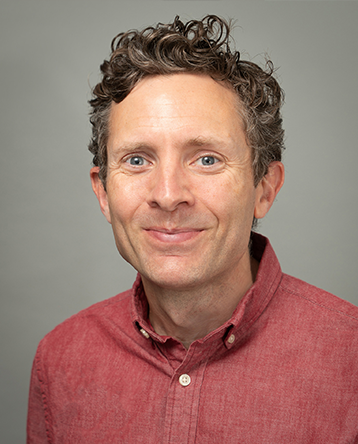
Alan McGaughey

Alan McGaughey

· Trustee ProfessorVerified

Carnegie Mellon University · Mechanical Engineering

Active 2000–2026

h-index53
Citations11.0k
Papers20748 last 5y
Funding$2.3M
See your match with Alan McGaughey — sign in to PhdFit.Sign in

About

Alan McGaughey is a Professor of Mechanical Engineering at Carnegie Mellon University, where he also holds a courtesy appointment in Materials Science and Engineering. He leads the Nanoscale Transport Phenomena Laboratory, which focuses on understanding the transport of mass, momentum, and energy at the atomic level by studying the behavior of phonons, photons, electrons, and fluid particles. His research integrates mechanical engineering with physics, materials science, and chemistry, employing molecular- and meso-scale simulation techniques and collaborating closely with experimental research groups. McGaughey received his Bachelor of Engineering from McMaster University in 1998, a Master of Applied Science from the University of Toronto in 2000, and a Ph.D. from the University of Michigan in 2004. He joined Carnegie Mellon University in 2005. Throughout his career, he has been recognized for his excellence in teaching, winning the Teare Teaching Award in 2014 and being voted Professor of the Year by Mechanical Engineering seniors three times (2012, 2015, and 2017). His research encompasses methodology development such as molecular dynamics, lattice dynamics, density functional theory, and the Boltzmann transport equation to predict phonon properties and thermal conductivity. He also investigates thermal transport across nanostructures and interfaces, including metal and oxide interfaces, and studies hybrid organic-inorganic materials like metal-organic frameworks and superatomic crystals. Additionally, his work extends to molecular mechanisms of electrocaloric cooling in polymers and liquid-vapor phase change phenomena. McGaughey's contributions have advanced the understanding of nanoscale heat transfer and thermal transport, with significant impacts on energy, catalysis, electronics, and ultrawide bandgap semiconductor applications.

Research signals

Five dimensions sourced from public faculty / publication signals. Sign in to compare against your own profile and see your match score.

Research topics

  • Chemistry
  • Composite material
  • Materials science
  • Thermodynamics
  • Condensed matter physics
  • Physics
  • Optoelectronics
  • Nanotechnology
  • Physical chemistry
  • Computer Science
  • Artificial Intelligence
  • Chemical physics
  • Optics
  • Electrical engineering

Selected publications

  • Perspective: twenty-five years of nanoscale thermal transport modeling

    Journal of Materials Science Materials Theory · 2026-04-13

    articleOpen access1st authorCorresponding

    Over the past twenty-five years, I have explored the application of molecular dynamics simulations and lattice dynamics calculations for determining phonon properties and thermal conductivity. Motivated by conversations with my group members and colleagues, I share insights about aspects of these methods that can be overlooked or misunderstood. For molecular dynamics, I focus on how to set up the simulations and apply the Green-Kubo method. For lattice dynamics, I outline the calculation workflow and highlight key decisions. I offer thoughts about the benefits of calculations and how they can be compared to experiments. I share highlights, mistakes, and missteps from my group’s work. I conclude with reflections on the past, present, and future of nanoscale thermal transport modeling.

  • Influence of Melt Pool Overlap on Inclusion Entrapment and Dispersoid Characteristics in Oxide Dispersion-Strengthened Ni-20Cr Fabricated by Powder Bed Fusion - Laser Beam

    SSRN Electronic Journal · 2026-01-01

    preprintOpen access
  • phonix-summary

    Hugging Face · 2026-04-02

    datasetOpen access
  • Two Distinct Phonon Wave Effects Control Thermal Transport across the Coherent–Incoherent Regime in Superlattices

    Advanced Science · 2026-02-04

    articleOpen access

    Superlattices composed of nanometer-thick constituent layers with smooth interfaces exhibit a minimum in their cross-plane thermal conductivity as the period thickness is increased, marking a transition from coherent to incoherent phonon transport. Previous attempts to explain this minimum using the phonon Boltzmann transport equation (BTE) required an ad hoc diffuse interface scattering model due to the BTE's inherent particle-based framework. We apply the phonon Wigner transport equation (WTE) to study superlattices with smooth interfaces, a framework that inherently includes both the particle-like (i.e., population-channel) and wave-like (i.e., coherence-channel) contributions to thermal conductivity. Our results reveal that the WTE coherence channel is responsible for the thermal conductivity increase in the incoherent regime. The two distinct phonon wave effects in superlattices-the coherent transport induced by wave interference at the interfaces and the WTE coherence-channel transport enabled by tunneling between phonon modes-are examined in detail, along with their connection to the interfacial vibrational modes.

  • Phonon mode resolved anharmonic heat capacity of solids

    Physical review. B./Physical review. B · 2025-02-05 · 9 citations

    articleSenior author

    We develop and validate a lattice dynamics framework to include anharmonic effects in the calculation of mode-level phonon heat capacities. To capture anharmonicity, the phonons are renormalized using a temperature-dependent effective potential and a proposed approach based on instantaneous normal modes. Ground-truth total heat capacities are obtained from molecular dynamics simulations. For Lennard-Jones argon (Stillinger-Weber silicon), the deviation of the potential energy contribution to the total heat capacity from the harmonic Dulong-Petit law is $\ensuremath{-}12%$ ($+16%$) at the highest studied temperature of 80 K (1300 K). The mode heat capacities from the lattice dynamics calculations are summed and compared with the ground-truth total heat capacity. For all temperatures considered, the instantaneous normal mode approach gives the best prediction for Lennard-Jones argon (within 1.1%), while for Stillinger-Weber silicon the temperature-dependent effective potential is best (within 0.7%). The Lennard-Jones argon mode heat capacities decrease with increasing frequency and are impacted by the effect of anharmonicity on the mode's self energy and its interactions with other modes. In Stillinger-Weber silicon, the acoustic mode heat capacities increase by up to 30% relative to the Dulong-Petit law, with these deviations driven by the interactions between modes. The proposed calculation framework will improve high-temperature thermal conductivity calculations, where the heat capacity is generally assumed to take on the harmonic value from the Dulong-Petit law.

  • Two-mode terms in Wigner transport equation elucidate anomalous thermal transport in amorphous silicon

    Physical review. B./Physical review. B · 2025-03-20 · 7 citations

    article

    Over the past decades, our understanding of thermal transport in amorphous materials has predominantly relied on the inherently harmonic Allen-Feldman theory, which has been found to be insufficient. In this study, the Wigner transport formalism is adopted to explicitly account for anharmonicity. In studying the thermal transport in amorphous silicon, the results highlight that amorphous materials are not generally computationally equivalent to crystals with disordered primitive cells. A method that leverages the properties of the two-mode terms in the Wigner transport formalism is proposed to predict the bulk thermal conductivity of amorphous materials using finite-size models. In doing so, the need for mode classification schemes required in the Allen-Feldman theory is eliminated, and similarities are discovered between the two-mode terms and the carriers commonly used to describe thermal transport in amorphous materials, i.e., propagons, diffusons, and locons. Two competing trends are identified that shed light on the recently discovered anomalous decrease in the high-temperature thermal conductivity in some amorphous materials.

  • Phonon transport in Al-rich AlxGa1−xN thin films

    Journal of Applied Physics · 2025-08-22 · 1 citations

    articleOpen access

    AlxGa1−xN with a high Al composition (x) presents significant potential for advancing next-generation high-power electronic devices. To support the thermal design of AlxGa1−xN-based electronics, the thermal conductivity of AlxGa1−xN thin films was measured as a function of Al composition, temperature, and film thickness using time-domain thermoreflectance and frequency-domain thermoreflectance techniques. The measurement results were interpreted by modeling phonon transport in AlxGa1−xN films using the phonon Boltzmann transport equation. Phonon properties, including frequencies, group velocities, and lifetimes, were calculated using a virtual crystal approximation, with the effects of mass-disorder scattering incorporated via the Tamura model. The measured thermal conductivity of Al0.7Ga0.3N is an order of magnitude lower than those for GaN and AlN, exhibits an increase followed by saturation with temperature, and shows a modest decrease with a reduction in the film thickness. The modeling results agree with the measurement results and reveal that mass-disorder scattering and phonon-boundary scattering are the dominant mechanisms that reduce the thermal conductivity of AlxGa1−xN thin films.

  • Tacticity-dependent thermal conductivity of single polymer chains

    Applied Physics Letters · 2025-06-30 · 2 citations

    articleSenior author

    While the effect of polymer chain tacticity on crystallinity, glass transition dynamics, and viscoelastic coefficients has been studied, its impact on thermal transport is unknown. Here, molecular dynamics simulations are used to determine the tacticity-dependent thermal conductivity of extended single chains of polypropylene and polystyrene. Chains with ordered tacticity show a threefold enhancement in thermal conductivity compared to chains with random tacticity. A kinetic theory-based model indicates that the enhancement results from a combination of large mean free paths and velocities of energy carriers. This work introduces tacticity control as a strategy to develop thermally conductive polymers.

  • Evolution of powder-entrapped pores in Ti–6Al–4V fabricated with powder bed fusion-laser beam process

    Additive manufacturing · 2025-06-18 · 3 citations

    articleOpen access

    X-ray micro computed tomography (X- μ CT) of bulk powder bed fusion - laser beam (PBF-LB) Ti-6Al-4V samples shows that, within the optimal process window – where lack-of-fusion and keyhole porosity are minimized – higher laser power reduces the number density of powder-entrapped pores when hatch spacing, layer thickness, and laser spot size remain fixed. To gain insight into this observation, the X- μ CT measurements of powder-entrapped pores are combined with a computational model to simulate pore trajectories in the PBF-LB melt pool. More than 100,000 independent pore trajectories are simulated at two different combinations of laser power and scanning velocity, where the forces acting on the pores are quantified using melt pool temperatures, pressures, and fluid flow velocities from multi-physics simulations. The model is then used to predict the pore size distributions in bulk samples fabricated within the optimal process window at 150 W, 700 mm/s and 370 W, 1200 mm/s. At both laser power settings, the total number density of pores predicted by the model is within one order of magnitude of the experimental values. The model suggests that the differences in the pore size distributions measured with X- μ CT are caused by differences in melt pool overlap (i.e., remelting). Using the model, a process map is constructed to predict porosity as a function of hatch spacing and layer thickness, suggesting that the number density of powder-entrapped pores can vary by two orders of magnitude within the optimal process window. This result suggests that the elimination of powder-entrapped pores poses an obstacle to increasing build rates by increasing the hatch spacing and layer thickness. While previous investigations of pore evolution during PBF-LB focused on experimental approaches, this work will enable the development of model-driven processing strategies to promote pore elimination.

  • Database and deep-learning scalability of anharmonic phonon properties by automated brute-force first-principles calculations

    npj Computational Materials · 2025-05-14 · 4 citations

    preprintOpen access

    <title>Abstract</title> Understanding the anharmonic phonon properties of crystal compounds—such as phonon lifetimes and thermal conductivities—is essential for investigating and optimizing their thermal transport behaviors. These properties also impact optical, electronic, and magnetic characteristics through interactions between phonons and other quasiparticles and fields. In this study, we develop an automated first-principles workflow to calculate anharmonic phonon properties and build a comprehensive database encompassing more than 6,000 inorganic compounds. Utilizing this dataset, we train a graph neural network model to predict thermal conductivity values and spectra from structural parameters, demonstrating a scaling law in which prediction accuracy improves with increasing training data size. High-throughput screening with the model enable the identification of materials exhibiting extreme thermal conductivities—both high and low. The resulting database offers valuable insights into the anharmonic behavior of phonons, thereby accelerating the design and development of advanced functional materials.

Recent grants

Frequent coauthors

  • Jonathan A. Malen

    63 shared
  • Cristina H. Amon

    University of Toronto

    37 shared
  • Wee‐Liat Ong

    35 shared
  • Xavier Roy

    Columbia University

    30 shared
  • Daniel W. Paley⧓

    Lawrence Berkeley National Laboratory

    29 shared
  • C. Fred Higgs

    Rice University

    29 shared
  • Patrick Dougherty

    26 shared
  • E. S. Landry

    26 shared

Labs

Education

  • B.S.

    McMaster University

    1998
  • M.S.

    University of Toronto

    2000
  • Ph.D.

    University of Michigan

    2004

Awards & honors

  • Air Force Office of Scientific Research Young Investigator P…
  • Benjamin Richard Teare Teaching Award (2014)
  • National Academy of Engineering's Frontiers of Engineering E…
  • Professor of the Year by the Mechanical Engineering seniors…
  • 2019 College of Engineering faculty award
  • Resume-aware match score
  • Save to shortlist
  • AI-drafted outreach

See your match with Alan McGaughey

PhdFit ranks faculty by your research interests, methods, and publications — grounded in their actual work, not templates.

  • Free to start
  • No credit card
  • 30-second signup