Resume-aware faculty matching

Find professors who actually fit you

Upload your resume. Four AI agents analyze your background, rank the faculty who fit, inspect their recent research, and help you draft outreach — grounded in their actual work, not templates.

Free to startNo credit cardCancel anytime
Top matches Balanced preset
Dr. Sarah Chen
Stanford · Interpretability · NLP
91
Dr. Marcus Holloway
MIT · Robotics · RL
84
Dr. Aisha Okonkwo
CMU · Fairness · HCI
82
Nova · Professor Researcher · re-ranking top 20…
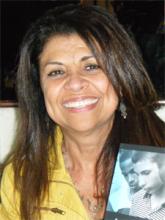
Aída Hurtado

Aída Hurtado

· Professor and Luis Leal Endowed Chair

University of California, Santa Barbara · Hispanic Studies

Active 1982–2023

h-index22
Citations2.7k
Papers9411 last 5y
Funding
See your match with Aída Hurtado — sign in to PhdFit.Sign in

About

Aída Hurtado is a Professor and the Luis Leal Endowed Chair in the Department of Chicana and Chicano Studies at the University of California, Santa Barbara. Her specialization includes equity issues in education for Chicanas/os, Chicana feminist theory, media representations of Latinos and other ethnic and racial groups, and social identity, including ethnic identity. She holds a B.A. from Pan American University and both her M.A. and Ph.D. from the University of Michigan. Her research focuses on equity issues in education, feminist theory, representations of ethnic and racial groups in the media, and social identity. Hurtado has contributed to the academic discourse through publications that explore language, culture, and identity in Latino/a educational achievement, multicultural feminist theory, and the development of Latina feminist psychology.

Research signals

Five dimensions sourced from public faculty / publication signals. Sign in to compare against your own profile and see your match score.

Research topics

  • Political Science
  • Sociology
  • Psychology
  • Social psychology
  • Computer Science
  • Developmental psychology
  • World Wide Web
  • Communication
  • Aesthetics
  • Philosophy
  • Law

Selected publications

  • Chicana/o Identity in a Changing U.S. Society

    2023 · 3 citations

    1st authorCorresponding
    • Sociology
    • Political Science
    • Sociology
  • Differences and Similarities

    2023-06-22

    book-chapter1st authorCorresponding

    This chapter examines the educational and gender socialization of 17 Mexican-descent Latinas and 10 Latino men in doctoral programs through qualitative interviews to examine the messages these individuals received about education from their parents. Latino parents with low educational levels not only lack instrumental knowledge, but they also have rigid views of gender that favor sons in every way, including encouraging them to succeed educationally, while they encourage their daughters to stay at home and marry early and view raising a family as more important than accomplishing educationally. Latinas did not necessarily follow their mothers’ admonishments, and some did have premarital sex. Most Latina respondents who had brothers reported that the brothers were exempt from household chores as they were from curfews. Latinas gave several justifications for gender differences in privileges.

  • “Know your worth and play it safe:” messages to daughters from Mexican-origin mothers in conversations about dating and romantic relationships

    Culture Health & Sexuality · 2021 · 9 citations

    Senior authorCorresponding
    • Psychology
    • Social psychology
    • Developmental psychology

    This study aims to enhance understanding of mother-daughter communication about dating and romantic relationships. We explored how Mexican-origin, mostly immigrant mothers talked about these topics with their daughters (ages 13 to 16 years) using videotaped observational methods. Themes drawn from the maternal messages contained in the conversations of 132 mother-daughter dyads show that mothers promote positive decision-making among their daughters, advising them to take their time, choose partners wisely, insist on respect from boys, maintain autonomy in relationships, pursue education goals, and develop a sense of self-worth. Mothers expressed concern about their daughters being pressured or manipulated into having unwanted sex, which led to messages about negative partner dynamics predominating in conversations. Communication about risks, however, included only implicit advice about self-protective behaviours and few messages about the potential for dating violence and abuse. We discuss the implications for improving the design of sexual health communication programmes in which mothers and daughters jointly participate.

  • Mexican Immigrant Mother-Daughter Conversations: Sexual Delay as a Path to Educational Achievement

    Association of Mexican American Educators Journal · 2020-06-16

    articleOpen accessSenior author

    In this article, we examine through quantitative and qualitative analyses Mexican immigrant mothers’ conversations about dating and sex with their teenage daughters who were not sexually active at the time of the study. The results of our mixed-methods study indicate that mothers give their daughters consejos (advice) restricting sex initiation embedded within messages that stress the importance of education as a means to achieve self-sufficiency and freedom. These messages of sexual restriction for the purpose of educational achievement and liberation are important for building a bridge of collaboration with teachers and schools to ensure the educational success of Mexican American female students. Our study examines whether the mothers’ consejos on sexual delay to achieve educational success results in their daughters’ postponement of sexual engagement for another year. We conclude by outlining the implications of our findings for teacher training.

  • Underground Feminisms: Inocencia’s Story

    2020-11-25

    book-chapter1st authorCorresponding
  • Session Two. Chicana/o Cultural Studies: Marking Interdisciplinary Relationships and Conjunctures

    New York University Press eBooks · 2020

    • Computer Science
    • Psychology
    • Computer Science
  • MeXicana Fashions: Politics, Self-Adornment, and Identity Construction

    Digital Commons - Trinity University (Trinity University) · 2020-01-01 · 3 citations

    article1st authorCorresponding

    Collecting the perspectives of scholars who reflect on their own relationships to particular garments, analyze the politics of dress, and examine the role of consumerism and entrepreneurialism in the production of creating and selling a style, meXicana Fashions examines and searches for meaning in these visible, performative aspects of identity. Focusing primarily on Chicanas but also considering trends connected to other Latin American communities, the authors highlight specific constituencies that are defined by region (“Tejana style,” “L.A. style”), age group (“homie,” “chola”), and social class (marked by haute couture labels such as Carolina Herrera and Oscar de la Renta). The essays acknowledge the complex layers of these styles, which are not mutually exclusive but instead reflect a range of intersections in occupation, origin, personality, sexuality, and fads. Other elements include urban indigenous fashion shows, the shifting quinceañera market, “walking altars” on the Days of the Dead, plus-size clothing, huipiles in the workplace, and dressing in drag. Together, these chapters illuminate the full array of messages woven into a vibrant social fabric.

  • Everyday Disputes and Negotiations: A Video Observational Analysis of Mexican‐origin Mother–Daughter Conversations

    Journal of Research on Adolescence · 2020 · 5 citations

    Senior authorCorresponding
    • Sociology
    • Psychology
    • Political Science

    Little is known about the nature of normative mother-daughter everyday disagreements in Mexican family contexts in which daughters are socialized to avoid conflict out of respect and deference to authority. Observations of videotaped conversations of 130 Mexican-origin mothers and their adolescent (13- to 16-year-old) daughters discussing their disagreements were systematically coded. Analyses of the conversations showed that the most frequently recurring conflicts involved autonomy privileges (appearance, friendships, going out, media use), household responsibilities (chores, sibling caretaking), and family dynamics (sibling tensions, sibling differential treatment, mutual respect in communication). Daughters from traditional immigrant families who had lived longer in Mexico were just as assertive in expressing their viewpoints as daughters from less traditional families, although they were less likely to display negative affect.

  • Session Three. Staking the Claim: Introducing Applied Chicana/o Cultural Studies

    New York University Press eBooks · 2020-12-31

    book-chapter
  • CHAPTER 7 Visuality, Corporality, and Power

    University of Texas Press eBooks · 2020-12-31

    book-chapter1st authorCorresponding

Frequent coauthors

  • Resume-aware match score
  • Save to shortlist
  • AI-drafted outreach

See your match with Aída Hurtado

PhdFit ranks faculty by your research interests, methods, and publications — grounded in their actual work, not templates.

  • Free to start
  • No credit card
  • 30-second signup