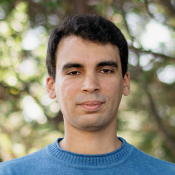
Ahmed Alaa
· Below The Line Assistant ProfessorVerifiedUniversity of California, Berkeley · Department of Statistics
Active 2002–2025
About
Ahmed Alaa is an Affiliated Assistant Professor in the Department of Statistics at the University of California, Berkeley. His research areas include applications in biology and health sciences, machine learning, causal inference, high-dimensional data analysis, nonparametric inference, physical and environmental sciences, probability, social sciences, and statistical computing. He is based in Warren Hall and can be contacted via amalaa@berkeley.edu. His work focuses on advancing statistical methods and their applications across various scientific disciplines, contributing to the development of innovative approaches in data analysis and inference.
Research signals
Five dimensions sourced from public faculty / publication signals. Sign in to compare against your own profile and see your match score.
Research topics
- Artificial Intelligence
- Computer Science
- Machine Learning
- Medicine
- Data science
- Business
- Database
- Risk analysis (engineering)
- Economics
- Economic growth
- Oncology
- Knowledge management
- Internal medicine
Selected publications
Generative AI enables medical image segmentation in ultra low-data regimes
Nature Communications · 2025-07-14 · 18 citations
articleOpen accessSemantic segmentation of medical images is pivotal in applications like disease diagnosis and treatment planning. While deep learning automates this task effectively, it struggles in ultra low-data regimes for the scarcity of annotated segmentation masks. To address this, we propose a generative deep learning framework that produces high-quality image-mask pairs as auxiliary training data. Unlike traditional generative models that separate data generation from model training, ours uses multi-level optimization for end-to-end data generation. This allows segmentation performance to guide the generation process, producing data tailored to improve segmentation outcomes. Our method demonstrates strong generalization across 11 medical image segmentation tasks and 19 datasets, covering various diseases, organs, and modalities. It improves performance by 10-20% (absolute) in both same- and out-of-domain settings and requires 8-20 times less training data than existing approaches. This greatly enhances the feasibility and cost-effectiveness of deep learning in data-limited medical imaging scenarios.
Lifelong Knowledge Editing requires Better Regularization
ArXiv.org · 2025-02-03
preprintOpen accessKnowledge editing is a promising way to improve factuality in large language models, but recent studies have shown significant model degradation during sequential editing. In this paper, we formalize the popular locate-then-edit methods as a two-step fine-tuning process, allowing us to precisely identify the root cause of this degradation. We show that model degradation occurs due to (1) over-optimization of internal activations and (2) continuous norm-growth of edited matrices. To mitigate these issues, we introduce two regularization techniques: (1) Most-Probable Early Stopping (MPES) and (2) explicit Frobenius norm-constraint. We demonstrate that applying these simple yet effective regularization techniques at key points in the editing process can substantially mitigate model degradation. Combining these regularization methods enables scaling locate-then-edit methods to 10,000 edits while reducing editing time by 42-61%. These results show that targeted regularization is essential for lifelong knowledge editing.
Data reuse enables cost-efficient randomized trials of medical AI models
ArXiv.org · 2025-11-12
preprintOpen accessRandomized controlled trials (RCTs) are indispensable for establishing the clinical value of medical artificial-intelligence (AI) tools, yet their high cost and long timelines hinder timely validation as new models emerge rapidly. Here, we propose BRIDGE, a data-reuse RCT design for AI-based risk models. AI risk models support a broad range of interventions, including screening, treatment selection, and clinical alerts. BRIDGE trials recycle participant-level data from completed trials of AI models when legacy and updated models make concordant predictions, thereby reducing the enrollment requirement for subsequent trials. We provide a practical checklist for investigators to assess whether reusing data from previous trials allows for valid causal inference and preserves type I error. Using real-world datasets across breast cancer, cardiovascular disease, and sepsis, we demonstrate concordance between successive AI models, with up to 64.8% overlap in top 5% high-risk cohorts. We then simulate a series of breast cancer screening studies, where our design reduced required enrollment by 46.6%--saving over US$2.8 million--while maintaining 80% power. By transforming trials into adaptive, modular studies, our proposed design makes Level I evidence generation feasible for every model iteration, thereby accelerating cost-effective translation of AI into routine care.
“Face Detection & Recognition System for Enhancing Cybersecurity”
2025-07-28
articleHigh-accuracy, real-time face detection is a critical requirement for enhancing cybersecurity across various domains. This paper proposes a novel approach for security augmentation through a hybrid hypermodel that synergistically combines DenseNet-121 and ResNet-50 architectures. Leveraging ResNet-50's residual connections for stable gradient flow and DenseNet-121's dense connectivity for efficient feature reuse, this model is designed to overcome limitations of standalone networks. The hypermodel is trained on diverse face datasets, including data augmented with varying brightness conditions to simulate real-world scenarios. Through real-time evaluation with OpenCV, the system achieves a high accuracy of 96 %, demonstrating its practicality and efficiency for security deployment. This research contributes a stable and highly effective face detection system, capable of accurately identifying individuals across diverse environments, thereby significantly enhancing security operations.
Conformal Prediction Sets with Improved Conditional Coverage using Trust Scores
ArXiv.org · 2025-01-17 · 1 citations
preprintOpen accessSenior authorStandard conformal prediction offers a marginal guarantee on coverage, but for prediction sets to be truly useful, they should ideally ensure coverage conditional on each test point. Unfortunately, it is impossible to achieve exact, distribution-free conditional coverage in finite samples. In this work, we propose an alternative conformal prediction algorithm that targets coverage where it matters most--in instances where a classifier is overconfident in its incorrect predictions. We start by dissecting miscoverage events in marginally-valid conformal prediction, and show that miscoverage rates vary based on the classifier's confidence and its deviation from the Bayes optimal classifier. Motivated by this insight, we develop a variant of conformal prediction that targets coverage conditional on a reduced set of two variables: the classifier's confidence in a prediction and a nonparametric trust score that measures its deviation from the Bayes classifier. Empirical evaluation on multiple image datasets shows that our method generally improves conditional coverage properties compared to standard conformal prediction, including class-conditional coverage, coverage over arbitrary subgroups, and coverage over demographic groups.
Lifelong Knowledge Editing requires Better Regularization
2025-01-01
articleOpen accessBioAgents: Bridging the gap in bioinformatics analysis with multi-agent systems
Scientific Reports · 2025-11-07 · 9 citations
articleOpen accessDeveloping end-to-end bioinformatics workflows is challenging, demanding deep expertise in both genomics and computational techniques. While large language models (LLMs) provide some assistance, they often lack the nuanced guidance required for complex bioinformatics tasks, and are resource-intensive. We thus propose a multi-agent system built on small language models, fine-tuned on bioinformatics data, and enhanced with retrieval augmented generation (RAG). Our system, BioAgents, enables local operation and personalization using proprietary data. We observe performance comparable to human experts on conceptual genomics tasks, and discuss future work to enhance code generation capabilities.
Cardiology and Angiology An International Journal · 2025-04-24
articleOpen access1st authorCorrespondingBackground: Carcinoid syndrome, a rare neuroendocrine disorder, can lead to progressive valvular fibrosis due to the excessive secretion of serotonin and other vasoactive substances. This typically affects the right-sided cardiac valves and rarely the left side. The resulting carcinoid heart disease represents an uncommon but serious cause of heart failure. Presentation of Case: We report the case of a 45-year-old woman admitted for progressive heart failure symptoms, including dyspnea, peripheral edema, and fatigue. She also experienced flushing and diarrhea suggestive of carcinoid syndrome. Transthoracic echocardiography revealed severe tricuspid, mitral, and aortic valve involvement, with biatrial dilation and features of severe stenosis and regurgitation. Work-up revealed elevated urinary 5-HIAA and chromogranin A levels, and imaging identified a hyper vascular ileocecal mass consistent with a neuroendocrine tumor. The diagnosis of carcinoid syndrome with multivalvular carcinoid heart disease was established. Discussion: This case illustrates the diagnostic challenge of distinguishing carcinoid heart disease from other etiologies such as rheumatic heart disease. The rare left-sided valvular involvement, likely due to high circulating serotonin levels, underscores the severity of tumor burden. Early identification through echocardiography and biochemical markers is crucial. Management requires both symptomatic treatment of heart failure and control of the underlying tumor through somatostatin analogs and surgical or oncologic intervention. Conclusion: Carcinoid-induced multivalvular heart disease is a rare but critical diagnosis in patients with neuroendocrine tumors. Optimal care requires a multidisciplinary approach combining cardiology, oncology, and cardiac surgery to improve outcomes and manage complex systemic involvement.
COVID-19 Among Solid Organ Transplant Recipients
Infectious Diseases in Clinical Practice · 2025-04-23
articleOpen accessBackground In this study, we present the clinical characteristics and outcome of COVID-19 among solid organ transplant (SOT) recipients and assess factors associated with mortality. Methods We retrospectively describe a cohort of SOT recipients infected with SARS-CoV-2 at Prince Sultan Military Medical City, Riyadh, Saudi Arabia, between March 2020 and December 2022. Specific information regarding clinical presentation, course, management, and outcome were obtained from the electronic records. Results Eighty-one SOT recipients enrolled in the study, 65 (80%) kidney, 12 (15%) heart, and 4 (5%) liver transplants. The majority of SOT patients infected with COVID-19 were male (66.7%), had hypertension (67.9%), and take prednisone (97.5%), tacrolimus (92.6%), and antimetabolite (95%) at the time of diagnosis. Radiologically only 17 (34%) patients had images consistent with the diagnosis of COVID-19 pneumonia (50% liver, 35% kidney, and 22% heart). Thirty-three (40.7%) SOT patients were provided antivirals, steroids, convalescent plasma, IL-6 inhibitors, anticoagulation, and antibiotics. The survival rate was 97.5%, with only 2 deaths attributable to COVID-19 pneumonia, none had graft loss, 9 (22%) patients required admission to intensive care unit, 5 (12.2%) requiring mechanical ventilation, and 7 (17.1%) patients required a high-flow nasal cannula. Only bacterial coinfection was recognizable in 2 patients who also passed away; neither CMV nor fungal coinfections were evident. Conclusions There is no specific symptom for COVID-19 among SOT patients. Furthermore, severe complications and mortality rate are low among SOT patients infected with SARS-CoV-2. This may be related to close monitoring, early intervention, and vaccination used with SOT patients that may have a protective effect against detrimental COVID-19 outcomes.
Data reuse enables cost-efficient randomized trials of medical AI models
Research Square · 2025-12-02
preprintOpen access
Frequent coauthors
- 119 shared
Mihaela van der Schaar
- 23 shared
Mahmoud H. Ismail
American University of Sharjah
- 15 shared
Ioana Bica
- 15 shared
Jinsung Yoon
- 15 shared
Hazim Tawfik
Cairo University
- 12 shared
Zhaozhi Qian
- 11 shared
Scott Hu
University of California, Los Angeles
- 10 shared
Irene Y. Chen
University of Rochester Medical Center
- Resume-aware match score
- Save to shortlist
- AI-drafted outreach
See your match with Ahmed Alaa
PhdFit ranks faculty by your research interests, methods, and publications — grounded in their actual work, not templates.
- Free to start
- No credit card
- 30-second signup