Resume-aware faculty matching

Find professors who actually fit you

Upload your resume. Four AI agents analyze your background, rank the faculty who fit, inspect their recent research, and help you draft outreach — grounded in their actual work, not templates.

Free to startNo credit cardCancel anytime
Top matches Balanced preset
Dr. Sarah Chen
Stanford · Interpretability · NLP
91
Dr. Marcus Holloway
MIT · Robotics · RL
84
Dr. Aisha Okonkwo
CMU · Fairness · HCI
82
Nova · Professor Researcher · re-ranking top 20…
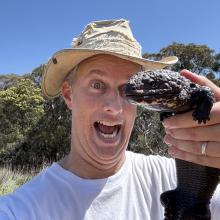
Adam Leaché

Adam Leaché

· ProfessorVerified

University of Washington · Biology

Active 2002–2026

h-index55
Citations15.1k
Papers25673 last 5y
Funding
See your match with Adam Leaché — sign in to PhdFit.Sign in

About

Adam Leaché is the Principal Investigator of the Leache Lab at the University of Washington, where he specializes in the evolutionary biology of reptiles and amphibians. His research focuses on understanding the evolutionary processes and genetic diversity within these groups, contributing to the broader field of herpetology and evolutionary biology. As a leading figure in his lab, he guides research efforts that explore the genetic and ecological factors shaping reptile and amphibian diversity, fostering advancements in conservation and evolutionary studies.

Research signals

Five dimensions sourced from public faculty / publication signals. Sign in to compare against your own profile and see your match score.

Research topics

  • Computer Science
  • Biology
  • Ecology
  • Artificial Intelligence
  • Evolutionary biology
  • Genetics
  • Social Science
  • Engineering
  • Sociology
  • Medicine
  • Mathematics
  • Data science
  • Internal medicine
  • Engineering ethics
  • Paleontology
  • Combinatorics
  • Statistics
  • Geography

Selected publications

  • FIGURE 12 in Four new cryptic Ptychadena species from the Upper Guinean rainforests of West Africa (Amphibia, Anura, Ptychadenidae)

    Zenodo (CERN European Organization for Nuclear Research) · 2026-03-20

    otherOpen access

    FIGURE 12. Hind feet of the type species (all male) of the Ptychadena aequiplicata-group, illustrating the visibility and shape of outer metatarsal tubercle and the presence or absence of supernumerary tubercles on bases of toe III and IV. a) Ptychadena aequiplicata (ZMB 74490; lectotype), b) P. dahomeyensis sp. nov. (ZMB 95881; holotype); c) P. atewae sp. nov. (ZMB 95884; holotype), d) P. silvamare sp. nov. (ZMB 88441; holotype), and e) P. saskiae sp. nov. (ZMB 95904; holotype). The right hind foot is shown for all species except P. silvamare sp. nov. (d) which displays the left foot. Figures are not to scale.

  • FIGURE 2 in Four new cryptic Ptychadena species from the Upper Guinean rainforests of West Africa (Amphibia, Anura, Ptychadenidae)

    Zenodo (CERN European Organization for Nuclear Research) · 2026-03-20

    otherOpen access

    FIGURE 2. Habitats of West African members of the Ptychadena aequiplicata-group; a) Lama Forest, Bénin, the type locality of P. dahomeyensis sp. nov., this forest consists of a more or less pristine (left side) and an agroforestry (right side) part; b) Mabi Yaya Forest Reserve, a locality of P. atewae sp. nov. in Côte d'Ivoire; c) Taï National Park, Côte d'Ivoire and d) Krahn-Bassa Proposed Protected Area, Liberia (type locality of P. silvamare sp. nov.), at these two forests P. silvamare sp. nov. and P. saskiae sp. nov. occur in syntopy.

  • FIGURE 15 in Four new cryptic Ptychadena species from the Upper Guinean rainforests of West Africa (Amphibia, Anura, Ptychadenidae)

    Zenodo (CERN European Organization for Nuclear Research) · 2026-03-20

    otherOpen access

    FIGURE 15. Ptychadena atewae sp. nov. in life, including individuals from the Mabi-Yaya Forest Reserve (a) and the Azagny National Park (c; cf.), both Côte d'Ivoire, and the Atewa Range, Ghana (b, d); photos not assignable to vouchers. Photo b: courtesy by Piotr Naskrecki.

  • FIGURE 19 in Four new cryptic Ptychadena species from the Upper Guinean rainforests of West Africa (Amphibia, Anura, Ptychadenidae)

    Zenodo (CERN European Organization for Nuclear Research) · 2026-03-20

    otherOpen access

    FIGURE 19. Scan of a colour slide, showing dark Ptychadena eggs on the forest floor in Taï National Park, Côte d'Ivoire, see discussion and Rödel et al. (2002) for additional details.

  • FIGURE 15 in Four new cryptic Ptychadena species from the Upper Guinean rainforests of West Africa (Amphibia, Anura, Ptychadenidae)

    Zenodo (CERN European Organization for Nuclear Research) · 2026-03-20

    otherOpen access

    FIGURE 15. Ptychadena atewae sp. nov. in life, including individuals from the Mabi-Yaya Forest Reserve (a) and the Azagny National Park (c; cf.), both Côte d'Ivoire, and the Atewa Range, Ghana (b, d); photos not assignable to vouchers. Photo b: courtesy by Piotr Naskrecki.

  • Gene Flow Creates Fuzzy Species Boundaries in Fence Lizards

    bioRxiv (Cold Spring Harbor Laboratory) · 2026-04-10

    articleOpen access1st authorCorresponding

    Abstract Species delimitation is a fundamental challenge in systematic biology, particularly for geographically variable taxa with hierarchical population structure and gene flow. Migration-aware coalescent models provide a powerful framework for investigating lineage divergence and accurately defining species boundaries. In this study, we combine statistical evaluations of gene flow with phylogenetic and population structure analyses to delimit species of fence lizards within the Sceloporus undulatus complex, a group characterized by extensive population subdivision, mitochondrial DNA introgression, and nuclear gene flow. We find that the undulatus complex exhibits uneven variation in genetic, morphological, and bioclimatic traits, resulting in variable distinctiveness among groups. In some cases, species boundaries are recognized by clear genetic discontinuities without gene flow. In others, shallow divergence, paraphyly, and gene flow produce leaky boundaries and fuzzy species limits. Mitochondrial introgression is extensive and concentrated at species boundaries, whereas nuclear gene flow occurs between only a few species and at much lower levels than within species. Neither within-species populations or species are substantially diverged across morphology or bioclimatic space, highlighting the limited utility of these traits for diagnosing species in this group. By integrating estimates of gene flow with phylogenetic and population structure analyses, this study provides a robust and biologically meaningful revised taxonomic framework for the undulatus complex that identifies independently evolving lineages as species.

  • Isolation in motion: how riverscape bridges and barriers shape the evolution of plants in fast-flowing river archipelagos

    DRYAD · 2026-04-21

    datasetOpen access

    Islands serve as natural laboratories for studying evolution. In fast-flowing rivers, rapids and waterfalls are discrete rocky habitats, acting as insular freshwater landscape units. In the Neotropics, these riverine archipelagos are inhabited one group of angiosperms, the Podostemaceae. We used Marathrum foeniculaceum, a species distributed across the Americas, to test ecological hypotheses derived from island biogeography. Using whole‐genome and plastome data from individuals collected across rivers in Panama and Colombia, we investigated the extent and constraints to gene flow at multiple spatial scales using tests of gene flow under the multispecies coalescent with migration model. We further tested the hypothesis that gene flow is asymmetric and follows the direction of river flow. Our results revealed strong genetic differentiation among independent drainage basins and significant isolation-by-distance, with overland distance posing a stronger barrier to gene flow than distance along continuous river courses. Gene flow identified between adjacent rivers likely reflects historical or episodic river connections rather than frequent overland dispersals. Comparisons between nuclear and plastid data indicate stronger constraints on seed than pollen dispersal. Phylogeographic patterns in Podostemaceae further suggest an east-to-west history of river connectivity across the Isthmus of Panama. Together, these findings show that river connectivity and flow directionality structure genetic variation in strictly riverine aquatic angiosperms. Rapids and waterfalls act as evolutionary islands where dispersal limitation, localized connectivity, and water flow interact to shape population differentiation in riverine landscapes.

  • Draft assemblies for 177 bird species enhance genus-level coverage

    GigaScience · 2026-05-08

    articleOpen access

    BACKGROUND: With over 10,000 recognized species, birds constitute one of the most diverse and widely distributed vertebrate groups. Although avian genomics has advanced rapidly over the past decade, substantial gaps remain across the global avifauna. Filling these gaps is essential for understanding macroevolutionary patterns, population structure, and the molecular basis of ecological and behavioral diversity. Worldwide museum collections represent invaluable resources for filling these gaps, yet the typically degraded DNA and limited quantities from historical specimens have posed significant challenges for generating high-quality genome assemblies. RESULTS: Here, the Bird Genome 10 K (B10K) Project adopted low-input sequencing strategies that reduce costs while improving assembly quality compared with earlier order- and family-level genomes. Using mainly stLFR, complemented by 10X Genomics and standard next-generation sequencing, we assembled 177 avian genomes from museum specimens and tissue collections representing 161 genera, including 102 newly sequenced at the genomic level. The assemblies average ∼1.2 Gb in size, with scaffold N50 = 8.03 Mb, contig N50 = 120 kb, 93% BUSCO completeness, and Merqury QV score of 56. CONCLUSIONS: These genomes greatly expand avian taxonomic coverage and demonstrate the efficiency of low-input sequencing for generating high-quality assemblies from limited and often degraded material sourced from museum specimens. This resource provides a foundation for comparative genomics, conservation genetics, and evolutionary studies across the avian tree of life.

  • FIGURE 14 in Four new cryptic Ptychadena species from the Upper Guinean rainforests of West Africa (Amphibia, Anura, Ptychadenidae)

    Zenodo (CERN European Organization for Nuclear Research) · 2026-03-20

    otherOpen access

    FIGURE 14. Ptychadena atewae sp. nov. paratypes in life, individuals from the Atewa Range, Ghana; a) UWBM 08947 (male), b) UWBM 08944 (female), c) UWBM 08948 (male), d) UWBM 08945 (male), e) UWBM 08946 (male).

  • FIGURE 1 in Four new cryptic Ptychadena species from the Upper Guinean rainforests of West Africa (Amphibia, Anura, Ptychadenidae)

    Zenodo (CERN European Organization for Nuclear Research) · 2026-03-20

    otherOpen access

    FIGURE 1. Measurement scheme for external morphology measures used in this study for Ptychadena. Abbreviations are given in the text.

Frequent coauthors

  • Jamie R. Oaks

    Auburn University

    108 shared
  • John E. McCormack

    104 shared
  • Tanja Stadler

    Board of the Swiss Federal Institutes of Technology

    104 shared
  • F. Keith Barker

    Science Museum of Minnesota

    102 shared
  • Joël Cracraft

    American Museum of Natural History

    102 shared
  • Brant C. Faircloth

    Louisiana State University

    102 shared
  • Sebastian Höhna

    Ludwig-Maximilians-Universität München

    102 shared
  • Hélène Morlon

    Centre National de la Recherche Scientifique

    100 shared

Labs

Education

  • B.A.

    Orange Coast College

    1995
  • B.S.

    San Diego State University

    1997
  • M.S.

    San Diego State University

    2000
  • Ph.D., Integrative Biology

    University of California, Berkeley

    2008
  • Other

    UC Davis

    2008

Awards & honors

  • UW Distinguished Teaching Award
  • Resume-aware match score
  • Save to shortlist
  • AI-drafted outreach

See your match with Adam Leaché

PhdFit ranks faculty by your research interests, methods, and publications — grounded in their actual work, not templates.

  • Free to start
  • No credit card
  • 30-second signup