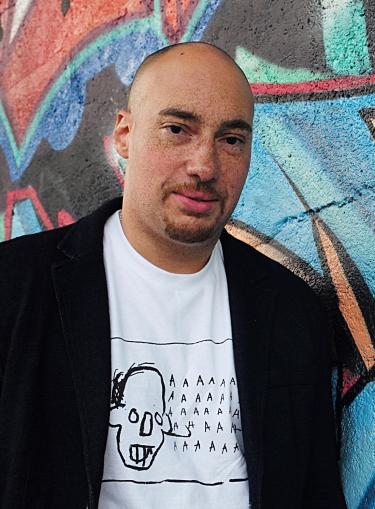
Adam Bradley
· Professor of English & African American StudiesUniversity of California, Los Angeles · African American Studies
Research signals
Five dimensions sourced from public faculty / publication signals. Sign in to compare against your own profile and see your match score.
Research topics
- Medicine
- Biology
- Immunology
- Pathology
- Genetics
- Cancer research
- Anatomy
- Art
- Cell biology
Selected publications
Nature Communications · 2024 · 48 citations
- Immunology
- Medicine
- Biology
Rheumatoid arthritis (RA) is an autoimmune disease involving antigen-specific T and B cells. Here, we perform single-cell RNA and repertoire sequencing on paired synovial tissue and blood samples from 12 seropositive RA patients. We identify clonally expanded CD4 + T cells, including CCL5+ cells and T peripheral helper (Tph) cells, which show a prominent transcriptomic signature of recent activation and effector function. CD8 + T cells show higher oligoclonality than CD4 + T cells, with the largest synovial clones enriched in GZMK+ cells. CD8 + T cells with possibly virus-reactive TCRs are distributed across transcriptomic clusters. In the B cell compartment, NR4A1+ activated B cells, and plasma cells are enriched in the synovium and demonstrate substantial clonal expansion. We identify synovial plasma cells that share BCRs with synovial ABC, memory, and activated B cells. Receptor-ligand analysis predicted IFNG and TNFRSF members as mediators of synovial Tph-B cell interactions. Together, these results reveal clonal relationships between functionally distinct lymphocyte populations that infiltrate the synovium of patients with RA.
Deconstruction of rheumatoid arthritis synovium defines inflammatory subtypes
Nature · 2023 · 365 citations
- Medicine
- Immunology
- Pathology
. Here, to deconstruct the cell states and pathways that characterize this pathogenic heterogeneity, we profiled the full spectrum of cells in inflamed synovium from patients with rheumatoid arthritis. We used multi-modal single-cell RNA-sequencing and surface protein data coupled with histology of synovial tissue from 79 donors to build single-cell atlas of rheumatoid arthritis synovial tissue that includes more than 314,000 cells. We stratified tissues into six groups, referred to as cell-type abundance phenotypes (CTAPs), each characterized by selectively enriched cell states. These CTAPs demonstrate the diversity of synovial inflammation in rheumatoid arthritis, ranging from samples enriched for T and B cells to those largely lacking lymphocytes. Disease-relevant cell states, cytokines, risk genes, histology and serology metrics are associated with particular CTAPs. CTAPs are dynamic and can predict treatment response, highlighting the clinical utility of classifying rheumatoid arthritis synovial phenotypes. This comprehensive atlas and molecular, tissue-based stratification of rheumatoid arthritis synovial tissue reveal new insights into rheumatoid arthritis pathology and heterogeneity that could inform novel targeted treatments.
Fibroblasts as immune regulators in infection, inflammation and cancer
Nature reviews. Immunology · 2021 · 579 citations
- Immunology
- Biology
- Cancer research
Notch signalling drives synovial fibroblast identity and arthritis pathology
Nature · 2020 · 519 citations
Senior authorCorresponding- Pathology
- Cell biology
- Biology
Frequent coauthors
- 410 shared
Soumya Raychaudhuri
Brigham and Women's Hospital
- 250 shared
Deepak A. Rao
Brigham and Women's Hospital
- 185 shared
Kevin Wei
Brigham and Women's Hospital
- 168 shared
Gerald F. Watts
- 166 shared
Steven A. Porcelli
Albert Einstein College of Medicine
- 151 shared
Andrew Filer
- 139 shared
Laura T. Donlin
Hospital for Special Surgery
- 139 shared
Fan Zhang
Qilu Hospital of Shandong University
Similar researchers at University of California, Los Angeles
- Resume-aware match score
- Save to shortlist
- AI-drafted outreach
See your match with Adam Bradley
PhdFit ranks faculty by your research interests, methods, and publications — grounded in their actual work, not templates.
- Free to start
- No credit card
- 30-second signup