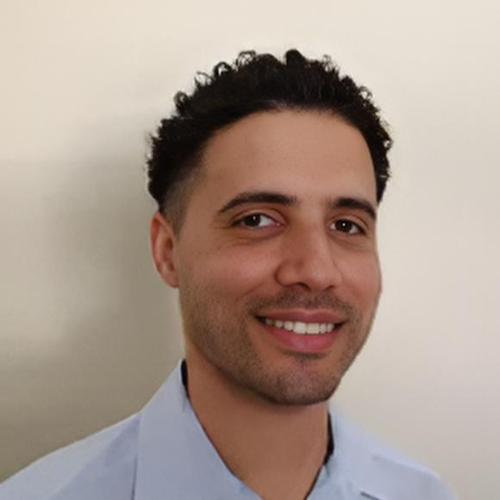
Adam Bledsoe
· Associate ProfessorVerifiedUniversity of Minnesota · African American and African Studies
Active 2013–2026
About
Adam Bledsoe is a professor in the College of Liberal Arts at the University of Minnesota, specializing in Geography, Environment & Society. He serves as the Director of Graduate Studies in the department. His research focuses on Black geographies, African diaspora, political geography, and the impacts of anti-Blackness. Bledsoe has contributed to scholarly discussions on racial antagonism, global capital's anti-Blackness, and the pluralities of Black geographies. His work includes publications such as 'The Primacy of Anti-Blackness' and articles in journals like the Journal of Latin American Geography, Antipode, and Society and Space. He is actively involved in teaching courses related to Black Geographies, Latin American Geographies, Political Geography, and Our Globalizing World.
Research signals
Five dimensions sourced from public faculty / publication signals. Sign in to compare against your own profile and see your match score.
Research topics
- Sociology
- Social Science
- Political Science
- Law
- Gender studies
- Media studies
- Epistemology
Selected publications
Reflecting with our Elder: A Conversation with Bobby Wilson
Southeastern geographer · 2026-05-01
article1st authorCorrespondingAnnals of the American Association of Geographers · 2024-03-25 · 7 citations
articleEnthusiasm for Black geographies has grown significantly since it was formalized in Black Geographies and the Politics of Place (McKittrick and Woods 2007). With an increase in interest in this framework has come an increased potential for the misapplication of the aims defined in its origin. Now is the time to reiterate the purpose of Black geographies. We suggest that although within the purview of geographies of race, Black geographies provides insights beyond this unit of study that are reliant on particular sights, valuations, methods, and liberatory practices.
2023-04-11
peer-reviewOpen access1st authorCorrespondingForegrounding race in analyses of extraction
Dialogues in Human Geography · 2021-10-29 · 1 citations
article1st authorCorrespondingAnnals of the American Association of Geographers · 2021-10-21 · 15 citations
articleOpen access1st authorCorrespondingThis article examines self-defense as an inherently spatial phenomenon that evidences an assumed right to the individual self and the creation and occupation of space. I argue that self-defense and its claims to space are conceptually and historically denied to Black diasporic populations, as gratuitous violence and the assumption of Black aspatiality void Black claims to self and space. I draw on U.S. laws and legal decisions from the antebellum era through the present to show how anti-Blackness has manifested itself in the legal realm through repeated legal denials of Black self-defense. I argue that at the core of this prohibition of Black self-defense is a societal need to preserve gratuitous violence and aspatiality as tenets of modern humanity. I further argue that, despite this long-standing prohibition, organized Black self-defense has remained important to Black social and political movements throughout the history of the United States. Examining Black movements from the nineteenth and twentieth centuries, I show how different movements have used self-defense to realize larger goals and establish and protect spaces in which Black life is fostered.
Methodological reflections on geographies of blackness
Progress in Human Geography · 2021 · 35 citations
1st authorCorresponding- Sociology
- Sociology
- Epistemology
This article argues that work on geographies of Blackness and Black Geographies emphasizes different aspects of Black experiences and relies on different methodologies in making these emphases. I focus on the work of six prominent geographers who engage with questions of Blackness and examine the different data sources they draw on. I show that they all employ a multi-method, interdisciplinary approach in their scholarship and that all of them, regardless of emphasis or method, foreground the experiences of black populations. I argue that this collective multi-method approach pushes the conceptual boundaries of the wider discipline of Geography.
‘A world of many Souths’: (anti)Blackness and historical difference in conversation with Ananya Roy
Urban Geography · 2020 · 17 citations
Senior authorCorresponding- Sociology
- Social Science
- Political Science
On 2–3 October 2018, an interdisciplinary group of scholars and community organizers were invited to participate in “(anti)Blackness in the American Metropolis,” 2-day workshop in Baltimore, Maryland. Each shared research on the effects of anti-Blackness policies and practices in U.S. cities and place-based organizing tactics designed to address and refute them. The event sought to merge a gap in the study of urban black communities exiting between Black Studies and Geography. The event culminated in a keynote address by Dr. Ananya Roy on the political potential of forging intellectual and communal relationships across the Global South. This interview, conducted in the aftermath of the workshop, extends Dr. Roy’s address. Here, she discusses her personal and political growth, her recent intellectual interface with the Black Radical Tradition, as well as her rationale for participating in this inaugural workshop.
Afro-Brazilian Resistance to Extractivism in the Bay of Aratu
2020-05-21 · 4 citations
book-chapter1st authorCorrespondingUniversity of Minnesota Press eBooks · 2020-10-27 · 9 citations
book-chapterSenior authorDefender Nosso Pedaço de Chão: Quilombola Struggles in Bahia
Carolina Digital Repository (University of North Carolina at Chapel Hill) · 2019-08-13 · 11 citations
articleOpen access1st authorCorrespondingThis research examines the territorial understandings and practices of three “quilombo” communities in the state of Bahia, Brazil, as they seek to protect their way of life amidst a series of land grabs enacted by public and private actors. These quilombos, which were started by slaves and runaway slaves over two hundred years ago, are located in the Bay of Aratu—an area that took on national importance as a site of industry and shipping in the mid-20th century. Because of this, the communities have spent nearly sixty years struggling to defend their territories against the enclosures, environmental degradation, and irreversible topographical changes that typify state, military, and industrial presence in the area. While the tactics and discourses employed by the quilombos reflect the realities of present-day Brazil and attend to the shortcomings of the country’s “progressive” government, I argue that the quilombola struggle is part of a much larger legacy of Black Geographies. I define Black Geographies as the spatial expressions of those that recognize the inherent violence of modern territorial practices and notions of human hierarchy and seek to create a world not defined in these exclusive terms. Using qualitative and participatory methods, I explore the ways in which the Quilombos from the Bay of Aratu analyze the oppressive qualities of Brazil’s prevailing political and economic climate and how the communities’ own territorial arrangements work to protect against these violent expressions while simultaneously creating geographies that value and promote Black life.
Frequent coauthors
- 6 shared
Willie Jamaal Wright
University of Florida
- 2 shared
Priscilla Ferreira
Caribbean University
- 2 shared
Brian Williams
- 2 shared
Tyler McCreary
Florida State University
- 1 shared
Ellen Louis
University of California, Irvine
- 1 shared
Kristen Maye
Mount Holyoke College
- 1 shared
Yousuf Al‐Bulushi
University of California, Irvine
- 1 shared
LaToya E. Eaves
- Resume-aware match score
- Save to shortlist
- AI-drafted outreach
See your match with Adam Bledsoe
PhdFit ranks faculty by your research interests, methods, and publications — grounded in their actual work, not templates.
- Free to start
- No credit card
- 30-second signup