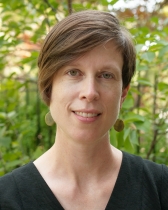
Kelly Wisecup
· Arthur E. Andersen Teaching and Research Professor; Professor of EnglishNorthwestern University · English
Active 2006–2025
About
Kelly Wisecup is a literary and cultural historian whose work integrates early American studies, Native American and Indigenous Studies, and histories of books and archives. She is a non-Native scholar who collaborates with contemporary Native nations and individuals to research, teach, and write about Indigenous literatures. Wisecup's scholarship includes a focus on Indigenous compilation, archival practices, and the material histories of Native American literature. Her most recent book, Assembled for Use: Indigenous Compilation and the Archives of Early Native American Literature, was published by Yale University Press in 2021 and received the 2023 Early American Literature Book Prize and the 2023 St. Louis Mercantile Library Prize from the Bibliographical Society of America. She is currently the Beatrice Shepherd Blane Fellow at the Radcliffe Institute at Harvard University for 2025-26, where she researches Indigenous birchbark books created during deforestation in the Great Lakes region, their afterlives in relation to woodpulp papermaking, and contemporary Indigenous art engaging these literary histories. Wisecup's research has been supported by fellowships from notable institutions including the Newberry Library, the National Endowment for the Humanities, the American Antiquarian Society, and the American Philosophical Society. She has served as co-director of Northwestern's Center for Native American and Indigenous Research and is actively involved in collaborative public humanities projects that intersect archives, rivers, cities, and Indigenous literatures. Wisecup directs the Ojibwe Muzzeniegun Digital Edition Project, a collaborative digital edition of a 19th-century literary magazine created by Ojibwe poet Jane Johnston Schoolcraft and her family, supported by a grant from the National Historical Publications and Records Commission. Her work also includes collaborations with tribal nations and Indigenous organizations, and she participates in projects such as Archive Chicago, which aims to remap Chicago’s colonial landscape through Indigenous perspectives.
Research topics
- Computer Science
- Political Science
- Sociology
- Gender studies
- Ethnology
- Law
- History
- Genealogy
- Archaeology
- Media studies
Selected publications
Grounding Nineteenth-Century Studies in Indigenous Studies
Cambridge University Press eBooks · 2025-01-02
book-chapterSenior author<i>Indigenous Chicago</i>. The Newberry Library, Chicago, Illinois
The Public Historian · 2025-08-01
article1st authorCorrespondingReview of Book Anatomy: Body Politics and the Materiality of Indigenous Book History by Amy Gore
Canadian journal of native studies · 2025-06-06
articleOpen access1st authorCorrespondingto his novel Joaquin Murieta critiquing plagiarized editions (1854), strategic use of blank space in Sarah Winnemucca's Life Among the
Christen Mucher, <i>Before American History: Nationalist Mythmaking and Indigenous Dispossession</i>
American Literary History · 2024-05-01
articleOpen access1st authorCorrespondingIn 2019, the Chicago Architectural Biennial featured two works by the Coushatta Tribe of Louisiana and CHamoru architect known as X: two earthworks that he constructed proximate to rivers flowing through the city currently called Chicago.Fololokah Cin Cinto (Coiled Serpent) and Pokto into (Serpent Twin) reference other earthworks, those downriver at Cahokia and those that existed in Chicago before settlers demolished them.Yet X insisted that the newly constructed earthworks were not replicas of past architectural structures but places for considering the ancient past and the future together:"This is also a way of restoring Indigenous place-making and will function as a reminder that the architectural world in America predates what we see now.And, moreover, the structures that we build today will have a post-industrial life-we need to think about reciprocity with the earth as we build on it."("One mound at a time, " 2019) How was that ancient Indigenous world severed from the present and the future in settler colonial historical consciousness?What is the relation of settler American history to Indigenous historiographic practices and temporalities?Why have settlers read earthworks not as instances of Indigenous architecture but as monuments created by a vanished "race" of peoples who came from somewhere else?In Before American History: Nationalist Mythmaking and Indigenous Dispossession, Christen Mucher traces how settler historians in the US and Mexico constructed a past for the territories their nations claimed, in the process bringing into being a period called antiquity that worked to alienate Indigenous peoples from their own monuments, stories, and relations to homelands.
Speaking for the People: Native Writing and the Question of Political Form by Mark Rifkin
Native American and Indigenous Studies · 2023-03-01
article1st authorCorrespondingReviewed by: Speaking for the People: Native Writing and the Question of Political Form by Mark Rifkin Kelly Wisecup (bio) Speaking for the People: Native Writing and the Question of Political Form by Mark Rifkin Duke University Press, 2021 speaking for the people focuses on four nineteenth-century Native American writers: Elias Boudinot (Cherokee), William Apess (Pequot), Sarah Winnemucca (Paiute), and Gertrude Bonnin/Zitkala-Ša (Yankton Dakota). Rifkin argues that these writers employed settler political forms, including treaties, conceptions of the nation and of hereditary leadership, and ethnographic genres, to access rhetorical platforms. These writers sought to define Indigenous Peoples in ways that would compel the U.S. to act differently toward Indigenous polities. Rifkin traces how the authors pursued these ends by making certain narratives about their communities legible to settler readers. Collectively, the chapters argue that such engagement with settler forms amounts to political “work” rather than functioning as a wholesale identification with the ideological content of those forms or, on the other hand, referencing tribal sovereignty itself as experienced and practiced across their communities (6). Rifkin traces how creating views of peoplehood acceptable to the U.S. could result in sidelining other decision-making processes, especially those belonging to Indigenous women and nonelite Indigenous Peoples. Rifkin’s attention to negotiations over political form engages two interrelated conversations in Indigenous studies. First, Rifkin seeks to correct prior NAIS scholarship that, he posits, has read Indigenous literatures as indexing what he calls “extratextual political formations” (16) or the “Indigenous real” (5). He argues that scholars have mistakenly read Native writers’ experimentation with political forms as reflective of actual Indigenous politics, taking as too much of a given that Indigenous writing reflects already established Indigenous conceptions of sovereignty. Rifkin’s primary object of critique here is Lisa Brooks’s The Common Pot (2008), which emerges in Speaking for the People as insufficiently accounting for the effects of settler contexts on Native writing. Rifkin seeks to offer alternatives to analyses that read Native writing “as somewhat mimetically bearing [extratextual formations] in ways that can replace ‘colonial fantasy’ and instead, convey Indigenous realities that lie beyond state-sanctioned frames of reference” (9). [End Page 113] Second, Rifkin asks what readings of nineteenth-century Native writing might contribute to recent discussions about the politics of recognition. He demonstrates how nineteenth-century writing illuminates the multiple outcomes of engaging settler forms. For example, chapter 4’s discussion of Gertrude Bonnin’s representations of Yankton Dakota life shows how working with settler forms can expose their limits and redirect their logic. Taking up the literary and political forms of recognition does not automatically entail identification with them. As the coda suggests, these four Native writers offer a view of Indigenous Peoplehood as contested, negotiated, and undecided, ultimately framing refusal not as the “opposite of recognition” but a “complex and shifting set of negotiations” regarding “Indigenous governance” (222). Speaking for the People usefully models one avenue for bringing together contemporary NAIS scholarship on recognition and nineteenth-century Native writing, in ways that mutually illuminate both. Yet I remain unconvinced that The Common Pot is the right object for Rifkin’s critique of ethno-graphic reading, in no small part due to Brooks’s own methodology of considering the diplomatic work that writing did among and within Indigenous communities as well as settler audiences (Rifkin’s focus remains on texts initially prepared for non-Native readers). Some of my skepticism revolves around Rifkin’s own method: he tends to draw on a limited set of quotations, sometimes from Brooks’s chapter summaries rather than from the book sections that more fully articulate her argument, and in some cases overlooks later commentary that would trouble his reading (see especially Rifkin 150, 175, 223). I am also mindful that The Common Pot focuses on eighteenth-century texts (with the exception of Apess’s Indian Nullification). As a result, while I know that this question runs counter to Rifkin’s move to ask what reading nineteenth-century texts might teach us about contemporary struggles, I do wonder if it is worth attending to what is specific about the nineteenth century? Also, given that it is in Bonnin’s early twentieth...
Michigan State University Press eBooks · 2023-10-01
book-chapter1st authorCorrespondingToward a Bibliography of Birch bark: The 2023 Annual Meeting Keynote
The Papers of the Bibliographical Society of America · 2023-12-01
article1st authorCorrespondingThis talk asks what a bibliography of birch bark books might entail and how such research might challenge understandings of paper, print production and circulation, and readership. I take up these questions by examining an array of birch bark books and objects that informed the making and circulation of the Potawatomi writer Simon Pokagon’s birch bark booklet titled The Red Man’s Rebuke (alternately titled The Red Man’s Greeting). Although they are thought by many scholars to have been printed for the Columbian Exposition and World’s Fair in 1893, I illuminate a longer history of the booklets’ printing and circulation, including multiple editions and evidence of several readers. I ask what methods a bibliography of birch bark requires by reflecting on recent collaborative research with Pokagon Band of Potawatomi archivists and linguists. Attempting a bibliography of the birch bark booklets offers new insights on how Indigenous people acted as readers of periodicals and other printed objects as well as evidence of strategic circulation and archiving, from the nineteenth century to the present.
chapter one Recipe: Plant Vocabularies, Indigenous Bodies, and Antiquarian Reprinting
Yale University Press eBooks · 2021-11-30
book-chapter1st authorCorrespondingTelling Our Story: An Interview with Paula Peters
Early American literature · 2021 · 2 citations
1st authorCorresponding- Sociology
- Political Science
- History
This interview highlights the work of Paula Peters, a Wampanoag historian and journalist, to center Wampanoag timelines and homelands in stories of Plymouth Colony. This work revises the current emphasis, among scholars, publishers, and public-facing institutions, on 1620 and on Plymouth Colony as origins points in regional and national histories. Several years before the 2020 commemorations of the Plymouth colonists' settlement at Patuxet, on Wampanoag homelands, Peters and other Wampanoag tribal members created a traveling exhibit through which they are telling Wampanoag histories. The exhibit begins not in 1620 but in 1614, when colonists captured Wampanoag men and took them to England, and it emphasizes Wampanoag peoples' diplomacy with Plymouth settlers and their persistence in the present. The interview discusses the long trajectory of Wampanoag peoples' public-facing scholarship, with the goal of making clear its significance for telling stories about early America.
CHAPTER FIVE ACCOUNT Reading Colonialism at the 1893 World’s Columbian Exposition
Yale University Press eBooks · 2021-11-30
book-chapter1st authorCorresponding
Frequent coauthors
- 5 shared
Ryan Skinnell
- 4 shared
Mary Motley
Weatherford College
- 4 shared
Kelly Bryant
- 4 shared
Cavyn Smith
Weatherford College
- 4 shared
Tsung-Che Lu
ERA Arqueologia
- 4 shared
D. M. Stuart
University of South Carolina
- 4 shared
Christine Whitten
Weatherford College
- 4 shared
Alex Wray
Weatherford College
Awards & honors
- 2023 Early American Literature Book Prize
- 2023 St. Louis Mercantile Library Prize from the Bibliograph…
- Resume-aware match score
- Save to shortlist
- AI-drafted outreach
See your match with Kelly Wisecup
PhdFit ranks faculty by your research interests, methods, and publications — grounded in their actual work, not templates.
- Free to start
- No credit card
- 30-second signup