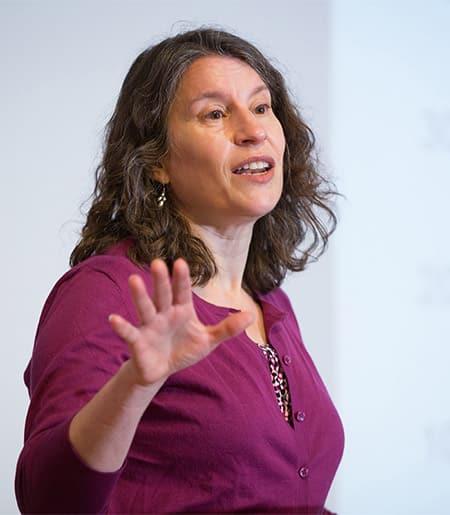
Sharon Sassler
· Professor of Public Policy and SociologyVerifiedCornell University · Sociology
Active 1988–2025
About
Sharon Sassler is a Professor of Public Policy and Sociology at Cornell University, affiliated with the Department of Policy Analysis and Management. She received her Ph.D. in Sociology from Brown University in 1995, following a MA in Sociology/Demography from Brown University in 1991 and a BA in English & American Literature and Politics from Brandeis University in 1984. Her academic background includes a Post-Doctoral Fellowship at Johns Hopkins University in the Department of Population Dynamics. Her research as a social demographer examines the factors shaping the activities of young adults and their life course transitions into school, work, relationships, and parenthood. She explores how these transitions vary by gender, race/ethnicity, and social class. Her work on family demography investigates contemporary relationship facets, including transitions into marriage, the health implications of marital or cohabiting unions for single mothers, outcomes for children born to unmarried parents, and the progression of cohabiting unions into marriage, parenthood, or dissolution. Sassler is also known for her forthcoming book, 'Cohabitation Nation: Gender, Class, and the Remaking of Relationships,' which analyzes how cohabitation contributes to family inequality in the United States. Additionally, her research focuses on the retention and advancement of women in STEM occupations, examining transitions into and retention within STEM jobs and addressing the gender wage gap in these fields.
Research topics
- Sociology
- Political Science
- Gender studies
- Demographic economics
- Psychology
- Development economics
- Social psychology
- Law
- Economics
Selected publications
Sociological perspectives on partnerships
Edward Elgar Publishing eBooks · 2025-04-25
book-chapterOpen accessSenior authorSociologists have developed a range of theories to explain changes in partnership formation and dissolution. Here we focus on four overlapping perspectives. First, we discuss theories that describe cultural context and global family systems, including how macro-level social change influences couples; these consist of the Second Demographic Transition, Pattern of Disadvantage, and the Gender Revolution. Second, we discuss social institutions which shape partnership formation, and the institution (and deinstitutionalization) of marriage. Third, we examine theories of power dynamics within the couple, for example Bargaining and Exchange theory, and the persistence of gender norms. Finally, we explore social theories related to growing individualization and destandardization of the life course. Taken together, these sociological theories illustrate how individual- and couple-level decisions aggregate upwards to form partnership patterns visible at the population level.
“I'll Take One for the Team”: Individual- and Couple-Level Decisions About Sterilization
Contemporary perspectives on family research · 2025-05-10
book-chapter1st authorCorrespondingMen’s participation in family planning has garnered increased attention since the 2022 Dobbs decision ruling that the Constitution did not confer a federal right to abortion. Yet among those who have reached their desired family size, female sterilization (tubal ligation) occurs far more often than male sterilizations (vasectomies). We utilize unique longitudinal qualitative data from a class-diverse sample of 61 couples who were cohabiting in the early years of the 21st century and were reinterviewed in 2020, to explore the process of making decisions about sterilization among those nearing the end of their reproductive life course. Vasectomies were more prevalent than tubal ligations in our sample, unlike findings from nationally representative data, reflecting the union status, class, and racial composition of our respondents. Many more men had contemplated getting vasectomies than had gone through with the procedure. Those still considering whether to obtain a vasectomy mentioned cost, dissuasion from doctors, and nervousness about the procedure to justify why they had not yet obtained one. Vasectomies were more common among men who had married, in part because fatherhood was still on the table for cohabitors partnered with younger women. A partner’s encouragement and a desire to “do their part” shaped men’s willingness to obtain a vasectomy – suggesting the need for additional focus on allyship and men’s roles in reproductive health in existing research. Our results shed light on how partnership shapes the ways that men think about their reproductive responsibilities.
2024-01-01
bookSenior author2024-01-18
book-chapter1st authorCorrespondingAbstract Over the past five decades, unmarried cohabitation has become widely accepted—even normative—among Americans. Support for cohabitation has increased among many groups, from teenagers to elders. In fact, most first coresidential romantic unions are cohabitations rather than marriages. Yet while the majority of American adults will enter a cohabiting union, most cohabiting unions do not lead to marriage, and the shares of those engaging in serial cohabitation are rising. Whereas many young adults in the 20th century viewed cohabitation as a stepping stone to marriage, in the 21st century cohabitation increasingly serves as an intensive form of dating—at least at its inception. The pathways into marriage from cohabitation differ in important ways by social class, highlighting how union formation contributes to growing levels of inequality.
Sociological Perspectives · 2023-10-28 · 1 citations
article1st authorCorrespondingAlthough women’s representation in science, technology, engineering, and mathematics (STEM) employment has increased significantly over the past few decades, their presence remains low in fields like computer science. Using the National Science Foundation’s Scientists and Engineers Statistical Data System (SESTAT), this paper assesses the factors shaping employment in STEM and non-STEM occupations among men and women with bachelor’s degrees in computer science. Our results reveal that women with degrees in computer science are far less likely than their male counterparts to be employed in STEM occupations, particularly in computer science jobs. But family factors do not have the expected association with employment in computer science jobs. Men who are parents and childless women are more likely to work in non-STEM jobs versus computer science jobs, relative to childless men. Furthermore, the gender gap in employment in computer science jobs is larger among those graduating in the new millennium, suggesting that other factors are at play.
Research in Social Stratification and Mobility · 2023-01-16 · 5 citations
articleOpen accessState-Level Abortion Policy Hostility and Unplanned Births in the Pre-<i>Dobbs</i> Era
Demography · 2023-09-08 · 11 citations
articleOpen accessSenior authorAn increasingly hostile policy climate has reshaped abortion access in the United States. Recent literature has studied the effects of restrictive abortion policies on reproductive health outcomes. This study is the first to investigate the association between state-level abortion policy hostility and the pregnancy intentions of women with a pregnancy resulting in live birth. Data are from the Pregnancy Risk Assessment Monitoring System survey, merged with a state-level legislative database from 2012-2018 and other state-level controls. Cross-sectional results reveal that a one-unit increase in abortion policy hostility is associated with a relative risk (odds) of having a live birth resulting from an unintended versus intended pregnancy that is 1.02 times as high (RRR = 1.02, 95% confidence interval = 1.01, 1.03). This result corresponds to a 13% increase in the predicted probability of having a live birth resulting from an unintended pregnancy between a zero-hostility and a maximum-hostility state. Models stratified by demographic and socioeconomic characteristics reveal that the association between abortion policy hostility and live birth resulting from an unintended pregnancy is particularly robust among women in younger, less educated, Medicaid, uninsured, and rural populations.
The Various Roles of Cohabitation in the United States
Oxford University Press eBooks · 2023-02-23 · 1 citations
book-chapter1st authorCorrespondingAbstract As cohabitation has become more prevalent, the role that living together serves has expanded. Early research on union formation generally depicted cohabitation as a precursor to marriage. However, the growing complexity of family formation patterns highlights the need to re-examine this presumption. Various factors contribute to the growing heterogeneity in the role served by cohabitation, and a more expansive framework for understanding new functions that living together serves can take several forms: as a precursor to marriage, as a trial for marriage, as an alternative to marriage, or as an alternative to dating and being single. Rather than assuming a static function, evidence points to a more dynamic role: the meaning of cohabitation can change over time, over the course of relationships, and within couples.
Factors shaping the gender wage gap among college-educated computer science workers
PLoS ONE · 2023-10-30 · 6 citations
articleOpen access1st authorCorrespondingEncouraging women to pursue STEM employment is frequently touted as a means of reducing the gender wage gap. We examine whether the attributes of computer science workers-who account for nearly half of those working in STEM jobs-explain the persistent gender wage gap in computer science, using American Community Survey (ACS) data from 2009 to 2019. Our analysis focuses on working-age respondents between the ages of 22 and 60 who had a college degree and were employed full-time. We use ordinary least squares (OLS) regression of logged wages on observed characteristics, before turning to regression decomposition techniques to estimate what proportion of the gender wage gap would remain if men and women were equally rewarded for the same attributes-such as parenthood or marital status, degree field, or occupation. Women employed in computer science jobs earned about 86.6 cents for every dollar that men earned-a raw gender gap that is smaller than it is for the overall labor force (where it was 82 percent). Controlling for compositional effects (family attributes, degree field and occupation) narrows the gender wage gap, though women continue to earn 9.1 cents per dollar less than their male counterparts. But differential returns to family characteristics and human capital measures account for almost two-thirds of the gender wage gap in computer science jobs. Women working in computer science receive both a marriage and parenthood premium relative to unmarried or childless women, but these are significantly smaller than the bonus that married men and fathers receive over their childless and unmarried peers. Men also receive sizable wage premiums for having STEM degrees in computer science and engineering when they work in computer science jobs, advantages that do not accrue to women. Closing the gender wage gap in computer science requires treating women more like men, not just increasing their representation.
Contemporary perspectives on family research · 2023-11-17
book-chapter1st authorCorrespondingThe protective aspects of relationships for health have been extensively studied. Here, we assess whether different dimensions of partnership status at the time of a child’s birth are associated with better self-assessed health later in mid-life. Data are from three countries with different social welfare policies relating to union status and parenting: the US, the UK, and Norway. Results indicate that women who were partnered at first birth had better health at midlife in all three countries than women who were unpartnered. The analysis indicates no differences in the mid-life health of Norwegian women who were married or cohabiting at birth, whereas for US and UK women, being married at the birth of a first child is more beneficial for mid-life health than bearing the child in a cohabiting union. In the US, women who are least likely to marry do not demonstrate better mid-life health if they had wed relative to cohabiting. In the UK, in contrast, the women least likely to be married at the birth experience better returns if they marry. These findings highlight the importance of paying closer attention to heterogeneous treatment effects as they relate to childbearing, relationship status, and mid-life health.
Recent grants
Race and Gender Variation in STEM Employment and Retention: A Cohort Analysis Using SESTAT Data
NSF · $250k · 2012–2017
NIH · $533k · 2013
NSF · $200k · 2015–2019
Frequent coauthors
- 29 shared
Daniel T. Lichter
Cornell University
- 21 shared
Fenaba R. Addo
University of North Carolina at Chapel Hill
- 21 shared
Amanda Miller
- 12 shared
Katherine Michelmore
University of Michigan–Ann Arbor
- 10 shared
Kristi Williams
- 9 shared
April Sutton
University of California, San Diego
- 8 shared
R.N. Turner
- 8 shared
Frances Goldscheider
Education
- 1996
Post-Doctoral Fellow, Population Dynamics
Johns Hopkins University Bloomberg School of Public Health
- 1995
PhD, Sociology
Brown University
- 1984
BA, English & American Literature; Politics
Brandeis University
- Resume-aware match score
- Save to shortlist
- AI-drafted outreach
See your match with Sharon Sassler
PhdFit ranks faculty by your research interests, methods, and publications — grounded in their actual work, not templates.
- Free to start
- No credit card
- 30-second signup