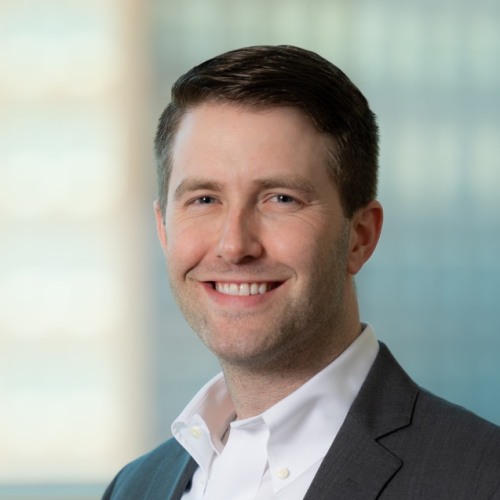
Tyler Wray
· Associate Professor of Behavioral and Social SciencesVerifiedBrown University · Behavioral and Social Sciences
Active 2010–2026
About
Dr. Tyler Wray, PhD, is an Associate Professor of Behavioral and Social Sciences at the Brown University School of Public Health. He is a clinical psychologist whose research focuses on the effects of technology on health-related behaviors and their determinants. His work involves designing and testing technologies that promote healthier behaviors, particularly related to addiction, and extending care beyond traditional clinical environments. Since joining Brown, his research has been continuously funded by the National Institutes of Health (NIH). Dr. Wray teaches courses on digital health, innovation, intervention design, and research methods, emphasizing the use of technology to support behavior change by aligning interventions with real-world challenges and facilitating dissemination and implementation of digital health tools.
Research topics
- Medicine
- Psychology
- Clinical psychology
- Demography
- Environmental health
- Social psychology
- Internal medicine
- Psychotherapist
- Psychiatry
- Family medicine
- Statistics
- Gerontology
- Developmental psychology
- Immunology
Selected publications
AIDS and Behavior · 2026-04-17
articleOpen accessSenior authorNon-Hispanic Black and Hispanic men who have sex with men (BHMSM) in the Southern United States (US) have the highest rates of new HIV diagnoses in the country. Self-testing can increase detection and contribute to decreasing diagnoses, but it is unclear which self-test program characteristics encourage the highest engagement. To inform the design of self-test programs, we conducted an online discrete choice experiment with BHMSM in this region who did not have an HIV diagnosis (n = 290) to understand their preferences for the following self-test program attributes: delivery strategy (home delivery, friend delivery, clinic pickup), support (instructions only, during the test, 1 week after delivery), delivery speed (same day, next day, 3 days, 5 days), and price ($0, $20, $40, $50, $60). We analyzed choice data using random parameters to estimate preferences and marginal willingness to pay. BHMSM preferred free (b = 2.67) self-tests, home delivery (b = 0.60), and same-day (b = 0.24) or next-day (b = 0.35) delivery and had a preference against support 1 week after delivery (b=-0.19). Marginal willingness to pay estimates showed that BHMSM would pay $6.71 more for home delivery compared to clinic pickup and $9.10 more for same-day delivery and $10.96 more for next-day delivery compared to 5-day delivery. Based on these results, a self-test program with free rapid home delivery and support via instructions only or during the test would best address the preferences of BHMSM in the Southern US. Patients may also be willing to pay for rapid home delivery, highlighting the possibility of cost-sharing models for self-test programs.
Alcohol Clinical and Experimental Research · 2026-05-01
articleBACKGROUND: Adolescent exposure to alcohol-related media content is widespread and may contribute to early initiation and risky patterns of use. Using a sample of participants who self-monitored their alcohol exposure during adolescence, the aim of this qualitative study was to gain their perspectives on alcohol-related media exposure, its perceived influence, and potential strategies to mitigate associated risks. METHODS: Adolescents aged 15-18 were enrolled into a multi-burst (21 day bursts) ecological momentary assessment (EMA) study based on prior alcohol involvement (any lifetime use or having at least one close friend who consumed alcohol). Following completion of the EMA study, individuals who reported exposure to alcohol content in the media (minimum 10 instances across the EMA study period) were selected to participate in focus groups. Eight (N = 42; M age = 18.21; SD = 0.84; 42.9% woman; 40.5% White, 71.4% non-Hispanic) focus groups were conducted via Zoom. Transcripts were double-coded and thematically analyzed. RESULTS: During the focus groups, youth perceived an increased awareness of the prevalence and sources of alcohol-related content, including from peers and family members. Four themes emerged as strategies identified by youth to mitigate the impact of media alcohol exposure: increasing accurate portrayals of alcohol risks, earlier alcohol education, greater government regulation of alcohol-related content, and promoting sobriety and sober culture. Participants recommended several strategies for more accurately portraying alcohol risks and harms on social media, such as infographics, short-form videos, real-time polls, disclaimers, and personal stories. CONCLUSIONS: In a sample of youth who had previously self-monitored their exposure to alcohol content in media, findings highlight their understanding of alcohol exposure from a variety of media sources, including television, movies, and social media, and suggest a need for alcohol prevention strategies that involve educators, parents, policymakers, and social media platforms.
Journal of Addiction Medicine · 2025-12-05
articleOpen accessSenior authorOBJECTIVES: This study examined changes in social media use among adults with past-year treatment for substance use disorder (SUD) in New England, focusing on the prevalence of such changes, reasons for modifying social media habits, perceived success, and factors associated with attempts to change social media use. METHODS: Participants [N = 255; 45% female, 85% white, mean age = 41.4 (9.6)] recently treated for SUD completed an online survey. The survey gathered demographics, SUD histories, and social media use data. We report descriptive statistics and logistic regression models testing relationships between attempts to change social media use while in treatment and individual factors. RESULTS: Overall, 62% of respondents reduced or stopped social media use during SUD treatment. A substantial minority (34%) viewed their attempts as unsuccessful or neutral. Logistic regressions indicated that having alcohol as one's drug of choice and having previously sought drugs on social media were both positively associated with attempting to reduce or quit social media. People who reported being motivated to avoid social media to reduce drug/alcohol triggers also reported being more successful in changing their social media use. CONCLUSIONS: Many individuals in SUD treatment actively limit social media to reduce exposure to substance-related triggers, yet success varies. Future research should explore how digital environments might be reshaped to support treatment goals, balancing the risk of exposure to substance use content with the potential benefits of online resources.
BMC Infectious Diseases · 2025-05-05
erratumOpen access1st authorCorresponding2025-06-25
preprint<sec> <title>BACKGROUND</title> The HIV epidemic in the United States disproportionately impacts gay, bisexual, and other men who have sex with men (MSM). Despite the effectiveness of HIV pre-exposure prophylaxis (PrEP) in preventing HIV acquisition, uptake among MSM remains suboptimal. Motivational interviewing (MI) has demonstrated efficacy at increasing PrEP uptake among MSM but is resource-intensive, limiting scalability. The use of artificial intelligence (AI), particularly large language models with conversational agents (i.e., “chatbots”) such as ChatGPT, may offer a scalable approach to delivering MI-based counseling for PrEP and HIV prevention. </sec> <sec> <title>OBJECTIVE</title> This study aimed to describe the development of an AI-based chatbot and evaluate its ability to provide MI-aligned education about PrEP and HIV prevention. </sec> <sec> <title>METHODS</title> The Chatbot for HIV Prevention and Action (CHIA) was built on a GPT-4o base model embedded with a validated knowledge database on HIV and PrEP in English and Spanish. CHIA was fine-tuned through training on a large MI dataset and prompt engineering. Use of the AutoGen multi-agent framework enabled CHIA to integrate two agents, the PrEP Counselor Agent and the Assistant Agent, which specialized in providing MI-based counseling and handling function calls (e.g., assessment of HIV risk), respectively. During internal testing from March 10-April 28, 2025, we systematically evaluated CHIA’s performance in English and Spanish using a set of five-point Likert scales to measure accuracy, conciseness, up-to-dateness, trustworthiness, and alignment with aspects of the MI spirit (e.g., collaboration, autonomy support) and MI-consistent behaviors (e.g., affirmation, open-ended questions). Descriptive statistics and independent samples t tests were used to analyze the data. </sec> <sec> <title>RESULTS</title> A total of 305 responses, including 140 English responses and 165 Spanish responses, were collected during the internal testing period. Overall, CHIA demonstrated strong performance across both languages, receiving the highest combined scores in the general response quality metrics including up-to-dateness (mean 4.6, SD 0.8), trustworthiness (mean 4.5, SD 0.9), accuracy (mean 4.4, SD 0.9), and conciseness (mean 4.2, SD 1.1). CHIA generally received higher combined scores for metrics that assessed alignment with the MI spirit (i.e. empathy, evocation, autonomy support, and collaboration) and lower combined scores for MI-consistent behaviors (i.e. affirmation, open-ended questions, and reflections). Spanish responses had significantly lower mean scores than English responses across nearly all MI-based metrics. </sec> <sec> <title>CONCLUSIONS</title> These findings highlight the potential of AI-based chatbots including CHIA as a scalable tool for delivering MI-aligned counseling in English and Spanish to promote HIV prevention and PrEP uptake. </sec>
Journal of Substance Use and Addiction Treatment · 2025-01-27
article1st authorCorrespondingAIDS · 2025-01-29 · 2 citations
articleBMC Infectious Diseases · 2025-04-03 · 3 citations
articleOpen access1st authorCorrespondingTesting for HIV continues to play a key role in prevention, especially among at-risk populations such as gay, bisexual, and other men who have sex with men (MSM). Incorporating HIV self-testing (HIVST) into testing programs encourages more frequent screening and likely facilitates earlier diagnosis, but little is known about how testing behavior changes after self-testing programs end. In this study, a subset of MSM in the eTest trial who were randomized to receive regular HIVST or clinic testing every three months for 12 months were followed for an additional 12 months. We compared testing rates during the intervention period to this 12-month post-intervention period. Results of a Poisson mixed model showed a significant condition by time interaction (IRR=0.91, SE=0.04, p=.019, %95CI=0.84-0.98). The average marginal predicted probability of testing in a given follow-up among controls was 30.4% during the intervention period and 28.2% post-intervention, versus 70.0% among HIVST condition participants during the intervention period but 23.6% by the end of the post-intervention period. Although regular mail delivery of HIVST increased HIV testing considerably while tests are actively being delivered, testing rates declined to a level similar to those who had not received HIVST after regular delivery stops. These results suggest that regularly delivering HIVST does not encourage longer-term regular testing habits in MSM who typically test infrequently.
AIDS and Behavior · 2025-12-05
articleOpen accessSenior authorBlack and Latino men who have sex with men (MSM) in the Deep South have the lowest HIV pre-exposure prophylaxis (PrEP) use rates in the United States, and PrEP stigma may deter PrEP use. However, most research on PrEP stigma is at the interpersonal level, which hinders the development of community-level PrEP anti-stigma campaigns. To address this knowledge gap, we conducted a secondary analysis of an online survey of Black and Latino MSM in the Deep South who are not living with HIV (n = 281). Multinomial logistic regression models were used to assess associations between the Community PrEP-Related Stigma Scale (Community-PSS), its four subscales, and PrEP use (never, former, current), controlling for covariates. We found no evidence of an association between the overall Community-PSS nor three of the four subscales and the likelihood of never PrEP use versus current PrEP use. However, we found that a 1-point increase in the extreme stigma perception subscale (i.e., views that community members believe PrEP users are living with HIV, bad people, or hiding something) was associated with a 16% higher relative risk of never PrEP use versus current PrEP use (p = .019, 95% CI: 1.03-1.32). We also found no evidence of a relationship between Community-PSS nor its subscales and the likelihood of former PrEP use versus current PrEP use. Given these results, extreme stigma perceptions may deter current PrEP use among Black and Latino MSM populations. PrEP campaigns that depict PrEP users as everyday people may be an effective socio-structural approach to increasing PrEP use.
Drug and Alcohol Dependence Reports · 2025-04-09 · 1 citations
articleOpen accessSenior authorThis study examined the use of social media for recovery support among individuals with substance use disorder (SUD) with past-year treatment attendance and tested whether demographic and SUD history factors were associated with use of social media for recovery support. Participants (N = 255; 45 % female, 85 % white, mean age = 41.4 [9.6]) recently treated for SUD completed an online survey. The survey gathered demographics, SUD histories, and social media use data. We report descriptive statistics and logistic regression models testing relationships between social media for recovery support and individual factors. Forty percent of participants used social media for recovery support, and most believed it beneficial. Being female increased use likelihood (OR = 2.56, 95 % CI [1.49, 4.46]), while older age (50 +) was associated with lower use likelihood than young adults (18−35) (OR = 0.35, 95 % CI [0.14, 0.84]). Social media was used primarily to build support systems and follow recovery-related content. Most found support forums on their own, and engaged with the groups for meaningful amounts of time ( > weekly, > 15 minutes). Results highlight how common it is to use social media for recovery support. Given the sparse evidence on its efficacy, more research is urgently needed to establish whether recovery support forums on social media convey actual benefits, and how to shape one’s digital environment to maximize those benefits. • Social media was commonly used for recovery support, and most believed it beneficial. • Female participants were more likely to use social media for recovery support. • Older participants (50 +) were less likely to use social media for recovery support. • Most found recovery groups alone, without support from professionals or peers. • Social media was used most to build support networks with both online and in-person relationships.
Recent grants
NIH · $39.3M · 2010–2026
NIH · $3.5M · 2017–2023
NIH · $701k · 2019
NIH · $34.9M · 2019–2029
NIH · $458k · 2015–2018
Frequent coauthors
- 78 shared
Christopher W. Kahler
Brown University
- 63 shared
Peter M. Monti
- 57 shared
Philip A. Chan
Brown University
- 45 shared
Erik M. Simpanen
Brown University
- 33 shared
Don Operario
Emory University
- 26 shared
Mark A. Celio
Institute of Alcohol Studies
- 24 shared
Ashley E. Pérez
Case Western Reserve University
- 23 shared
Robert Miranda
Brown University
Labs
Wray, Tyler Research LabPI
Education
Ph.D., Behavioral and Social Sciences
Brown University
- Resume-aware match score
- Save to shortlist
- AI-drafted outreach
See your match with Tyler Wray
PhdFit ranks faculty by your research interests, methods, and publications — grounded in their actual work, not templates.
- Free to start
- No credit card
- 30-second signup