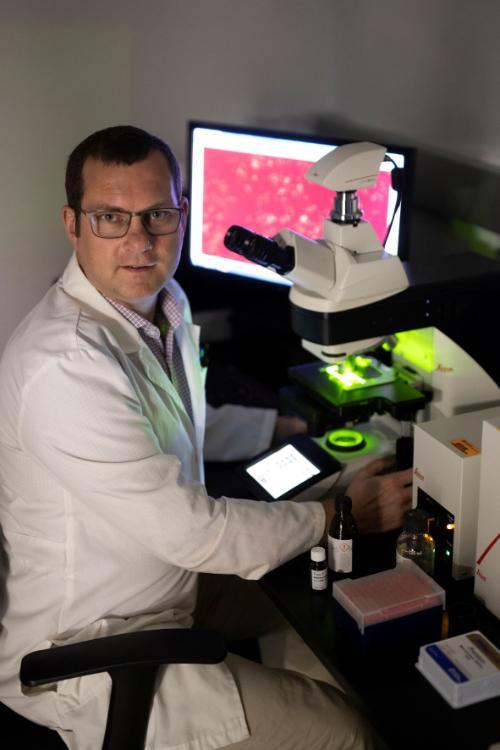
Willm Martens-Habbena
University of Florida · Microbiology and Cell Science
Active 2005–2025
About
Willm Martens-Habbena is an Associate Professor in the Department of Microbiology and Cell Science at the University of Florida. His research combines molecular microbiology, microbial physiology, and biogeochemistry to enhance understanding of microorganisms in complex ecosystems. He employs Next-Generation Sequencing approaches, bioinformatics tools, classical culture-based microbiology, and direct activity measurements to study patterns of microbial diversity, abundance, and activity in natural and engineered systems. His overarching research questions focus on microbial interactions and their influence on ecosystem function, the impact of global change factors such as sea level rise and human activity on microbial diversity in marine and terrestrial habitats, and how these forces affect community metabolism and ecosystem performance. Additionally, he investigates how microbial processes can be harnessed to conserve ecosystem functions and benefit humanity. Dr. Martens-Habbena has a background in biology and philosophy, with a Diplom in Biology and a doctoral degree in Environmental Microbiology, where his thesis examined microbial communities at the chemocline of anoxic basins of the central Baltic Sea. He teaches and mentors undergraduate and graduate students, offering courses in Principles of Microbiology and Environmental Microbiology, and provides research opportunities at the Fort Lauderdale Research and Education Center.
Selected publications
PLoS ONE · 2025-03-25 · 8 citations
articleOpen accessCorrespondingIn subtropical preserve ecosystems, natural factors combined with anthropogenic activities have led to significant seasonal changes, including distinct dry and rainy seasons. These changes can potentially impact soil health indicators, which are keystone properties that control ecosystem services across terrestrial landscapes. Few studies have evaluated the impact of seasonal changes on soil health within non-agronomic landscapes, such as preserves. As part of this study, we collected topsoil samples (0-15 cm) from twenty-three land cover types within a 109 km² preserve in central Florida during two different seasons (dry and wet) to advance the understanding of how soil health responds to seasonal changes and to explore the environmental factors controlling soil health within non-agronomic landscapes. Ten soil indicators were analyzed and incorporated into the total dataset (TDS). From the TDS, a minimum dataset was derived using Principal Component Analysis, which was then used to calculate the Soil Health Index (SHI) for soil health assessment. Our findings showed that changes in soil indicators, their relationships, and the SHI across seasons depend on land cover type. Based on soil health classification grades, soil health status either improved, declined, or remained constant between seasons, depending on land cover type. The regression analysis of eight selected environmental factors, such as soil profile moisture (SPM), surface soil wetness (SSW), precipitation (P), soil temperature (T), elevation (El), slope gradient (S), global horizontal irradiance (GHI) and surface albedo (ALB), showed that only slope gradient significantly explains variations in SHI during wet season, whereas other environmental factors do not show significant explanatory power for SHI variations in either dry or wet season. These findings highlight the dominant influence of slope gradient on soil health within non-agronomic landscapes, while indicating that other evaluated environmental factors may have limited relevance in this context. Furthermore, the non-significant findings among soil indicators across seasons may be attributed to the study's small sample size (i.e., three replications), a limitation stemming from constrained funding. This highlights the importance of future research incorporating larger sample size to validate the findings of this study.
Frontiers in Environmental Science · 2025-04-24 · 6 citations
articleOpen accessSoil Organic Matter (SOM) decomposition, vital to the carbon cycle, is influenced by land cover, hydrological conditions, and soil properties. However, understanding of how hydrolytic enzymes involved in SOM turnover vary under these factors remains limited. To address this, a study was conducted in a sub-tropical preserve in South Florida to assess hydrolytic enzyme activities across 23 diverse land covers (Categorized into five ecosystems: A-Upland Forests, B-Wetland ecosystems, C-Shrub ecosystems, D-Range Areas, and E-Barren ecosystems) during wet and dry seasons. The assessed enzymes were β-1,4 glucosidase (βG), β-1,4-N-acetyl glucosaminidase (β-NAG), Acid Phosphatase (AP), and Aryl Sulfatase (AS). A weighted index termed the Hydrolytic Enzyme Decomposition Indicator (HEDI) was derived using principal component analysis to summarize overall enzymatic activity as an indicator of decomposition. The results showed that among the land covers, βG, β-NAG, AP, and AS activities during the dry season ranged from 18.40 to 327.20, 14.71–351.90, 302.89–10,185.80, and 26.51–1,745.75 μg PNP/g soil/hr, respectively, while in the wet season, the activities for all enzymes except AS were higher, ranging from 4.08 to 398.66, 21.72–1,118.97, 372.38–11,960.36, and 28.26–1,475.09 μg PNP/g soil/hr. Among ecosystems, βG and β-NAG showed seasonal variability, with β-NAG consistently higher in A-Upland Forests, B-Range Areas, and C-Shrub. AP and AS showed minimal variation, with all enzymes showing lower activity in D-Barren ecosystems. HEDI values in the dry season A-Upland Forests exhibited the widest range (−0.962–1.613), indicating diverse decomposition rates, while Barren ecosystems showed consistently low activity (−0.928 to −0.916), suggesting lower decomposition. Correlation analysis revealed positive relationships between enzymatic activities and soil properties such as SOM (0.51–0.59), active carbon (0.46–0.58), soil protein (0.27–0.40), and cation exchange capacity (0.28–0.40), while bulk density showed negative correlations (−0.31 to −0.50). Overall, this study highlights the necessity of considering the complex interactions between soil properties, vegetation, moisture, and enzymatic activity in understanding SOM decomposition.
2024-07-30
peer-reviewCu(II) adsorption onto ammonia-oxidizing bacteria and archaea
2024-01-01
articleOpen accessSenior authorAmmonia-oxidizing bacteria and archaea exhibit differential nitrogen source preferences
Nature Microbiology · 2024-01-31 · 107 citations
articleOpen accessNitrogen-fixing bacterial communities differ between perennial agroecosystem crops
FEMS Microbiology Ecology · 2024-04-18 · 5 citations
articleOpen accessBiocrusts, common in natural ecosystems, are specific assemblages of microorganisms at or on the soil surface with associated microorganisms extending into the top centimeter of soil. Agroecosystem biocrusts have similar rates of nitrogen (N) fixation as those in natural ecosystems, but it is unclear how agricultural management influences their composition and function. This study examined the total bacterial and diazotrophic communities of biocrusts in a citrus orchard and a vineyard that shared a similar climate and soil type but differed in management. To contrast climate and soil type, these biocrusts were also compared with those from an apple orchard. Unlike natural ecosystem biocrusts, these agroecosystem biocrusts were dominated by proteobacteria and had a lower abundance of cyanobacteria. All of the examined agroecosystem biocrust diazotroph communities were dominated by N-fixing cyanobacteria from the Nostocales order, similar to natural ecosystem cyanobacterial biocrusts. Lower irrigation and fertilizer in the vineyard compared with the citrus orchard could have contributed to biocrust microbial composition, whereas soil type and climate could have differentiated the apple orchard biocrust. Season did not influence the bacterial and diazotrophic community composition of any of these agroecosystem biocrusts. Overall, agricultural management and climatic and edaphic factors potentially influenced the community composition and function of these biocrusts.
Seasonal variability and seagrass traits affect methane fluxes in a subtropical meadow
Journal of Ecology · 2024-09-23
articleOpen accessAbstract Plant traits which vary both within and between species often drive biogeochemical cycling. Understanding the relative role of within‐ and between‐species trait variability in driving carbon cycling is essential to scaling site measurements to global carbon budgets. In seagrass meadows, carbon and nitrogen mineralization rates and associated greenhouse gas emissions are highly variable, impeding our ability to reliably predict whether meadows are net carbon sinks. Evaluating the influence of within‐ and between‐species trait variability on greenhouse gas fluxes will improve our understanding of local‐scale drivers of greenhouse gas production and consumption in seagrass meadows. To test the effects of plant traits on dissolved greenhouse gas fluxes, we performed mesocosm incubations with live, intact seagrass plants. We compared methane (CH 4 ) and nitrous oxide (N 2 O) fluxes under dark and light conditions from sediments dominated by Halodule wrightii and Thalassia testudinum across dormant, early and peak growing seasons in a subtropical meadow along the west coast of peninsular Florida. We also measured oxygen (O 2 ) fluxes to interpret greenhouse gas fluxes within the context of community metabolism. We measured several seagrass traits, such as above‐ and below‐ground biomass and leaf and root area and assessed their impact as well as the impact of species identity on dissolved gas fluxes. We found that abiotic factors linked to metabolism (i.e. light and temperature) influenced greenhouse gas fluxes across seasons. In addition to light conditions and sampling month, plant size (a composite trait variable) was a significant predictor of O 2 consumption and CH 4 production under dark conditions, and better predicted fluxes than individual plant traits. CH 4 production was slightly higher in H. wrightii ‐dominated sediments, but species identity was less important than plant size in driving CH 4 production. N 2 O fluxes were low and not influenced by plant traits or species identity. Synthesis : Our results indicate that within‐species more so than between‐species trait variability drives the direction and magnitude of CH 4 fluxes in seagrass meadows. We identified a trade‐off where seagrass biomass is often associated with enhanced sediment carbon storage, but in our study, plant size promoted CH 4 production, potentially offsetting the benefits of long‐term storage.
The ISME Journal · 2024-01-01 · 41 citations
articleOpen accessCorrespondingAmmonia-oxidizing archaea (AOA) are among the most ubiquitous and abundant archaea on Earth, widely distributed in marine, terrestrial, and geothermal ecosystems. However, the genomic diversity, biogeography, and evolutionary process of AOA populations in subsurface environments are vastly understudied compared to those in marine and soil systems. Here, we report a novel AOA order Candidatus (Ca.) Nitrosomirales which forms a sister lineage to the thermophilic Ca. Nitrosocaldales. Metagenomic and 16S rRNA gene-read mapping demonstrates the abundant presence of Nitrosomirales AOA in various groundwater environments and their widespread distribution across a range of geothermal, terrestrial, and marine habitats. Terrestrial Nitrosomirales AOA show the genetic capacity of using formate as a source of reductant and using nitrate as an alternative electron acceptor. Nitrosomirales AOA appear to have acquired key metabolic genes and operons from other mesophilic populations via horizontal gene transfer, including genes encoding urease, nitrite reductase, and V-type ATPase. The additional metabolic versatility conferred by acquired functions may have facilitated their radiation into a variety of subsurface, marine, and soil environments. We also provide evidence that each of the four AOA orders spans both marine and terrestrial habitats, which suggests a more complex evolutionary history for major AOA lineages than previously proposed. Together, these findings establish a robust phylogenomic framework of AOA and provide new insights into the ecology and adaptation of this globally abundant functional guild.
The ISME Journal · 2023-08-18 · 25 citations
articleOpen accessSenior authorSoil represents the largest reservoir of Archaea on Earth. Present-day archaeal diversity in soils globally is dominated by members of the class Nitrososphaeria. The evolutionary radiation of this class is thought to reflect adaptations to a wide range of temperatures, pH, and other environmental conditions. However, the mechanisms that govern competition and coexistence among Nitrososphaeria lineages in soil remain poorly understood. Here we show that predominant soil Nitrososphaeria lineages compose a patchwork of gene inventory and expression profiles for ammonia, urea, and phosphate utilization. In contrast, carbon fixation, respiration, and ATP synthesis genes are conserved and expressed consistently among predominant phylotypes across 12 major evolutionary lineages commonly found in soil. In situ gene expression profiles closely resemble pure culture reference strains under optimal growth conditions. Together, these results reveal resource-based coexistence patterns among Nitrososphaeria lineages and suggest complementary ecophysiological niches associated with differential nutrient acquisition strategies among globally predominant archaeal lineages in soil.
bioRxiv (Cold Spring Harbor Laboratory) · 2023-08-04 · 1 citations
preprintOpen accessCorrespondingAbstract Four distinct lineages of ammonia-oxidizing microorganisms (AOM) collectively contribute to one of the largest nitrogen fluxes in the global nitrogen budget. AOM possess widely different specific affinities for ammonia, thought to determine their niche differentiation. Nevertheless, ammonia-oxidizing archaea and bacteria (AOA, AOB), and complete ammonia oxidizers (comammox) co-occur in soils, freshwater sediments, and aquifers, suggesting that other factors must drive their coexistence. Here, we show that representatives of four AOM lineages employ distinct regulatory strategies for ammonia or urea utilization, thereby minimizing direct competition for either substrate. The tested AOA and comammox species preferentially used ammonia over urea, while beta-proteobacterial AOB favored urea utilization, repressed ammonia transport in the presence of urea, and showed higher affinity for urea than ammonia, whereas gamma-proteobacterial AOB co-utilized both substrates. Stable isotope tracing, kinetics, and transcriptomics experiments revealed that both assimilation and oxidation of ammonia are transport-dependent. These results reveal novel mechanisms of nitrogen metabolism regulation and transporter-based affinity underlying the contrasting niche adaptation and coexistence patterns among the major AOM lineages.
- Resume-aware match score
- Save to shortlist
- AI-drafted outreach
See your match with Willm Martens-Habbena
PhdFit ranks faculty by your research interests, methods, and publications — grounded in their actual work, not templates.
- Free to start
- No credit card
- 30-second signup