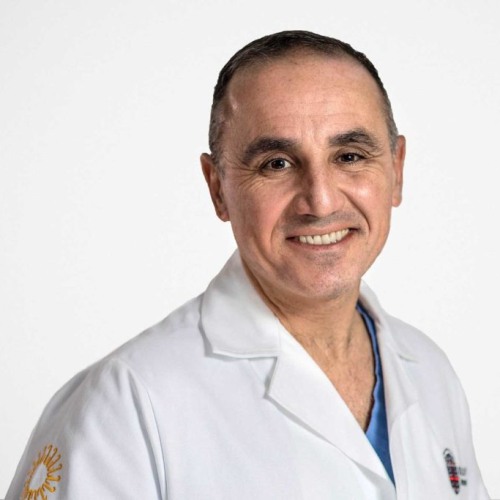
Albert Telfeian
· Professor of Neurosurgery, Clinician EducatorVerifiedBrown University · Microbiology and Immunology
Active 1995–2026
About
Albert Telfeian, MD, PhD, is a Professor of Neurosurgery at the Warren Alpert School of Medicine at Brown University and serves as the Vice Chairman of the Department of Neurosurgery at Rhode Island Hospital. He is the director of minimally invasive endoscopic spine surgery and has a distinguished background in neurosurgery, having completed his MD/PhD at Brown University, a neurosurgical residency at the Hospital of the University of Pennsylvania, and fellowship training in spine and functional epilepsy surgery in Switzerland, as well as pediatric neurosurgery at the Children’s Hospital of Philadelphia. Dr. Telfeian has published extensively in the fields of epilepsy, functional neurosurgery, and spine surgery, and is actively involved in the research and development of ultra-minimally invasive endoscopic techniques. His contributions to the field have been recognized through numerous awards, including the Kambin award for contributions to endoscopic spine surgery, and he has been honored as one of the nation’s 15 leaders in neurosurgery by Newsweek. His research and clinical work focus on advancing minimally invasive surgical approaches and improving patient outcomes in neurosurgery.
Research signals
Five dimensions sourced from public faculty / publication signals. Sign in to compare against your own profile and see your match score.
Research topics
- Medicine
- Surgery
- Internal medicine
- Radiology
- Political Science
- Computer Science
- Medical physics
- Physical therapy
- Psychology
- Medical education
- Law
- Pathology
- Emergency medicine
- Environmental health
Selected publications
Journal of Neurotrauma · 2026-01-13
articleThe current guidelines recommend that patients with spinal cord injury (SCI) undergo rapid decompressive surgery, ideally within 24 h, to reduce cord ischemia and improve outcomes. National trends in treatment times in the United States, and the factors limiting the timely surgical management of SCI, remain incompletely understood. A retrospective review of the National Trauma Data Bank (NTDB) from 2017 to 2021, which encompasses the years following the publication of the Arbeitsgemeinschaft für Osteosynthesefragen Spine guidelines suggesting early surgery, was performed. The included patients had sustained SCI requiring surgical management, were aged >18 years, were treated at a level I or II trauma center, and had no major trauma-related cranial, abdominal, or thoracic surgery prior to spine surgery. Mixed-effects models were used to identify the key factors at the patient and facility levels associated with time to surgery. The final cohort included 19,513 patients, of which 3,894 (19.9%) underwent surgery within 8 h and 10,634 (54.5%) underwent surgery within 24 h. The average time to surgery for patients admitted in 2018–2019 did not differ from 2017, whereas patients admitted in 2020 (−4.58 h, 95% confidence interval [CI] [−6.09, −3.07], p < 0.001) and 2021 (−2.17 h, 95% CI [−3.65, −0.68], p = 0.004) had significantly shorter times to surgery. Older patients experienced delays of 0.25 h per year of age (95% CI [0.22, 0.27], p < 0.001). Medicare status delayed surgery by 5.81 h (95% CI [4.81, 6.81], p < 0.001). When compared with patients arriving by helicopter ambulance, patients who self-transported (11.57 h, 95% CI [9.26, 13.90], p < 0.001) or were transported by ground ambulance (5.93 h, 95% CI [4.90, 6.96], p < 0.001) experienced significant delays. Pre-frail (5.88 h, 95% CI [5.02, 6.74], p < 0.001) or frail (10.15 h, 95% CI [8.62, 11.68], p < 0.001) patients by the 11-item modified frailty index had increased time to surgery. Patients with cervical injuries had significantly longer times to surgery compared with those with cervicothoracic (−3.42 h, 95% CI [−5.56, −1.28], p = 0.002) or thoracic injuries (−6.29 h, 95% CI [−7.54, −5.05], p < 0.001). Treatment at teaching hospitals (−1.18 h, 95% CI [−2.18, −0.37], p = 0.001) and level I trauma centers (1.41 h, 95% CI [−2.50, −0.53], p = 0.003) reduced the time to surgery in comparison with non-teaching and level II trauma hospitals. In summary, older age, pre-existing frailty, cervical injury, Medicare insurance status, and transportation by ground ambulance or self-transportation are associated with prolonged time to surgery, while treatment at teaching hospitals and level I trauma centers is linked to more rapid intervention. These results suggest that rapid emergency medical systems transport and management at high-resource trauma centers may minimize surgical delays. Despite improvements in later years, nearly half of patients did not meet 24-h operative standards, and only one in five met 8-h targets, underscoring persistent variability in practice patterns and opportunities to better align care with the established guidelines.
The International Journal of Spine Surgery · 2026-01-09
articleOpen accessBACKGROUND: Thoracic disc herniations (TDHs) are rare, comprising <1% of all disc herniations, but when symptomatic can cause severe neurological dysfunction. Traditional open and mini-open approaches allow for ventral canal decompression but are associated with high morbidity, including pulmonary complications, chest tube placement, and frequent need for fusion. Full-endoscopic thoracic discectomy has emerged as an ultra-minimally invasive alternative with reduced complications and faster recovery, but its application to midline or calcified thoracic discs remains technically demanding. CASE PRESENTATION: We report the case of a 54-year-old man with progressive chest wall pain and lower-extremity hyperreflexia who was found to have a T6 to T7 central disc herniation with mild calcification and spinal cord signal change. The patient underwent an outpatient right-sided full-endoscopic transforaminal discectomy. Complete decompression was achieved without spinal cord retraction or manipulation. The patient had complete resolution of his preoperative pain and was discharged home within 2 hours. DISCUSSION: Compared with open thoracic discectomy, endoscopic approaches significantly lower complication rates, blood loss, hospital stay, and cost while preserving motion segments. Our case highlights strategies for addressing technically challenging central TDHs, including lateralized access, controlled bony resection, and angled instrumentation. These methods align with growing evidence demonstrating the safety and efficacy of endoscopy in thoracic pathology, though the technique requires advanced endoscopic expertise and careful patient selection. CONCLUSION: Full-endoscopic transforaminal discectomy provides a safe, effective, and minimally invasive option for central TDHs in selected cases. With proper planning and advanced technical execution, endoscopic surgery can achieve decompression comparable to open surgery while minimizing morbidity and expediting recovery.
The International Journal of Spine Surgery · 2026-03-31
articleOpen access<sec><title>Background</title> Posterior decompression for degenerative lumbar spinal stenosis (DLSS) carries approach-related morbidity. In this study, we hypothesized that multilevel lateral lumbar interbody fusion (LLIF) achieves effective indirect decompression with acceptable safety and patient-reported improvement among DLSS patients without scoliosis. </sec><sec><title>Methods</title> This was a single-institution retrospective case series (2016–2022) of adults with symptomatic spondylotic stenosis and severe disc degeneration without scoliosis (Cobb angle <10°) undergoing multilevel (≥2) LLIF. Patients with concurrent posterior decompression or deformity correction were excluded. Primary outcomes were radiographic decompression (central canal diameter and bilateral foraminal height), patient-reported pain and disability (visual analog scale and Oswestry Disability Index), and complications. Secondary measures included spinopelvic parameters and fusion by the Brantigan-Steffee-Fraser scale. Imaging was assessed on pre- and postoperative magnetic resonance imaging. Tests of significance included 1-sided paired <italic>t</italic> tests for parametric variables and Wilcoxon signed-rank tests otherwise. </sec><sec><title>Results</title> Twenty-five patients (mean age 65.8 years; 56% men; mean body mass index 31.2 ± 5.4) underwent 57 LLIF levels with a mean follow-up of 41.3 ± 31.6 months. Central canal diameter increased by 31% (2.2 mm absolute), and foraminal height increased 17% to 39% (2.5–13.1 mm). Lumbar lordosis improved from 39.6° to 44.8°, with PI–LL mismatch improving by 5.4°. Early fusion status (BSF-3) at the last radiological assessment (mean 7.2 months) was 91.3% (21/23 evaluated). Visual analog scale score improved from 7.1 ± 2.0 to 3.0 ± 2.4 (Δ−4.1; <italic>n</italic> = 20), and Oswestry Disability Index score improved from 65.9 ± 12.9 to 47.5 ± 19.8 (Δ−18.4; <italic>n</italic> = 17). Overall complication rate was 40% with no major events; postoperative neurological complications included transient proximal lower-extremity weakness in 4% and persistent sensory symptoms in 12%. </sec><sec><title>Conclusions</title> In carefully selected DLSS patients without scoliosis, multilevel LLIF achieved meaningful indirect decompression, substantial pain and disability improvement, and high early fusion rates with no major complications. The findings support LLIF as a viable alternative to posterior approaches. </sec><sec><title>Clinical Relevance</title> Multilevel LLIF can facilitate multilevel indirect decompression with favorable radiographic and clinical outcomes while avoiding posterior soft-tissue disruption. Routine posterior instrumentation at the index surgery may support fusion and reduce returns to the OR. </sec><sec><title>Level of Evidence</title> 4. </sec>
The International Journal of Spine Surgery · 2026-04-01
articleOpen accessResidual giant thoracic disc herniations after open decompression are uncommon and present a significant surgical challenge, particularly in the setting of prior instrumentation and distorted anatomy. Here, the authors present a case of salvage full-endoscopic resection of a residual giant, centrally calcified thoracic disc herniation causing persistent spinal cord compression following prior transpedicular decompression and instrumented fusion. A 37-year-old woman presented with persistent thoracic pain, gait disturbance, and myelopathic symptoms after partial improvement from an initial open T6 to T7 transpedicular decompression with T6 to T8 fusion. Magnetic resonance imaging and computed tomography demonstrated a residual giant calcified disc herniation at T6 to T7 with severe spinal cord compression and signal change. The patient underwent revision right-sided full-endoscopic thoracic discectomy using preoperative trajectory planning, docking on preserved osseous landmarks, ventral cavity creation, and controlled disc mobilization. The patient experienced rapid postoperative recovery with immediate resolution of thoracic pain and sustained improvement in gait and balance. This case demonstrates that full-endoscopic thoracic discectomy can be safely and effectively applied as a salvage technique to achieve spinal cord decompression in complex revision settings following failed open thoracic disc surgery.
North American Spine Society Journal (NASSJ) · 2026-04-01
articleOpen accessThe International Journal of Spine Surgery · 2026-01-09
articleOpen accessSenior authorBACKGROUND: Lateral lumbar interbody fusion is a widely used technique to address degenerative lumbar conditions but can be associated with injury to the psoas, lumbar plexus, and abdominal wall owing to retractor usage. We describe a minimally invasive endoscopic lateral lumbar interbody fusion (ELLIF) procedure that aims to reduce these complications by avoiding prolonged muscle retraction, preparing the disc space under direct endoscopic vision, and shortening the surgical time. METHODS: Between 2019 and 2024, 35 patients underwent ELLIF at a single center. Discectomy, endplate preparation, and iliac crest harvest were done via a working-channel endoscope without expandable retractors. Neurophysiological monitoring was used to minimize nerve injury. Outcomes included complications, visual analog scale scores for pain, and Oswestry Disability Index (ODI). RESULTS: < 0.001). By the 3-year follow-up in 9 patients, ODI scores remained near normal, and visual analog scale was reduced by 93% from baseline. CLINICAL RELEVANCE: We present a minimally invasive, ELLIF, and decompression technique that provides patients with minimal complications and excellent functional recovery. CONCLUSION: ELLIF offers a safe, minimally invasive alternative for patients with lumbar degenerative disease. This technique minimizes direct retraction on the psoas and lumbar plexus, resulting in a low complication rate and substantial functional recovery at short- and medium-term follow-up.
The International Journal of Spine Surgery · 2025-09-24 · 1 citations
articleOpen accessSenior authorHemorrhagic facet cysts are a rare condition including both synovial and ganglion cysts. Here, the authors present the first-ever reported case of a hemorrhagic ganglion cyst of the facet joint at L1 to L2 causing cauda equina syndrome. In this report, a 72-year-old woman presented with symptoms of cauda equina syndrome requiring urgent surgical consideration. Magnetic resonance imaging and computed tomography showed an extradural mass at the L1 to L2 level. Due to the giant size of the cyst, there was severe compression of the thecal sac and nerve roots. The patient underwent interlaminar contralateral decompression and cystectomy using a uniportal endoscopic approach. The patient had a quick postoperative recovery, with postoperative magnetic resonance imaging of the lumbar spine showing recovery of the facet cyst with no sign of recurrence or stenosis. This case demonstrates the successful surgical technique of interlaminar endoscopic contralateral decompression combined with cystectomy, showing that a hemorrhagic ganglion cyst at the facet at L1 to L2 can be removed completely under endoscopic view.
Patient Perspectives on Awake Transforaminal Endoscopic Decompression Surgery Outcomes
The International Journal of Spine Surgery · 2025-05-19 · 1 citations
articleOpen access1st authorCorrespondingBACKGROUND: This study aims to evaluate patient perceptions of the outcomes following awake transforaminal endoscopic lumbar decompression surgery for treating degenerative spine diseases. METHODS: Over a 1-year period from 2022 to 2023, awake transforaminal endoscopic spine surgeries were performed on 183 patients using local anesthesia and sedation, allowing patients to communicate with the surgical team throughout the procedure. A follow-up app-based survey was sent to these patients to assess their perceptions and outcomes related to the surgery. RESULTS: Out of 183 recipients, 102 patients completed the survey. At the 1-year follow-up, 89.2% of the respondents reported better outcomes in comparison to traditional spine surgeries, and 98% expressed willingness to recommend the procedure to others with similar conditions. CONCLUSIONS: The findings demonstrate notable advancements in minimally invasive spine surgery, with awake transforaminal endoscopic decompression showing high satisfaction rates tied closely to meeting patient expectations. The study also identifies areas for improvement, particularly in managing postoperative pain and aligning patients' expectations with clinical results. CLINICAL RELEVANCE: Effective preoperative communication and consistent pain management practices are critical in enhancing patient satisfaction and postoperative recovery, along with the integration of conservative treatments such as physical therapy and acupuncture to maximize surgical outcomes.
AtlasGPT: a language model grounded in neurosurgery with domain-specific data and document retrieval
Journal of neurosurgery · 2025-04-18 · 6 citations
articleOBJECTIVE: Large language models (LLMs) have shown promising performance on medical licensing examinations, but their ability to excel in subspecialty domains and their robustness under adversarial conditions remain unclear. Herein, the authors present AtlasGPT, a subspecialty-focused LLM for neurosurgery, and evaluate its performance on a benchmark multiple-choice question bank and under adversarial testing, as well as its ability to generate high-quality explanations. METHODS: AtlasGPT was built by fine-tuning GPT-4 architecture and retrieval-augmented generation from neurosurgical knowledge sources. Its performance was compared with that of GPT-4 and Gemini Advanced on a 149-question neurosurgery examination. Adversarial testing assessed robustness to misinformation. Answer explanations were rated by 15 independent neurosurgeons and compared with the question bank. RESULTS: Across all 149 questions and on text-only questions, AtlasGPT (96%) outperformed Gemini Advanced (93%) and GPT-4 (88%) in accuracy. In adversarial testing, under which AtlasGPT was tasked with identifying medical misinformation, it was fooled 14% of the time, compared with 44% for GPT-4 and 68% for Gemini Advanced. Neurosurgeons rated AtlasGPT's answer explanations as significantly more comprehensive, relevant, and better referenced than the question bank's explanations of the responses (p < 0.001). AtlasGPT did not demonstrate any evidence of hallucination or other content that would be harmful for patient care or the surgeon's clinical decision. CONCLUSIONS: AtlasGPT demonstrates the potential of subspecialty-focused LLMs to outperform general models, exhibit robustness to misinformation, and generate high-quality explanations. Domain-specific LLMs may improve medical knowledge, decision-making, and educational materials in complex fields like neurosurgery.
Journal of Clinical Medicine · 2025-05-30 · 3 citations
reviewOpen accessFull endoscopic spine surgery (FESS) offers an ultra-minimally invasive solution for addressing many different degenerative spine pathologies. While FESS has demonstrated strong evidence for faster recovery, reduced hospital stays, fewer complications, and potentially lower overall costs, FESS remains underutilized in low-income countries (LICs). This narrative review synthesizes the existing literature to evaluate access to FESS in LICs, highlighting challenges such as a lack of trained neurosurgeons and orthopedic surgeons, insufficient access to specialized equipment, capital costs, and limited representation in research. A systematic literature search identified only a handful of relevant studies, underscoring the scarcity of data on FESS in LICs. Findings reveal stark disparities in training opportunities and equipment availability, with less than 25% of LIC facilities equipped with the essential tools. This review advocates for international collaboration, increased funding, cost reduction, and targeted research to bridge these gaps. Innovative solutions such as virtual training platforms may help overcome current limitations. Addressing these challenges is essential to leveraging FESS's potential to mitigate the burden of spinal disorders in LICs and advance global health equity.
Frequent coauthors
- 385 shared
Ziya L. Gokaslan
- 336 shared
Adetokunbo A. Oyelese
Brown University
- 327 shared
Jared S. Fridley
Brown University
- 111 shared
Tianyi Niu
Brown University
- 110 shared
Kai‐Uwe Lewandrowski
Desert Institute For Spine Care
- 102 shared
Owen P. Leary
Providence College
- 98 shared
Rohaid Ali
Providence College
- 84 shared
Rahul A. Sastry
Providence College
Education
- 1993
Ph.D.
Brown University
- 1993
M.D.
Brown University
- 1987
B.A.
Columbia University
Awards & honors
- American Association of Neurologic Surgeons Stereotactic and…
- American Epilepsy Society Young Investigator Award
- J. Kiffin Penry Pediatric Epilepsy Award
- Epilepsy Foundation of America Research Fellowship (Brown):…
- High Plains Epilepsy Foundation “Person of the Year” (2005)
- Resume-aware match score
- Save to shortlist
- AI-drafted outreach
See your match with Albert Telfeian
PhdFit ranks faculty by your research interests, methods, and publications — grounded in their actual work, not templates.
- Free to start
- No credit card
- 30-second signup