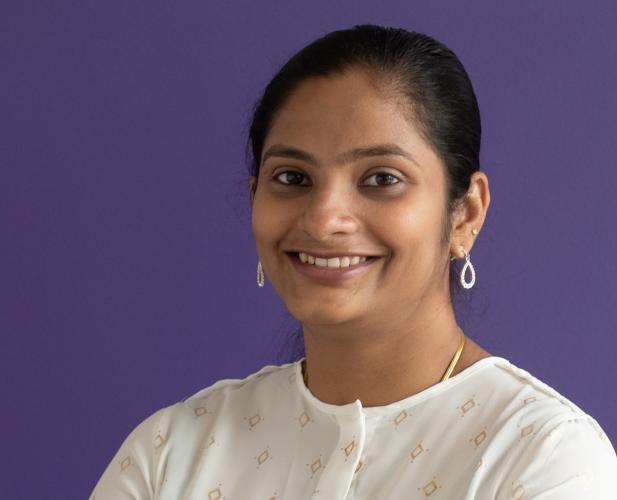
Rajalakshmi Nandakumar
VerifiedCornell University · Computer Science
Active 1997–2026
About
Rajalakshmi Nandakumar is an Assistant Professor at Cornell Tech and in the Computing and Information Science department at Cornell University. She manages the wireless and mobile systems lab at Cornell Tech, where she develops computing technologies that enable novel applications across various domains including mobile health, user interfaces, and the Internet of Things (IoT). Her research focuses on creating and deploying computing technologies that have real-world impact and improve quality of life. Notable projects include smartphone-based opioid overdose detection, which has received media coverage from Science Friday, CNBC, MIT Technology Review, and others, and has been commercialized by the startup Sound Life Sciences. Another significant contribution is ApneaApp, a technology for sleep staging and sleep apnea diagnosis licensed by ResMed, a major player in the sleep health industry, and used by millions through the SleepScore app. Her work also includes innovations in IoT interaction mechanisms such as FingerIO and Wi-Fi gesture recognition, with technologies licensed to companies like TandemLaunch. Rajalakshmi has received several awards including the Marconi Society Paul Baran Young Scholar award and best paper awards at top conferences. She also teaches courses on modern mobile systems and data science.
Research topics
- Computer Science
- Operating system
- Artificial Intelligence
- Embedded system
- Telecommunications
- Medicine
- Electrical engineering
- Geography
- Chemistry
- Computer network
- Internal medicine
- Physics
- World Wide Web
- Mathematics
- Engineering
Selected publications
mmFHE: mmWave Sensing with End-to-End Fully Homomorphic Encryption
ArXiv.org · 2026-03-23
articleOpen accessSenior authorWe present mmFHE, the first system that enables fully homomorphic encryption (FHE) for end-to-end mmWave radar sensing. mmFHE encrypts raw range profiles on a lightweight edge device and executes the entire mmWave signal-processing and ML inference pipeline homomorphically on an untrusted cloud that operates exclusively on ciphertexts. At the core of mmFHE is a library of seven composable, data-oblivious FHE kernels that replace standard DSP routines with fixed arithmetic circuits. These kernels can be flexibly composed into different application-specific pipelines. We demonstrate this approach on two representative tasks: vital-sign monitoring and gesture recognition. We formally prove two cryptographic guarantees for any pipeline assembled from this library: input privacy, the cloud learns nothing about the sensor data; and data obliviousness, the execution trace is identical on the cloud regardless of the data being processed. These guarantees effectively neutralize various supervised and unsupervised privacy attacks on raw data, including re-identification and data-dependent privacy leakage. Evaluation on three public radar datasets (270 vital-sign recordings, 600 gesture trials) shows that encryption introduces negligible error: HR/RR MAE <10^-3 bpm versus plaintext, and 84.5% gesture accuracy (vs. 84.7% plaintext) with end-to-end cloud GPU latency of 103s for a 10s vital-sign window and 37s for a 3s gesture window. These results show that privacy-preserving end-to-end mmWave sensing is feasible on commodity hardware today.
mmFHE: mmWave Sensing with End-to-End Fully Homomorphic Encryption
arXiv (Cornell University) · 2026-03-23
preprintOpen accessSenior authorWe present mmFHE, the first system that enables fully homomorphic encryption (FHE) for end-to-end mmWave radar sensing. mmFHE encrypts raw range profiles on a lightweight edge device and executes the entire mmWave signal-processing and ML inference pipeline homomorphically on an untrusted cloud that operates exclusively on ciphertexts. At the core of mmFHE is a library of seven composable, data-oblivious FHE kernels that replace standard DSP routines with fixed arithmetic circuits. These kernels can be flexibly composed into different application-specific pipelines. We demonstrate this approach on two representative tasks: vital-sign monitoring and gesture recognition. We formally prove two cryptographic guarantees for any pipeline assembled from this library: input privacy, the cloud learns nothing about the sensor data; and data obliviousness, the execution trace is identical on the cloud regardless of the data being processed. These guarantees effectively neutralize various supervised and unsupervised privacy attacks on raw data, including re-identification and data-dependent privacy leakage. Evaluation on three public radar datasets (270 vital-sign recordings, 600 gesture trials) shows that encryption introduces negligible error: HR/RR MAE <10^-3 bpm versus plaintext, and 84.5% gesture accuracy (vs. 84.7% plaintext) with end-to-end cloud GPU latency of 103s for a 10s vital-sign window and 37s for a 3s gesture window. These results show that privacy-preserving end-to-end mmWave sensing is feasible on commodity hardware today.
Zenodo (CERN European Organization for Nuclear Research) · 2026-02-08
articleOpen accessSenior authorProcrastination is a complex behavioural singularity subjective by psychological, neurological, and biological factors. Teenage years represents a critical developing stage during which procrastination behavior possibly will be exacerbated, predominantly among personalities la-di-da by neurological disorders such as migraine. The contemporaneous cross-sectional study observed the association amongst nominated phenotypic characters—ABO blood group, hair type, and facial shape—and procrastination behavior amongst adolescents, with special reference to migraine. A total of 102 adolescents elderly 17–21 years from nominated educational institutions in Tamil Nadu, India, be situated included. The Data be situated collected via a structured inquiry form, a homogenous adolescent procrastination scale, scientific migraine history, and phenotypic assessment. The ABO blood grouping was completed using standard transparency agglutination techniques. The Statistical studies, included chi-square tests, odds ratios (OR) with 95% confidence intervals (CI), logistic regression, in addition Hardy–Weinberg equilibrium analysis. In height procrastination behavior be to be found observed in 70.5% of contributors, while migraine predominance was 20.5%. The Migraine-affected young people presented significantly greater procrastination scores (χ² = 9.84; p < 0.01). Blood groups B and O, curly hair type, in addition round facial shape established relatively higher prevalence of procrastination, however population-level associations remained weak. The findings indicate that procrastination behavior amongst adolescents is ambitious for the most part by neurological and psychosocial influences slightly than phenotypic characters alone.
Open MIND · 2026-02-08
articleSenior authorProcrastination is a complex behavioural singularity subjective by psychological, neurological, and biological factors. Teenage years represents a critical developing stage during which procrastination behavior possibly will be exacerbated, predominantly among personalities la-di-da by neurological disorders such as migraine. The contemporaneous cross-sectional study observed the association amongst nominated phenotypic characters—ABO blood group, hair type, and facial shape—and procrastination behavior amongst adolescents, with special reference to migraine. A total of 102 adolescents elderly 17–21 years from nominated educational institutions in Tamil Nadu, India, be situated included. The Data be situated collected via a structured inquiry form, a homogenous adolescent procrastination scale, scientific migraine history, and phenotypic assessment. The ABO blood grouping was completed using standard transparency agglutination techniques. The Statistical studies, included chi-square tests, odds ratios (OR) with 95% confidence intervals (CI), logistic regression, in addition Hardy–Weinberg equilibrium analysis. In height procrastination behavior be to be found observed in 70.5% of contributors, while migraine predominance was 20.5%. The Migraine-affected young people presented significantly greater procrastination scores (χ² = 9.84; p < 0.01). Blood groups B and O, curly hair type, in addition round facial shape established relatively higher prevalence of procrastination, however population-level associations remained weak. The findings indicate that procrastination behavior amongst adolescents is ambitious for the most part by neurological and psychosocial influences slightly than phenotypic characters alone.
Mobile medical systems for equitable healthcare
Nature Reviews Bioengineering · 2025-07-03 · 5 citations
articleSenior authorCoPlay: Audio-agnostic Cognitive Scaling for Acoustic Sensing
2025-08-04
articleSenior authorAcoustic sensing manifests great potential in various applications like health monitoring, gesture interface, by utilizing built-in speakers and microphones on smart devices. However, in ongoing research and development, one problem is often overlooked: the same speaker, when used concurrently for sensing and other traditional audio tasks (like playing music), could cause interference in both, making it impractical to use. The strong ultrasonic sensing signals mixed with music would overload the speaker’s mixer. To confront this issue of overloaded signals, current solutions are clipping or down-scaling, both of which affect the music playback quality, sensing range, and accuracy. To address this challenge, we propose CoPlay, a deep learning-based optimization algorithm to cognitively adapt the sensing signal and run in real-time. It can 1) maximize the sensing signal magnitude within the available bandwidth left by the concurrent music to optimize sensing range and accuracy and 2) minimize any consequential frequency distortion that can affect music playback. We design a custom model and test it on common types of sensing signals (sine wave or Frequency Modulated Continuous Wave FMCW) as inputs alongside various agnostic types of concurrent music and speech. First, we micro-benchmark the model performance to show the quality of the generated signals. Secondly, we conducted 2 field studies of downstream acoustic sensing tasks on 2 devices in the real world. A study with 12 users proved that respiration monitoring and gesture recognition using our adapted signal achieve similar accuracy as no-concurrent-music scenarios, whereas baseline methods of clipping or down-scaling manifest worse accuracy. A qualitative study also justifies that CoPlay leaves music untouched, unlike clipping or down-scaling that degrade music quality.
Association of extreme heat events with sleep and cardiovascular health: a scoping review
Systematic Reviews · 2025-01-22 · 7 citations
reviewOpen accessBACKGROUND: Extreme heat events (EHEs), driven by anthropogenic climate change, exacerbate the risk of cardiovascular disease (CVD), although the underlying mechanisms are unclear. A possible mechanism leading to heat-related CVD is disturbances in sleep health, which can increase the risk of hypertension, and is associated with ideal cardiovascular health. Thus, our objective was to systematically review the peer-reviewed literature that describes the relationship between EHEs, sleep health, and cardiovascular measures and outcomes and narratively describe methodologies, evidence, and gaps in this area in order to develop a future research agenda linking sleep health, EHEs, and CVD. METHODS: A comprehensive literature search was performed in the following databases from inception-June 2023: Ovid MEDLINE, Ovid Embase, CINAHL, Web of Science, and the Cochrane Library. Studies retrieved were then screened for eligibility against predefined inclusion/exclusion criteria. Then studies were described qualitatively in relation to study design, findings, and the evidence linking the relationship between sleep health, EHEs, and CVD. RESULTS: Of the 2035 records screened, only three studies met the inclusion criteria. In these three studies, EHE was measured as absolute temperatures (greater than 30 °C) or relative temperatures (i.e., 90th percentile daily maximum temperature within the region). Cardiovascular (CV) measures described included blood pressure (BP), heart rate (HR), and HR variability (no CVD outcomes were described), and objective and subjective measurements of sleep health outcomes included sleep duration, calmness, ease of falling asleep, ease of awakening, freshness after awakening, and sleep satisfaction. Two studies were controlled trials, and one was a cohort study. During EHEs, individuals slept for shorter periods of time and less efficiently, with greater degrees of HR variability in two of the three studies lasting at most 1-2 days; BP (both systolic and diastolic) significantly decreased during EHEs in two of the studies. No formal assessment of a mediating relationship between EHE exposure, sleep outcomes, and CV measures was undertaken. CONCLUSIONS: Few studies examine the link between CVD, sleep, and extreme heat as a possible mechanism of elevated CVD risk during EHEs, despite a strong physiological rationale. Our findings highlight an important gap in the literature that should be closely examined as EHEs become more frequent and their harmful impacts of health increase.
WixUp: A Generic Data Augmentation Framework for Wireless Human Tracking
2025-05-04 · 1 citations
articleOpen accessSenior authorWireless sensing technologies, leveraging ubiquitous sensors such as acoustics or mmWave, can enable various applications such as human motion and health tracking. However, the recent trend of incorporating deep learning into wireless sensing introduces new challenges, such as the need for extensive training data and poor model generalization. As a remedy, data augmentation is one solution well-explored in other fields such as computer vision; yet they are not directly applicable due to the unique characteristics of wireless signals. Hence, we propose a custom data augmentation framework, WixUp, tailored for wireless human sensing. Our goal is to build a generic data augmentation framework applicable to various tasks, models, data formats, or wireless modalities. Specifically, WixUp achieves this by a custom Gaussian mixture and probability-based transformation, making any data formats capable of an in-depth augmentation at the dense range profile level. Additionally, our mixing-based augmentation enables un-supervised domain adaptation via self-training, allowing model training with no ground truth labels from new users or environments in practice. We extensively evaluated WixUp across four datasets of two sensing modalities (mmWave, acoustics), two model architectures, and three tasks (pose estimation, identification, action recognition). WixUp provides consistent performance improvement (2.79%-84.25%) across these various scenarios and outperforms other data augmentation baselines.
VitalHide: Enabling Privacy-Aware Wireless Sensing of Vital Signs
2025-02-12
articleOpen accessSenior authorWireless sensing technologies leveraging the acoustic and RF sensors in smart devices have advanced to enable accurate contactless monitoring of vital signs such as breathing and heartbeat. Wireless signal monitoring can enable important health applications, such as determining emotional states, detecting critical health conditions, and providing suitable interventions. While offering non-invasiveness and privacy advantages over wearables and cameras, these technologies pose serious privacy risks. The improved sensing accuracy allows any unauthorized sensor to detect sensitive health data without consent. This paper proposes VitalHide, a novel approach to protect vital signs from unauthorized sensing while still enabling wireless sensing for authorized devices. The key idea of VitalHide is to obfuscate the user's vital signs by generating a deceiving vital sign motion using a wearable mechanical device. The obfuscated signal can then only be decoded at authorized devices, while unauthorized devices receive deceiving vital signs. We show the feasibility of VitalHide by generating motion using a vibration sensor and shape memory alloy (SMA)-based smart textile, and the successful decoding of the obfuscated vital sign signal at the authorized receiver. This work advances privacy-preserving wireless sensing by securing personal health information against unauthorized access without affecting the utility of authorized devices.
Indigenous Sky Guard: Empowering Remote Communities with IoT-Enabled Drone Surveillance
Lecture notes in networks and systems · 2025-01-01
book-chapter
Frequent coauthors
- 14 shared
Shyamnath Gollakota
University of Washington
- 9 shared
Nathan Ashe
Cornell University
- 9 shared
Sarah Wozniak
Center for Autism and Related Disorders
- 9 shared
Michelle Demetres
Weill Cornell Medicine
- 9 shared
Rayan A. Ahmed
Jazan University
- 9 shared
Arnab K. Ghosh
Cornell University
- 9 shared
Nour Makarem
Columbia University Irving Medical Center
- 6 shared
Vikram Iyer
University of Washington
Labs
Wireless and Mobile Systems LabPI
Developing computing technologies that enable novel applications across various domains including mobile health, user interfaces and IoT.
Education
- 2019
Ph.D., Computer Science and Engineering
University of Washington
Awards & honors
- UW Medicine Judy Su Clinical Research award
- Paul Baran Young Scholar award by the Marconi Society
- rising star in EECS by MIT
- Resume-aware match score
- Save to shortlist
- AI-drafted outreach
See your match with Rajalakshmi Nandakumar
PhdFit ranks faculty by your research interests, methods, and publications — grounded in their actual work, not templates.
- Free to start
- No credit card
- 30-second signup