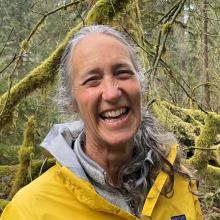
Jennifer L. Ruesink
· ProfessorVerifiedUniversity of Washington · Biology
Active 1995–2026
About
Jennifer L. Ruesink is a Professor in the Department of Biology at the University of Washington. Her research emphasizes field experimental approaches to investigate responses and feedbacks between organisms and their environment, primarily within estuarine soft sediment systems. Her current research areas include the control of life history and morphological traits in eelgrass, community structure in oyster and eelgrass habitats, restoration strategies for native oysters, environmental impacts of shellfish aquaculture, and recruitment variability and phenology under climate warming. Her work contributes to understanding ecosystem dynamics, invasive species impacts, and conservation strategies in estuarine environments.
Research topics
- Ecology
- Biology
- Fishery
- Environmental science
- Geography
Selected publications
Journal of Shellfish Research · 2026-01-03
articleSenior authorEstuaries and Coasts · 2025-12-11 · 1 citations
articleOpen accessAbstract In estuaries where native eelgrass ( Zostera marina ) and Pacific oyster ( Magallana gigas ) aquaculture co-occur along the US Pacific Coast, contemporary landscape-scale distributions are essential to properly assess the interaction between these habitats and balance priorities of eelgrass conservation and sustainable aquaculture. We classified eelgrass distribution and delineated active oyster aquaculture throughout Willapa Bay, WA, using orthoimagery to examine eelgrass coverage among aquaculture practices and compare current and historical estimates. Eelgrass covered an estimated 5550 ha (or 25.7%) of the intertidal area and had not substantially changed from that of 2009. Active oyster aquaculture encompassed approximately 3096 ha of intertidal area, wherein eelgrass coverage differed among aquaculture management practices ( p < 0.001), exhibiting the highest proportional coverage (0.60) within off-bottom culture beds. Bottom-culture beds that were harvested mechanically contained lower proportional eelgrass coverage (0.27) than those harvested by hand (0.44, p < 0.001). We further demonstrated the utility of these landscape-scale datasets by integrating nekton data to develop novel abundance estimates for two managed nekton species within channel-fringing habitats. Estimated seasonal densities of juvenile Dungeness crab ( Metacarcinus magister ) and English sole ( Parophrys vetulus ) differed among aquaculture methods ( p ≤ 0.03, except for P. vetulus in spring ( p = 0.05)), with bottom culture generally containing the highest densities of both species. Species densities did not differ between areas of eelgrass presence and absence. Collectively, channel-fringing habitat composed 9% of the estuary’s expansive lower intertidal area and was estimated to support just 1.3–2.1% of the juvenile M. magister but a relatively high 13.6–23.5% of the juvenile P. vetulus throughout the same intertidal zone. These landscape-scale methodologies, datasets, and findings provide valuable information on the spatiotemporal dynamics of eelgrass and oyster aquaculture that can support stakeholder efforts to navigate the dual challenges of preserving eelgrass and supporting sustainable aquaculture.
iScience · 2025-07-08 · 2 citations
articleOpen accessmay inhibit flowering in eelgrass.
Data for: Direct and indirect ecosystem responses to vehicle compaction of soft sediments
Open MIND · 2025-12-01
dataset1st authorCorrespondingIn northeastern Pacific tidal flats, a native bioturbator, ghost shrimp Neotrypaea californiensis, engineers soft-sediment habitat and interacts antagonistically with bivalve shellfish. Vehicle compaction has been used in pest control of ghost shrimp, but this disturbance lacks quantitative evidence of its efficacy and environmental impacts. Through three large (~10 ha) experiments in Grays Harbor, Washington, USA, we tested the direct and indirect impacts of compaction by a tracked vehicle (MarshMaster) on ghost shrimp density, sediment conditions, and infauna. We also examined how oyster survival (cultch seeded with Pacific oysters, Magallana gigas) and waterbird usage of tidal flats responded post-compaction. In Experiment 1, compaction occurred on 13 Aug 2022 and 19 May 2023, and sampling occurred seasonally over three years, including immediately post-compaction. In Experiment 2, compaction occurred on 2 Aug 2023, and sampling occurred seasonally over one year. Due to minimal treatment effects at this site, a third experiment was set up on 0.16-ha beds that were compacted with 0, 1, 3, or 5 compaction passes on 24 Jul 2024 and followed for a year. Compaction pushed <20% of ghost shrimp to the surface, where they were vulnerable to predation and damage, yet did not significantly reduce subsurface densities within 1-2 days. Rather, declines in shrimp density and shifts to smaller size classes appeared at later sample timepoints and were more pronounced with more compaction passes. All compaction experiments resulted in firmer sediment for at least a year, even in the experiment where shrimp densities were unaffected by a single compaction pass. Where compaction briefly reduced shrimp densities below 50 m-2, sediment increased in mud and organic content and infauna increased in abundance, suggesting that these changes were mediated through reduced bioturbation rather than a direct impact of compaction. Similarly, multivariate responses of infauna appeared only in the experiments where compaction reduced shrimp densities. Habitat use by waterbirds was more influenced by tidal stage than by compaction; statistically, only dunlin (Calidris alpina) foraged more on compacted than on reference beds. Finally, although survival of outplanted oyster seed improved with compaction at one site, it remained too low (~34-40% yr-1) for viable farming.
Molecular Ecology · 2025-03-20 · 8 citations
articleOpen accessDiversity in life expectancy is common in flowering plants. In the seagrass Zostera marina , a vital foundation species in estuarine ecosystems, annual and perennial varieties occur in close proximity, raising the question of whether these lifespan strategies represent locally adapted genetic variation or plastic phenotypes influenced by the environment. Our study combined field transplant experiments and population genetic analyses to investigate the phenotypic (juvenile survival, flowering, and branching) and genetic differentiation between paired annual and perennial eelgrass meadows in a single estuary (Willapa Bay, northeast Pacific Ocean, USA) over one growing season. A common garden reciprocal transplant experiment, based on seedlings, demonstrated no differential survival to maturity but revealed a greater likelihood of flowering in annual-sourced plants and branching in perennial-sourced shoots. Further, reproductive trait performance was greater for local individuals compared to non-local ones, which indicates adaptive differentiation. Experimental transplants of annual-sourced seeds into both annual and perennial-dominated sites flowered within a few months, regardless of overwintering conditions. Estimates of population structure based on 325 SNPs (RAD-seq) revealed fine-scale population structure between life history types. Population assignment tests identified two distinct groups, distinguished mainly by whether the seedling flowered or not, regardless of geographic source or outplant location. Tests for outlier loci between the two life histories provided further evidence of local adaptation. These insights shed light on the factors governing life cycle variation and resilience in Z. marina , offering implications for the evolution and trait-based management of eelgrass populations.
Aquatic Botany · 2025-05-30
article1st authorCorrespondingAquatic Conservation Marine and Freshwater Ecosystems · 2025-10-01
articleSenior authorABSTRACT Seagrass restoration has shown mixed results, even in suitable environments, indicating ongoing needs for improved techniques. This study tracked intertidal eelgrass ( Zostera marina ) dynamics at two donor sites, differing in elevation, and one transplant site over multiple years. Based on 0%, 50%, 80% and 100% removal from 4 m 2 plots, recovery times increased with collection intensity at both donor sites, taking up to 2 years when plots were completely cleared. Collected shoots were transplanted at four plot sizes (0.0625, 0.25, 1, 4 m 2 ) and three densities (25, 64, 125 m −2 ) on tidal flats dominated by bioturbating shrimp ( Neotrypaea californiensis ). Initial establishment was reduced at higher shoot densities; only the smallest plots showed no advantage of low density. Despite initial density differences, all plots converged to ~60 m −2 after 1 year and 110 m −2 after 2 years, except 0.25 m 2 low‐density plots (initially six shoots). For total shoot counts, including those extending outside the original plots, proportional increases were inversely related to plot size and density, but a three‐way statistical interaction appeared in both years. Because low‐elevation shoots showed negative density dependence even in the 0.0625 m 2 plots, whereas high‐elevation shoots did not, the 2‐shoot transplants from low elevation had by far the fastest population growth, reaching an average of roughly 190 shoots after 2 years. Both donor sites proved viable for restoration, though performance differences emerged under specific planting configurations, suggesting that planting strategies may be more important determinants of restoration success than donor characteristics in environments suitable for eelgrass.
Blood · 2025-11-03
articleOpen accessAbstract There is a paucity of evidence-based interventions to improve outcomes in pregnancy in sickle cell disease (SCD) patients despite an increasing number of studies worldwide reporting pregnancy outcomes during the past decade. The heterogeneity in the definition of outcomes among studies has been recognized (Ashwal et al. 2023) and is a potential barrier to prioritize endpoints for clinical research. There is near-universal exclusion of pregnant women from clinical trials for novel medications for SCD, which limits investigation to medications known to be safe in pregnancy. The purpose of this meta-analysis was to assess the current evidence of the association of SCD in pregnancy with actionable and well-defined outcomes, for which there are interventions used in pregnant healthy patients that can be explored in prospective studies in SCD; for example, aspirin and heparin are used to reduce the risk of preeclampsia or venous thromboembolism (VTE). Given the importance of having precisely defined outcomes for future studies, we analyzed data on individual subtypes of hypertensive disorders, such as pregnancy induced hypertension (PIH) or gestational hypertension (GH), preeclampsia, and eclampsia, and subtypes of VTE complications, divided into deep vein thrombosis (DVT) and pulmonary embolism (PE) rather than studying them only as composite outcomes. A systematic review was conducted using Embase, PubMed, Web of Science, Global Health, CINAHL, Global Index Medicus, and SciELO. We included cohort and case control studies from 16 countries within the years 1973-2023 that compared outcomes between women with SCD and women without SCD. Log response ratio was used to quantify differences in pregnancy outcome risks, incorporating outcome type as a moderator and accounting for non-independence within studies. We found 45 studies fulfilled inclusion criteria, of which 21 were additional studies to the last comprehensive meta-analysis published in 2022, nearly doubling the sample size analyzed. We included 38,386 pregnancies in women with SCD and 19,259,391 pregnancies in women without SCD. There was a significant increase in the risk of aggregated hypertensive disorders (risk ratio [RR]: 1.75, 95% confidence interval [95%CI]1.69-1.80, p&lt;0.001) in pregnant women with SCD. We included under “hypertensive disorders” results from studies that did not stratify among causes of hypertension in pregnancy. From studies that stratified that, we found progressively higher RR for PIH/GH (1.10, 95%CI 1.03-1.17, p=0.0054), preeclampsia (2.01, 95%CI 1.93- 2.09, p&lt;0.001), and eclampsia (2.62, 95%CI 2.35-2.92, p&lt;0.001). There was a notably higher risk of VTE events (10.79, 95%CI 9.52-12.22, p&lt;0.001), with about equally high RR for DVT (9.44, 95%CI 7.96-11.19, p&lt;0.001) or pulmonary embolism (10.00, 95%CI 8.16-12.25, p&lt;0.001) in pregnant women with SCD. Low birth weight was also significantly more common in infants born to women with SCD (1.85, 95%CI 1.75-1.96, p&lt;0.001). To our knowledge, this meta-analysis included the largest number of pregnancies in SCD patients with data collected along with control patients. It provides the most current data and confirms that SCD is associated with a higher risk of VTE and hypertensive disorders in pregnancy. The analysis of subtypes of hypertensive disorders revealed more nuanced risk patterns, with higher risk ratios found in the more severe presentations (eclampsia &gt; preeclampsia &gt; PIH/GH). It also showed that RR for DVT and pulmonary embolism were similar, which may suggest that DVT in this patient population carries a higher risk of embolism. Our findings highlight the importance of ongoing clinical trials investigating aspirin to prevent adverse outcomes in pregnancy in SCD patients, such as the LEARNER (NCT06417411) and PIPSICKLE (NCT05253781) studies. With very high risk ratios, there is great need and opportunity for international collaboration to investigate strategies to prevent DVT and pulmonary embolism in this population leading to practice-changing evidence applicable worldwide.
Marine Environmental Research · 2025-04-09 · 2 citations
articleOpen accessLong-lasting restoration success of foundation species requires understanding their responses to climate change. For species with broad distributions, lower latitudes may serve as a proxy for future warming at higher latitudes. Such space-for-time substitutions are a powerful tool for developing climate change predictions for species distributed along steep elevational gradients. To understand climate resilience of a key coastal foundation species, we examined the upper elevational limit of the native Olympia oyster ( Ostrea lurida ) along its entire range at 26 sites spanning 21° latitude, from British Columbia to Baja California. Counter to our expectations, high air temperatures did not affect variation in the upper limit of Olympia oysters. Indeed, Olympia oysters extended high into the intertidal zone at the warmer southern sites, and shading did not influence the upper limit. Our models indicated instead that extreme low temperatures set the upper limit for Olympia oysters at higher latitudes. In contrast, neither the Pacific oyster ( Magallana gigas ), a co-occurring global invader, nor barnacles exhibited clear latitudinal patterns. These findings suggest that Olympia oysters and restoration projects aimed at supporting their recovery will be resilient to increased temperatures projected by climate change models. Our results also illustrate the importance of testing the assumption that species on steep elevational gradients are living close to their upper thermal limits and will be negatively impacted by warming; for this foundation species, the assumption was false. Latitudinal studies enhance understanding of species response to climate stressors and are key to the design of climate-resilient conservation strategies. • Heat sets upper elevation limits for many intertidal species, but not Olympia oysters. • At high latitudes, cold temperatures limit Olympia oysters to the low intertidal zone. • Olympia oysters' elevational distribution may expand at high latitudes with warming. • This coastal foundation species will likely be fairly resilient to climate change. • Latitudinal studies can test assumptions about impacts of predicted warming.
The genetic legacy of a global marine invader
Proceedings of the National Academy of Sciences · 2025-04-07 · 2 citations
articleOpen accessThe massive geographic expansion of terrestrial plant crops, livestock, and marine aquacultured species during the 19th and 20th centuries provided local economic benefits, stabilized food demands, and altered local ecosystems. The invasion history of these translocations remains uncertain for most species, limiting our understanding of their future adaptive potential and historical roles as vectors for coinvaded species. We provide a framework for filling this gap in invasion biology using the widely transplanted Pacific oyster as a case study. A two-dimensional summary of population-level variation in single nucleotide polymorphisms in native Japan reflected the geographical map of Japan and allowed identification of the source regions for the worldwide expansion. Pacific oysters proliferate in nonnative areas with environmental temperatures similar to those areas where native lineages evolved. Using Approximate Bayesian Computation, we ranked the likelihood of historical oyster or shipping vectors to explain current-day distribution of genotypes in 14 coinvaded algal and animal species. Oyster transplants were a more likely vector than shipping for six species, shipping activity was more likely for five species, and a vector was ambiguous for three species. Applying this approach to other translocated species should reveal similar legacy effects, especially for economically important foundation species that also served as vectors for nonnative species.
Frequent coauthors
- 36 shared
Katharina A. M. Engelhardt
University of Maryland Center for Environmental Science
- 36 shared
Amy L. Downing
Ohio Wesleyan University
- 36 shared
Martin Solan
National Oceanography Centre
- 31 shared
Diane S. Srivastava
University of British Columbia
- 27 shared
Alan C. Trimble
University of Washington
- 24 shared
Fiona Tomàs
Mediterranean Institute for Advanced Studies
- 24 shared
Bradley J. Cardinale
Pennsylvania State University
- 20 shared
Brett R. Dumbauld
United States Department of Agriculture
Labs
Jennifer L. Ruesink LabPI
- Resume-aware match score
- Save to shortlist
- AI-drafted outreach
See your match with Jennifer L. Ruesink
PhdFit ranks faculty by your research interests, methods, and publications — grounded in their actual work, not templates.
- Free to start
- No credit card
- 30-second signup