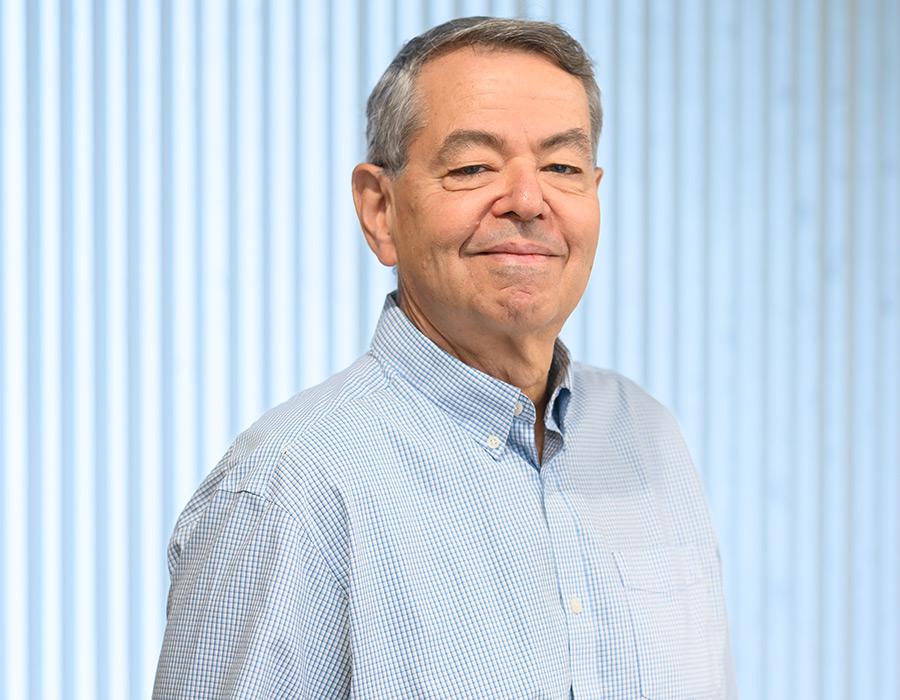
Stephen Leffler Buchwald
· Camille Dreyfus ProfessorVerifiedMassachusetts Institute of Technology · Chemistry
Active 1976–2026
About
Stephen Leffler Buchwald is the Camille Dreyfus Professor of Chemistry at MIT. His research group combines elements of organic synthesis, physical organic chemistry, and organometallic chemistry to develop catalytic processes that address fundamental problems. His work involves inventing and developing new techniques, understanding their mechanisms, and applying them in synthetically interesting contexts. Key areas of his research include the creation and study of new ligands, the design of methods for forming carbon-nitrogen and carbon-fluorine bonds—particularly using metal catalysts based on palladium or copper—and employing mechanistic and structural studies to aid in ligand and catalyst development. Additionally, his group explores continuous flow chemistry using microreactors and capillary tubing to optimize chemical processes on a small scale, leveraging the enhanced heat and mass transfer properties of silicon microreactors.
Research topics
- Combinatorial chemistry
- Organic chemistry
- Chemistry
- Stereochemistry
- Nanotechnology
- Materials science
- Photochemistry
- Inorganic chemistry
- Physical chemistry
- Medicinal chemistry
Selected publications
Journal of the American Chemical Society · 2026-03-10
articleOpen accessSenior authorCorrespondingHerein, we report that nitroalkanes are competent electrophiles for the enantioselective copper hydride (CuH)-catalyzed alkene hydrofunctionalization of vinyl(hetero)arenes to generate hydroxylamines in good yields and with high levels of enantioselectivity. Control experiments and density functional theory (DFT) calculations suggest that the nitro group constitutes the active electrophile. The direct addition of the enantioenriched alkyl copper intermediate to the nitro group outcompetes competitive reduction or deprotonation of the nitroalkane. DFT calculations indicate that the addition of the stereoenriched alkyl copper intermediate to nitroalkane electrophiles occurs through a six-membered cyclic transition state featuring dearomatization of the vinyl arene. Overall, this process constitutes a one-step route to access enantioenriched N-alkylhydroxylamine from vinylarenes and nitroalkanes.
Ligand Design Enables Cu-Catalyzed Etherification of Aryl Bromides Using Mild Bases
Organic Letters · 2026-01-05
articleOpen accessSenior authorCorrespondingWe report a Cu-catalyzed method for the efficient coupling of base-sensitive aryl bromides and alcohols utilizing a newly developed N1,N2-diarylbenzene-1,2-diamine ligand, L15. This ligand was developed to increase the Lewis acidity of the Cu center, thereby permitting the use of a substantially milder base (NaOTMS or NaOPh) relative to those required in a previous iteration of this methodology (NaOMe or NaOt-Bu). Under the optimized reaction conditions, several classes of previously incompatible aryl bromides were efficiently transformed, including base-sensitive heterocycles and those containing acidic functional groups. Kinetic analyses support that C–O coupling proceeds via a mechanism involving binding/deprotonation of alcohol nucleophiles, that the pKa of the base influences the overall rate law, and that substoichiometric quantities of strong base can be utilized to accelerate ligand activation and thereby increase the overall rate of the transformation.
CCDC 2549881: Experimental Crystal Structure Determination
The Cambridge Structural Database · 2026-04-29
datasetOpen accessSenior authorAn entry from the Cambridge Structural Database, the world’s repository for small molecule crystal structures. The entry contains experimental data from a crystal diffraction study. The deposited dataset for this entry is freely available from the CCDC and typically includes 3D coordinates, cell parameters, space group, experimental conditions and quality measures.
Copper Hydride-Catalyzed Net Hydroformylation of Unactivated Terminal Olefins
Organic Letters · 2025-07-26
articleOpen accessSenior authorCorrespondingWe report a copper-catalyzed method for the highly regioselective formal hydroformylation via hydroacetalization of simple terminal alkenes. The robust protocol employs a commercially available diethoxy methyl ester proelectrophile activated by cocatalytic Zn(OTf)2 and was found to operate on a variety of functionalized olefin substrates to provide acetal products with exclusive linear regioselectivity. Density functional theory studies support that the key C–C bond forming event between the alkyl copper and the oxocarbenium ion intermediates takes place via a frontside electrophilic substitution (SE2) mechanism with retention of configuration of the reacting Cu–C bond.
Journal of the American Chemical Society · 2025-05-29 · 16 citations
articleOpen accessThis manuscript presents machine learning models for Pd-catalyzed C–N couplings constructed using a large, pharmaceutically relevant, structurally diverse dataset (4204 unique products) generated de novo using high-throughput experimentation. The dataset generation was enabled by the discovery of novel nanomole scale compatible automation friendly C–N coupling reaction conditions using LiOTMS as the base. The large dataset enabled the systematic evaluation of model performance using five different data-splitting strategies that were carefully designed to assess the models’ ability to both interpolate and extrapolate. The models exhibit high predictive performance across all splits as gauged by standard metrics. In addition, the models predicted with high accuracy the outcome of validation libraries that were outside the scope of the training set. Employing these models in the context of medicinal chemistry campaigns should result in significant enrichment of successful C–N couplings.
Development of a Ligand for Cu-Catalyzed Amination of Base-Sensitive (Hetero)aryl Chlorides
Journal of the American Chemical Society · 2025-10-13 · 5 citations
articleOpen accessSenior authorCorrespondingWe report a new N1,N2-diarylbenzene-1,2-diamine ligand, L6, that supports a copper catalyst capable of coupling base-sensitive aryl chlorides and amines that were previously unsuccessful substrates for Cu-catalyzed C–N coupling. A detailed structure–activity relationship study, combined with density functional theory (DFT) calculations, was used to uncover two key structural features that contribute to the efficacy of the catalyst derived from L6. First, steric repulsion caused by a methyl substituent induces a conformational change that opens up additional space for ligand deprotonation and oxidative addition. Second, the trifluoromethyl groups create electrostatic interactions between the ligand and aryl chloride substrates that facilitate oxidative addition via through-space ligand–substrate interaction.
Automated Flow Synthesis of Artificial Heme Enzymes for Enantiodivergent Biocatalysis
Journal of the American Chemical Society · 2025-01-22 · 8 citations
articleOpen accessCorrespondingThe remarkable efficiency with which enzymes catalyze small-molecule reactions has driven their widespread application in organic chemistry. Here, we employ automated fast-flow solid-phase synthesis to access catalytically active full-length enzymes without restrictions on the number and structure of noncanonical amino acids incorporated. We demonstrate the total syntheses of iron-dependent Bacillus subtilis myoglobin (BsMb) and sperm whale myoglobin (SwMb). The synthetic enzymes displayed excellent enantioselectivity and yield in carbene transfer reactions. Absolute control over enantioselectivity in styrene cyclopropanation was achieved using synthetic L- and D-BsMb mutants, which delivered each enantiomer of cyclopropane product in identical and opposite enantiomeric enrichment. BsMb mutants outfitted with noncanonical amino acids were used to facilitate detailed structure–activity relationship studies, revealing a previously unrecognized hydrogen-bonding interaction as the primary driver of enantioselectivity in styrene cyclopropanation. We anticipate that our approach will advance biocatalysis by providing reliable and rapid access to fully synthetic enzymes possessing noncanonical amino acids.
Miquel Pericàs – an Outstanding Scientist and a Great Friend
Advanced Synthesis & Catalysis · 2024-02-20
articleOpen access1st authorCorrespondingFrom left to right: Miquel Pericàs, Laura Herrero (Ruben Martin's wife), Anne-Liese Pericàs, Steve Buchwald, Ruben Martin I first met Miquel Pericàs when he came to MIT to visit in the mid-1990s and to check on the progress of his student, Xevi Verdaguer, who was a postdoc with me. Little did I know that this would be the beginning of a close personal and professional relationship that has now gone on for over 25 years. When Miquel founded the ICIQ, I was very pleased to be appointed as a member of the Scientific Advisory Board (in 2002), which I ultimately led for almost nine years. I watched Miquel build the ICIQ into an international chemistry powerhouse during this time. He was able to attract outstanding colleagues and build an infrastructure that was the envy of others. He maintained a vigorous research program in organic synthesis, asymmetric catalysis, flow chemistry, and immobilized catalysts. I was fortunate enough to visit “Casa Pericas” in Barcelona many times, where I enjoyed the tremendous hospitality of Miquel and his wife, Anne-Liese. I can readily hear Miquel's common query: “Would you like a digestif?” Miquel, my friend, congratulations on all you have done for science in Spain and for building the ICIQ. You are an outstanding scientist and a great friend.
Room‐Temperature Copper‐Catalyzed Etherification of Aryl Bromides
Angewandte Chemie International Edition · 2024-02-15 · 38 citations
articleOpen accessSenior authorCorresponding-diarylbenzene-1,2-diamine ligand, L8. Under optimized reaction conditions, structurally diverse aryl and heteroaryl bromides underwent efficient coupling with a variety of alcohols at room temperature using an L8-based catalyst. Notably, the L8-derived catalyst exhibited enhanced activity when compared to the L4-based system previously disclosed for C-N coupling, namely the ability to functionalize aryl bromides containing acidic functional groups. Mechanistic studies demonstrate that C-O coupling utilizing L8 ⋅ Cu involves rate-limiting alkoxide transmetallation, resulting in a mechanism of C-O bond formation that is distinct from previously described Pd-, Cu-, or Ni-based systems. This lower energy pathway leads to rapid C-O bond formation; a 7-fold increase relative to what is seen with other ligands. The results presented in this report overcome limitations in previously described C-O coupling methods and introduce a new ligand that we anticipate may be useful in other Cu-catalyzed C-heteroatom bond-forming reactions.
Room‐Temperature Copper‐Catalyzed Etherification of Aryl Bromides
Angewandte Chemie · 2024-02-15
articleOpen accessSenior authorCorrespondingAbstract We disclose the development of a Cu‐catalyzed C−O coupling method utilizing a new N 1 , N 2 ‐diarylbenzene‐1,2‐diamine ligand, L8 . Under optimized reaction conditions, structurally diverse aryl and heteroaryl bromides underwent efficient coupling with a variety of alcohols at room temperature using an L8 ‐based catalyst. Notably, the L8 ‐derived catalyst exhibited enhanced activity when compared to the L4 ‐based system previously disclosed for C−N coupling, namely the ability to functionalize aryl bromides containing acidic functional groups. Mechanistic studies demonstrate that C−O coupling utilizing L8 ⋅ Cu involves rate‐limiting alkoxide transmetallation, resulting in a mechanism of C−O bond formation that is distinct from previously described Pd‐, Cu‐, or Ni‐based systems. This lower energy pathway leads to rapid C−O bond formation; a 7‐fold increase relative to what is seen with other ligands. The results presented in this report overcome limitations in previously described C−O coupling methods and introduce a new ligand that we anticipate may be useful in other Cu‐catalyzed C‐heteroatom bond‐forming reactions.
Recent grants
NIH · $8.1M · 2010
NIH · $296k · 2000
Metal-Catalyzed Methods for Organic Synthesis
NIH · $10.2M · 2017–2027
NIH · $3.4M · 2000
Catalytic Methods for Organic Synthesis
NIH · $7.3M · 1992–2018
Frequent coauthors
- 54 shared
Bradley L. Pentelute
Massachusetts Institute of Technology
- 49 shared
Brett P. Fors
University of California, Santa Barbara
- 38 shared
Timothy E. Barder
- 38 shared
Phillip J. Milner
University of California, Berkeley
- 38 shared
Mingjuan Su
Massachusetts Institute of Technology
- 38 shared
John P. Wolfe
University of Michigan–Ann Arbor
- 38 shared
Richard Y. Liu
Duke University
- 34 shared
Klavs F. Jensen
Massachusetts Institute of Technology
- Resume-aware match score
- Save to shortlist
- AI-drafted outreach
See your match with Stephen Leffler Buchwald
PhdFit ranks faculty by your research interests, methods, and publications — grounded in their actual work, not templates.
- Free to start
- No credit card
- 30-second signup