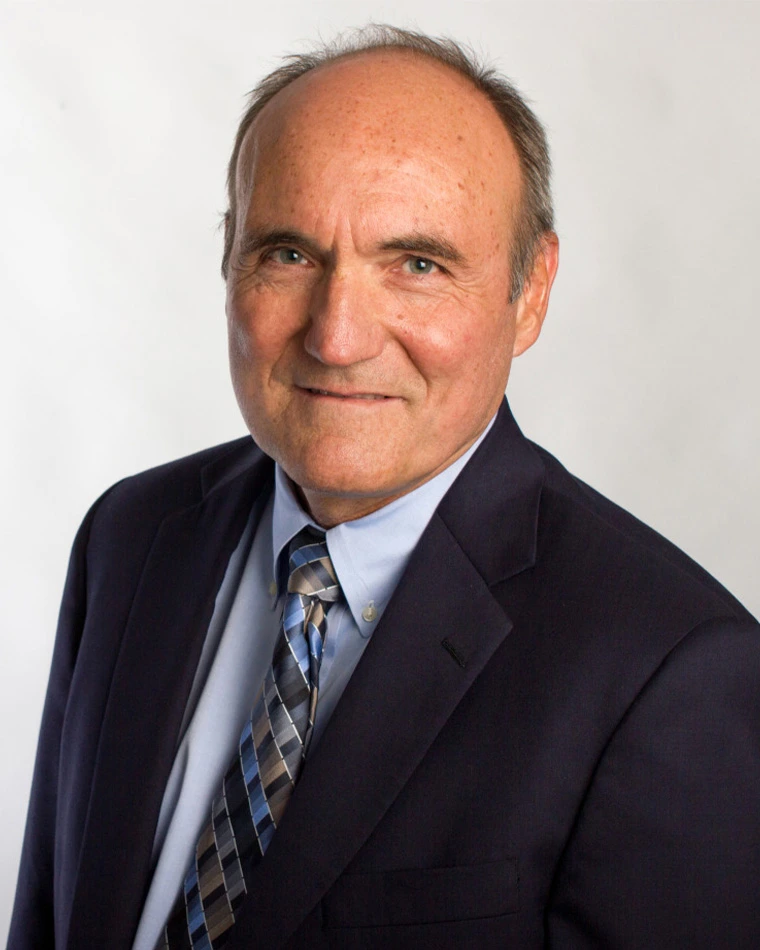
Jeffrey W. Jacobs
· Elwin G. Wood Distinguished Professor of Aerospace and Mechanical EngineeringVerifiedUniversity of Arizona · Electrical & Computer Engineering
Active 1959–2025
About
Jeffrey W. Jacobs is the Elwin G. Wood Distinguished Professor of Aerospace and Mechanical Engineering at the University of Arizona. His research focuses on experimental fluid mechanics, particularly the study of instabilities such as Richtmyer-Meshkov, Rayleigh-Taylor, and related turbulent mixing phenomena. He has contributed to understanding the development and behavior of these instabilities through experiments and simulations, utilizing advanced measurement techniques like time-resolved particle image velocimetry (PIV). His work often involves shock tube experiments and the investigation of the effects of shock interactions, reshock times, and miscibility on fluid instabilities. Jacobs has authored numerous publications in this field, advancing the knowledge of turbulent mixing processes relevant to aerospace, defense, and energy applications.
Research topics
- Mechanics
- Physics
- Classical mechanics
- Optics
- Atomic physics
- Chemistry
- Computational physics
Selected publications
2025-01-01
book-chapterSenior author278 Enhancing parenteral medication safety by using safety II: only double-check if it adds value
2025-05-01
articleOpen accessis also important and they will receive good advice on how to do that and finally receive a correct referral where they can be helped if they need help to live a healthier life.The inspectorate hopes that doctors will now discuss lifestyle more often with their patients and that they will give concrete advice and refer better.Also, the inspectorate hopes that the collaboration has been strengthened between hospitals, general practitioners, institutions that offer lifestyle guidance such as lifestyle coaches and smoking cessation coaches and dieticians, but also the social domain, which offers exercise or healthy eating clubs, for example.Involving patients in the development of innovative stimulating supervision is a rather recent development (Wiig et al., 2020) and this project has proven to be very successful.It is precisely the stories of patients about their experienced care that stimulate care professionals to improve care (Kleefstra et al., 2024).Essential in this is the safe environment, created in this project in collaboration with patient organization Ikone.Furthermore, by bringing care professionals and patients together and having them come up with improvements together, care professionals in a region get to know each other.And in addition, the improvements will hopefully lead to a healthier Dutch population.
271 Enhancing parenteral medication safety by using safety II: only double-check if it adds value
2025-05-01 · 1 citations
articleOpen accesstailored staff education, and the appointment of departmental champions to drive adoption.Protocols defined inappropriate catheterization based on factors such as surgical duration (<180 minutes), expected postoperative bedrest (<24 hours), and thresholds for urinary retention and residuals. 5 7Results A total of 2,711 adult patients were included (2,167 before; 544 after implementation).Following the intervention, the percentage of patients without inappropriate IDUC increased from 46% to 57%, and those without inappropriate CIC from 34% to 67%.Total catheter use also declined: the proportion of patients not receiving an IDUC rose from 54% to 64%, and those without CIC from 89% to 92%.Ordinal logistic regression, adjusted for age, sex, hospital, and surgery type, confirmed statistically significant reductions in total IDUC use (adjusted OR 0.61, 95% CI 0.50-0.76)and inappropriate CIC use (adjusted OR 0.25, 95% CI 0.13-0.51).UTI rates remained stable (1.4% vs. 1.3%), and the average length of hospital stay did not increase (4.9 vs. 5.1 days).Discussion Key factors contributing to success included multidisciplinary buy-in, strong local leadership, and the adaptability of training formats, including online tools necessitated by the COVID-19 pandemic.Challenges involved staff turnover and pre-existing variability in institutional catheter protocols.The role of nurses as key decision-makers in catheter use was expanded, aligning with current literature suggesting nursedriven catheter management improves outcomes. 8 9 This study highlights the potential of structured, scalable strategies to improve the quality and safety of postoperative care.By combining evidence-based protocols with localized implementation, inappropriate catheter use was significantly reduced without compromising patient safety or length of stay.The findings support broader application of this approach to other surgical disciplines or invasive interventions.Sustained adherence will require ongoing training, audit-feedback loops, and integration into hospital-wide quality improvement systems.
The influence of the shock-to-reshock time on the Richtmyer–Meshkov instability in reshock
Journal of Fluid Mechanics · 2024-11-18 · 12 citations
articleOpen accessSenior authorExperiments on the Richtmyer–Meshkov instability (RMI) in a dual driver vertical shock tube (DDVST) are described. An initially planar, stably stratified membraneless interface is formed by flowing air from above and sulfur hexafluoride from below the interface location using the method of Jones & Jacobs ( Phys. Fluids , vol. 9, issue 1997, 1997, pp. 3078–3085). A random three-dimensional, multi-modal initial perturbation is imposed by vertically oscillating the gas column to produce Faraday waves. The DDVST design generates two shock waves, one originating above and one below the interface, with these shocks having independently controllable strengths and interface arrival times. The shock waves have nominal strengths of $M_L=1.17$ and $M_H=1.18$ for the shock wave originating in the light and heavy gas, respectively, with these strengths chosen to result in arrested bulk interface motion following reshock. The influence of the length of the shock-to-reshock time, as well as the order of shock arrival, on the post-reshock RMI is examined. The mixing layer width grows according to $h\propto t^\theta$ , where $\theta _H=0.36\pm 0.018$ (95 %) and $\theta _L=0.38\pm 0.02$ (95 %) for heavy and light shock first experiments, respectively, indicating no strong dependence on the order of shock wave arrival. Volume integrated specific turbulent kinetic energy (TKE) in the mixing layer versus time is found to decay according to $E_{tot}/\bar {\rho }\propto t^p$ with $p_H=-0.823\pm 0.06$ (95 %) and $p_L=-1.061\pm 0.032$ (95 %) for heavy and light shock first experiments, respectively. Notably, the 95 % confidence intervals do not overlap. Analysis on the influence of the shock-to-reshock time on turbulent length scales, transition criteria, spectra and mixing layer anisotropy are also presented.
Simulations of three-layer Richtmyer–Meshkov mixing in a shock tube
Physics of Fluids · 2024-01-01 · 11 citations
articleOpen accessThe Richtmyer–Meshkov instability causes perturbations to grow after a shock traverses a fluid density interface. This increases the mixing rate between fluid from either side of the interface. We use the Flash Eulerian hydrodynamic code to investigate alterations when a thin third layer of intermediate density is placed along the interface, effectively creating two adjacent unstable interfaces. This is a common occurrence in engineering applications where a thin barrier initially separates two materials. We find that the width of the mixing layer is similar or slightly reduced; however, the total mass of mixed material can actually increase. The mixing layer becomes more compact and efficient. However, the normalized mixed mass decreases, meaning that finger entrainment becomes more important than in the simple two-layer case. The effect of adding the central layer appears to decrease when the Atwood number is decreased. The Flash results are also benchmarked against two-layer experimental data from a shock tube at the University of Arizona.
Shock tube experiments on the three-layer Richtmyer–Meshkov instability
Physics of Fluids · 2024 · 17 citations
Senior authorCorresponding- Physics
- Mechanics
- Optics
A vertical shock tube is used for experiments on the three-layer Richtmyer–Meshkov instability. Two closely spaced membrane-less interfaces are formed by the flow of two different sects of three gases: one with air above CO2 above SF6 and the other with helium above air above SF6. The lightest of the three gases enters the shock tube at the top of the driven section and flows downward. Conversely, the heaviest gas enters at the bottom of the shock tube and flows upward while the intermediate density gas enters at the middle through porous plates. All three gases are allowed to escape through holes at the layer location, leaving an approximately 30-mm layer of intermediate-density gas suspended between the lightest gas from above and the heaviest gas from below. A single-mode, two-dimensional initial perturbation is then imposed on the lower interface by oscillating the shock tube in the horizontal direction. The flow is visualized by seeding the intermediate gas with particles and illuminating it with a pulsed laser. Image sequences are then captured using high-speed video cameras. Perturbation amplitude measurements are made from the three-layer system and compared with measurements from 2, two-layer systems. It is observed that the presence of the upper, initially flat interface produces a decrease in growth of instability amplitude in the nonlinear phase over an equivalent single-interface configuration.
Time-resolved particle image velocimetry measurements of the turbulent Richtmyer–Meshkov instability
Journal of Fluid Mechanics · 2021 · 39 citations
Senior authorCorresponding- Physics
- Mechanics
- Classical mechanics
Abstract
Experiments and Simulations on the Turbulent, Rarefaction Wave Driven Rayleigh–Taylor Instability
Journal of Fluids Engineering · 2020 · 12 citations
Senior authorCorresponding- Mechanics
- Physics
- Computational physics
Abstract Experiments were performed to observe the growth of the turbulent, Rayleigh–Taylor unstable mixing layer generated between air and SF6, with an Atwood number of A=(ρ2−ρ1)/(ρ2+ρ1)=0.64, where ρ1 and ρ2 are the densities of air and SF6, respectively. A nonconstant acceleration with an average value of 2300g0, where g0 is the acceleration due to gravity, was generated by interaction of the interface between the two gases with a rarefaction wave. Three-dimensional, multimode perturbations were generated on the diffuse interface, with a diffusion layer thickness of δ=3.6 mm, using a membraneless vertical oscillation technique, and 20 experiments were performed to establish a statistical ensemble. The average perturbation from this ensemble was extracted and used as input for a numerical simulation using the Lawrence Livermore National Laboratory (LLNL) Miranda code. Good qualitative agreement between the experiment and simulation was observed, while quantitative agreement was best at early to intermediate times. Several methods were used to extract the turbulent growth constant α from experiments and simulations while accounting for time varying acceleration. Experimental, average bubble and spike asymptotic self-similar growth rate values range from α=0.022 to α=0.032 depending on the method used, and accounting for variable acceleration. Values found from the simulations range from α=0.024 to α=0.041. Values of α measured in the experiments are lower than what are typically measured in the literature but are more in line with those found in recent simulations.
Bulletin of the American Physical Society · 2020-11-24
articleSenior authorBulletin of the American Physical Society · 2020-11-24
articleSenior author
Frequent coauthors
- 23 shared
V. V. Krivets
Joint Institute for High Temperatures
- 16 shared
Charles Niederhaus
- 16 shared
Alison James
- 16 shared
Mrs Amanda
Chitose Institute of Science and Technology
- 16 shared
M Roberts
Monash University
- 13 shared
Kevin Ferguson
Lawrence Livermore National Laboratory
- 10 shared
Jeffrey Greenough
Lawrence Livermore National Laboratory
- 10 shared
D. P. Blanchard
Awards & honors
- Best poster award National Nuclear Security Administration,…
- Resume-aware match score
- Save to shortlist
- AI-drafted outreach
See your match with Jeffrey W. Jacobs
PhdFit ranks faculty by your research interests, methods, and publications — grounded in their actual work, not templates.
- Free to start
- No credit card
- 30-second signup