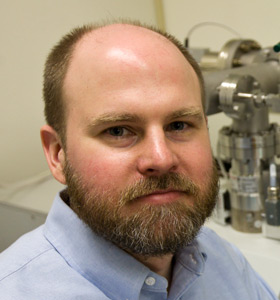
Patrick Inglett
· ProfessorVerifiedUniversity of Florida · Soil and Water Sciences
Active 2000–2025
About
Dr. Patrick Inglett is a professor of biogeochemistry at the University of Florida. His interest in aquatic systems and biogeochemistry began while working in the Wetlands Protection Section at the Environmental Protection Agency. He completed his undergraduate studies in Biology at the Georgia Institute of Technology, where he was mentored by plant ecologist Lloyd Dunn. To deepen his understanding of geochemistry, he minored in Earth and Atmospheric Sciences and conducted salt marsh research in the lab of Philippe Van Cappellen. For graduate school, he chose the University of Florida to study Wetland Biogeochemistry under the guidance of Ramesh Reddy. His research projects focused on nitrogen cycling, with his dissertation work centered on understanding patterns and processes affecting stable nitrogen isotope signatures. After ten years, he has earned tenure in the same department where he obtained his degree. Despite the challenges, he continues to enjoy teaching classes and mentoring students through research.
Research topics
- Environmental science
- Ecology
- Agronomy
- Biology
- Soil science
- Chemistry
- Environmental chemistry
- Geology
- Forestry
Selected publications
Journal of Plant Growth Regulation · 2025-10-21 · 1 citations
articleSenior authorAgriculture · 2025-09-29
articleOpen accessIn Florida, many agricultural soils contain up to 600 mg/kg of Mehlich-3 extractable phosphorus (P), yet potato growers continue to apply P fertilizers, indicating complex P dynamics that remain underexplored. Previous studies have mainly focused on P fertilizer trials, overlooking crucial factors like phosphatase activity and P sorption isotherms in high-legacy P systems. This study aimed to address this gap by examining acid phosphatase activity (AcPA) and P sorption dynamics in a potato field in northeastern Florida. Utilizing a split-block design, 24 plots were subjected to two P application rates (0 and 49 kg/ha) and three management treatments: a multispecies cover crop (MSCC), MSCC with Telone-C35 (a nematicide), and an untreated control. Significant increases in AcPA were observed during the tuber bulking stage, suggesting that applied P was insufficient for plant needs. P sorption isotherms indicated that the soil had reached maximum P sorption capacity, with applied P primarily fixed through chemical processes. These findings underscore the need for revised P fertilizer strategies in high-legacy P soils and highlight the importance of monitoring AcPA and sorption phases for effective nutrient management.
SSRN Electronic Journal · 2025-01-01
preprintOpen accessSSRN Electronic Journal · 2025-01-01
preprintOpen accessNitrogen-fixing bacterial communities differ between perennial agroecosystem crops
FEMS Microbiology Ecology · 2024-04-18 · 5 citations
articleOpen accessBiocrusts, common in natural ecosystems, are specific assemblages of microorganisms at or on the soil surface with associated microorganisms extending into the top centimeter of soil. Agroecosystem biocrusts have similar rates of nitrogen (N) fixation as those in natural ecosystems, but it is unclear how agricultural management influences their composition and function. This study examined the total bacterial and diazotrophic communities of biocrusts in a citrus orchard and a vineyard that shared a similar climate and soil type but differed in management. To contrast climate and soil type, these biocrusts were also compared with those from an apple orchard. Unlike natural ecosystem biocrusts, these agroecosystem biocrusts were dominated by proteobacteria and had a lower abundance of cyanobacteria. All of the examined agroecosystem biocrust diazotroph communities were dominated by N-fixing cyanobacteria from the Nostocales order, similar to natural ecosystem cyanobacterial biocrusts. Lower irrigation and fertilizer in the vineyard compared with the citrus orchard could have contributed to biocrust microbial composition, whereas soil type and climate could have differentiated the apple orchard biocrust. Season did not influence the bacterial and diazotrophic community composition of any of these agroecosystem biocrusts. Overall, agricultural management and climatic and edaphic factors potentially influenced the community composition and function of these biocrusts.
Effects of drought stress on soil nitrogen cycling
Elsevier eBooks · 2024-10-25 · 2 citations
book-chapterFrontiers in Marine Science · 2024-01-25 · 4 citations
articleOpen accessCorrespondingIntroduction Successful management and mitigation of harmful algal blooms (HABs) requires an in-depth understanding of the physiology and nutrient utilization of the organisms responsible. We explored the preference of various nitrogen (N) and phosphorus (P) substrates by two novel groups of HAB-forming phytoplankton originating from the Indian River Lagoon (IRL), Florida: 1) a consortium of picocyanobacteria ( Crocosphaera sp. and ‘ Synechococcus’ sp.) and 2) ananochlorophyte ( Picochlorum sp.). Methods Short-term kinetic uptake experiments tested algal use and affinity for inorganic and organic N substrates (ammonium (NH 4 + ), nitrate (NO 3 - ), urea, and an amino acid (AA) mixture) through 15 N and 13 C isotope tracing into biomass. Results Picocyanobacteria exhibited Michaelis-Menten type uptake for the AA mixture only, while nanochlorophytes reached saturation for NH 4 + , the AA mixture, and urea at or below 25 µM-N. Both picocyanobacteria and nanochlorophyte cultures had highest affinity (V max /K s ) for NH 4 + followed by the AA mixture and urea. Neither culture showed significant uptake of isotopically-labeled nitrate. Disappearance of glucose-6-phosphate (G6P) added to culture medium suggesting use of organic P by both cultures was confirmed by detection of alkaline phosphatase activity and the tracing of 13 C-G6P into biomass. Discussion Together, our results suggest that these HAB-forming phytoplankton groups are able to use a variety of N and P sources including organic forms, and prefer reduced forms of N. These traits are likely favorable under conditions found in the IRL during periods of significant competition for low concentrations of inorganic nutrients. Bloom-forming phytoplankton are therefore able to subsist on organic or recycled forms of N and P that typically dominate the IRL nutrient pools.
Elsevier eBooks · 2024-10-25
book-chapterOpen accessUptake of biocrust nitrogen by tree crops in a sandy soil agroecosystem
Nutrient Cycling in Agroecosystems · 2024-01-18 · 3 citations
articleOpen accessSenior authorAbstract Biological soil crusts (biocrusts) are widespread in dryland ecosystems worldwide and were only recently discovered in agroecosystems. As agroecosystem biocrusts complete biological nitrogen (N) fixation, this research investigated if biocrust N could be released to biocrust subsoil and assimilated by a perennial tree crop. Biocrust was pulse labeled with 15 NH 4 Cl ( 15 N) in the greenhouse for eight weeks prior to application in a citrus ( Citrus spp.) orchard in Southwest Florida, USA. Patches of labeled biocrust were applied to twelve citrus trees in September, with twelve trees in the same orchard not receiving biocrust (controls). The 15 N in the biocrust, subsoil, crop fibrous roots, and crop leaves was quantified at seven dates leading up to fruit harvest 158 days after application. Sampling dates overlapped with citrus root (September–October) and shoot (March) flush periods. Isotopically labeled biocrust N was present in subsoil and crop roots one day after biocrust application and in leaves after three days. Results revealed that N was released from biocrust at a rate of 0.63% 15 N released per day leading up to fruit harvest when 91.7% of 15 N had been released. The amount of biocrust 15 N in the fibrous roots increased during a root flush period (September–October) until 28 days after biocrust application and then decreased leading up to a leaf flush period and fruit harvest. Approximately 23.8% of total biocrust 15 N was in the crop tissue at fruit harvest. Overall, these results indicate agroecosystem biocrusts have the potential to support tree crop growth during N demanding growth stages.
Soil Science Society of America Journal · 2023-08-25 · 2 citations
articleOpen accessAbstract The recognition that texture is a “master soil property” points toward the need for actual quantification of particle size in organic soil material. Using a multi‐wave particle size analyzer, fibric and sapric soil samples were circulated in deionized water through a closed aqueous loop at 9.6 L min −1 , and the following methodological parameters were investigated: pre‐treatment, circulation time, and refractive index. Our results show that pre‐treatment for organic soil samples is dependent upon the degree of decomposition; the intact and dispersed PSDs for fibrous samples were similiar, whereas the PSDs for sapric samples showed a shift from 500–2000 (intact) μm to 5–100 (dispersed) μm. Circulation time was investigated using mean particle diameter and specific surface area. We demonstrated that as circulation time increased, the mean particle diameter decreased and the specific surface area increased out to 30 min as mechanical dispersion and/or fragmentation of organic particles occurred. However, circulation time after 5 min is not significantly different in terms of mean particle diameter. To investigate refractive index, 12 optical models were created. When determined across all intact samples, uncertainty was low within individual bins, with a maximum value of 0.07 ± 0.04% v/v. For dispersed samples, uncertainty increased within the silt sized region and had a maximum value of 0.17 ± 0.07% v/v. This study demonstrates that the particle diameter of organic soil material can be measured by LD with comparable certainty as that of mineral soil material using the methodological approach used in this study.
Frequent coauthors
- 26 shared
Kanika S. Inglett
University of Florida
- 20 shared
K. R. Reddy
University of Florida
- 17 shared
Ronald D. DeLaune
Louisiana State University
- 16 shared
Sarah L. Strauss
Southwest Florida Research
- 12 shared
Clayton J. Nevins
Pivot Bio (United States)
- 11 shared
Debjani Sihi
Emory University
- 8 shared
Stefan Gerber
University of Florida
- 7 shared
Xiaolin Liao
Labs
Education
- 2005
PhD, Soil and Water Sciences
University of Florida
Awards & honors
- Honors Coordinator
- Resume-aware match score
- Save to shortlist
- AI-drafted outreach
See your match with Patrick Inglett
PhdFit ranks faculty by your research interests, methods, and publications — grounded in their actual work, not templates.
- Free to start
- No credit card
- 30-second signup