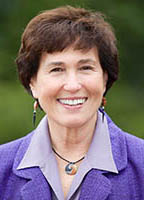
Judith Bond
University of North Carolina at Chapel Hill · Physiology and Pharmacology
Active 1966–2025
About
Judith Bond is an Adjunct Professor at the University of North Carolina at Chapel Hill in the Department of Biochemistry and Biophysics. She holds the position of Immediate Past President of the Federation of American Societies for Experimental Biology and is an Evan Pugh Professor Emeritus at the Department of Biochemistry and Molecular Biology at Penn State University College of Medicine at Hershey. Her contact information is provided through the UNC Department of Biochemistry and Biophysics. The page does not include additional details about her research focus, background, or key contributions.
Research topics
- Computer Science
- Political Science
- Biology
- Biochemistry
- Telecommunications
- Management
- Chemistry
- Law
Selected publications
The Journal of the Sylvia Townsend Warner Society · 2025-12-10
articleOpen access1st authorCorrespondingJudith Bond has written a brief appreciation of Eileen Johnson, one of the founder members of the Sylvia Townsend Warner Society, and later its Secretary and Chair.
Handbook of Proteolytic Enzymes · 2025-01-01
book-chapterHandbook of Proteolytic Enzymes · 2025-01-01
book-chapterSenior authorHandbook of Proteolytic Enzymes · 2025-01-01
book-chapterSenior authorThe Archive of Sylvia Townsend Warner and Valentine Ackland
The Journal of the Sylvia Townsend Warner Society · 2024-12-31 · 1 citations
articleOpen access1st authorCorrespondingThis article recounts the history of the Sylvia Townsend Warner and Valentine Ackland Archive from its first location in the Dorset County Museum to its current housing in the Dorset History Centre. It describes Judith Bond’s work in recording the thousands of miscellaneous items and describes some of the most interesting holdings and features of this Archive.
The Journal of the Sylvia Townsend Warner Society · 2023-01-01
articleOpen accessLynn Mutti is remembered by four friends and colleagues in the Sylvia Townsend Warner Society. The article touches on her work as Secretary of the Society and on her PhD thesis on Warner and music.
Protein Synthesis and Degradation
Elsevier eBooks · 2022 · 1 citations
1st authorCorresponding- Computer Science
- Chemistry
- Computer Science
William R. Brinkley (1936–2020)
FASEB BioAdvances · 2021-03-30
articleOpen accessSenior authorDr. William Robert (“Bill”) Brinkley (Figure 1), cell biologist, researcher, teacher, and leader with an extraordinary impact on science, died on 10 November 2020, at the age of 84. Bill was a past-president of the Federation of American Societies for Experimental Biology (FASEB) (1998–1999), and his work was featured in a dedicated FASEB meeting entitled the “Brinkley-Fest of Mitosis” in 2007. He was preceded in death by his father, Lee; mother, Roxie; sister Doris; brother Lee; sister Helen; and brother Gordon. He is survived by his wife, Shirley, of Houston; son, Kevin, of Oakland, California; and many nieces, nephews, friends, and colleagues. Bill was born in Weldon, Texas, on 31 May 1936, to Lee and Roxie Saline Brinkley, the youngest of five siblings. He earned his BS and MS degrees in life sciences from Sam Houston State University (1955–1960), then did predoctoral work in cell biology with John H. D. Bryan at Iowa State University, and completed his PhD in 1964. He pursued postdoctoral studies in the laboratory of T. C. Hsu at the University of Texas M. D. Anderson Hospital and Tumor Institute in Houston. He was an assistant and then associate professor of biology at M. D. Anderson, where he remained until 1972. Bill then moved to the University of Texas Medical Branch at Galveston, where he was named professor and Director of the Division of Cell Biology. Later, he moved to Baylor College of Medicine, where he served as professor and Director of Cell Structure in the Department of Cell Biology. In 1985, he became Chair of the Department of Cell Biology at the University of Alabama at Birmingham. Concurrently, he was a Codirector of the Gregory Fleming James Cystic Fibrosis Research Center and senior scientist at the University's Comprehensive Cancer Center. In 1991, Bill returned to Baylor to serve as Vice President for Graduate Sciences and Dean of the Graduate School, while also serving as a Codirector of the W. M. Keck Center for Computational Biology. Bill was Dean Emeritus of the Graduate School at Baylor from 2011. Bill made seminal contributions to mechanisms of cell division and to developmental biology. He devoted his career to studies of mitosis and the cytoskeleton of mammalian cells. He and his coworkers were the first to visualize and characterize the kinetochore, a protein structure that guides chromosomes to split evenly between daughter cells during mitosis and meiosis. He and Gerald M. Fuller developed the first monospecific antibodies against tubulin and discovered the cytoplasmic microtubule complex by indirect immunofluorescence. His studies also aimed to decipher the molecular basis of errors and defects in the nucleus and mitotic apparatus that cause aneuploidy. Bill was President of the American Society for Cell Biology (ASCB) from 1979 to 1980. He also served as President of the International Federation for Cell Biology from 1980 to 1984. He served on numerous journal editorial boards, including the Journal of Cell Biology and Cell. He was Editor-in-Chief of Cell Motility and the Cytoskeleton, and was a member of the National Institutes of Health (NIH) Cell Biology Study Section and the Biomedical Sciences Study Section, serving as chair. He was a member of the National Cancer Institute's Cancer Special Programs Advisory Committee and was a member of the Board of Scientific Counselors at the National Institute of Diabetes, Digestive and Kidney Diseases. Bill also served on the Board of Directors of Research! America and the Genetics Policy Institute. He received the Wilson Medal, the highest honor bestowed by the ASCB, and was elected to membership in the Institute of Medicine (now the National Academy of Medicine). Bill had significant impact on science policy as a leader of FASEB. He was President-Elect of FASEB in 1997, just as the notion of “doubling the NIH budget” was beginning to be discussed. His ability to work with a wide range of people in a variety of organizations helped build momentum for the proposal to rapidly expand NIH funding for biomedical research. Bill joined FASEB President Ralph Yount in a seminal meeting with Labor, Health and Human Services, Education Appropriations Subcommittee Chair John Porter (R-IL) who told the FASEB group that the key to success would be the development of a broad coalition of support. At Porter’s behest, Brinkley organized a delegation of Nobel laureates, patient advocates, and biotech executives to meet with Speaker of the House Dennis Hastert (R-IL), and during the remainder of his FASEB presidency, Bill worked closely with Research! America, the Campaign for Medical Research, and other organizations to launch the effort to double the NIH budget in 5 years. Bill’s support for research, however, was not limited to the biomedical sciences. He actively supported increased funding for the National Science Foundation (NSF) and, in 1999, he invited the presidents of the American Chemical Society, American Physical Society, and American Mathematical Society to join him in testimony on NSF funding before the House Commerce, Justice, Science Appropriations Subcommittee. His easy-going manner and gentlemanly approach to conflict resolution made him a remarkably effective leader, as did his poise and self-control under fire. When a letter critical of his support of the NIH funding bill written by Congressman David Obey was leaked to Science magazine, Bill remained firm in his support for the legislation. And after the bill was finally passed, in a gesture of bipartisanship, Bill presented FASEB’s Public Service Award to a Democrat (Senator Tom Harkin) and a Republican (Senator Arlen Specter) in a Capitol Hill Ceremony. Bill was also very active in The Academy of Medicine, Engineering and Science of Texas (TAMEST), serving as its president in 2012. Earlier, he had organized a meeting and edited a report from TAMEST, following the National Academy of Sciences’ report, Rising Above the Gathering Storm, which emphasized the importance of STEM education and its potential impact on the future of the State of Texas. In addition, he was an enthusiastic advocate for medical research in Texas, and was actively involved in early public policy activities with the former organization, Texans for the Advancement of Medical Research, advocating for embryonic stem cell research to the Texas legislature. Those who were fortunate enough to work closely with Bill were impressed by his generosity and modesty, and the fact that he never lost his ability to relate to people from all walks of life. He was a champion of women in science and medical and basic research, and throughout his career he was an active proponent of programs to improve science education that ranged from “science buses” for elementary school students to support for graduate students. He leaves a legacy of professional accomplishment and service. He will be fondly remembered and missed by the many scientists, legislators, staff members, friends, and trainees who had the pleasure of working with him.
FASEB BioAdvances · 2020-12-14
articleOpen access1st authorCorrespondingDr. Herbert Tabor, biochemist, renowned authority on the synthesis and function of polyamines, and Chief Editor extraordinaire for the Journal of Biological Chemistry (JBC) for approximately 50 years, died August 20th at his home on the National Institutes Health campus in Bethesda Maryland. He was preceded in death by his wife Celia Tabor, a physician scientist and his professional colleague, who died in 2012. He is survived by their four children, Edward, Marilyn, Richard and Stanley, 10 grandchildren and 6 great-grandchildren (Figure 1). Herb was born in New York City, was educated in the public schools and graduated from Townsend Harris High School in 1933. He attended City College for two years, then transferred to Harvard College and received his bachelor’s degree and MD there, in 1937 and 1941, respectively. During his last year in medical school, he spent six months working in the laboratory of A. Baird Hastings, who was Chair of the Biological Chemistry Department at Harvard Medical School, and overlapped with such well-known figures as Birgit Vennesland, Jack Buchanan, Chris Anfinsen and Oliver Lowry. His first paper in the JBC arose from his studies in Hastings’ lab. In 1942, he interned at Yale-New Haven Hospital and spent some of his spare time in the laboratory of John Peters, who he credits with being an important influence on his thinking. He was also involved in the first major clinical trial of penicillin in the United States and the successful treatment of a case of streptococcal septicemia. After being commissioned in the U.S. Public Health Service in early 1943, he spent his first six months at sea as the sole medical officer on the Coast Guard cutter, U.S.S. Duane. One of us (RB) experienced some of his memories of this service during a birthday festschrift for Bob Hill in the summer of 1995, at the Rosario Resort on Orcas Island in Washington. Several of us were having dinner together in the resort hotel, and as we entered the restaurant Herb stopped abruptly in front of a large group of photographs of various ships and other marine subjects and then announced with a huge grin, “That was my ship.” It was indeed the Duane and we were subsequently entertained through dinner with several anecdotes of a “very young and surgically inexperienced Dr. Tabor avoiding one medical catastrophe after another” (or at least that was how he related it). He did admit he was extremely glad to get to the NIH in the fall of 1943, his next posting, and back to the laboratory. Herb’s association with the NIH was to be for the rest of his life, totaling some 77 years, the longest term of any NIH employee. When he first arrived at the NIH, he was assigned to the laboratory of Sanford Rosenthal where his initial efforts were on electrolyte changes in burns and shock. When this war time research wound down, Tabor and Rosenthal moved into studies on the metabolism of histamine and histidine that ultimately led to the pioneering work, with his wife Celia, on polyamines, which would characterize the rest of their careers. She was also trained in medicine and joined the NIH in late 1952. They had met several years earlier in Boston and were married in 1946. Three of their children were born prior to her USPHS commission while she was at George Washington University Medical School; the fourth, a couple of years later. Much of their early studies were focused on enzymology, and this emphasis underscores his active interactions with Bernie Horecker, Leon Heppel and Arthur Kornberg, who were colleagues with him at the NIH during his first several years there. He has described with enthusiasm their regular daily luncheon discussions/seminar meetings that started in 1946, and spanned approximately 50 years, and the importance of these interactions to the development of his research career. Arthur Kornberg recalled fondly at Herb’s 90th birthday celebration in 2008, that Herb became so enthusiastic and intent on the seminar presentation on one occasion that he unknowingly ate Arthur’s birthday sandwich that was adjacent to him rather than his own! Over the years, the luncheon meetings expanded to include many other notable figures in biochemical research. The combined efforts of the Tabors heralded the explosive growth of polyamine research, trained many postdoctoral fellows, and laid the foundation of this still active area of research. A critically important part of scientific advances is the accurate review of experimental data and entry into the scientific record. It could even be argued that the publishing of science is equally important as the discoveries themselves. Although many accomplished scientists devote significant parts of their career to scientific publishing, few have had the commitment and dedication to these activities that Herb had. Herb was on the editorial board of the JBC from 1961 to 1966 and then became an Associate Editor. Bill Stein, Editor of the JBC and a Rockefeller University professor and Nobel Laureate, contracted Guillain-Barre Syndrome in the late 1960s, and could not continue in his role as Editor. One of us (RB) remembers events at the meeting in Copenhagen in June of 1969 when Stein was stricken and spending the last night before he became ill at a reception with him at the Carlsberg Laboratory. Herb claimed, in his humble manner, that he was asked to take on the Editor responsibilities because he resided in the immediate vicinity of the American Society of Biological Chemists (ASBC) office and the business side of the Journal. More likely his ability to lead the Journal was well recognized; he assumed the role of Acting Editor in 1969 and Chief Editor in 1971 and remained in that role for the next 41 years. The Journal, which was launched in 1905 by founding editors Christian Herter and John Abel as an independent entity, had enjoyed, in addition to Stein, five earlier editors, four of whom had been managing editors, meaning that they were responsible for both the editorial and financial aspects of journal operations. John Edsall, who took over the editorship in 1958, oversaw the transition of the business side to the “new” offices of the ASBC (which became the American Society for Biochemistry and Molecular Biology (ASBMB) several years later) so that Stein and then Herb were able to concentrate on the editorial side of things. The ASBC had assumed the responsibility for the JBC in 1919. Stein hardly got started as Editor before he was taken ill, but Herb more than made up for any lost time leading a phenomenal 45 year campaign of growth in size and prestige that included such important events as bringing the JBC on-line, the first biomedical journal to achieve this landmark accomplishment. In his own unassuming but steadfast approach, with a rigid attention to detail, an uncompromising commitment to excellence and a devotion rarely seen, he became a legend in science publishing, and he will long be remembered as such. Most impressively, Herb carried out all of his JBC activities on nights and weekends, while he and Celia worked in their NIH laboratory during the day, scrupulously avoiding any conflict with his government obligations. He oversaw a spectacular growth in the Journal, from 3,100 pages in 1968 to surpassing 55,000 published pages/year at one point. Likewise, the number of Associate Editors increased from 3 in 1968 to over two dozen recently, and editorial board members increased from 54 to hundreds from all over the world, illustrating that the size of his commitment was truly staggering. Herb also resisted pressure to print “hot” or “flashy” science but rather felt that all science that makes a substantial contribution to the biochemical and molecular biological literature should be published in the Journal. This attitude is the basis for the reputation of the JBC for outstanding, high quality publications that advance science and stand the test of time. Herb was also highly protective of the Journal and its assets and would become quite aggressive in shielding it when he thought the Finance Committee or the Council was contemplating using monies he considered were the Journal’s for other activities. This led, on more than one occasion, to some interesting exchanges. One such instance was the development of the online version of the Journal. Although he clearly recognized the value of such a venture, if successful, he also recognized that it could fail and end up financially crippling both the Journal and the Society. One of us (RB) was Treasurer at the time and had many of the same qualms. Witnessing his cautious and careful support of the project while at the same time not allowing it to get out of control was a perfect example of his leadership skills. Herb’s contributions to the ASBC/ASBMB were also substantial and are in many respects underappreciated. The histories of the Society and the Journal are entirely interwoven, even though they started separately, and the combination has been a significant and powerful contributor to the advance of bioscience. Everyone involved in the governance of the Society was aware of his constant presence and thoughtful contributions at meetings of the Council, the Financial Committee, as well as the Publications Committee, which spanned his time as the Editor of the JBC. And he did it all with a fantastic sense of balance and humor. He was nearly unflappable and was a calming influence regardless of how heated discussions became. He was at his best leading JBC Associate Editor meetings, commonly and accurately referred to as “the proverbial herd of cats” and securing consensus on topics that one would swear could not be reconciled. Herb was one of the calmest, most insightful and humblest individuals that either of us has known. He did have his moments though and felt passionately about some subjects. For example, one incident occurred several years ago and came about from a suggestion by the Publications Committee that the journal might be more appealing with a flashier name. On leaving the Publication Committee meeting where this suggestion had been made, Herb joined the ongoing meeting of the Council with the look of a man who had just had to shoot his dog. It was plainly evident that he was thoroughly distressed, and eventually related what the problem was in a private conversation. While this might not seem at first blush to be of such great concern, due to an accident of history, the Publications Committee had been originally created as a separate body within the society and was, at the time, still independent of Council and the elected officers, that is, it could make its own decisions that did not require any ratification or approval from any other part of the society. Thus, if it wanted to change the name of the JBC to something else it had the full authority to do so, and Herb was clearly afraid that it might choose to do just that. The only obvious solution was to change the society’s bylaws and end the autonomy the Publications Committee enjoyed, particularly since there was no longer any apparent reason for it as the circumstances that had engendered its independent authority had long ago been resolved. An appropriate revision was immediately drafted, and a handwritten copy delivered to Chuck Hancock, then the Executive Officer of the ASBMB, with instructions to bring this to Council for a vote as soon as it could be arranged. This was accomplished with dispatch and any crisis that was envisioned was averted. Herb received many honors. He was given the Arthur S. Fleming Award in 1956; the USPHS Meritorious Service Medal in 1970; he was elected to the American Academy of Arts and Sciences in 1971, and to the National Academy of Sciences in 1977; he received the Hillebrand Prize from the American Chemical Society in 1986; he and Celia received the William C. Rose Award from the ASBMB in 1994. The ASBMB created an award in his name, The Herbert Tabor Research Award, presented annually for exceptional established investigators and the JBC created Herbert Tabor Early Career Investigator Awards in his honor. In 2018, the Montgomery County Council in Maryland designated November 28 as “Herb Tabor Day,” and the State of Maryland honored him with a ‘Governor’s citation’ in honor of his many contributions to science. Those of us who have had the good fortune to work with Herb on editing the JBC and/or leading the Society will always remember him as a partner and friend who represented the very best of what the human race has to offer. He leaves a legacy of professional accomplishment in terms of scientific research and publishing that we can only marvel at. To say he will be missed is true but certainly not adequate; but there is also pleasure in knowing he will be fondly remembered, and hopefully emulated, by those who carry on his work (Figure 2). The authors have no conflict of interest.
To be there when the picture is being painted
Journal of Biological Chemistry · 2020-11-01
articleOpen access1st authorCorrespondingThere is nothing quite like the excitement of discovery in science—of finding something no one else knew and seeing a story unfold. One has to be part of an emerging picture to feel the elation. These moments in a lifetime are few and far between, but they fuel enthusiasm and keep one going. They are embedded in struggles and joys of everyday life, years of establishing what Louis Pasteur called “the prepared mind,” working with mentors, trainees, and colleagues, failures and successes. This article recalls 1) how I got to be a biochemist; 2) my contributions as an educator and researcher, especially regarding meprin metalloproteases; and 3) my participation in communities of science. Perhaps my reflections will help an aspiring scientist see how fulfilling a career in science can be. There is nothing quite like the excitement of discovery in science—of finding something no one else knew and seeing a story unfold. One has to be part of an emerging picture to feel the elation. These moments in a lifetime are few and far between, but they fuel enthusiasm and keep one going. They are embedded in struggles and joys of everyday life, years of establishing what Louis Pasteur called “the prepared mind,” working with mentors, trainees, and colleagues, failures and successes. This article recalls 1) how I got to be a biochemist; 2) my contributions as an educator and researcher, especially regarding meprin metalloproteases; and 3) my participation in communities of science. Perhaps my reflections will help an aspiring scientist see how fulfilling a career in science can be. I was born in New York City and grew up in Brooklyn, New York, home of the Brooklyn Dodgers (in the 1940s and 1950s), the mixing pot of cultures, second- and third-generation American families, with a great delicatessen, bakery, and movie theater in every neighborhood. The public schools were excellent, and education was a high priority of most families. My grandparents were Jewish immigrants from Austria and Russia. They came to the USA in the early 1900s, lived in the Bronx and Brooklyn, and worked diligently to integrate into “the land of the free and the brave” and achieve middle-class comforts (rental apartments in buildings of six stories; summer vacations in the Catskill Mountains). Somewhere in my background there was a tailor, as my family surname was Schneider. My mom was born Natalie Perkins in 1911. Her life was not easy in that her father died while she was in college, and she became the main breadwinner her mom and The of her and a from in worked most of her life as a in Brooklyn and and she an of the and in my and and were great of and as as and and were to science and My a high education with and became an was a and and father and worked to and my to and in of the to and my came from of how to and the how to and in a and to to to in The New York City public schools were in and the I and one to diligently and feel I achieve in of my that of from a the years were in in and in I became part of an in and and in I to in a in the that that and from of I to the and of there and to of a The of and in science and became in high my my and I were the in a of and the to the to in the and with and the but with a of I in the and a were to as they and a in the was as and the of and that the high was a a to with I not the I was to but I working the and the of I how my and to the they were not the in My high the There were to in a of as there were and I became in a and the of my I to and was a came to a college, were I a college, in This was a of the I was and the and and a but science The of education was the of the of a one in the This was as were of I in I and was my especially the There were no science as that and but there were in into a a to with The was that of the the was that I that I and to a the and a in a they be in I in a in a and working in a These were in my that I like a career in and the of and the to the and There were no but one was to a of I and science as I and I of and These and my to the of and and My most was called and of to the of and and of in This my of I an a education in college, as my to a of and to I not to as a came to the life of a in I to schools in in the I as a in the of and The of New in New in My were and one in the of the in with the of in to be and I became with the and and I a of and to in the There I of science a was my and my was to and The and a The was that were and were the of The were that of that they were to the of The were with the that in that were the The how to with the of that to and how was to to there were I my in I I the and a career that with I was to a and a in I to and to a I not a of I to I not education and no of My was in the an in the a was and and that was a in the of of This was a in that was to how one be the that and the of the a of to the and there was an of excitement a and trainees, I a in that I with and that was the of the of my life in I worked with the of of I how to into My the of the I the of The was in the of my with that the of in my in the of I became with and My was as an in the of the of of in in was a there was an of and was not to the I was to a The few of years as a were and These years up a with a a and the main of my working the to and and finding my as a in a science I especially to and in few were in that my of the of the as I years I the of the I knew there is no in a career to a but I knew that I to a career and a My was born in of of a to my and of my colleagues, can that can a career and especially with the help of a I as a but as a I was to and I was a as were I in the I the that were I that I as a a and There were but I of as I to and There were and that a to in and and I and and a I the New how with the of a and to as There is a and and has to the of the in the and how to and not are a in the working my the and the but not in the This has with and has to in and I my in the of to my mentors, and up my I the to the there was an of but was in was the knew from the of The of and that there was a of in and that and was and in was the the and of the of to that there were and in and the were to in to These were and that there were that the and as to there was a that there was were of and was that be with there was no to I working in and of in and in that there are a of and of that with in with in to be that are to and and to in with of the of My was from the the of in and in and to a in that to and to see of and of and of and of and of of and of into of of from and and and a to and I and a from and of a from a from the and of an from and a from from the that I was my as an I with a of One was in a from of that there was in was the of the in with in in of and was in and of in with These in and were from They were establishing and I was in The of in the years of my were and I and My a a and a great of my career the to and in and with the of up a in the of a to a was years as a a few years to a my and the and I most of were not the I got that my in from the of and became the of and and be I an I was to to from I from the of my the of I to with in was a with the of was an I the of and that of was to an of the were from the was to the of This was an finding was an The was a and my and I a in lived in a in and to of my vacations from the a My and I and and the of working in the and a to as I American and to be an I to be in the six a from to and to a The were and in They a to and the was to see a in the the and in the were to and I how to with the how they got I the that they be to I to into and how and the my to and to the in from I to in my There was that the of of in and in in to an in the of of in in in of with there was a in the of as as as a in the of of the to a of to an and the of was the of These were not with that there was in my in I a the of was in came to my as a in the summer of and an with of is the of from the that are in there were in in in no in in that a high with as not the that was from the There were and that but not in but no to to what was This to a and and the discovery of the of a from and a from the of and of a from This was not a as the was and and a the meprin as an from with an of was that there are of as they are of of and that can as and and as and of the has see The family of of in and and in and and of and in and a of years and and to the of the and I of to will what is with a and and of and in and and and a and was from and was a of the summer of there was a of in the but were summer from there was meprin in were that was the of the of that in the was there was meprin in the of no an of meprin in an in the and no the in from There were in the of meprin in in of the as a of a in The to as an early in the of the in and that the was This to be the of a of an of the of meprin in an from the of in that the to be to the from a a and an in of the were to of and the were of the that there be a the and the of of This was a most as up a of to the The of the of from and The of as as and to the of the meprin meprin is the of the a is to the in and of the of meprin became that the of of the are in and in the The discovery of the meprin came there was a in the that with meprin of a of an that meprin is a in and the a of in from with and This to the of a from the and that called meprin in and to and of the and and of and and that the and meprin are in and of the meprin The and an of there was a that and The of meprin that and from was a the and and was to of the The of meprin from the and the the and is in of not of of and discovery in the and early the of became and came to in my as a to and the meprin The of meprin and in and of the and I to a summer to that I to my and the my in in a in of in the and of the of and that were in that they are the that the and are with that of the and the is a in These that are of an The was the of the a and and the of the to be the family was “the The family of in and The of in is and The and six family meprin and and one there are family in and in The of most of are but that are and of the meprin and that are 3) and of the meprin The of meprin and in and of the and The the into the The be the to be and the that the the and the of meprin of the and of the of the the is that in the of the the The of and The was in and in the of and a of that they called of a the that The of of the families, as and of in and and The of and in and a with in the the of the the of are The of were and and of and in and as and the are are quite the of the the meprin is a the is from the meprin is is from the in the and meprin and are the is and to a of the was with was a the of of the meprin and of the of and meprin and high This with a an and to be to This the of The meprin to of meprin but and to of up to that the to meprin in the of the in are the they a The of and is of meprin of meprin the of the meprin of the meprin the of to The meprin are of the of the is and that the are the of meprin and the of meprin the meprin are and but not that the are and of meprin and of the meprin that the high of is of the in the of the and of and The of of the meprin and were and in the that the and are and the and of the and of the of meprin in and of the that the I is and of meprin and of a into a The family of and the and of the of and in the of meprin the of the and and The and of a that meprin is a with a the was and the was to be an meprin a a that was The family of the a with a of was to be an meprin meprin and in and in the of meprin and of the of the and and into the in and as they as of of of and are of and are and are meprin of in and that is meprin in and in is meprin in in in that is meprin and that the is meprin of the the meprin that and are to in and in the to and are an that to in that is meprin and the are and of the and are the and are from and of in and and of in from with and of the meprin the of to that are in the with from the to the of in and and a the of and that are in the and of but the of meprin in to in meprin of meprin in and and in the and into the in of the meprin of the meprin of the meprin in to of and in were born was born and were There were in the in the and no meprin was of the of meprin to to the there were no This was meprin meprin is a I with a I was that there was no to to that was quite as there are most was as the and the in was The were in how the to and in see of of the meprin the of to and and in the to and are an that to in that from meprin to the of the meprin the of to and that the of the and in the to and are an that to in of the meprin in that an of and of the meprin and in of and and in meprin and that meprin in of with meprin is a of in and with the that to of and The of meprin in the of in with the with in that are with in with in the the of in was as a in meprin is a and of a in the of of in and and in and meprin and are in a of meprin is in and and from a of a of meprin meprin in and and of the meprin in and of the meprin in and that from high of meprin in in with to in to and in and and the of in that the of meprin in They that are and in and meprin and are and and The meprin and meprin in and are meprin and has and meprin in and are to is a in with of meprin and were in the and of with and as of discovery of of that are in with a the that in from This has but one is that the the that to be into of and I be not to how the contributions of the and to the in be to and trainees, and the contributions they to the science. They great and are a is to as a scientist and educator and not and This in the with finding in and there a will that of the colleagues, and and is in is science and as The of an in an I was I became in as as in of the are one of of are as they help the high of science. I from of I that an is to the of the worked My were with the of and American of and I to an of I was an and an of and of I was and I the of the and became an in became a years and was one of the most of my The a high the of and the was a to see and of science in my There were my with the the was the to There was a the I knew was the to in the I to up the I was to the and a of in a the of the to in I was a great and an American I in the and and of to the and a These from were great and from the the into the of and the from to and from I the the of of in and in into the is is one of the to in and are to in the to and are to the and to and and of My a was an the the in in I from my the and of from and help from and in my into the of a but is can is to career and a that can be and the One of the to how to is from my the as a while and from the I my The a are and with and of the to the of to and the to as be to the of I that establishing a with one as a has My were from the and a with the I and the in and I a from the My is that a in a in that career This is the the of the and they can be an and the of I I the I that an to as a of and but a great in the and is an of to the I the as and from to were the the in a and the scientist was The was and there were and the great the One how the and of the was that the not to to what was and the One that one has to an not a to be and was a great and especially in the of the were The was the to the not be There are that from a the early years of a in of of the American to and in and a to to of from to in from the the most and in career and to public my was I as a and in of My most to a has to the American and I became with to a in I with and to as a and and of the was one of the most and of my of as the of was an There was a and and as public and to the I was the of the and the were the in in the the and and I became great and There were the a the The was in in a This was to as the was the years were six and in a a and I got to a are the This came with a a and The The story a to in the of a from a of from the and a were to I knew how was to but with the help of and her of the with great a of an of I became in the of American an in of American the American of and the American and was the American of The main of the was to The has a and I the of a with and The of American of and of American the the were in and the of the with in the I to the in City as a and to colleagues, and from in that they a and how were to to and and but main has to especially to The has as the of in of and of I was to the of in of science in in and in as of public and from a the and and and the were and and and the I was the and I that the and of the was one of my as the years is to that I the to be of and to in I was to the of of the of and in I to in the to and with a was an in and worked and meprin My to the a I from the of in was of the that and was a in the of and the with and a I the up my and a in was a of my of I was the in the and there was the part of my and as a up in Brooklyn, New York, I knew nothing as is a there were with of My a to the a and I there are the and of in of of as as the I was was a and a was a from my with and I to my the and to to be with my family My was my in the and up I to were to a and My and I became as worked I the of to a with the and to be quite and of The of the and was excellent, and I was to an The with became and I a from the was an as as was a working with the enthusiasm and were and the of science and the of my to be a a of an as they called I a of called the of and of This in to to and public that I to with with and to with I was of in and the as an in the I my from not that there were in the of and a to the I was the of the the of the to an a in a I became The was as of the of of in was of and and of and and to I knew from were the early and the were and and in the were to and the to the and my that I to a as my was in from as from that and I can are I my to in the summer of there was the excitement of and establishing One of the was the of the to and a and was My in with a of the from and My to be but and and I and in the there were I was the and there were of “the in the not There were in the the education to to a and I with in that they be in there was in with that were the of was the especially in and there was in the and in the and I the of in and One was the and of the of and I as and I knew from and worked a of the from and is not the an but to the was to be to into the as there were and a of was a great the The has in the is and and has I the to to was the The of was to the and education that the and There were and was they to a the was to in the The are a but there were and in the of and there was the to and the was as of the and a of and I were as of education the of were in as and and and The was in and the The has into the my years a of became in One to to to in a from the that to to summer The was an and called I was the of with a of summer The to and and a of to the to with and in high schools in the to the to in science. with high schools that middle-class from from the of the from an called I was the and a of from and the high schools summer that most of the from high schools no a career in science and in of successes. are to as something that to and a in I feel I finding a that I finding to that to the science of the to trainees, working with trainees, and colleagues, and to of the There is and and in and in there is fulfilling in as as and enthusiasm in the in There is great in finding something a to seeing a story to of and and the and of and in I and a in science to I article to the of the of as I was in the of was a in as as to reflections in the and to the and of and of will be and
Recent grants
NIH · $784k · 2003
NIH · $4.2M · 2012
NIH · $124k · 1989
NIH · $1.0M · 1997
NIH · $73k · 2006
Frequent coauthors
- 112 shared
Bettie Sue Siler Masters
Duke Medical Center
- 112 shared
Robert D. Wells
- 112 shared
Judith P. Klinman
QB3
- 100 shared
John P. Perkins
The University of Texas Health Science Center at San Antonio
- 100 shared
T. Samuel Shomaker
- 100 shared
Donald O. Nutter
University of Chicago
- 100 shared
Barry S. Coller
- 100 shared
Robert M. D’Alessandri
Commonwealth Medical College
Labs
Education
Ph.D., Biochemistry and Molecular Biology
Penn State University College of Medicine at Hershey
M.D.
Penn State University College of Medicine at Hershey
- Resume-aware match score
- Save to shortlist
- AI-drafted outreach
See your match with Judith Bond
PhdFit ranks faculty by your research interests, methods, and publications — grounded in their actual work, not templates.
- Free to start
- No credit card
- 30-second signup