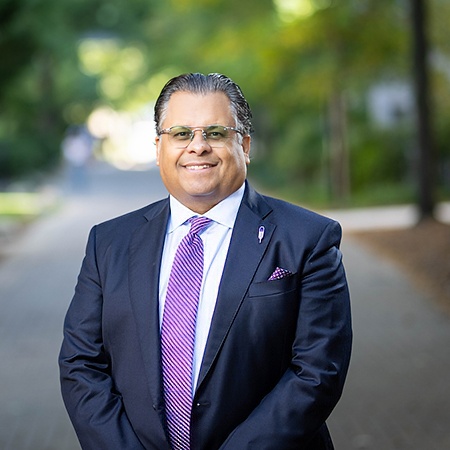
Bryan McKinley Jones Brayboy
· Dean, Carlos Montezuma Professor of Education and Social PolicyVerifiedNorthwestern University · Social Policy Analysis and Evaluation
Active 1998–2026
About
Bryan McKinley Jones Brayboy is a Dean at the School of Education and Social Policy at Northwestern University. His role involves exemplifying the philosophy of the program by bridging scholarship and practice. As a scholar-practitioner, he represents diverse expertise and experience within organizations and academic disciplines. His leadership emphasizes the integration of research, teaching, and outreach to influence human lives through collaborative efforts and community engagement.
Research topics
- Political Science
- Sociology
- Social Science
- Ethnology
- Anthropology
- Geography
- Gender studies
- Engineering
- Law
Selected publications
Anthropology & Education Quarterly · 2026-04-29
articleOpen access1st authorCorrespondingHonoring sovereignties through technology within indigenous community research partnerships
Journal of Computing in Higher Education · 2025-06-01 · 1 citations
articleOpen accessSenior authorAbstract Indigenous community research partnerships face challenges when integrating technology into their infrastructure, and risk compromising the community’s cultural, technological, and rhetorical sovereignty. In this paper, we explore the practices that help mitigate this challenge, including making visible the technology itself and technology practices embedded in dominant research processes. We consider how technologies mediate community research partnerships and question how we overlook our understanding of and creation of technologies as designers. Drawing on empirical insights of community research across Indigenous communities, we provide guidance on technology use with values of transparency, accessibility, and relationality. From a lens of place and power, we unpack the question: How can we cultivate technology in our research practices with Indigenous communities to honor their sovereignties? By reflecting on technology in the context of community research partnerships, we acknowledge Indigenous people’s sovereignty and self-determination, heal from harmful systemic research practices through critical questioning and reflection, and rebuild relationships among multiple rich ways of knowing and being.
Journal of American Indian Education · 2024-03-01
articleEthnographic methods: Training norms and practices and the future of American anthropology
American Anthropologist · 2024-07-17 · 5 citations
articleOpen accessSenior authorAbstract American anthropology is engaged in significant self‐reckonings that call for big changes to how anthropology is practiced. These include (1) recognizing and taking seriously the demands to decolonize the ways research is done, (2) addressing precarious employment in academic anthropology, and (3) creating a discipline better positioned to respond to urgent societal needs. A central role for ethnographic methods training is a thread that runs through each of these three reckonings. This article, written by a team of cultural, biocultural, and linguistic anthropologists, outlines key connections between ethnographic methods training and the challenges facing anthropology. We draw on insights from a large‐scale survey of American Anthropological Association members to examine current ethnographic methods capabilities and training practices. Study findings are presented and explored to answer three guiding questions: To what extent do our current anthropological practices in ethnographic methods training serve to advance or undermine current calls for disciplinary change? To what extent do instructors themselves identify disconnects between their own practices and the need for innovation? And, finally, what can be done, and at what scale, to leverage ethnographic methods training to meet calls for disciplinary change?
2023-06-21
book-chapterSenior authorNativa college students' lives, time and time again, are in constant tension with federal policies and sociopolitical forces that influence a sense of belonging in society and colleges. Struggles over Native students’ sense of belonging and simultaneous (in) visibility are also occurring on college campuses. Campus racial climate accounts for the interrelated dynamics of four dimensions that serve as a proxy of the institutional climate: historical, structural, psychological, and behavioral. Society's depiction of Natives through media is largely outdated; grossly misrepresentative; negative; and can be credited to the stereotypical imagery and narratives depicted through film, television, and popular culture. Scholars, journalists, advocates, poets, filmmakers, and now Native college students themselves are reframing the narrative of Indigenous peoples. Students are usually writing for assignments that adhere to specific guidelines, which can limit the topics that Native students desire to share. Turning Points extends beyond these boundaries to tell stories that are raw, bold, and genuine.
Through My Body and In My Heart: A Primer
Occasional Paper Series · 2023-05-08 · 6 citations
articleOpen access1st authorCorrespondingHow do we think about Indigenous Knowledge Systems (IKS)? I want to offer here my own thinking about what IKS are. There will certainly be debate about this. These are my views only; they serve as an invitation to others to share their own ways of outlining these crucial ideas. IKS are—for me—fundamentally about the intersections between philosophical ideas and the daily realities of tribal nations, communities, and other entities that comprise the peoples who belong to them, and their lands and waters. Before I discuss this further, let me be clear about what I am NOT engaging here. These are not sacred or limited knowledges. They are not specific knowledges or sets of knowledges; rather, they are principles and connectors. They are sites of convenings. They are systems. IKS unite Indigenous peoples across the globe. Indigenous peoples are simultaneously tethered to place and migratory. We have always moved. Often the movement was tied to food or water. Sustenance. Or to mates. Another form of sustenance, I suppose. The movement allowed Indigenous peoples to trade ideas, peoples. Stuff. Migration enabled relationships between peoples and ideas. Sparked by connection and curiosity, movement spurred innovation. The movement was a particular life force. Those who fail to adapt and adjust perish. Those who do not innovate, perish. Early Indigenous peoples in what is now Alaska created kayaks for transportation in and through waterways. Kayaks were effective in narrow spaces. And fast ones. Kayaks helped move us. They provided fun. Trips toward sustenance.
A response to Bradley Levinson
Anthropology & Education Quarterly · 2023-08-24
articleOpen access1st authorCorrespondingI appreciate the opportunity to engage in a written scholarly dialogue with an article based on the remarks that were part of Bradley Levinson's presidential address in November 2016. My engagement here is not only with the submitted article; it also includes a few other data points. These include my in-person attendance at the address in 2016 as well as additional correspondence between the years 2017 and 2018 with the author. That correspondence was mediated by the editorial team at Anthropology & Education Quarterly (AEQ). Below, I will do my best to note where I had correspondence that was—to the best of my knowledge—shared with Professor Levinson. I attended Professor Levison's original talk; I was there for its commencement, and I stayed through its conclusion. Later, at the request of AEQ's editors (Sally Galman and Laura Valdiviezo), I read a version of the original talk, and I gave explicit and direct feedback on the original manuscript where I suggested revisions. Out of respect for Professor Levinson and the enormity of publishing presidential remarks, I signed my review. A few years later (in 2021), I read an early version of the article that appears in this issue of AEQ. As is his prerogative, Professor Levinson did not significantly revise his original talk (despite my recommendations to do so). I read another iteration of this talk with the opening vignette and its concomitant commentary—the version now published in this issue. To his credit, Professor Levison recommended me to the previous AEQ editors (Lesley Bartlett and Stacey Lee) as a potential respondent. He also references my early engagement with his talk. I have been the president of the Council on Anthropology and Education (CAE), and I have given a presidential talk. It is not easy; it carries its own set of anxieties. I can imagine giving such an address in the shadows of former President Donald Trump's controversial and contested election, which shook many people, added a layer of difficulty. I have a real sense of empathy for anyone having to offer a scholarly address to the council. In exploring Professor Levinson's presidential address, I will draw on multiple reviews of it as well as my curiosity about its implications. Except where necessary, I will not engage in a point-by-point analysis. Instead, I will comment on points of agreement, while raising questions for us, as a council, to consider. But over the last several years—especially the three years of my presidential service—I have become more intimately familiar with [the mission]. And the more familiar I become, the more it chafes against some of the sensibilities that are inseparable from my identity as an anthropologist. (Levinson, 2023, 211) In the end, the message of my talk could be boiled down to the following: The notion of “advancing solutions to educational problems” doesn't capture what many of us do, in many moments of our work, so it seems inadequate as the opening clause of a mission statement. Yet beyond the statement's syntax, I am trying to question the deeper archaeology of our field's imaginary.* We all produce ethnographically-informed knowledge about education (knowledge that is contextualized, reflexive, etc.), and we all communicate that knowledge in varied forms to varied audiences. We should maintain our strong commitment to social justice in all we do, but continually expand our work and identities as educational anthropologists in ecumenical fashion. That is the “Big Tent” I was hoping to facilitate in the original address. And it is the organizational learning and growth I am hoping to inspire through this meta-reflection. *My thanks to Rodney Hopson for some of this phrasing. We should, as a council, hold up, turn over, examine, and interrogate the mission statement and its role in the CAE. There are—in my mind—significant possibilities for deep engagement about the role of the mission. The mission should not, in my opinion, serve as a litmus test for membership in the council. Nor do I believe that the mission should solely be used to assess the quality or meaningfulness of anyone's scholarship. I believe that the mission is aspirational, like many other mission statements or charter documents. It is in these different understandings that I think there must be a space to engage one another. I support Professor Levinson's idea that we must have a “big tent” in our council. I hope we can find and create the space to do so. In that spirit, I turn now to a few essential questions sparked by my reading of Professor Levinson's presidential address. In the past few years—particularly following the social upheaval spurred by the murders of Breonna Taylor, Ahmaud Arbery, George Floyd, and others—there has been serious engagement around the term inclusion. Throughout his presidential address, Professor Levinson calls for a mission that is more inclusive for individuals who may not be doing work rooted in social justice. The term social justice is used in myriad ways with different sets of meanings attached to it. How, I wonder, does Professor Levinson mean it? We do not know; he does not define it in his address. It does appear that he is making—and potentially confounding—two points: 1) There is some anthropology of education work that is not about race but is about gender, class, or other social markers that may lead to exclusion and/or marginalization; and 2) Not all research in our field should be critical and engaged with the intention of solving social problems. This argument, it seems, is directly tied to the question of whether the mission serves as a litmus test. Levinson's (and the mission committee's) lack of definition of social justice and Levinson's lack of definition of inclusion create the conditions for confusion. Statements about a mission or charter can be illuminating and offer guideposts for movement; they can also be taken up and interpreted as something entirely different. Bryan Brayboy: I recently had an email conversation with a former student. He was looking for someone to write on a particular topic and sent me an email asking if I knew someone in the field that fulfilled that topical area. In the midst of the email, with no provocation from me, he wrote: Student: Well, I've been trying to figure out how to fit in with the CAE world as a white, male, [redacted] scholar. I was lucky enough to catch up with [name redacted] and get a better sense of how I might be able to fit in and it sounds like it won't be easy. And so perhaps I never will—and maybe that's as it should be. Bryan Brayboy: I asked [this former student] about “fitting in” and noted that [at the time] the new president of CAE was a white male. He wrote back: Student: The one thing that [he] did mention is that, as with all intellectual communities, CAE has its set of concerns that are central and sacred, and social justice is one such concern with CAE. Additionally, he mentioned that it would probably be good for someone in my position (white, male, straight, [redacted]) to be explicit about my stance vis-a-vis these issues of social justice. So, the point wasn't about discrimination. My sense that I might not be able to fit in at CAE has to do with the fact that I don't know that I'll be able to be sufficiently explicit about my stance, for a number of different reasons. I suspect somewhere down the line I'll find my way in, but I've got a lot of work to do to get my agenda out there in a way that is going to be recognizable to others. Once I am able to articulate my intellectual project, I hope that others will be able to see how it dovetails with issues of social justice. So, I guess you could say I'm approaching this a little self-centeredly, with my intellectual project first and social justice second (rather than having social justice drive the intellectual project). Bryan Brayboy: [Writing back to Bradley] I suspect that part of your argument is similar to our colleague's above. I don't know that I have the same interpretation of the mission statement as my former student's, but I do think we should engage it, examine and explore it, turn it over, and be clear about what we mean by it, and whether or not we think this is how we should frame our work and mission. So, please start with this exploration, as noted above, and move on to make your points. This is important and meaningful work. (emphasis in the original) While I was working on this most recent response to Professor Levinson's address, the noted Black philosopher and public intellectual bell hooks passed away. hooks has been an important part of my intellectual journey. I thought about some of her writings and what I learned from her, and I became re-acquainted with a particularly poignant part of her acknowledgements in her 1984 book Feminist Theory: From Margin to Center. She recounts how other Black women philosophers attack her and her work, and she ends thusly: “Unfortunately it is often easier to ignore, dismiss, reject, and even hurt one another rather than engage in constructive confrontation” (1984, viii). I want to encourage us to think about how we, as a council, can engage in constructive confrontation, rather than resorting to either leaving the council or creating different conditions for what it means to be included. I think it is crucial to explore what we mean by rigor. It was a central point in Professor Levinson's presidential address. Frankly, rigor is not a word I often use, because it has been—and continues to be—used as a cudgel against many (myself included) who think about things differently or have the audacity to assert new approaches and question the way of the discipline. I have written (Brayboy, 2005) about a former professor of mine who, after a day filled with “rigorous interrogation” of the theories of Max Weber, Karl Marx, Émile Durkheim, and other social science theorists, told me—with sympathy—that I was a good storyteller but I would never be a good theorist. When I published that story as part of an article, a senior colleague told me, referring to the article, “I hope you have this out of your system so that you can now do some real anthropological work.” Being a “good storyteller” supposedly lacked the rigor of “being a good theorist.” Similarly, in a 2002 anonymous review of an article I submitted to Anthropology & Education Quarterly, a senior member of the field wrote, “This work lacks rigor and the consistency needed. You must do better or decide if this is the kind of work you should be doing.” In fairness, this reviewer went on to tell me that I “[have] a bright future if [I] would be rigorous and do the work.” It took me two years to submit revisions because, in part, I wondered if I was capable enough. Twenty years later, that review and those words sit with me. The argument about the lack of rigor was aimed at my storytelling and my theorization of culture. It offended the reviewer's anthropological sensibilities. My point here is that rigor or rigorous, or any other forms of the word, are not ones that I use. But I think about them a lot. And Professor Levinson references rigor throughout his address. This leads me to ask: How do we make sense of rigor? How do we make sense of the version of the talk published in this issue—a version the author refused to “overhaul” because doing so, he wrote, “completely feels. . . like a cowardly act of whitewashing (yes, the pun is intended)” (Levinson, 2023, 209)? And what do we do with the fact that Professor Levinson would later write, about the address, “The talk was too raw, and had not been sufficiently reviewed by colleagues” (Levinson, 2023, 210, my emphasis)? Rigor necessarily includes revision. Revision—and rigor—means receiving critiques of scholarly texts and ideas, engaging those critiques, and deciding how to revise based on those critiques. Refusal to revise—because it would seem cowardly and because there is a need to “both recognize and defend myself,” as Professor Levinson argues in his address—lacks rigor. Rigor is also rooted in a sense of curiosity. We might be guided by asking: How did this policy or mission come to be? How do I understand it? How do others understand it? How can I triangulate data to get a clearer sense of this phenomenon or question? Professor Levinson writes, “I want to make a critique of this core statement” (Levinson, 2023, 212). Later, in that same paragraph he writes, “I've assiduously avoided digging into the details of how this statement was drafted, because I don't want to personalize this. I went to the so-called Canterbury event in 2004, from whence this mission statement emerged” (Levinson, 2023, 212, emphasis in the original). How, I wonder, can we critique something so strongly without asking: How and why did it come to be? How—and why—did those who helped create it decide to do so? Importantly, in the latter part of the address, Professor Levinson described how he asked some of his colleagues outside of the United States how they understood the mission statement. But he has avoided offering specifics about colleagues in the United States. I am left wondering why, and to what ends, are the opinions of international scholars worth exploring but not those of scholars in the United States? As I have noted, I was at the live, in-person address. I have read the address at least a dozen times. My concerns about the address arose not because the mission was called into question or certain books were listed as exemplars, as Professor Levinson suggests. On the contrary, we need debate. The council needs a serious and sustained engagement with the mission, which includes the historical context and subsequent iterations of the mission. Interestingly, I have been influenced by the rigor of Bradley Levinson's scholarship for twenty-five years. He need not defend his brilliance or his influence. I cite his work because it is smart and serious. I find meaning in it. One of my earliest memories as a scholar is seeing this young, energetic person, then a Spencer postdoctoral fellow, at the Spencer Foundation's annual party at the American Educational Research Association meetings (in the late 1990s) reaching into what seemed to me a sophisticated canvas satchel and pulling out a thick paper that he was working on, handing copies out to senior scholars, and asking for feedback. I was a Spencer dissertation fellow, trying to figure out if I belonged in the academy and as a Spencer dissertation fellow. I remember asking someone, with wonder, “Who is that guy?” I was told that he (Levinson) was one of the brightest minds in the anthropology of education. His work was important then. It is important now. That he feels a need to defend himself is troubling. We should defend our scholarship but not our person. My critique here is of the address; it is not of Professor Levinson. I regret that Professor Levinson has used this opportunity to defend himself rather than as an opportunity to advance what I think is a significant question (Can we debate the role of the mission in the council?) The power of his argument is obfuscated by his defense. It is a lost opportunity. Did this conversation begin with the mission committee and the statement it created? Or, is this the pushback of the discipline of anthropology against the field of anthropology of education—more succinctly, is this an argument of applied work (an anthropology of education) versus pure inquiry (anthropology)? Driven by this question of rigor, I think it is important to understand the context and history of the council as it relates to questions of our mission. Professor Levinson notes that he is bothered by the mission because, he says, “it chafes against some of the sensibilities that are inseparable from my identity as an anthropologist” (Levinson, 2023, 211). Fair enough. His commentary, however, led me to wonder: What is the origin of these calls for doing work to address the lives of others? Is it rooted in the discipline of anthropology (supposed pure inquiry), or is it something that results from the field of anthropology of education (which is applied work)? I do not mean to suggest that the practitioners of a field or a discipline all believe the same thing. And I most certainly do not mean to suggest that Professor Levinson's identity as an anthropologist is for me to judge. I am, however, interested in some of the ways that these calls for relevance to the world in which we live emerged and their potential starting point. When I wrote my presidential address (Brayboy, 2013), I spent a few months reading the previously published talks to make sense of the issues that had emerged in the past and whether there were lessons in them for me. After initially reading Professor Levinson's response, I returned to the notes from my exploration. Having done so, I can state with confidence that the notion of anti-oppressive, socially just work emerged well before the Canterbury meetings. The mission emerged from those meetings; the calls for action have been part of the council since its early days. The ethnography of Malinowski and most other classic ethnography—mere ethnography—does not address such questions as “How can we make this canoe better?” Thus classic ethnographers have been unable to learn what can only be learned when one gets involved in the action, and picks up one's “own end of the log” (p. 186). . . [and] I hope that more American ethnographers will allow themselves to be transformed by involvement in the action, by joining in the responsibility for change, by taking concrete action toward changing the particular circumstances of everyday life in actual schools and school communities. (1979, 186–87) At this point, isn't it true that we—the community of linguists and ethnographers—have explained educational failure without showing how it can be reversed? As long as this situation continues, the losers are not only the children but also our social science. (1983, 36) Debates such as this [how underrepresented students are faring in schools] place anthropologists of education in an uncomfortable position because they expose the contradictions that confront us. In our research and writing, we often celebrate popular culture and local knowledge. We often defend subjugated groups, attempting to show the coherence, vitality, and dignity of their cultural worlds. At the same time that we defend traditional practices against misinterpretation by insensitive outsiders, we live and work in elite educational institutions. (1995, 242) My point here is basic: Many in CAE have called for social justice to frame our work. If his objection is to making this a requirement to “join the club” and be part of the council, I think Professor Levinson should be more direct about this objection. Now is the time to engage in constructive confrontation. I would stand next to him in making the argument that we need a big tent and more expansive ideas of what kinds of work “count.” If this is his argument, I think he is right. Simultaneously, it is important to note that almost 40 years before Professor Levinson's original talk, one of the field's giants called for us to do something about the lives of the people we study (Erickson, 1979). Fred was not suggesting that we are only real educational anthropologists if we do this. He was suggesting that we can be part of a transformative moment if we do. He was right then. He's still right.
Indigenous Millennial Students in Higher Education
2023-06-26 · 1 citations
book-chapter1st authorCorrespondingThe status of American Indian and Alaskan Native education is fundamentally different from that of other racialized groups; tribal nations and their citizens are unique in that they are not just a racialized group, but political or legal ones as well (Brayboy, 2005). American Indians and Alaskan Natives (hereafter referred to as Indigenous peoples, or students) are named in the U.S. Constitution twice, and the role of this legal relationship becomes important when examining educational issues (as well as health and other entitlements) for the group. In the process of signing 371 treaties, which were agreements between Indigenous nations and the U.S. government, in addition to over 5,000 congressional acts and executive orders, Indigenous peoples ceded 1 billion acres of land to the United States (Deyhle & Swisher, 1997). Many of these treaties and other laws, executive orders, and acts explicitly address Indigenous education by outlining specific provisions, while others offer broader notions of how the U.S. government would address the educational needs of Indigenous students. Importantly, Indigenous education is still largely connected to and, at least in part, funded by the U.S. government, which makes it fundamentally different from the public education experienced by every other racialized group (Lomawaima & McCarty, 2006).
Ethnographic Methods Training Norms and Practices and the Future of American Anthropology
2023-08-04 · 4 citations
preprintOpen accessSenior authorAmerican Anthropology is engaged in significant self-reckonings that call for big changes to how anthropology is practiced. These include (1) recognizing and taking seriously the demands to decolonize the ways research is done; (2) addressing precarious employment in academic anthropology; and (3) creating a discipline better positioned to respond to urgent societal needs. A central role for ethnographic methods training is a thread that runs through each of these four reckonings. This paper, written by a team of cultural, biocultural, and linguistic anthropologists, outlines key connections between ethnographic methods training and the challenges facing anthropology. We draw on insights from a large-scale survey of American Anthropological Association members to examine current ethnographic methods capabilities and training practices. Study findings suggest that there is a strong desire among anthropologists for deeper training in foundational methods such as participant observation, entering the field, and ethnographic fieldwork writ-large, combined with training in critical and collaborative methods, as well as in quantitative methods. In addition, respondents report having competencies in ethnographic data collection methods, but a lack of training in methods for systematically analyzing the data they collect. We explore these and other findings to answer three guiding questions: To what extent do our current anthropological practices in ethnographic methods training serve to advance or undermine current calls for disciplinary change? To what extent do instructors themselves identify disconnects between their own practices and the need for innovation? And, finally, what can be done, and at what scale, to leverage ethnographic methods training to meet calls for disciplinary change?
A Brief Introduction to Critical Indigenous Research Methodologies
2023-10-06 · 2 citations
book-chapter1st authorCorrespondingUnderstanding the use and purpose of Indigenous methodologies is key to responsible research with Indigenous peoples and communities. This lesson explains how to teach critical Indigenous research methodologies (CIRM) by following five core tenants. The goal of CIRM is to create sustainable relationships between researchers and communities and is applicable to all community-researcher partnerships.
Recent grants
Frequent coauthors
- 21 shared
Teresa L. McCarty
- 14 shared
Angelina E. Castagno
Northern Arizona University
- 12 shared
K. Tsianina Lomawaima
- 9 shared
Maori Theorising
University of Sydney
- 9 shared
Imelda Miller
Queensland Museum
- 9 shared
Graham Smith
- 9 shared
Amanda Howard
University of Sydney
- 9 shared
Allan Hall
Charles Sturt University
Education
- 2002
Ph.D., Education
University of California, Berkeley
- 1998
M.A., Education
University of California, Berkeley
- 1995
B.A., American Indian Studies
University of California, Santa Barbara
Awards & honors
- American Educational Research Association Distinguished Lect…
- George and Louise Spindler Award from the Council on Anthrop…
- Resume-aware match score
- Save to shortlist
- AI-drafted outreach
See your match with Bryan McKinley Jones Brayboy
PhdFit ranks faculty by your research interests, methods, and publications — grounded in their actual work, not templates.
- Free to start
- No credit card
- 30-second signup