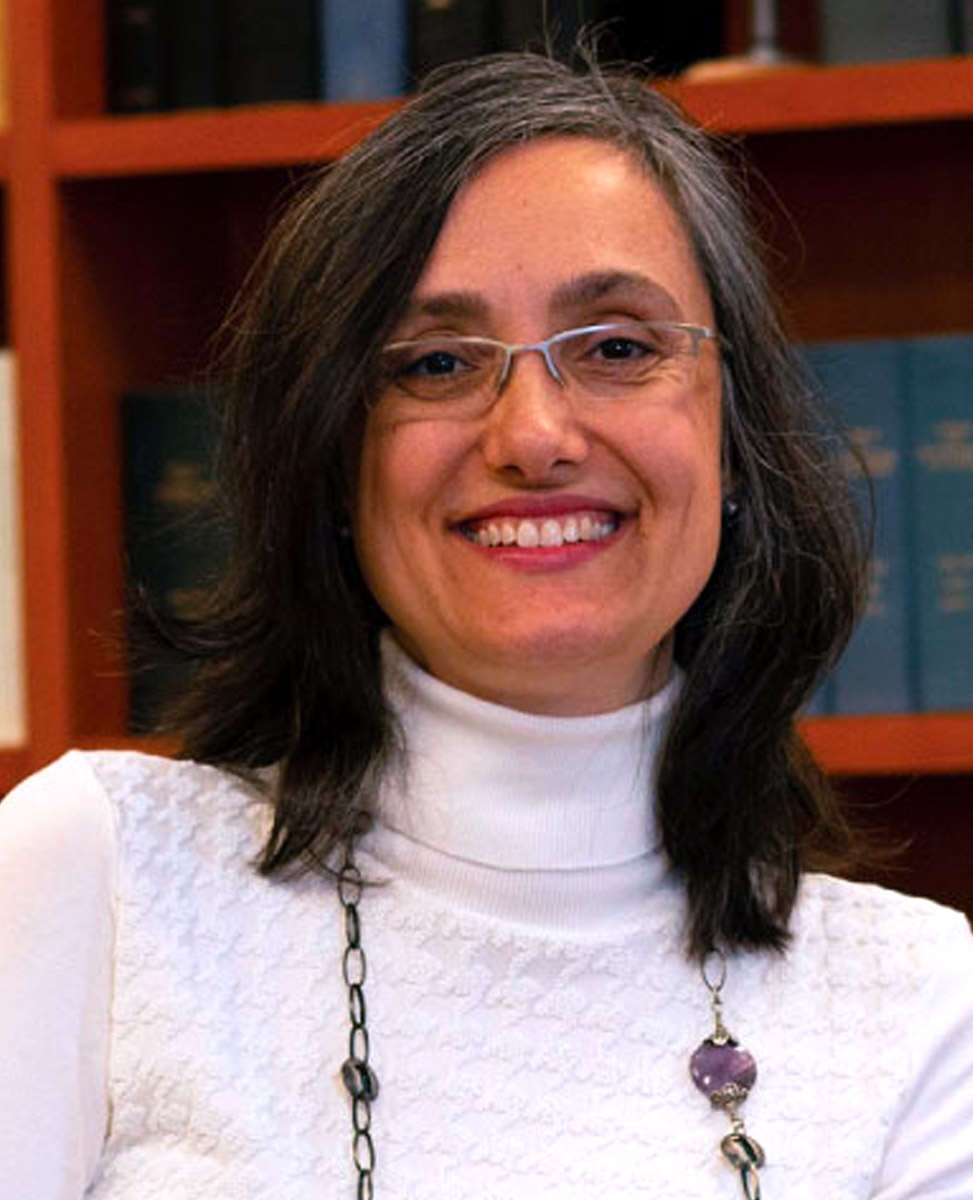
Nilay Tanık Argon
· ProfessorVerifiedUniversity of North Carolina at Chapel Hill · Statistics
Active 2001–2026
About
Nilay TANIK ARGON is a Professor of Statistics and Operations Research at the University of North Carolina at Chapel Hill. The page primarily lists her as a faculty member and details her supervision of PhD students, including their dissertation titles and co-advisors. However, it does not provide specific information about her research focus, background, or key contributions.
Research topics
- Computer Science
- Medicine
- Mathematics
- Internal medicine
- Medical emergency
- Nursing
- Operations research
- Intensive care medicine
- Business
- Economics
- Engineering
- Operations management
- Emergency medicine
- Statistics
Selected publications
Dynamic Distribution of Patients to Medical Facilities in the Aftermath of a Disaster
UNC Libraries · 2026-04-08
articleOpen access1st authorCorrespondingIn the aftermath of a disaster, emergency responders must transport a large number of patients to medical facilities, using limited transportation resources (such as ambulances). Decisions about where to send the patients are typically made in an ad hoc manner by responders on the scene. Using a Markov decision process formulation, we develop two heuristic policies that use limited information such as mean travel times and congestion levels to determine (a) how to allocate ambulances to patient locations and (b) which medical facility should be the destination for those ambulances. In a simulation study, we incorporate patient survival rates and service times for different types of traumatic injuries, and show that the proposed heuristics can provide substantial improvement in the expected number of survivors compared to the common practice of transporting to the nearest facility, even when the decision maker has only limited up-to-date information about the system state. In particular, a myopic approach that considers only what is best for the next patient to be transported increases the expected number of survivors in almost all scenarios considered. Using a more sophisticated one-step policy improvement approach provides further improvement when the event involves patients who do not deteriorate rapidly, especially when the transportation is not the bottleneck and the casualties are spread over many locations. We demonstrate the effectiveness of the proposed heuristics on a case study of a hypothetical earthquake, where casualty data is generated using computer software developed by the U.S. government. The e-companion is available at https://doi.org/10.1287/opre.2017.1695 .
When to Triage in Service Systems with Hidden Customer Class Identities?
UNC Libraries · 2026-04-14
articleOpen accessSenior authorIn service systems with heterogeneous customers, prioritization with respect to the relative importance of customers is known to improve certain performance measures. However, in many applications, information necessary to determine the importance level of a customer may not be available immediately but can be revealed only through some preliminary investigation, which is sometimes called triage. This triage process is typically error‐prone and may take substantial amount of time, and hence, it is not always clear if and when it should be implemented for purposes of priority assignment. To provide insights into this question, we study a stylized queueing model with a single server and two types of customers with hidden type identities, which differ in their rates of service and waiting costs. By means of a Markov decision formulation, we first show that the optimal dynamic policy on triage is characterized by a switching curve. The comparison of two state‐independent policies (no‐triage and triage‐all) shows that the information from triage is more beneficial when the traffic intensity is neither too low nor too high. Our numerical results show that the system manager should consider implementing a state‐dependent triage policy when the probability of classifying a customer into the important class and the mean triage time are of moderate size, when the difference between the importance levels of the two classes of customers is large, and/or when the traffic intensity is high.
Patient Triage and Prioritization Under Austere Conditions
UNC Libraries · 2026-04-08
articleOpen access1st authorCorrespondingIn war zones and economically deprived regions, because of extreme resource restrictions, a single provider may be the sole person in charge of providing emergency care to a group of patients. An important question the provider faces under such circumstances is whether or not to perform triage and how to prioritize the patients. By choosing to triage a particular patient, the provider can determine the health condition and thus the urgency of the patient, but that will come at the expense of delaying the actual service (stabilization or initial treatment) for that patient as well as all the other patients. Motivated by this problem, which also arises in other service contexts, we consider a service system where finitely many patients, all available at time zero, belong to one of the two possible triage classes, where each class is characterized by its waiting cost and expected service time. Patients’ class identities are initially unknown, but the service provider has the option to spend time on triage to determine the class of a patient. Our objective is to identify policies that balance the time spent on triage with the time spent on service by minimizing the total expected cost. We provide a complete characterization of the optimal dynamic policy and show that the optimal dynamic policy that specifies when to perform triage is determined by a switching curve, and we provide a mathematical expression for this curve. One insight that comes out of this characterization is that the server should start with performing triage when there are sufficiently many patients and never perform triage when there are few patients. Finally, we carry out a numerical study in which we demonstrate how one can use our mathematical results to develop policies that can be used in mass-casualty triage and prioritization, and we find that there are substantial benefits to using one of these policies instead of the simpler benchmarks. The online supplement is available at https://doi.org/10.1287/mnsc.2017.2855 . This paper was accepted by Assaf Zeevi, stochastic models and simulation.
Optimal control of a single server in a finite-population queueing network
UNC Libraries · 2026-04-03
articleOpen access1st authorCorrespondingComparison of emergency department crowding scores: a discrete-event simulation approach
UNC Libraries · 2026-04-15
articleOpen accessSenior authorPooling in tandem queueing networks with non-collaborative servers
UNC Libraries · 2026-04-03
articleOpen accessSenior authorUNC Libraries · 2025-04-03
articleOpen accessHealth Services Insights · 2024-01-01
articleOpen accessCorrespondingBackground/objectives: The race-sex differences in emergency department (ED) disposition decisions have been reported widely. Our objective is to identify demographic and clinical subgroups for which this difference is most pronounced, which will facilitate future targeted research on potential disparities and interventions. Methods: We performed a retrospective analysis of 93 987 White and African-American adults assigned an Emergency Severity Index of 3 at 3 large EDs from January 2019 to February 2020. Using random forests, we identified the Elixhauser comorbidity score, age, and insurance status as important variables to divide data into subpopulations. Logistic regression models were then fitted to test race-sex differences within each subpopulation while controlling for other patient characteristics and ED conditions. Results: In each subpopulation, African-American women were less likely to be admitted than White men with odds ratios as low as 0.304 (95% confidence interval (CI): [0.229, 0.404]). African-American men had smaller admission odds compared to White men in subpopulations of 41+ years of age or with very low/high Elixhauser scores, odds ratios being as low as 0.652 (CI: [0.590, 0.747]). White women were less likely to be admitted than White men in subpopulations of 18 to 40 or 41 to 64 years of age, with low Elixhauser scores, or with Self-Pay or Medicaid insurance status with odds ratios as low as 0.574 (CI: [0.421, 0.784]). Conclusions: While differences in likelihood of admission were lessened by younger age for African-American men, and by older age, higher Elixhauser score, and Medicare or Commercial insurance for White women, they persisted in all subgroups for African-American women. In general, patients of age 64 years or younger, with low comorbidity scores, or with Medicaid or no insurance appeared most prone to potential disparities in admissions.
An Investigation into Demographic Disparities in Emergency Department Disposition Decisions
UNC Libraries · 2024-09-28
articleOpen accessWe investigate the presence of health disparities in emergency department (ED) disposition decisions and if crowding levels might have an exacerbating role. Using data from a large, academic ED, we find statistically significant associations between ED disposition decisions and patient sex, race, as well as ethnicity, with male, Caucasian, and non-Hispanic patients being more likely to be admitted to the hospital compared with, respectively, female, African-American, and Hispanic patients. In line with earlier findings in other studies, we find that longer waiting times, suggesting higher levels of ED crowding, is associated with higher rates of admission. Moreover, longer ED wait times modified sex differences, suggesting that the disposition disparity in female patients might be exacerbated when the ED is more crowded.
Dynamic Resource Allocation in Urban Search and Rescue Operations
SSRN Electronic Journal · 2024-01-01
preprintOpen access
Recent grants
Collaborative Research: Distribution of Patients to Medical Facilities in Mass-Casualty Events
NSF · $325k · 2016–2020
Collaborative Research: Priority Dispatching of Patients in the Aftermath of a Mass-Casualty Event
NSF · $360k · 2009–2013
NSF · $156k · 2006–2010
Frequent coauthors
- 28 shared
Serhan Ziya
University of North Carolina at Chapel Hill
- 17 shared
Benjamin Linthicum
University of North Carolina at Chapel Hill
- 13 shared
David Goldsman
Georgia Institute of Technology
- 10 shared
T. Bohrmann
- 9 shared
Sigrún Andradóttir
Georgia Institute of Technology
- 9 shared
Yufeng Liu
- 8 shared
Christopher S. Evans
East Carolina University
- 8 shared
Christos Alexopoulos
Georgia Institute of Technology
Labs
- Resume-aware match score
- Save to shortlist
- AI-drafted outreach
See your match with Nilay Tanık Argon
PhdFit ranks faculty by your research interests, methods, and publications — grounded in their actual work, not templates.
- Free to start
- No credit card
- 30-second signup