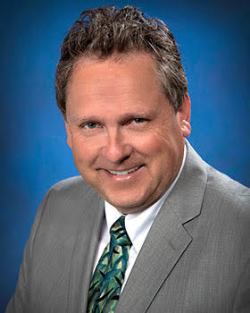
Martin Schoonen
· Professor Hydrogeochemistry, Mineral Reactivity, Environmental Geochemistry, Medical GeologyVerifiedStony Brook University · Geosciences
Active 1985–2024
About
Martin A. A. Schoonen is a professor in the Department of Geosciences at Stony Brook University, where he has been a faculty member since 1989. He holds an M.Sc. from the University of Utrecht, The Netherlands, obtained in 1984, and a Ph.D. from Pennsylvania State University, earned in 1989. His research interests focus on the reactivity of earth materials under a wide range of conditions. Currently on leave from Stony Brook, he leads part of his work at Brookhaven National Laboratory (BNL), primarily in a management role, while actively working on the application of synchrotron-based analytical techniques to study various earth materials.
Research topics
- Geology
- Mineralogy
- Chemistry
- Geochemistry
- Environmental chemistry
- Materials science
- Organic chemistry
Selected publications
Developing a National Virtual Biosecurity for Bioenergy Crops Center (NVBBCC)
2024-09-01
reportOpen access1st authorCorrespondingFY24 Progress Report for the National Virtual Biosecurity for Bioenergy Crops Center (NVBBCC).
2024-05-10 · 1 citations
reportOpen access1st authorCorrespondingBrookhaven National Laboratory (BNL) was awarded a pilot project in FY22 under the U.S. Department of Energy (DOE) Office of Science Biopreparedness Research Virtual Environment (BRaVE) initiative, to define research priorities, needs, and requirements for a national virtual center devoted to the biosecurity of bioenergy crops. The mission of the proposed center, referred to as the National Virtual Biosecurity for Bioenergy Crop Center (NVBBCC), would be to provide the scientific basis and tools to detect, characterize, model, and mitigate biothreats to bioenergy crops. This function will be essential to ensure the projected increased US reliance over the next few decades on key plant-based energy products, such as biojet fuel. The NVBBCC is envisioned as a distributed, virtual center with multiple national laboratories at its core to maximize the use of existing unique facilities and expertise across the DOE complex. A major goal of the pilot project was to develop a roadmap for establishing NVBBCC through a series of meetings to gather community input. A total of about 150 individuals, drawn from DOE laboratories, the USDA, academia, NIH, DHS and the private sector participated in six planning meetings held in FY23. Four of the meetings were focused on specific research topics (disease detection, dispersion and disease propagation, biomolecular characterization of plant-pathogen interaction, and mitigation strategies). These four meetings were followed by a meeting that focused on computational needs to support collaborative, data-intensive research within a distributed center as well as workforce development. A final meeting focused on establishing and maintaining preparedness within NVBBCC to respond to an emerging disease within bioenergy crops and how it would collaborate and coordinate with USDA and DHS.
Laser-Focused: One-of-a-Kind Mobile Observatory Provides a New Outlook on Urban Climate
Bulletin of the American Meteorological Society · 2023-08-01
articleSenior author2023-01-01
articleOpen access2023-01-01
articleOpen access1st authorCorrespondingFreshwater and Evaporite Brine Compositions on Hadean Earth: Priming the Origins of Life
Astrobiology · 2022 · 10 citations
Senior authorCorresponding- Chemistry
- Geochemistry
- Geology
were addressed by a single, globally operating mechanism of atmosphere-water-rock interactions without invoking special microenvironments. The present results support a facile origins-of-life hypothesis even under a neutral atmosphere as long as other favorable geophysical and planetary conditions are also met.
Going Mobile to Address Emerging Climate Equity Needs in the Heterogeneous Urban Environment
Bulletin of the American Meteorological Society · 2022-06-27 · 11 citations
articleOpen accessSenior authorAbstract The Brookhaven National Laboratory Center for Multiscale Applied Sensing (CMAS) aims to address environmental equity needs in the context of a changing climate. As a first step toward this goal, the center developed a one-of-a-kind observatory tailored to the study of highly heterogeneous urban environments. This article describes the features of the mobile observatory that enable its rapid deployment either on or off the power grid, as well as its instrument payload. Beyond its unique design, the observatory optimizes data collection within the obstacle-laden urban environment using a new smart sampling paradigm. This setup facilitated the collection of previously poorly documented environmental properties, including wind profiles throughout the atmospheric column. The mobile observatory captured unique observations during its first few intensive observation periods. Vertical air motion and infrared temperature measurements collected along the faces of the supertall One Vanderbilt skyscraper in Manhattan, NY, reveal how solar and anthropogenic heating affect wind flow and thus the venting of heat, pollution, and contaminants in urban street canyons. Also, air temperature measurements collected during travel along a 150-km transect between Upton and Manhattan, NY, offer a high-resolution view of the urban heat island and reveal that temperature disparities also exist within the city across different neighborhoods. Ultimately, the datasets collected by CMAS are poised to help guide equitable urban planning by highlighting existing disparities and characterizing the impact of urban features on the urban microclimate with the goal of improving human comfort.
2022-09-30
articleWe describe the methods for automating the workflow for rapidly measuring and producing elemental maps of large-area samples using the Submicron Resolution X-ray Spectroscopy Beamline (SRX) at the National Synchrotron Light Source II, Brookhaven National Laboratory, through a novel combination of supervised (support vector machine) and unsupervised (cluster analysis) machine learning algorithms. SRX has the capability to create centimeter area full spectrum x-ray fluorescence (XRF) maps non-destructively with special detector and beam configurations. To facilitate the automation of this process, we discuss the development of the Synchrotron Network Automation Program in Python (SnapPy) software package that automates measurements such that SnapPy will control everything from beamline machine control to data acquisition and analysis. The only intervention that will need to be performed by beamline staff will be to physically install and remove samples. This will allow us to run measurements overnight or during times when beamline staff would not otherwise be available.
GeoHealth · 2021 · 9 citations
Senior authorCorresponding- Mineralogy
- Geology
- Geochemistry
With the Artemis III mission scheduled to land humans on the Moon in 2025, work must be done to understand the hazards lunar dust inhalation would pose to humans. In this study, San Carlos olivine was used as an analog of lunar olivine, a common component of lunar dust. Olivine was dissolved in a flow-through apparatus in both simulated lung fluid and 0.1 M HCl (simulated gastric fluid) over a period of approximately 2 weeks at physiological temperature, 37°C. Effluent samples were collected periodically and analyzed for pH, iron, silicon, and magnesium ion concentrations. The dissolution rate data derived from our measurements allow us to estimate that an inhaled 1.0 μm diameter olivine particle would take approximately 24 years to dissolve in the human lungs and approximately 3 weeks to dissolve in gastric fluid. Results revealed that inhaled olivine particles may generate the toxic chemical, hydroxyl radical, for up to 5-6 days in lung fluid. Olivine dissolved in 0.1 M HCl for 2 weeks transformed to an amorphous silica-rich solid plus the ferric iron oxy-hydroxide ferrihydrite. Olivine dissolved in simulated lung fluid shows no detectable change in composition or crystallinity. Equilibrium thermodynamic models indicate that olivine in the human lungs can precipitate secondary minerals with fibrous crystal structures that have the potential to induce detrimental health effects similar to asbestos exposure. Our work indicates that inhaled lunar dust containing olivine can settle in the human lungs for years and could induce long-term potential health effects like that of silicosis.
Goldschmidt Abstracts · 2020-01-01
articleOpen access
Frequent coauthors
- 168 shared
Daniel R. Strongin
Temple University
- 53 shared
Michael J. Borda
University of Pennsylvania
- 42 shared
F. Marc Michel
Virginia Tech
- 37 shared
John B. Parise
Stony Brook University
- 36 shared
Sytle M. Antao
University of Calgary
- 32 shared
Peter J. Chupas
Stony Brook University
- 31 shared
Scot T. Martin
Harvard University Press
- 29 shared
Alexander Smirnov
Dowling College
Labs
Department of GeosciencesPI
Education
- 1984
M.S.
University of Utrecht, The Netherlands
- 1989
Ph.D.
Pennsylvania State University
- Resume-aware match score
- Save to shortlist
- AI-drafted outreach
See your match with Martin Schoonen
PhdFit ranks faculty by your research interests, methods, and publications — grounded in their actual work, not templates.
- Free to start
- No credit card
- 30-second signup