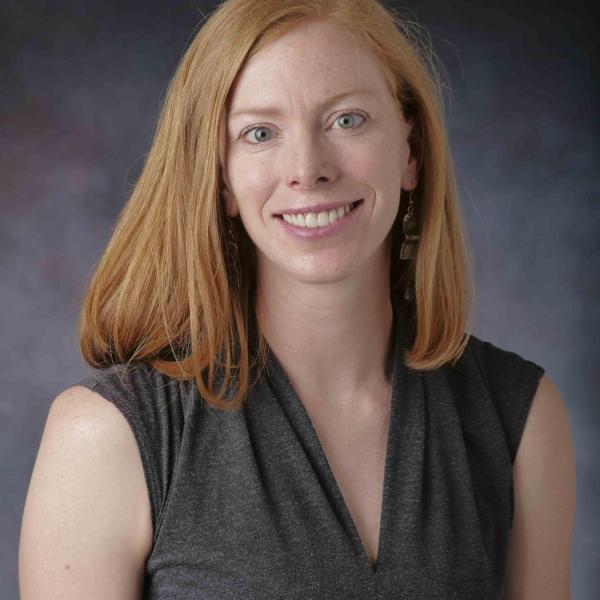
Lisa Corwin
· Associate ProfessorVerifiedUniversity of Colorado Boulder · Ecology & Evolutionary Biology
Active 2015–2025
About
Lisa Corwin is an Associate Professor in the Department of Ecology and Evolutionary Biology at the University of Colorado Boulder. She earned her Ph.D. from the University of California Davis in 2013. Her research focuses on biology education, particularly how biology students develop into resilient, creative, and competent scientific researchers in ecology, evolutionary biology, and STEM more broadly. She is the Principal Investigator of the RE 3 ACH lab, which engages in biology education research to explore how students cope with challenges in scientific research, develop creativity through iterative design processes, and participate in place-based, culturally relevant research experiences. Her work aims to understand and improve how society addresses ecological and environmental issues such as climate change by fostering a new generation of passionate and resilient scientists.
Research topics
- Mathematics education
- Psychology
- Computer Science
- Social Science
- Pedagogy
- Medicine
- Sociology
- Engineering
- Medical education
- Social psychology
- Mathematics
- Demography
- Ecology
- Geography
- Engineering management
- Biology
- Developmental psychology
Selected publications
CBE—Life Sciences Education · 2025-11-19
articleOpen accessSenior authorCivic engagement involves an individual's proactive participation in a community to improve its socioeconomic conditions. Scientific civic engagement (SCE) is a variant where students use their scientific expertise to achieve similar effects. Various factors, including family, community, peer groups, and education, influence an individual's likelihood of SCE. In undergraduate biology, civic engagement is sometimes integrated into courses through community-engaged projects or CUREs (Course-based undergraduate research experiences). Investigations into these courses have shown positive outcomes, such as students feeling a greater Sense of belonging to the communities they civically engage with in the course and expressing intentions to pursue more SCE in the future. However, limited research explains how students' PRE-course Sense of Belonging to the communities students civically engage with during a course affects these outcomes. Our study found that students' PRE-course Sense of Belonging to the communities with which they were expected to civically engage during a course significantly predicted their outcomes in civically engaged biology courses and CUREs. This highlights questions regarding the choice of these communities by instructors and how incoming identities students hold, that do or do not align with the communities with which they are expected to engage, might influence students' science civic engagement outcomes.
Ecology and Evolution · 2025-08-01
articleOpen accessSenior authorCorrespondingAs graduate students transition into advanced academic environments, the physical and social contexts in which they engage play a critical role in shaping their sense of belonging, academic success, and personal development. Using a qualitative approach, this study explores how an immersive and place-based fieldwork program impacted community building and self-efficacy in incoming graduate students in an Ecology and Evolutionary Biology (EEB) program. Data were collected through surveys, focus groups, and in-depth interviews with students over the program's duration. Our findings reveal that the remote location of the program played an important role in community development and fostered autonomy and competence. We also found that choosing a discipline-focused location for fieldwork can positively impact student experiences. Opportunities for interdisciplinary collaboration and mentorship emerged as key components of fostering a supportive academic community. The study demonstrates a positive role for place-based strategies in graduate program design, suggesting that creating spaces that nurture collaboration, allow students to enact disciplinary skills, and present students with formative challenges can enhance academic resilience and self-confidence. The findings offer implications for institutions looking to cultivate stronger, more cohesive graduate communities and for future research on the intersection of place, identity, and academic success in higher education.
Developing a conceptual model for students’ scientific civic engagement self-concept
International Journal of Science Education · 2025-02-04 · 3 citations
articleOpen accessCBE—Life Sciences Education · 2025-10-27
articleOpen accessSenior authorbecomes a central feature that influences not only their learning, but also that of those around them. Participant identities, expectations, and teaching philosophies all influence the success of PD. In 2019, Zagallo and colleagues developed a set of personas to characterize how instructors show up in these settings. We are expanding on this prior study to include instructors from diverse institution types participating in a different PD context. To validate the existing personas and generate potential new personas, we followed Zagallo's stepwise procedure that included the collection of multiple types of data (interview transcripts, PD observations, meeting observations) over a 2-y period, qualitative analysis and triangulation of data, creation of skeletons that could be further developed into personas, description and refinement of skeletons into personas, and validation of the personas. Themes from the original study were also captured in this study: knowledge of students, teaching values, approaches to innovations, and perceived barriers. Four personas from the original paper were refined, and two new personas (Riley the Rookie and Ash the Advocate) were identified; both arose from institutional contexts not present in the prior research.
How Latiné STEM Students' Identities Shaped Community Engagement: A Case Study
CBE—Life Sciences Education · 2025-07-29
articleOpen accessSenior authorNational efforts to enhance postsecondary science, technology, engineering, and mathematics (STEM) education have continued to emphasize the integration of civic engagement within curricula. Achieving this goal requires that we understand how students' social identities impact their community involvement, particularly for minoritized groups such as Latiné students, that are growing within the United States. This case study explores how 15 STEM Latiné students perceived their identities to influence their community engagement within a scientifically civically engaged course-based undergraduate research experience at a research-intensive Hispanic-Serving Institution. Multiple lines of evidence, including surveys, interviews, social identity mapping, and photovoice were collected. Findings revealed that students' social, science, and place identities significantly shaped their experience of scientific community engagement, presenting both opportunities and challenges. Biculturalism, language proficiency, and shared socioeconomic experiences enhanced students' connections to their communities, promoting motivation, and meaningful engagement. Conversely, differing identities, language barriers, and perceived exclusion hindered participation, highlighting the complexities of belonging. We recommend that STEM instructors consider tenants of culturally responsive education when engaging Latiné students. By understanding the relationship between identity and scientific civic engagement, educators can prepare STEM Latiné students to apply their scientific skills in the service of their communities.
CourseSource · 2024-01-01
articleOpen accessSenior authorAs the complexity and interconnectedness of our world increases, we are continually expected to be capable of complex, non-linear thinking in order to successfully tackle and solve the challenges we face in the 21<sup>st</sup> century. Tackling these challenges requires “systems thinking,” in which problem solving must consider interconnected components within a whole to solve complex problems. However, high school and undergraduate training often focus on linear cause-and-effect relationships, failing to help students develop a systems approach to problem solving. Food web ecology lends itself well to developing systems thinking skills, as species depend on one another for resources, form complex systems, and provide benefits to society, known as ecosystem services. We developed a case study based on Carpinteria Salt Marsh Reserve that incorporates both active- and game-based learning to teach students about socio-ecological systems and food web ecology and to use systems thinking. This case study was designed for two 75-minute class periods and uses a freely available web-based game developed by the authors. The case introduces food web ecology and ecosystems services, and as such, it is helpful if students have basic knowledge of food webs prior to the case. After implementing this case study in an undergraduate introductory ecology course, we found that students often (i) improved their content knowledge regarding food webs and ecosystem services, (ii) recognized the importance of species interactions and direct/indirect threats for ecosystem services, and (iii) considered multiple types of information to make decisions. <em>Primary Image:</em> Carpinteria Salt Marsh Reserve in Santa Barbara, California, USA. Salt marsh in front of mountains in Santa Barbara, California, overlaid with food web data from the Food Web Game. Photo by Aislyn Keyes. Data for food web game from R. F. Hechinger, K. D. Lafferty, J. P. McLaughlin, B. L. Fredensborg, T. C. Huspeni, J. Lorda, P. K. Sandhu, J. C. Shaw, M. E. Torchin, K. L. Whitney, and A. M. Kuris, Ecology 92:791, 2011, https://doi.org/10.1890/10-1383.1.
CBE—Life Sciences Education · 2024 · 2 citations
Senior authorCorresponding- Ecology
- Psychology
- Mathematics education
One of the central issues in ecology is the underrepresentation of individuals from diverse backgrounds. This underrepresentation starts at the undergraduate level and continues into graduate programs, contributing to a need for more diversity in the discipline. We hypothesize that the interplay of students' identities and contextual factors influence how students perceive their sense of belonging in a field-based discipline. We present findings from a 2-yr evaluation of a pregraduate school field program, FIRED UP (Field-Intensive Research Emphasizing Diversity UP in the alpine), where students interacted with a curriculum focused on building field skills and cohort bonding. Students provided feedback through surveys and interviews conducted at various phases throughout the program. Using the Phenomenological Variant Ecological Systems Theory, we present our interview results in three cases describing differing student outcomes regarding belonging which allows us to give voice and weight to students with more critical and constructive perspectives. Thus, the results of this study can be used to critically examine field-based educational program design to maximize the ability of programs to respond to diverse student needs. The broader implications of this work address how to approach pregraduate school training and cohort building that supports students marginalized in science, technology, engineering and mathematics (STEM) disciplines as they enter graduate school.
CBE—Life Sciences Education · 2024-09-26 · 13 citations
articleOpen accessSenior authorcivic engagement where research is relevant to the community where the research is taking place. PoP-CUREs have potential to build students' knowledge, skills, value, and self-efficacy when engaging with the public using science skills (i.e., scientific civic engagement). A mixed-methods sequential explanatory design utilizing surveys and semistructured interviews was used for this study (Warfa, 2016). Students made gains in science self-efficacy over the course of the semester and showed a trend of increasing science identity in both Fall 2021 and Spring 2022 semesters. Students' scientific civic knowledge, or a student's sense of how to use or apply knowledge and skills to help a community, increased significantly, while other predictors of scientific civic engagement started high and remained high throughout the course. Bee the CURE demonstrates psychosocial outcomes that are similar to previously studied CUREs and expands our understanding of how PoP-CUREs might influence outcomes with evidence that an important predictor of future scientific civic engagement increases. Implications for PoP-CURE instruction at Hispanic serving community colleges are discussed.
CourseSource · 2024-01-01
articleOpen accessSenior authorWith this case study, we aim to increase awareness of essential services plants provide to society, as well as the importance of fundamental aspects of ecology for other disciplines and the interconnectedness among different fields of science in general. The case study was designed to be implemented in two 75-minute class periods in an introductory university-level ecology course. This case study provides an interdisciplinary perspective by defining learning goals at the nexus of science and society, explicitly emphasizing (and embracing) the interconnectedness among different fields of science via student exploration and how an often under-appreciated sub-discipline of biology—plant science—is useful for other disciplines. We use plants from the family Lemnaceae (duckweeds or water lenses) as a hook to introduce what is needed to create a self-sustaining ecosystem in a habitat on the surface of a moon or planet, in orbit, or during long-duration crewed spaceflight. Following the 5E model of curriculum design, students explore their chosen scientific literature before presenting their findings. The structure of the case study and student presentations facilitate making connections between scientific practices, peers, and ecological concepts, enhancing understanding of science's interconnected nature and the importance of plants. After implementation of this case study in a Principles of Ecology course, students felt more comfortable interacting with, and making claims about, scientific material, better recognized the interdisciplinary nature of science, and were more aware of essential services plants provide for humans. <em>Primary Image:</em> Creating a bioregenerative ecosystem in space. A diagram showing how duckweed plants and astronauts are connected and support each other. An artistic image of duckweed—a tiny plant that floats on water—is on the left side of the figure and is connected to an artistic representation of an astronaut on the right.
CBE—Life Sciences Education · 2024-01-12 · 10 citations
articleOpen accessSenior authorDiscipline-based education research (DBER) has experienced dramatic growth over recent years, but with growth comes concerns about whether DBER efforts accurately represent the education landscape. By many measures, DBER does not feature a representative range of institutional contexts or a diverse array of voices. Numerous professional development efforts have sought to broaden DBER participation. However, few studies investigate factors that increase engagement by individuals from underrepresented contexts. Drawing on theory related to belonging, self-efficacy, and social learning communities, we investigated persistence in an affinity group aimed at engaging community college faculty (CCF) in biology education research (BER). CCF and CC contexts are dramatically underrepresented in BER in comparison to their central positioning in higher education. We conducted a 4-y study of CCF participants' sense of belonging, self-efficacy, and network connectivity. Our results suggest a relationship between social connectivity, belonging, and persistence in the community, indicating an increase of either of these factors may increase persistence. Self-efficacy increased alongside belonging within the affinity group, which correlated with belonging in BER broadly. These results might inform efforts to engage underrepresented groups of DBER scholars and suggest that such efforts go beyond provision of resources and skills, to focus on building social connections.
Recent grants
Frequent coauthors
- 9 shared
Kendi F. Davies
University of Colorado Boulder
- 8 shared
Laura E. Dee
- 8 shared
Amy Dunbar‐Wallis
University of Colorado System
- 7 shared
Aislyn A. Keyes
University of Colorado Boulder
- 6 shared
Melissa L. Aikens
University of New Hampshire
- 6 shared
Louise K. Charkoudian
Haverford College
- 6 shared
Jennifer M. Heemstra
Washington University in St. Louis
- 5 shared
Sriparna Saha
Woxsen School of Business
Education
- 2013
Ph.D.
University of California Davis
- Resume-aware match score
- Save to shortlist
- AI-drafted outreach
See your match with Lisa Corwin
PhdFit ranks faculty by your research interests, methods, and publications — grounded in their actual work, not templates.
- Free to start
- No credit card
- 30-second signup