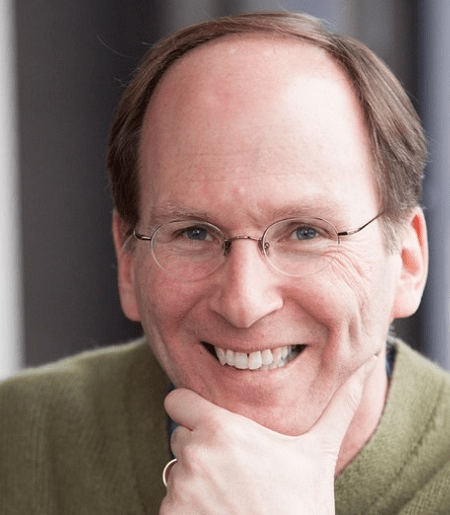
Steven Strogatz
· Susan and Barton Winokur Distinguished Professor for the Public Understanding of Science and Mathematics, Stephen H. Weiss Presidential FellowVerifiedCornell University · Mathematics
Active 1981–2026
About
Steven Strogatz is the Susan and Barton Winokur Distinguished Professor for the Public Understanding of Science and Mathematics and a Stephen H. Weiss Presidential Fellow at Cornell University. His academic interests encompass applied mathematics, with a focus on dynamical systems applied to physics, biology, and social science. His early work involved mathematical biology, exploring problems such as the geometry of supercoiled DNA, the dynamics of the human sleep-wake cycle, the topology of chemical waves, and the collective behavior of biological oscillators like swarms of fireflies. In the 1990s, his research concentrated on nonlinear dynamics and chaos, particularly in coupled oscillators found in lasers, superconducting Josephson junctions, and crickets, often collaborating closely with experimentalists. More recently, his work has expanded into areas such as social networks and complex systems, including the small-world phenomenon, crowd synchronization effects like the wobbling of London's Millennium Bridge, and the dynamics of structural balance in social systems. Beyond research, Strogatz is passionate about communicating mathematics to the public, having written columns for the New York Times, authored books like 'The Joy of x' and 'Infinite Powers,' and hosted a podcast called 'The Joy of Why,' aimed at exploring big questions in math and science.
Research topics
- Computer Science
- Mathematics
- Combinatorics
- Quantum mechanics
- Distributed computing
- Geometry
- Physics
- Mathematical physics
- Computer network
- Mathematical analysis
- Discrete mathematics
Selected publications
Designing temporal networks that synchronize under resource constraints
Nature Communications · 28 citations
Senior authorCorresponding- Computer Science
- Computer Science
- Distributed computing
Abstract Being fundamentally a non-equilibrium process, synchronization comes with unavoidable energy costs and has to be maintained under the constraint of limited resources. Such resource constraints are often reflected as a finite coupling budget available in a network to facilitate interaction and communication. Here, we show that introducing temporal variation in the network structure can lead to efficient synchronization even when stable synchrony is impossible in any static network under the given budget, thereby demonstrating a fundamental advantage of temporal networks. The temporal networks generated by our open-loop design are versatile in the sense of promoting synchronization for systems with vastly different dynamics, including periodic and chaotic dynamics in both discrete-time and continuous-time models. Furthermore, we link the dynamic stabilization effect of the changing topology to the curvature of the master stability function, which provides analytical insights into synchronization on temporal networks in general. In particular, our results shed light on the effect of network switching rate and explain why certain temporal networks synchronize only for intermediate switching rate.
Expander graphs are globally synchronizing
Advances in Mathematics · 2026-01-19 · 2 citations
preprintOpen accessExpander graphs are globally synchronizing
Advances in Mathematics · 2026-01-19
article2024-01-03
book-chapter1st authorCorresponding2024-01-03 · 193 citations
book1st authorCorrespondingThe goal of this third edition of Nonlinear Dynamics and Chaos: With Applications to Physics, Biology, Chemistry, and Engineering is the same as previous editions: to provide a good foundation - and a joyful experience - for anyone who’d like to learn about nonlinear dynamics and chaos from an applied perspective. The presentation stresses analytical methods, concrete examples, and geometric intuition. The theory is developed systematically, starting with first-order differential equations and their bifurcations, followed by phase plane analysis, limit cycles and their bifurcations, and culminating with the Lorenz equations, chaos, iterated maps, period doubling, renormalization, fractals, and strange attractors. The prerequisites are comfort with multivariable calculus and linear algebra, as well as a first course in physics. Ideas from probability, complex analysis, and Fourier analysis are invoked, but they're either worked out from scratch or can be safely skipped (or accepted on faith). Changes to this edition include substantial exercises about conceptual models of climate change, an updated treatment of the SIR model of epidemics, and amendments (based on recent research) about the Selkov model of oscillatory glycolysis. Equations, diagrams, and every word has been reconsidered and often revised. There are also about 50 new references, many of them from the recent literature. The most notable change is a new chapter. Chapter 13 is about the Kuramoto model. The Kuramoto model is an icon of nonlinear dynamics. Introduced in 1975 by the Japanese physicist Yoshiki Kuramoto, his elegant model is one of the rare examples of a high-dimensional nonlinear system that can be solved by elementary means. Students and teachers have embraced the book in the past, its general approach and framework continue to be sound.
2024-01-03
book-chapter1st authorCorresponding2024-01-03
book-chapter1st authorCorrespondingSynchronization in random networks of identical phase oscillators: A graphon approach
arXiv (Cornell University) · 2024-03-20
preprintOpen accessNetworks of coupled nonlinear oscillators have been used to model circadian rhythms, flashing fireflies, Josephson junction arrays, high-voltage electric grids, and many other kinds of self-organizing systems. Recently, several authors have sought to understand how coupled oscillators behave when they interact according to a random graph. Here we consider interaction networks generated by a graphon model known as a $W$-random network, and examine the dynamics of an infinite number of identical phase oscillators. We show that with sufficient regularity on $W$, the solution to the dynamical system over a $W$-random network of size $n$ converges in the $L^{\infty}$ norm to the solution of the infinite graphon system, with high probability as $n\rightarrow\infty$. We leverage this convergence result to explore synchronization for two classes of identical phase oscillators on Erdős-Rényi random graphs. This result suggests a framework for studying synchronization properties in large but finite random networks.
2024-01-03
book-chapter1st authorCorresponding2024-01-03
book-chapter1st authorCorresponding
Recent grants
RTG: Dynamics, Probability, and Partial Differential Equations in Pure and Applied Mathematics
NSF · $2.5M · 2017–2024
Nonlinear Dynamics of Oscillator Networks
NSF · $401k · 2015–2019
Mathematical Biology: Nonlinear Dynamics of Oscillator Networks
NSF · $524k · 2004–2008
Frequent coauthors
- 44 shared
Renato Mirollo
Boston College
- 24 shared
M. E. J. Newman
University of Michigan–Ann Arbor
- 22 shared
Duncan J. Watts
University of Pennsylvania
- 17 shared
Bertrand Ottino-Löffler
- 16 shared
Wouter‐Jan Rappel
University of California, San Diego
- 14 shared
Guillermo H. Goldsztein
- 13 shared
Kurt Wiesenfeld
Georgia Institute of Technology
- 13 shared
P. C. Matthews
CIC nanoGUNE
Education
- 1986
Ph.D., Applied Mathematics
Harvard University
- 1986
M.A., Mathematics
University of Cambridge
- 1982
B.A., Mathematics
University of Cambridge
- 1980
A.B., Mathematics
Princeton University
Awards & honors
- Stephen H. Weiss Presidential Fellow
- Cornell mathematician featured in Netflix film
- Mathematician Steven Strogatz receives national award for sc…
- Strogatz named finalist for Royal Society prize
- Strogatz, Bethe research papers named to top-50 list
- Resume-aware match score
- Save to shortlist
- AI-drafted outreach
See your match with Steven Strogatz
PhdFit ranks faculty by your research interests, methods, and publications — grounded in their actual work, not templates.
- Free to start
- No credit card
- 30-second signup