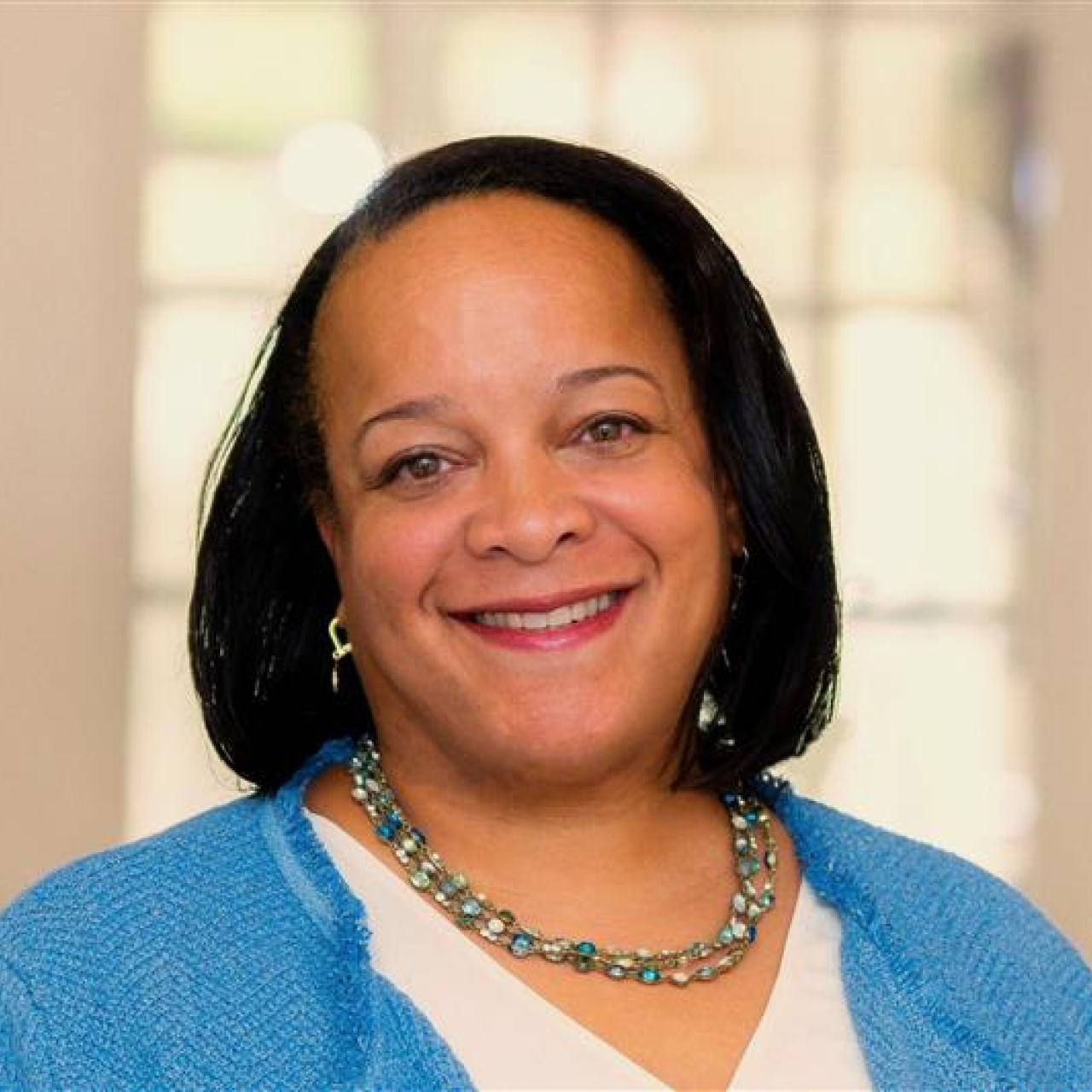
Bridget Terry Long
· economistVerifiedHarvard University · Social Studies and Civics Education
Active 1999–2025
About
Bridget Terry Long is the Saris Professor of Education and Economics at the Harvard Graduate School of Education and a Harvard University Distinguished Service Professor. She has been a member of the HGSE faculty since 2000 and served as dean of HGSE from 2018 to 2024. During her tenure as dean, she led the school through the implementation of a redesigned master’s program, the pivot to remote education during the 2020-2021 academic year, and the introduction of a new online master’s degree, while also expanding external engagement and partnerships. Long previously served as academic dean from 2013 to 2017 and as faculty director of the Ed.D. and Ph.D. programs from 2010 to 2013. Her research focuses on improving educational opportunity and student success, providing evidence on the effectiveness of financial aid policies, postsecondary remedial education, and support programs on educational attainment. She has also studied the impact of providing information and assistance with college processes on student engagement in educational activities, developing interventions and evaluating their impact across schools and organizations. Additionally, her work examines the role of instructor quality, class size, and support programs in educational attainment. Long is a research associate of the National Bureau of Economic Research, a member of the American Academy of Arts and Sciences, the National Academy of Education, and the International Academy of Education. She has held leadership roles such as chair of the Board of Directors for MDRC and served on the Board for the Red Sox Foundation. During the Obama administration, she was chair of the National Board for Education Sciences. Long earned her Ph.D. and M.A. from Harvard University’s Department of Economics and her A.B. from Princeton University in Economics with a Certificate in Afro-American Studies.
Research topics
- Psychology
- Mathematics education
- Business
- Economics
- Medical education
Selected publications
SSRN Electronic Journal · 2025-01-05 · 3 citations
articleOpen accessSenior authorRemedial or developmental courses are the most common instruments used to assist postsecondary students who are not ready for college-level coursework. However, despite its important role in higher education and substantial costs, there is little rigorous evidence on the effectiveness of college remediation on the outcomes of students. This study uses a detailed dataset to identify the causal effect of remediation on the outcomes of nearly 100,000 college students in Florida. Using a Regression Discontinuity design, we provide causal estimates while also investigating possible endogenous sorting around the policy cutoff. The results suggest math and reading remedial courses have mixed benefits. Being assigned to remediation appears to increase persistence to the second year and the total number of credits completed for students on the margin of passing out of the requirement, but it does not increase the completion of college-level credits or eventual degree completion. Taken together, the results suggest that remediation might promote early persistence in college, but it does not necessarily help students on the margin of passing the placement cutoff make long-term progress toward earning a degree.
Evaluation Review · 2023-03-23 · 3 citations
article1st authorCorrespondingThese remarks, which were given as the 2022 Recipient of the Peter H. Rossi Award for Contributions to the Theory or Practice of Program Evaluation, emphasize ways to increase the impact of program evaluation. First, is the importance of asking good questions, including ones that challenge the assumptions and models that dominate the field. Relatedly, we need to question the assumption that "one size fits all" and recognize the variation that exists-across contexts, time, and individuals. The key question is what works for whom under what conditions, and this also pushes us to think about why effects differ and what is driving those differences, that is, the underlying mechanisms. It is also important to incorporate new perspectives to improve our questions, models, research design, and interpretation, thus helping to address the aforementioned points. We should both welcome diverse perspectives into the research community and listen carefully to the communities we seek to study and incorporating their insights. Although the examples focus on a career in education research, the implications of the points are relevant for any aspect of social policy.
“Prior-Prior Year” FAFSA Increased Aid Submissions but Likely not Enrollment
Research in Higher Education · 2022-12-31
articleSenior authorDigital messaging to improve college enrollment and success
Economics of Education Review · 2021-09-15 · 36 citations
articleOpen accessAccess to Higher Education, Barriers to Enrollment and Choice
2020-01-01
book-chapter1st authorCorrespondingDigital Messaging to Improve College Enrollment and Success
National Bureau of Economic Research · 2020-10-01 · 13 citations
reportOpen accessWe investigate the efficacy of text messaging campaigns to remind students about and support them with key steps in the college search, application, selection and transition process. First, in collaboration with the College Board and uAspire, both national non-profit organizations, we implemented text-message based outreach and advising to students in over 700 US high schools that primarily serve large shares of low-income students. Second, we collaborated with several school districts in the state of Texas to implement a school-based version of the intervention. In the national sample, treatment students received outreach approximately once per month from uAspire counselors, whereas in the Texas sample, treatment students received outreach once every one to two weeks from their high school counselors. In both samples, outreach began in Spring 2015 and continued through September 2016. We tested these interventions with concurrent cluster randomized control trials with randomization at the school level. In contrast to the national version of the intervention, which tended to produce null effects, the school-based intervention yielded positive and significant impacts on several college-going steps and on college enrollment for certain subgroups. We discuss key differences between the two versions of the intervention that may have contributed to these divergent results.
Digital Messaging to Improve College Enrollment and Success. Working Paper 27897.
National Bureau of Economic Research · 2020-10-01
articleDigital Messaging to Improve College Enrollment and Success
SSRN Electronic Journal · 2020-01-01
articleOpen accessAccess to Higher Education, Affirmative Action
2020-01-01
book-chapter1st authorCorrespondingConnecting Students with Financial Aid: Evidence from a Field Experiment
2019-11-07
article1st authorCorresponding
Recent grants
Frequent coauthors
- 34 shared
Eric Bettinger
Stanford University
- 18 shared
John Bound
- 14 shared
Brad J. Hershbein
- 14 shared
Philip Oreopoulos
- 10 shared
Benjamin Castleman
University of Virginia
- 8 shared
Lisa Sanbonmatsu
National Bureau of Economic Research
- 6 shared
Caroline Hoxby
- 6 shared
Christopher Avery
Labs
Bridget Terry LongPI
Education
- 2000
PhD, Economics
Harvard University
- 1997
MA, Economics
Harvard University
- 1995
A.B., Economics
Princeton University
Awards & honors
- Peter H. Rossi Award for Contributions to the Theory or Prac…
- Spencer Foundation Mentor Award
- Robert P. Huff Golden Quill Award for excellence in research…
- Resume-aware match score
- Save to shortlist
- AI-drafted outreach
See your match with Bridget Terry Long
PhdFit ranks faculty by your research interests, methods, and publications — grounded in their actual work, not templates.
- Free to start
- No credit card
- 30-second signup