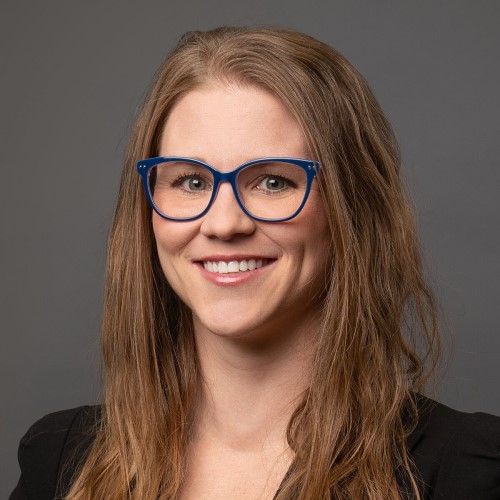
Kelly Capel
· Clinical Assistant ProfessorUniversity of Wisconsin-Madison · Radiology
Active 2018–2024
About
Kelly Capel, MD, is a clinical assistant professor of radiology in the Section of Neuroradiology at the University of Wisconsin School of Medicine and Public Health. She has specialized expertise in head and neck imaging and is committed to medical education, having been honored with the Faculty Teaching Award by the Radiology Residents in May 2025. Her professional interests include spine interventions—particularly fluoroscopic and CT-guided procedures—as well as vascular and flow imaging, and stroke imaging. Dr. Capel earned her undergraduate degree in biomedical sciences from Marquette University and received her medical degree from Rush Medical College in Chicago, Illinois. She completed a transitional year in internal medicine at Aurora St. Luke’s Medical Center in Milwaukee, followed by a diagnostic radiology residency at the University of Wisconsin. She then pursued subspecialty training through the Neuroradiology Fellowship program at the University of Wisconsin, after which she joined the faculty. In 2025, Dr. Capel was appointed director of radiology fellowships and associate program director of the Neuroradiology Fellowship program. Outside of her medical career, she enjoys hiking, traveling, playing soccer, and spending quality time with her family.
Research topics
- Artificial Intelligence
- Medicine
- Radiology
- Computer Science
- Nuclear medicine
- Cardiology
- Internal medicine
- Physics
- Pathology
Selected publications
Journal of Medical Imaging · 2024-12-03
articleOpen accessPurposeThe critical time between stroke onset and treatment was targeted for reduction by integrating physiological imaging into the angiography suite, potentially improving clinical outcomes. The evaluation was conducted to compare C-Arm cone beam CT perfusion (CBCTP) with multi-detector CT perfusion (MDCTP) in patients with acute ischemic stroke (AIS).ApproachThirty-nine patients with anterior circulation AIS underwent both MDCTP and CBCTP. Imaging results were compared using an in-house algorithm for CBCTP map generation and RAPID for post-processing. Blinded neuroradiologists assessed images for quality, diagnostic utility, and treatment decision support, with non-inferiority analysis (two one-sided tests for equivalence) and inter-reviewer consistency (Cohen’s kappa).ResultsThe mean time from MDCTP to angiography suite arrival was 50±34 min, and that from arrival to the first CBCTP image was 21±8 min. Stroke diagnosis accuracies were 96% [93%, 97%] with MDCTP and 91% [90%, 93%] with CBCTP. Cohen’s kappa between observers was 0.86 for MDCTP and 0.90 for CBCTP, showing excellent inter-reader consistency. CBCTP’s scores for diagnostic utility, mismatch pattern detection, and treatment decisions were noninferior to MDCTP scores (alpha = 0.05) within 20% of the range. MDCTP was slightly superior for image quality and artifact score (1.8 versus 2.3, p<0.01).ConclusionsIn this small paper, CBCTP was noninferior to MDCTP, potentially saving nearly an hour per patient if they went directly to the angiography suite upon hospital arrival.
Beyond TOF MRA: Review of Flow Imaging Techniques
Neurographics · 2023 · 3 citations
1st authorCorresponding- Computer Science
- Artificial Intelligence
- Medicine
MRA is essential for neurovascular evaluation with applications in anatomic mapping, atherosclerotic disease, stroke, aneurysm, vascular malformations, and vascular dysfunction in neurodegenerative diseases. TOF MRA is the most used MRA technique but has some disadvantages. Many new and important advancements in flow imaging have emerged both without and with the use of contrast agents. The purpose of this article was to highlight appropriate advantages, pitfalls, and applications for both traditional and more advanced MRA techniques including TOF, phase contrast MRA, 4D flow, arterial spin-labeling, and contrast-enhanced MRA techniques.Learning Objective: To review TOF MRA and explore the advantages, disadvantages, and applications of alternative MRA techniques without and with contrast including phase contrast MRA, arterial spin-labeling MRA, and other novel contrast-enhanced MRA techniques
Operative Neurosurgery · 2023-04-11
letterTo the Editor: We thank Dr See et al1 for their valuable and thought-provoking comment in regards to our publication on the wide arterial sparing encephalo-duro-synangiosis surgical technique and outcomes.2 Spontaneous vascularity in moyamoya is complex and vastly understudied. For example, although direct collateralization exists between the branches of the middle meningeal artery and the brain, as their group has shown,3 terminal collaterals with intracranial vasculature (eg, anterior cerebral artery) are also commonly encountered.4 And while opening the dura can theoretically disturb the direct dura-brain collaterals, interrupting middle meningeal artery branches as happens uniformly in encephaloduroarteriosynangiosis may damage terminal collaterals. Navigating through these issues is difficult. The good news is that most patients improve with most reported surgical techniques, and our role at present is to start looking more deeply into outcome measures with contemporary imaging and clinical assessment tools. Considering the small number of patients who carry this diagnosis, collaborative studies and registries would be very useful in helping surgeons and large experienced institutions, like the Boston group, continue to fine-tune the methodologies and establish management criteria.
Perfusion MRI Techniques: Beyond DSC
Neurographics · 2023 · 2 citations
- Medicine
- Nuclear medicine
- Radiology
The use of brain hemodynamics is important in the assessment of numerous pathophysiologic conditions. The measurement of perfusion or delivery of blood to tissues by MR imaging is essential for neuroradiologists to understand and appropriately apply to clinical practice. Several different approaches are used. DSC and dynamic contrast-enhanced MR imaging study the signal change (according to T2* and T1, respectively) induced by an exogenous contrast agent, allowing the measurement of CBF, CBV, and time-related parameters. Blood oxygen level‐dependent (BOLD) MR imaging measures the T2* signal changes induced by the paramagnetic molecule deoxyhemoglobin. BOLD MR imaging provides complex measurements because the signal varies not only with changes in CBF but also with several other parameters such as tissular oxygen uptake and brain activation. Arterial spin-labeling MR imaging is a technique relying on labeled endogenous water as a tracer. By measuring the signal difference between 2 sets of acquisitions (labeling and control), arterial spin-labeling MR imaging calculates cerebral perfusion in a quantitative manner. This article aims to review the fundamentals of perfusion MR imaging techniques essential to any neuroradiology practice along with their advantages, disadvantages, and applications to research and clinical care.Learning Objective: To review DSC MR imaging and alternative MR imaging perfusion techniques, focusing on methodology, advancements, and applications essential for the neuroradiologist to understand and clinically use these techniques
Wide Arterial Sparing Encephalo-Duro-Synangiosis for Moyamoya: Surgical Technique and Outcomes
Operative Neurosurgery · 2022 · 4 citations
- Medicine
- Cardiology
- Internal medicine
BACKGROUND: Moyamoya is managed by surgical revascularization, but no standardized method has yet been universally adopted. OBJECTIVE: To describe a new indirect bypass technique for pediatric moyamoya, wide arterial sparing encephalo-duro-synangiosis (WASEDS), which provides a much wider area of revascularization with minimal compromise to the middle meningeal arterial tree compared with traditional procedures. Initially used as a salvage technique after failed encephalo-duro-arterio-synangiosis, its success later motivated its use as a first-line procedure. METHODS: Clinical and radiographic records of patients who underwent WASEDS for moyamoya from 2009 to 2020 were reviewed. Brain perfusion relative cerebral blood volume on the side of the WASEDS procedure was calculated. Two-tailed paired t tests were performed to identify the statistically significant differences ( P ≤ .05). RESULTS: WASEDS was successfully performed on 8 patients for a total of 14 cerebral hemispheres. Age ranged from 2 to 25 years. There were no mortalities. The average clinical and radiographic follow-up was 49.79 months (range 2-126 months), demonstrating improvement in neurological condition and no postoperative stroke and significant diminution or cessation of transient ischemic attacks in all patients. Relative cerebral blood volume increased 9.24% after the WASEDS procedure ( P = .012). There were no neurological complications. There were 2 pseudomeningoceles related to the extensive dural openings. CONCLUSION: WASEDS is a safe and effective indirect revascularization technique for both primary and salvage techniques. It provides an extensive area of cortical revascularization with no compromise of the middle meningeal vasculature and subjective reports of early improvement in cognition and behavior. The main disadvantage is elevated risk of pseudomeningocele secondary to the large craniotomy.
Stroke · 2020
- Artificial Intelligence
- Medicine
- Radiology
Introduction: Time from diagnostic imaging to groin puncture highly correlates with outcome and often accounts for delays between hospital arrival and EVT. Our study comparing image quality and information content of MDCTP and CBCTP provides feasibility data for selected AIS patients to go straight to the angio-suite for comprehensive imaging and treatment. Methods: AIS patients eligible for EVT underwent MDCTP, then a CBCTP study on arrival in angio-suite. Of 939 admitted June 2017-April 2019, 226 (24%) received EVT. Of these 54 (35%) were enrolled to receive additional CBCTP imaging. Inability to obtain consent and co-morbidities were major causes for non-enrollment. Times from the start of MDCTP to angio-suite and from angio-suite arrival to first arterial image were recorded. Acquired CBCTP data were reconstructed and processed with an in-house toolbox. MDCTP and CBCTP data were matched for slice thickness and angulation and were processed using RAPID CTP (iSchemaView, Inc.). The rCBF, rCBV, MTT, tMAX maps were randomized to generate 3 unique evaluation sets. 3 neuroradiologists scored diagnostic image quality, artifacts, mismatch pattern detection and EVT indication using 5-point Likert scales. Stroke laterality was compared with the clinical standard for diagnostic accuracy. Results: Accuracies for stroke diagnosis are 97% [95%, 97%] with MDCTP and 92% [90%, 95%] with CBCTP. Cohen’s Kappa between observers is 0.90 for MDCTP-based diagnosis and 0.89 for CBCTP-based diagnosis. Scores of CBCTP to make the stroke diagnosis, detect mismatch pattern, and make treatment decision were non-inferior to corresponding scores for MDCTP (alpha=0.05) within 10% of the whole score range. Subjective scores of MDCTP for image quality and artifacts were slightly superior to those of CBCTP (1.8 vs. 2.3, p<0.01). Conclusions: In this study, a direct to angio-suite workflow provided non-inferior perfusion imaging for AIS patient triage while saving nearly one hour per patient.
2020-04-01
preprint1st authorCorresponding2020-04-10
preprintOpen access1st authorCorrespondingPurpose: In acute stroke patients, time from imaging to groin puncture highly correlates with outcome and often accounts for significant time delay between hospital arrival and start of endovascular therapy (1). The purpose of this exhibit is to outline a "One-Stop-Shop" workflow where selected stroke patients transfer directly to the angiography suite for comprehensive imaging and
PE or no PE? Alternative diagnoses on CTA
Applied Radiology · 2018-03-01
articleOpen access1st authorCorresponding
Frequent coauthors
- 8 shared
Laura Eisenmenger
University of Wisconsin–Madison
- 7 shared
Guang‐Hong Chen
University of Wisconsin–Madison
- 5 shared
Azam Ahmed
- 5 shared
David Niemann
University of Wisconsin–Madison
- 5 shared
Yinsheng Li
- 4 shared
Santiago Ortega‐Gutiérrez
University of Iowa Hospitals and Clinics
- 4 shared
Beverly Aagaard Kienitz
Vestergaard (Switzerland)
- 4 shared
Sebastian Schäfer
Varian Medical Systems (Germany)
Awards & honors
- Faculty Teaching Award by the Radiology Residents (May 2025)
- Resume-aware match score
- Save to shortlist
- AI-drafted outreach
See your match with Kelly Capel
PhdFit ranks faculty by your research interests, methods, and publications — grounded in their actual work, not templates.
- Free to start
- No credit card
- 30-second signup