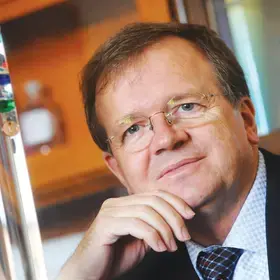
Peter Schlosser
VerifiedColumbia University · American Language Program
Active 1938–2024
Research topics
- Oceanography
- Environmental science
- Geology
- Ecology
- Chemistry
- Political Science
- Psychology
- Paleontology
- Geotechnical engineering
- Geochemistry
- Finance
- Environmental chemistry
- Environmental planning
- Economics
- Environmental resource management
- Natural resource economics
- Business
Selected publications
The Arctic Highlights Our Failure to Act in a Rapidly Changing World
Sustainability · 2022 · 14 citations
1st authorCorresponding- Political Science
- Business
- Natural resource economics
In this perspective on the future of the Arctic, we explore actions taken to mitigate warming and adapt to change since the Paris agreement on the temperature threshold that should not be exceeded in order to avoid dangerous interference with the climate system. Although 5 years may seem too short a time for implementation of major interventions, it actually is a considerable time span given the urgency at which we must act if we want to avoid crossing the 1.5 to <2 °C global warming threshold. Actions required include co-production of research exploring possible futures; supporting Indigenous rights holders’ and stakeholders’ discourse on desired futures; monitoring Arctic change; funding strategic, regional adaptation; and, deep decarbonization through transformation of the energy system coupled with negative carbon emissions. We are now in the decisive decade concerning the future we leave behind for the next generations. The Arctic’s future depends on global action, and in turn, the Arctic plays a critical role in the global future.
Arsenic contamination of Bangladesh aquifers exacerbated by clay layers
Nature Communications · 2020 · 104 citations
- Geology
- Environmental science
- Environmental chemistry
Confining clay layers typically protect groundwater aquifers against downward intrusion of contaminants. In the context of groundwater arsenic in Bangladesh, we challenge this notion here by showing that organic carbon drawn from a clay layer into a low-arsenic pre-Holocene (>12 kyr-old) aquifer promotes the reductive dissolution of iron oxides and the release of arsenic. The finding explains a steady rise in arsenic concentrations in a pre-Holocene aquifer below such a clay layer and the repeated failure of a structurally sound community well. Tritium measurements indicate that groundwater from the affected depth interval (40-50 m) was recharged >60 years ago. Deeper (55-65 m) groundwater in the same pre-Holocene aquifer was recharged only 10-50 years ago but is still low in arsenic. Proximity to a confining clay layer that expels organic carbon as an indirect response to groundwater pumping, rather than directly accelerated recharge, caused arsenic contamination of this pre-Holocene aquifer.
Journal of Geophysical Research Oceans · 2020 · 164 citations
- Oceanography
- Geology
- Environmental science
Abstract A major surface circulation feature of the Arctic Ocean is the Transpolar Drift (TPD), a current that transports river‐influenced shelf water from the Laptev and East Siberian Seas toward the center of the basin and Fram Strait. In 2015, the international GEOTRACES program included a high‐resolution pan‐Arctic survey of carbon, nutrients, and a suite of trace elements and isotopes (TEIs). The cruises bisected the TPD at two locations in the central basin, which were defined by maxima in meteoric water and dissolved organic carbon concentrations that spanned 600 km horizontally and ~25–50 m vertically. Dissolved TEIs such as Fe, Co, Ni, Cu, Hg, Nd, and Th, which are generally particle‐reactive but can be complexed by organic matter, were observed at concentrations much higher than expected for the open ocean setting. Other trace element concentrations such as Al, V, Ga, and Pb were lower than expected due to scavenging over the productive East Siberian and Laptev shelf seas. Using a combination of radionuclide tracers and ice drift modeling, the transport rate for the core of the TPD was estimated at 0.9 ± 0.4 Sv (10 6 m 3 s −1 ). This rate was used to derive the mass flux for TEIs that were enriched in the TPD, revealing the importance of lateral transport in supplying materials beneath the ice to the central Arctic Ocean and potentially to the North Atlantic Ocean via Fram Strait. Continued intensification of the Arctic hydrologic cycle and permafrost degradation will likely lead to an increase in the flux of TEIs into the Arctic Ocean.
Recent grants
NSF · $1.4M · 2007–2012
NSF · $460k · 2010–2013
NSF · $677k · 2005–2009
Collaborative Research: AnSlope Analysis
NSF · $168k · 2005–2009
NSF · $2.0M · 2010–2015
Frequent coauthors
- 206 shared
M. Stute
- 132 shared
David T. Ho
University of Hawaiʻi at Mānoa
- 77 shared
William M. Smethie
Lamont-Doherty Earth Observatory
- 74 shared
R. Newton
Environment Agency
- 62 shared
Alexander van Geen
Lamont-Doherty Earth Observatory
- 49 shared
Robert F. Anderson
- 41 shared
Gerhard Bönisch
- 39 shared
Yan Zheng
- Resume-aware match score
- Save to shortlist
- AI-drafted outreach
See your match with Peter Schlosser
PhdFit ranks faculty by your research interests, methods, and publications — grounded in their actual work, not templates.
- Free to start
- No credit card
- 30-second signup