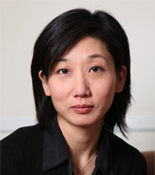
Eleana Kim
· Professor and Director, Graduate AdmissionsVerifiedUniversity of California, Irvine · Anthropology
Active 2000–2023
About
Eleana Kim is a Professor in the Department of Anthropology at UC Irvine whose research critically examines transnational Korean adoptees, kinship, and belonging within the contexts of global capitalism, state power, and transnational processes. Her first book, Adopted Territory: Transnational Korean Adoptees and the Politics of Belonging (Duke UP, 2010), is an ethnographic study that traces the evolution of a global network of transnational Korean adoptees. This work situates adoptees' personal experiences within broader historical frameworks including South Korean modernity, gender oppression, reproductive politics, U.S. empire, and Cold War geopolitics. By foregrounding displacement, social networks of shared personhood, and the political agency of adult adoptees, Adopted Territory contributed foundational insights to the interdisciplinary field of Critical Adoption Studies. This project was supported by the Social Science Research Council, the Fulbright Commission, and the Korea Foundation, and received the Social Science Book Award from the Association for Asian American Studies and the James B. Palais Prize in Korean Studies from the Northeast Asia Council of the Association for Asian Studies in 2012. Her second book, Making Peace with Nature: Ecological Encounters along the Korean DMZ (Duke UP, 2022), approaches the nature/culture divide through environmental anthropology, political ecology, feminist social studies of science, and animal/posthuman studies. It explores the Korean Demilitarized Zone (DMZ), an uninhabited area for over six decades that has become a refuge for biodiversity, where rare and endangered species thrive between the overdeveloped South and environmentally degraded North Korea. Kim analyzes how the South Korean state and provincial governments have symbolically transformed the DMZ from a scar of national division into a green belt representing peace and life. This project develops the concept of "biological peace," advocating for a political framework that expands peace beyond human concerns to include alternative infrastructures of humans and nonhumans in de/militarized ecologies. The research was supported by the American Council for Learned Societies, the Wenner-Gren Foundation, UC Humanities Research Institute, and UCI's Center for Critical Korean Studies. Making Peace with Nature was awarded the James B. Palais Prize in Korean Studies from the Northeast Asia Council of the Association for Asian Studies in 2024. Kim's ongoing research investigates the transnational circulation and production of Korean ginseng, focusing on how Korean terroir, human-nature relations, and cultivation techniques shape its chemical efficacies and branded qualities. This project also connects these aspects to broader cultural values within South Korea's hypercapitalist context. Her scholarly articles have appeared in journals such as Adoption & Culture, Social Text, Visual Anthropology Review, Anthropological Quarterly, Journal of Korean Studies, and Cultural Anthropology. Her research and teaching interests encompass transnational adoption, kinship and reproduction, nationalism, transnationalism, migration, diaspora, race/ethnicity, citizenship, personhood, social movements, expressive cultures, ethnographic media, borders and borderlands, political ecology, environmental anthropology, militarized ecologies, posthumanism, multispecies ethnography, science and technology studies (STS), the Korean peninsula, Koreans in the world, and Asians in the Americas.
Research topics
- Sociology
- Political Science
- Law
- Geography
- Computer Science
- Engineering
- Ecology
- Archaeology
- Biology
- Gender studies
- Environmental ethics
- History
Selected publications
Epilogue: On Everyday Ecologies and Systems of Mediation
Cornell University Press eBooks · 2023-05-11
book-chapterOpen accessSenior authorStepsThis epilogue is being written at a momentous period in time.The global pandemic of COVID-19 has become a biological threat to human life inside and outside the Korean peninsula.Starting with the outbreak of cases among the followers of the religious group Sinch'ŏnji in February 2020, the global pandemic upended everyday life and any sense of normality in society and the economy in Korea.As the government scrambled to identify, trace, and contain the virus, it quickly became apparent that this deadly microbe had the power to ravage people's respiratory systems.Infected with the virus, countless numbers of people have experienced respiratory tract infections that have left them with severely compromised lungs and windpipes, a major factor behind COVID-19related deaths.At the very beginning of the pandemic, Koreans were already being exposed to environmental dangers that were causing stress to their upper and lower respiratory tracts.Respiratory health was under assault by the massive air pollution in the country-known as "fine dust" (misaemŏnji).From the urban to the rural, no one in the country could escape the ubiquitous air pollution that had been releasing the dangerous fine particulate matter known as PM 2.5, which has the power to seep deeply into the respiratory tract of humans, causing shortness of breath, coughing, sneezing, runny nose, and irritation to the lungs, eyes, throat, and nose.The most serious consequence of the lung's absorption of PM 2.5 has been the onset of asthma and bronchitis and cardiovascular effects, such as heart disease and cardiac arrhythmias, particu-Epilogue
Cornell University Press eBooks · 2023
- Computer Science
- Computer Science
Japan's Empire of Forestry in Colonial Korea (University of Washington Press, 2020), as well as numerous articles on the environmental
Cornell University Press eBooks · 2023-05-11
paratextOpen accessCornell University Press eBooks · 2023-05-11
book-chapterOpen access1st authorCorrespondingCornell University Press eBooks · 2023-05-11
book-chapterOpen accessCornell University Press eBooks · 2023-05-11
book-chapterOpen access1st authorCorrespondingDuke University Press eBooks · 2023
- Geography
- History
2022-07-18
book1st authorCorrespondingDuke University Press eBooks · 2022 · 4 citations
1st authorCorresponding- Political Science
- Sociology
- Geography
The Korean Demilitarized Zone (DMZ) has been off-limits to human habitation for nearly seventy years, and in that time, biodiverse forms of life have flourished in and around the DMZ as beneficiaries of an unresolved war. In Making Peace with Nature Eleana J. Kim shows how a closer examination of the DMZ in South Korea reveals that the area’s biodiversity is inseparable from scientific practices and geopolitical, capitalist, and ecological dynamics. Drawing on ethnographic fieldwork with ecologists, scientists, and local residents, Kim focuses on irrigation ponds, migratory bird flyways, and land mines in the South Korean DMZ area, demonstrating how human and nonhuman ecologies interact and transform in spaces defined by war and militarization. In so doing, Kim reframes peace away from a human-oriented political or economic peace and toward a more-than-human, biological peace. Such a peace recognizes the reality of war while pointing to potential forms of human and nonhuman relations.
"Would You Rather Have Been Aborted?": Why Adoption Is Not the Solution to Abortion
Adoption & Culture · 2022-01-01
articleSenior author
Frequent coauthors
- 16 shared
Ian C. Gray
Takeda (United Kingdom)
- 16 shared
Andrew Bushell
University of Rochester
- 16 shared
Astrida Neimanis
University of California, San Diego
- 16 shared
J. Kuang
University of Rochester
- 16 shared
Karen Barad
University of California, San Diego
- 16 shared
Bill Maurer
University of California, Irvine
- 16 shared
Ali Rezaie
Cedars-Sinai Medical Center
- 16 shared
Jose-Henrique Alves
NOAA Weather Program Office
Education
Ph.D.
New York University
M.A., with a Certificate in Culture and Media
New York University
Awards & honors
- James B. Palais Prize in Korean Studies from the Association…
- Association of Asian American Studies Social Science book aw…
- Resume-aware match score
- Save to shortlist
- AI-drafted outreach
See your match with Eleana Kim
PhdFit ranks faculty by your research interests, methods, and publications — grounded in their actual work, not templates.
- Free to start
- No credit card
- 30-second signup