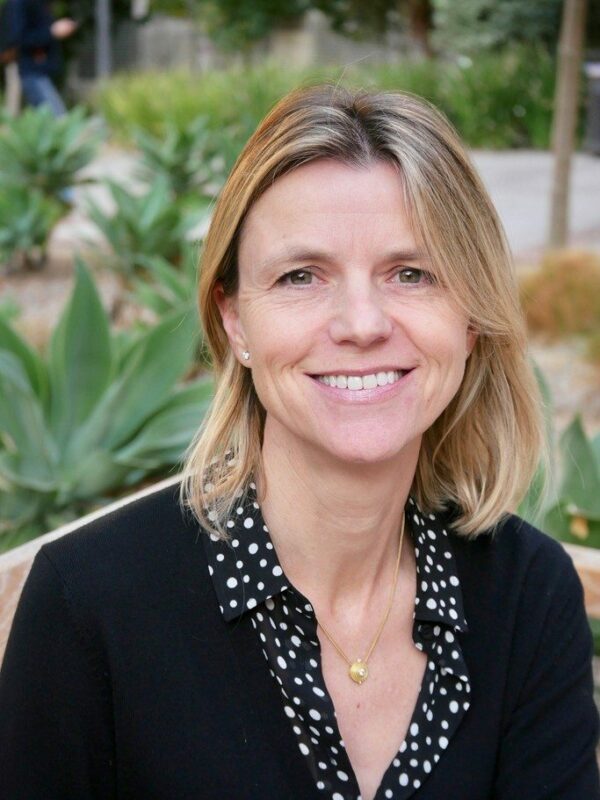
Magali (Maggie) Delmas
· Professor of Management; Director, Leadership in Sustainability Certificate ProgramVerifiedUniversity of California, Los Angeles · Environmental Science and Policy
Active 1997–2026
About
Magali (Maggie) Delmas is a Professor of Management at the UCLA Institute of the Environment and the Anderson School of Management. She is also the director of the UCLA Center for Corporate Environmental Performance and the Center for Impact@Anderson. Her research interests are primarily in the areas of Business Strategy and Corporate Sustainability, with a focus on developing effective information strategies to promote conservation behavior and the development of green markets. She has authored over 100 articles, book chapters, and case studies on business and the natural environment, and has received the Academy of Management/Organization and the Natural Environment Distinguished Scholar Award. Delmas works on investigating barriers and incentives to the adoption of energy-efficient solutions and refining methodologies to measure and communicate firms' and products’ environmental and social performance.
Research topics
- Political Science
- Law
- Computer Security
- Computer Science
- Psychology
- Mathematics
- Marketing
- Business
- Environmental ethics
- Social psychology
- Engineering ethics
- Statistics
- Econometrics
- Engineering
- Public relations
- Chemistry
- Environmental science
- Environmental resource management
- Ecology
Selected publications
Improving the Credibility of Corporate Sustainability Metrics
Academy of Management Perspectives · 2026-03-26
article1st authorCorrespondingFirms face growing pressure to measure and disclose their sustainability performance, yet credible sustainability metrics remain scarce because sustainability initiatives often operate under significant uncertainty. We argue that two forms of uncertainty—(1) “effect uncertainty” (whether an initiative produces its intended outcome) and (2) “measurement uncertainty” (the accuracy and stability of quantification)—fundamentally shape the credibility of sustainability metrics. We introduce a credibility-centered roadmap that helps managers diagnose these uncertainties, select metrics that fit the informational context, reduce uncertainty where feasible, communicate remaining uncertainty transparently, and pause quantitative disclosure when precision cannot be responsibly claimed. The roadmap recognizes that credibility depends on aligning disclosure with what can be responsibly known rather than choosing the “right” metric in the abstract. Using carbon offsets as an illustrative domain where both uncertainties are exceptionally high, we demonstrate how misaligned metrics can unintentionally mislead stakeholders and why process metrics, qualified outcomes, or strategic silence may be more credible than precise quantitative claims. By adopting this structured approach, organizations can design sustainability metrics that more accurately reflect what can be known, avoid overstating confidence, and strengthen stakeholder trust.
Behavioral Interventions for Waste Reduction: A Systematic Review of Experimental Studies
SSRN Electronic Journal · 2026-01-01
preprintOpen accessImproving The Credibility Of Corporate Sustainability Metrics
SSRN Electronic Journal · 2026-01-01
preprintOpen access1st authorCorrespondingCan Climate Adaptation Be Sustainable?
SSRN Electronic Journal · 2026-01-01
preprintOpen access1st authorCorrespondingBuilding on Sand? Third-Party Sustainability Measures in the Business Literature
SSRN Electronic Journal · 2026-01-01
preprintOpen accessPerception Of Eco-Labels: Organic And Biodynamic Wines
SSRN Electronic Journal · 2025-01-01 · 8 citations
preprintOpen access1st authorCorresponding2025-03-14
preprintOpen accessMountainous landscapes have been progressively shaped during the Quaternary under oscillating glacial-interglacial conditions. However, in the context of current climate change, quantifying alpine erosion dynamics has remained problematic because geomorphic processes operate at interrelated timescales. Thus, deciphering the interactions between climate change, glacier retreat, and sediment production in alpine catchments has proven challenging. In this context, we aim to further constrain the transient geomorphic response and catchment sediment transfer during glacial/interglacial oscillations, and especially during the transition period since the Last Glacial Maximum (LGM, ca. 20 ka), using terrestrial cosmogenic nuclides as proxy for erosion processes.Here, we focus on the Ariège catchment (Eastern Pyrenees), a high-relief area crossing various lithologies that has been extensively glaciated and shaped by glacial processes during the Quaternary. We collected modern river sediments samples along the main Ariège river and its tributary basins, covering contrasted lithologies, topo-climatic settings and LGM glacial coverage. We complemented this dataset with Lateglacial sediment archives within the Ariège catchment together with fluvio-glacial terrace sediments in the downstream foreland area. Terrestrial cosmogenic nuclide (TCN) 10Be and 26Al concentrations were measured on these samples with the overall objectives to (1) identify TCN concentration differences between modern and Lateglacial/fluvio-glacial deposits, (2) assess sediment transfer times and potential recycling (using 26Al/10Be ratios), and finally (3) derive catchment-averaged denudation rates from TCN concentrations to investigate spatial erosion patterns and discuss the main controlling factors.The 26Al/10Be ratios calculated for modern river sediments are in majority between 6 and 6.75, consistent with surface production ratios. This suggests that most modern river sediments samples have a simple sediment transfer dynamics with limited effects of burial and recycling from glacial overdeepenings and low input from high elevation slowly eroding weathered surfaces. Measured 10Be concentrations in modern river sediments are 2 to 5 times higher than for Lateglacial and fluvio-glacial terrace sediments, showing a clear difference in the 10Be sediment signature during glacial and interglacial periods. This reveals that (1) glacial erosion has been effective enough to partially reset the TCN signals, and (2) the post-glacial period is marked by a re-adjustment of TCN concentrations towards an “interglacial” signal. Finally, TCN-derived catchment-averaged denudation rates reveal a high spatial variability within the Ariège catchment, both between tributary basins (from 33 to 294 mm/ka) and along the main Ariège stream (from 130 and 278 mm/ka). Our preliminary results point towards a topographic control on the modern erosion pattern, with a statistically-significant correlation between denudation rates and mean catchment slopes while other topo-climatic parameters appear less efficient in tuning the spatial distribution in denudation rates. We will discuss the potential influence of long-term orogeny, litho-tectonic configuration, and glacial inheritance on the modern slope distributions and overall topographic patterns in the Ariège catchment. Our work contributes to a better understanding of the sensitivity of alpine landscapes to climate forcing and associated changes in geomorphic processes over glacial-interglacial oscillations, using TCN approach for quantifying erosional processes, sediment production and transfer in mountainous environments.
Keeping Energy Star is the smart choice for efficient buildings
Nature Reviews Clean Technology · 2025-06-06 · 1 citations
article1st authorCorrespondingPermafrost in the Pyrenees: the changing mountains
HAL (Le Centre pour la Communication Scientifique Directe) · 2025-09-10
articleOpen accessInternational audience
International Journal of Speleology · 2025-02-01
articleOpen accessThe Lachambre cave network (Eastern Pyrenees, France) is well suited to studying the interaction between vertical successions of low-gradient cave passages in the limestone and chronosequences of fluvial terraces in the adjacent valley. Investigations here focus on cave passages striking parallel to the Têt River, and on their topographic, geomorphological, sedimentological and geochronological relationship with the two youngest generations of Pleistocene fluvial terrace, T2 and T1. Results reveal that the longitudinal profiles of the terraces and modern thalweg (1.5–3%) are ten times steeper than the profiles of the subterranean passages (0.1–0.3%), which display typical characteristics of water table caves. The respective cave and fluvial terrace profiles consequently diverge scissor-like on either side of a point of intersection, with the elevation of cave levels upstream occurring below the elevation of comparatively younger terrace treads, and even below the modern thalweg. U/Th ages obtained from speleothems and previously published 26Al/10Be burial ages of quartz-rich sediment indicate that the downstream segment of the cave passage (i) formed during Marine Isotope Stage 6, (ii) was invaded soon after by a subterranean debris cone (at times of fluvial aggradation in the Têt catchment, cones of river bedload entered the caves through valleyside sinkholes), (iii) was partially filled by an influx of gravel from upstream during MIS 4, (iv) experienced speleothem growth during MIS 3, and (v) underwent further geomorphic changes during MIS 2. Such complicated interactions between subaerial and subterranean dynamics emphasize the necessity for caution when using caves as tools for quantifying valley incision by rivers – particularly when using them as substitutes for fluvial terraces in widespread situations where none are available. Cave altimetry, speleogen inventories, cross-cutting relations in cave sediment stratigraphy and age-bracketing of fluvial deposits and speleothems all contribute to elaborating a more accurate understanding of how cave development interrelates with Quaternary alluvial cycles.
Recent grants
Frequent coauthors
- 18 shared
Michael W. Toffel
- 16 shared
Thomas P. Lyon
Michigan United
- 15 shared
Omar Isaac Asensio
Harvard Global Health Institute
- 13 shared
María J. Montes‐Sancho
Universidad Carlos III de Madrid
- 13 shared
David Colgan
- 11 shared
Sanja Peković
- 11 shared
Jinghui Lim
University of California, Los Angeles
- 9 shared
Yating Chuang
Institute of Economics, Academia Sinica
Labs
Institute of the Environment and Sustainability at UCLAPI
Education
- 2000
Ph.D., Environmental Science and Engineering
University of California, Los Angeles
- 1995
M.S., Environmental Science and Engineering
University of California, Los Angeles
- 1993
B.S., Environmental Science
University of California, Los Angeles
Awards & honors
- Academy of Management/Organization and the Natural Environme…
- Resume-aware match score
- Save to shortlist
- AI-drafted outreach
See your match with Magali (Maggie) Delmas
PhdFit ranks faculty by your research interests, methods, and publications — grounded in their actual work, not templates.
- Free to start
- No credit card
- 30-second signup